
Dua for Protection from Enemies & Oppression
There are times when a person feels completely surrounded by stress, fear, or unfair treatment. Someone may be trying to harm your reputation, block your rights, threaten your peace, or use their power against you. In moments like this, the heart naturally looks for protection.
For a Muslim, the strongest protection is always from Allah.

Making dua for protection from enemies and oppression does not mean you are weak. It means you know where real power belongs. People may plan, accuse, threaten, or oppress, but nothing happens except by the permission of Allah.
This guide includes powerful duas for protection from enemies, injustice, oppression, harmful people, fear, and evil. Where possible, the duas are presented with Arabic text, transliteration, meaning, and practical guidance on when to recite them.
Why Muslims Make Dua for Protection from Enemies
Enemies are not always people on a battlefield. Sometimes an enemy is someone who spreads lies, creates problems in your family, misuses authority, harms your business, or makes your life difficult through jealousy and hatred.
Islam teaches us to respond with wisdom, patience, lawful action, and trust in Allah. We are not told to live in fear of people. We are taught to seek Allah’s help and protection while also taking practical steps.
A dua for protection from enemies helps the heart in two ways. First, it reminds you that Allah is greater than the people causing harm. Second, it gives you emotional strength when you feel powerless.
MyIslam lists several authentic protection duas, including the dua for leaving the house, the dua “Bismillahilladhi la yadurru…,” and the dua “Allahumma inna naj‘aluka fi nuhoorihim…” for protection from enemies. (myislam.org)
Best Duas for Protection from Enemies and Oppression
1. Dua for Protection from the Evil of Enemies
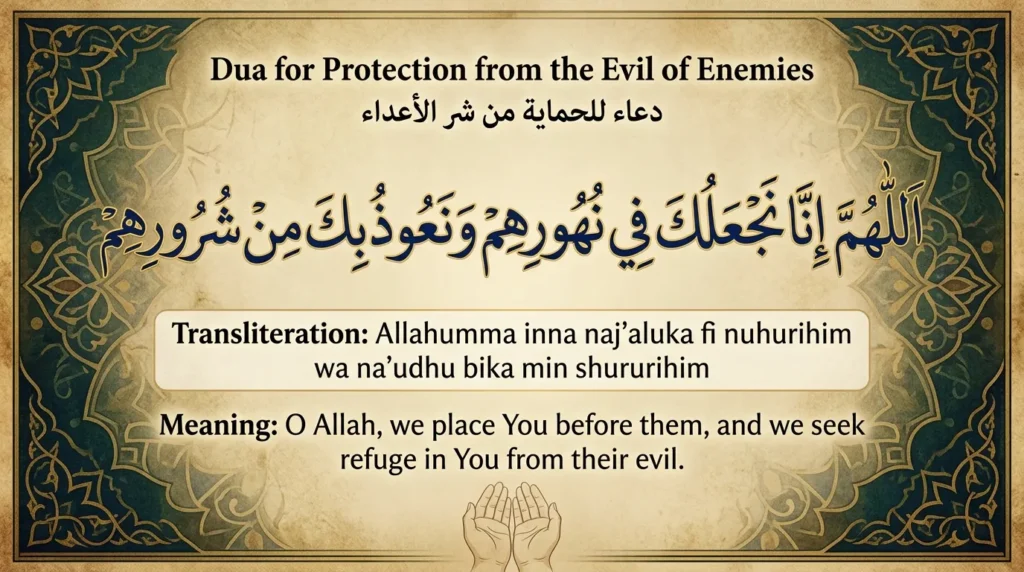
Arabic
اللَّهُمَّ إِنَّا نَجْعَلُكَ فِي نُحُورِهِمْ وَنَعُوذُ بِكَ مِنْ شُرُورِهِمْ
Transliteration
Allahumma inna naj‘aluka fi nuhoorihim wa na‘udhu bika min shuroorihim.
Meaning
O Allah, we place You before them, and we seek refuge in You from their evil.
This is one of the most direct duas for protection from enemies and harmful people. It is short, powerful, and easy to memorize. When you recite it, you are asking Allah to stand between you and those who intend harm.
This dua is especially comforting when you are about to face someone difficult, attend a stressful meeting, deal with a conflict, or protect yourself from people who may act unjustly.
This dua is mentioned in protection-related dua collections, with references to Abu Dawud and authentication notes in Islamic sources. (myislam.org)
2. Short Dua When You Fear Harm from Someone
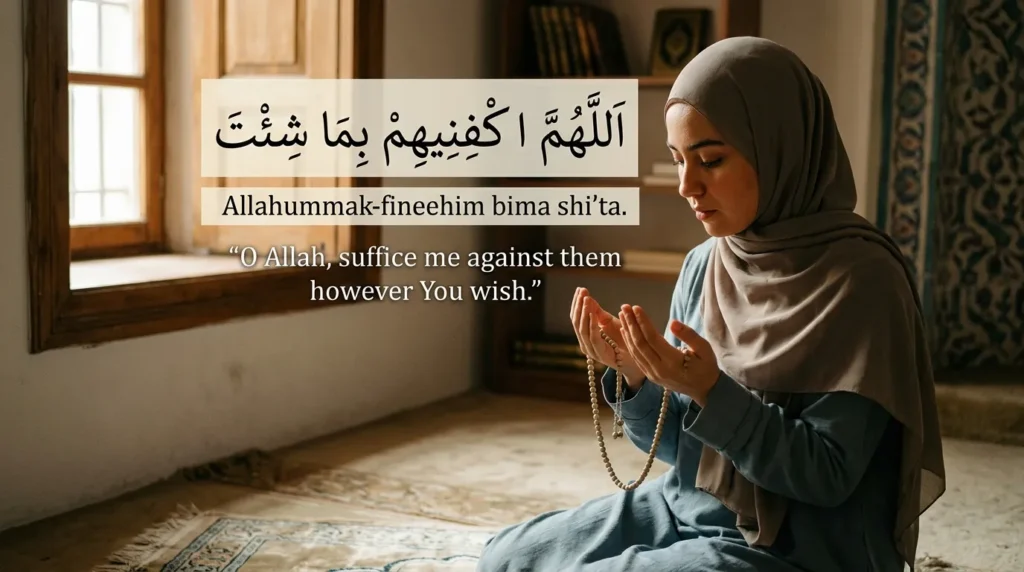
Arabic
اللَّهُمَّ اكْفِنِيهِمْ بِمَا شِئْتَ
Transliteration
Allahummak-fineehim bima shi’ta.
Meaning
O Allah, suffice me against them however You wish.
This is a very short dua, but its meaning is deep. Sometimes you do not know how the problem will be solved. You may not know whether Allah will remove the person, soften their heart, expose the truth, or create a way out for you.
This dua leaves the matter completely to Allah’s wisdom.
It is useful when you feel afraid of someone’s harm, when someone is threatening you, or when you feel powerless in front of a person who has influence or authority.
2LearnIslam includes this dua among supplications for protection from enemies, haters, and harmful people. (2learnislam.com)
3. Dua of Prophet Musa عليه السلام Against Oppression
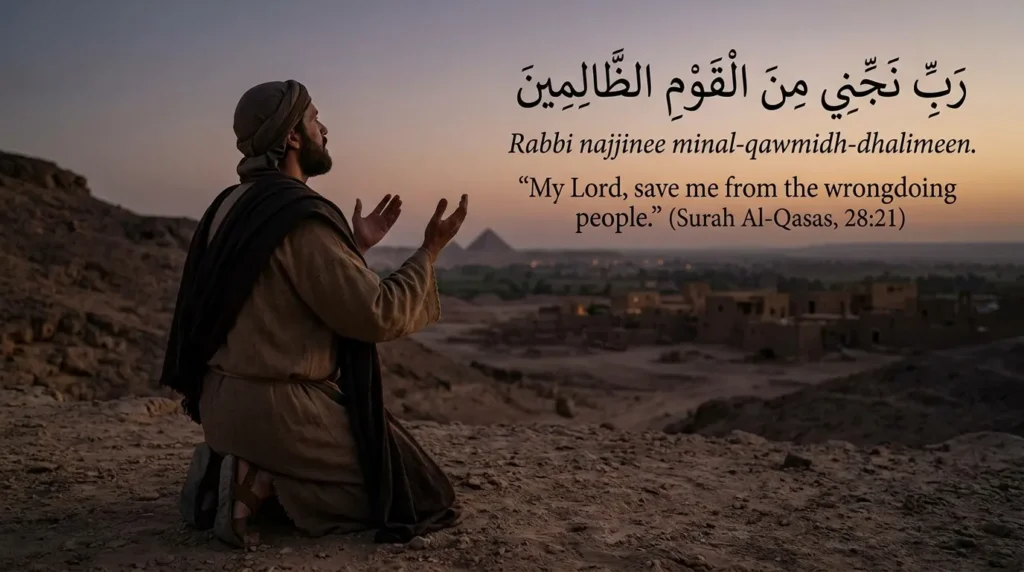
Arabic
رَبِّ نَجِّنِي مِنَ الْقَوْمِ الظَّالِمِينَ
Transliteration
Rabbi najjinee minal-qawmidh-dhalimeen.
Meaning
My Lord, save me from the wrongdoing people.
This Qur’anic dua was made by Prophet Musa عليه السلام when he left a dangerous situation and asked Allah for safety from oppressive people.
It is one of the most beautiful duas for anyone facing injustice, cruelty, threats, abuse, or unfair treatment. Notice how the dua asks first for rescue. It is not a dua of uncontrolled anger. It is a dua for safety, relief, and escape from wrongdoing people.
If you are being treated unfairly, this dua is very easy to repeat throughout the day.
2LearnIslam mentions this dua from Surah Al-Qasas, verse 21, in the context of protection from enemies and wrongdoers. (2learnislam.com)
4. Dua When You Feel Overpowered
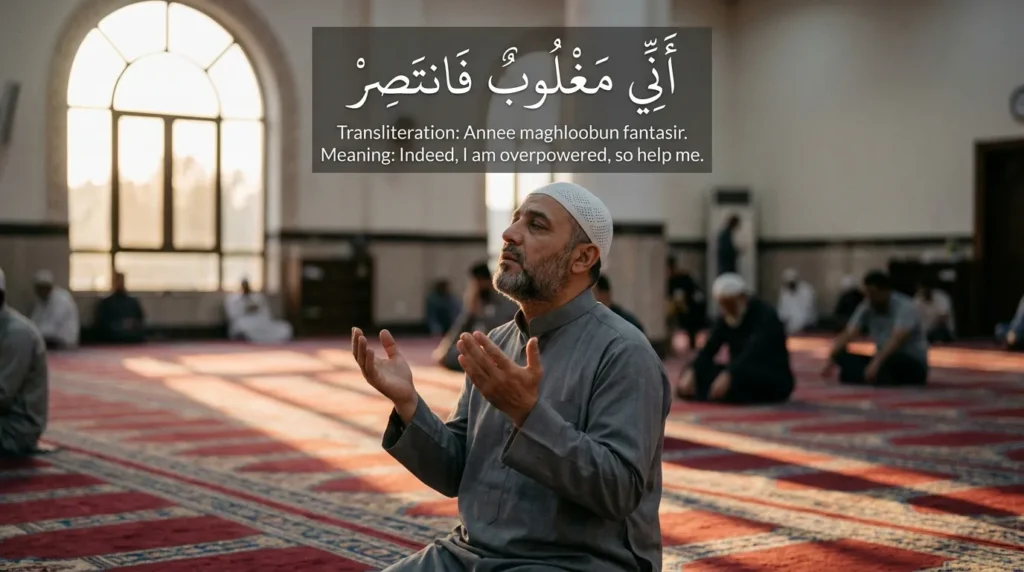
Arabic
أَنِّي مَغْلُوبٌ فَانْتَصِرْ
Transliteration
Annee maghloobun fantasir.
Meaning
Indeed, I am overpowered, so help me.
This is a powerful Qur’anic dua from the story of Prophet Nuh عليه السلام. It is a dua for the moment when a person feels they have no strength left.
There are situations where you may explain yourself again and again, but nobody listens. You may try to protect your rights, but the situation keeps getting worse. At such times, this dua expresses complete need before Allah.
It is short enough to repeat often, especially in moments of fear, sadness, or helplessness.
Duas.org includes this dua in the context of enemies, oppression, and seeking Allah’s help. (duas.org)
5. Dua for Protection from Calamity and Harm
Arabic
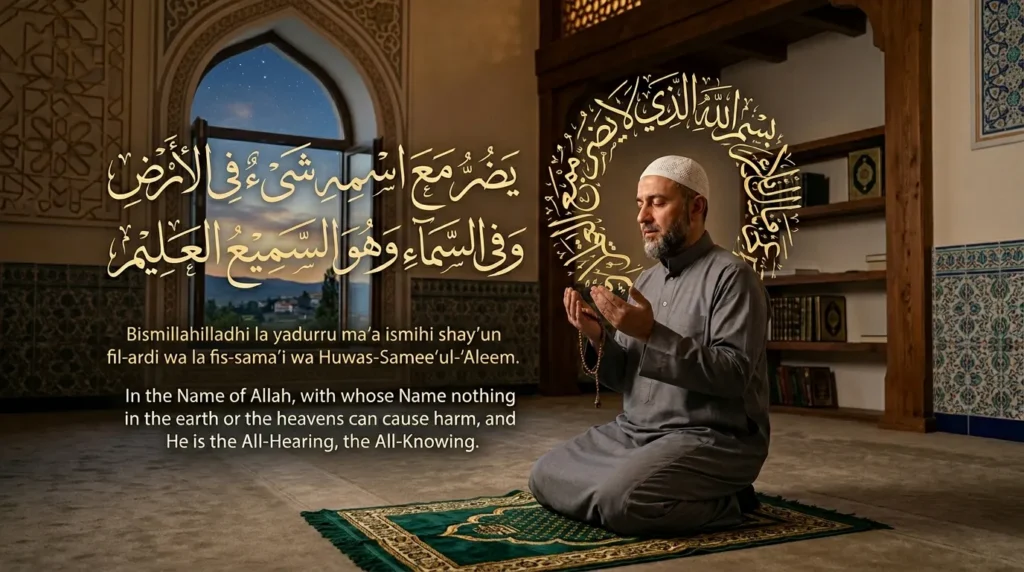
بِسْمِ اللَّهِ الَّذِي لَا يَضُرُّ مَعَ اسْمِهِ شَيْءٌ فِي الْأَرْضِ وَلَا فِي السَّمَاءِ وَهُوَ السَّمِيعُ الْعَلِيمُ
Transliteration
Bismillahilladhi la yadurru ma‘a ismihi shay’un fil-ardi wa la fis-sama’i wa Huwas-Samee‘ul-‘Aleem.
Meaning
In the Name of Allah, with whose Name nothing in the earth or the heavens can cause harm, and He is the All-Hearing, the All-Knowing.
This is one of the most well-known duas for daily protection. It is not only for enemies; it is also recited for protection from general harm, calamity, fear, and unexpected difficulties.
The meaning itself gives peace to the heart. When you say this dua, you are reminding yourself that nothing in the heavens or the earth can harm you unless Allah allows it. This helps reduce fear of people, situations, evil plans, and unseen harm.
MyIslam cites this dua with reference to Jami‘ at-Tirmidhi 3388 and mentions the narration that whoever says it three times in the morning and evening will be protected from sudden harm by Allah’s permission. (myislam.org)
Best Time to Recite
Recite it three times in the morning and three times in the evening.
6. Dua When Leaving the House
Arabic
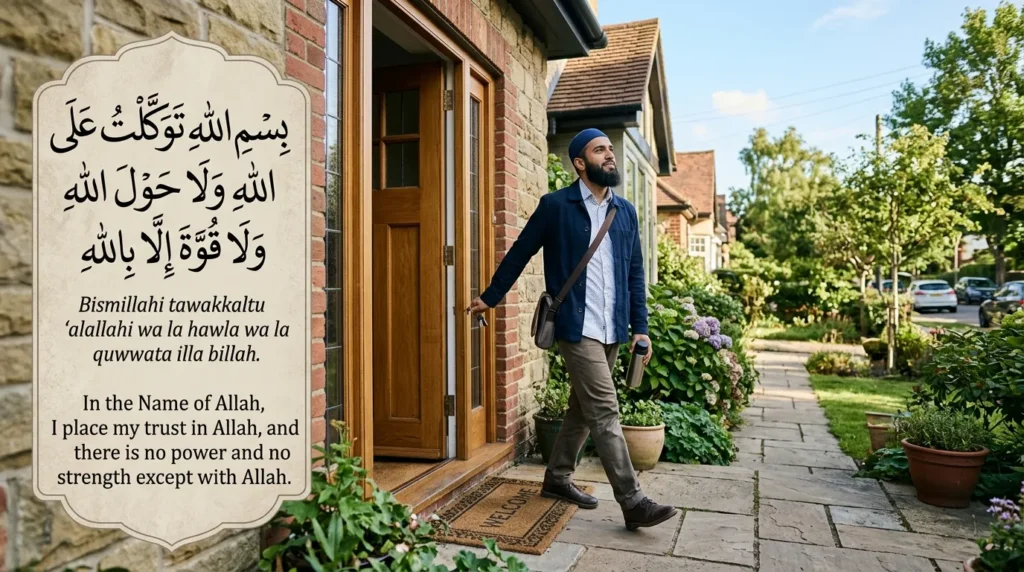
بِسْمِ اللهِ تَوَكَّلْتُ عَلَى اللهِ وَلَا حَوْلَ وَلَا قُوَّةَ إِلَّا بِاللهِ
Transliteration
Bismillahi tawakkaltu ‘alallahi wa la hawla wa la quwwata illa billah.
Meaning
In the Name of Allah, I place my trust in Allah, and there is no power and no strength except with Allah.
This dua is especially important for daily protection. Many problems happen outside the home: at work, school, business, travel, court, meetings, or public places. This dua helps a believer leave home with trust in Allah instead of fear.
It is a simple reminder that your safety does not depend only on your planning. Real protection comes from Allah.
MyIslam cites this dua with references including Hisnul Muslim and Sunan Abi Dawud 5095, mentioning the narration that the one who recites it is guided, defended, and protected. (myislam.org)
7. Ayat al-Kursi for Protection
Reference
Surah Al-Baqarah, 2:255
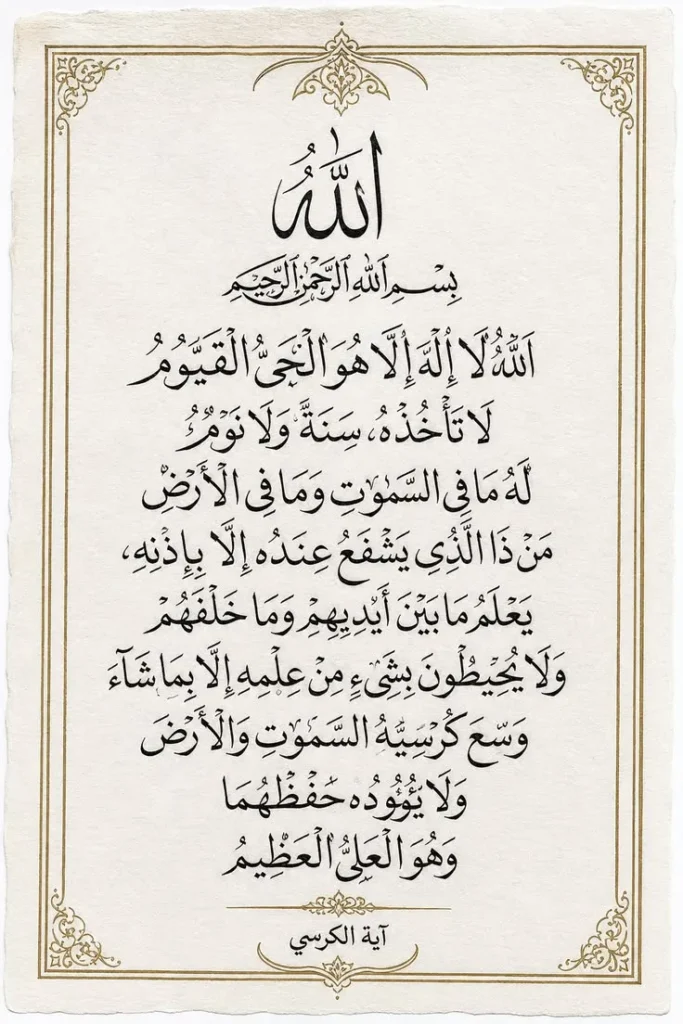
ٱللَّهُ لَآ إِلَـٰهَ إِلَّا هُوَ ٱلْحَىُّ ٱلْقَيُّومُ ۚ لَا تَأْخُذُهُۥ سِنَةٌۭ وَلَا نَوْمٌۭ ۚ لَّهُۥ مَا فِى ٱلسَّمَـٰوَٰتِ وَمَا فِى ٱلْأَرْضِ ۗ مَن ذَا ٱلَّذِى يَشْفَعُ عِندَهُۥٓ إِلَّا بِإِذْنِهِۦ ۚ يَعْلَمُ مَا بَيْنَ أَيْدِيهِمْ وَمَا خَلْفَهُمْ ۖ وَلَا يُحِيطُونَ بِشَىْءٍۢ مِّنْ عِلْمِهِۦٓ إِلَّا بِمَا شَآءَ ۚ وَسِعَ كُرْسِيُّهُ ٱلسَّمَـٰوَٰتِ وَٱلْأَرْضَ ۖ وَلَا يَـُٔودُهُۥ حِفْظُهُمَا ۚ وَهُوَ ٱلْعَلِىُّ ٱلْعَظِيمُ ٢٥٥
Ayat al-Kursi is one of the greatest verses of the Qur’an. It is widely recited for protection because it describes Allah’s complete power, knowledge, authority, and control over the heavens and the earth.
This verse reminds the believer that Allah is Al-Hayy — the Ever-Living — and Al-Qayyum — the Sustainer of everything. He does not become tired, unaware, weak, distracted, or overcome by sleep. Nothing is hidden from Him, and no enemy can act outside His knowledge and permission.
That is why Ayat al-Kursi brings so much comfort. It does not only ask for protection; it strengthens your belief in the One who protects.
Many Muslims recite Ayat al-Kursi after obligatory prayers, before sleeping, and during times of fear. MyIslam mentions the narration in which reciting Ayat al-Kursi before sleeping is connected with protection through the night by Allah’s permission. (myislam.org)
When to Recite
You can recite Ayat al-Kursi after prayers, before sleeping, when leaving home, during fear, or whenever you need spiritual strength and protection.
8. Dua for Patience and Victory Over Wrongdoers

Arabic
رَبَّنَا أَفْرِغْ عَلَيْنَا صَبْرًا وَثَبِّتْ أَقْدَامَنَا وَانصُرْنَا عَلَى الْقَوْمِ الْكَافِرِينَ
Transliteration
Rabbana afrigh ‘alayna sabran wa thabbit aqdamana wansurna ‘alal-qawmil-kafireen.
Meaning
Our Lord, pour upon us patience, make our feet firm, and help us against the disbelieving people.
This Qur’anic dua is powerful because it asks for three things: patience, firmness, and help from Allah.
When someone is oppressed, they often want the hardship to end immediately. That is natural. But sometimes Allah gives patience first, firmness second, and victory after that. This dua teaches the heart to remain steady while waiting for Allah’s help.
2LearnIslam lists this dua from Surah Al-Baqarah, verse 250, in the context of patience, perseverance, and victory. (2learnislam.com)
9. Dua for Protection from Injustice and Being Unjust
Arabic
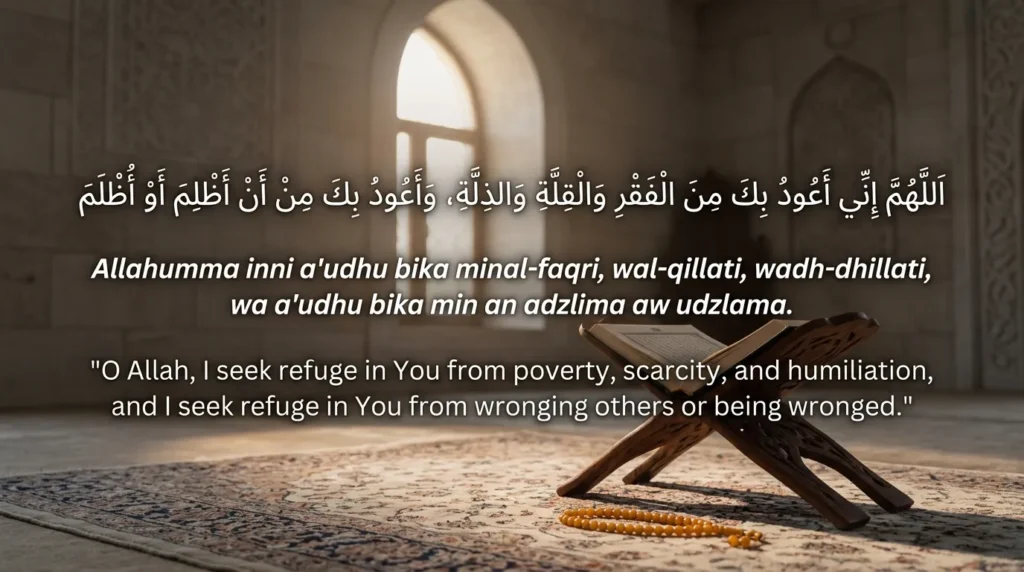
اللَّهُمَّ إِنِّي أَعُوذُ بِكَ مِنَ الْفَقْرِ وَالْقِلَّةِ وَالذِّلَّةِ، وَأَعُوذُ بِكَ مِنْ أَنْ أَظْلِمَ أَوْ أُظْلَمَ
Transliteration
Allahumma inni a‘udhu bika minal-faqri wal-qillati wadh-dhillati, wa a‘udhu bika min an adhlima aw udhlam.
Meaning
O Allah, I seek refuge in You from poverty, scarcity, and humiliation, and I seek refuge in You from wronging others or being wronged.
This dua is deeply balanced. It does not only ask Allah to protect you from being oppressed. It also asks Allah to protect you from becoming the oppressor.
That is a very important part of Islamic character. Sometimes pain can make a person harsh. Anger can make someone cross limits. This dua protects both sides: your rights and your heart.
It is a beautiful dua to recite when you are involved in conflict, legal issues, family disputes, workplace problems, or any situation where injustice is possible.
2LearnIslam includes this dua among supplications related to stress, disgrace, and injustice, with references to Abu Dawud and Ibn Majah. (2learnislam.com)
How to Make Dua When Facing Enemies or Oppression
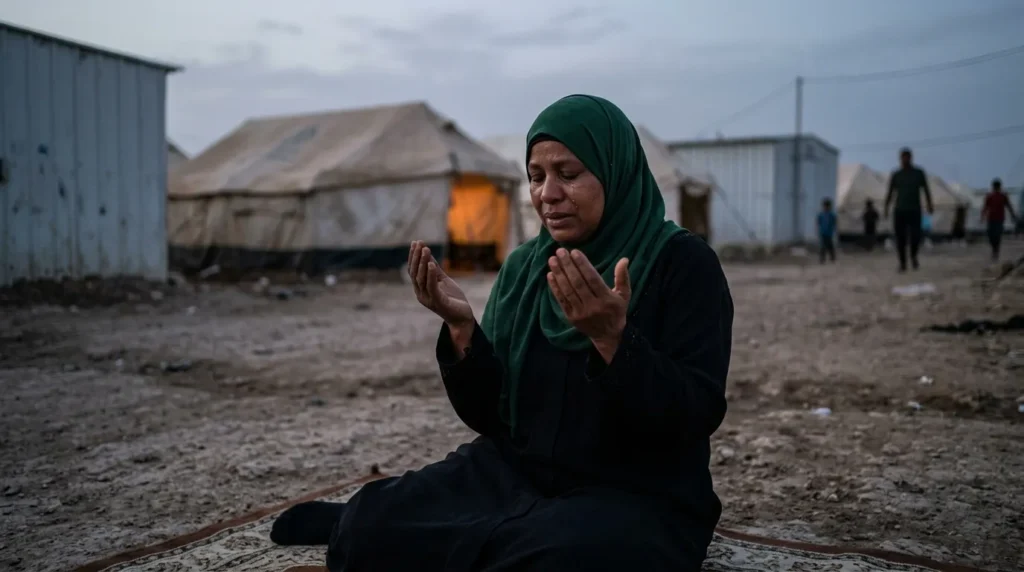
When you are hurt, dua may come out with tears, anger, fear, or exhaustion. Allah already knows what is in your heart before you say anything.
Still, it is good to make dua with adab.
Begin by praising Allah. Send blessings upon the Prophet ﷺ. Admit your weakness before Allah. Ask for protection, justice, truth, relief, and a safe way out. If someone has harmed you, ask Allah to stop their harm and return your rights in the best way.
A balanced dua could be:
O Allah, protect me from the evil of those who wish to harm me. Remove oppression from my life, expose the truth, return my rights, and guide my heart to patience and wisdom.
This kind of dua keeps your heart connected to Allah without letting hatred control you.
Practical Steps Alongside Dua
Dua does not mean doing nothing.
If someone is threatening you, abusing you, blackmailing you, stealing your rights, or putting you in danger, take lawful action. Speak to trusted family members, community elders, legal authorities, workplace management, school administration, or professional support where needed.
Islam teaches tawakkul, but tawakkul does not mean ignoring the means. Tie your camel, then trust Allah.
So make dua, but also protect yourself wisely.
Common Mistakes to Avoid
One common mistake is looking only for duas to “destroy enemies.” That is not always the best mindset. A believer should ask Allah for protection, justice, guidance, truth, and removal of harm.
Allah knows whether your enemy needs to be guided, stopped, exposed, weakened, removed, or kept away from you.
Another mistake is believing every viral dua post online without checking sources. Some posts mention fixed numbers, guaranteed results, or dramatic claims without clear evidence. Be careful with such claims.
This article focuses mainly on Qur’anic duas and widely cited protection duas from hadith-based collections. Some sites, such as Duas.org, also include broader devotional supplications and practices, so readers should treat source strength with care and ask a reliable scholar when unsure. (duas.org)
Simple Daily Routine for Protection
If you want a simple routine, do not make it complicated. The best routine is the one you can continue.
In the morning, recite:
Bismillahilladhi la yadurru… three times.
Ayat al-Kursi.
Rabbi najjinee minal-qawmidh-dhalimeen if you are facing oppression.
When leaving home, recite:
Bismillahi tawakkaltu ‘alallahi wa la hawla wa la quwwata illa billah.
When you fear someone’s harm, recite:
Allahumma inna naj‘aluka fi nuhoorihim wa na‘udhu bika min shuroorihim.
At night, recite Ayat al-Kursi before sleeping and ask Allah to protect your heart, home, family, honor, work, and future.
Consistency is more powerful than reading many duas once and forgetting them later.
FAQs About Dua for Protection from Enemies and Oppression
What is the best dua for protection from enemies?
One of the most direct duas for protection from enemies is: Allahumma inna naj‘aluka fi nuhoorihim wa na‘udhu bika min shuroorihim, meaning, “O Allah, we place You before them, and we seek refuge in You from their evil.” (myislam.org)
What dua should I read when I am oppressed?
You can recite Annee maghloobun fantasir, meaning, “Indeed, I am overpowered, so help me.” You can also recite Rabbi najjinee minal-qawmidh-dhalimeen, meaning, “My Lord, save me from the wrongdoing people.” (duas.org)
Which dua protects from harm morning and evening?
The dua Bismillahilladhi la yadurru ma‘a ismihi shay’un fil-ardi wa la fis-sama’i wa Huwas-Samee‘ul-‘Aleem is commonly recited three times in the morning and evening for protection from harm. (myislam.org)
Is Ayat al-Kursi good for protection?
Yes. Ayat al-Kursi is widely recited for protection because it reminds the believer of Allah’s complete power, knowledge, and authority. It is commonly recited before sleeping, after prayers, and during times of fear. (myislam.org)
Can I make dua against an oppressor?
Yes, an oppressed person can ask Allah for justice and protection. However, it is better to ask Allah to stop the harm, return your rights, expose the truth, and deal with the oppressor in the way He knows best.
Can I recite these duas in English?
Yes, you can ask Allah in any language. It is also beneficial to learn Qur’anic and Sunnah duas in Arabic with their meanings so you understand what you are saying.
What should I do if someone is threatening me?
Make dua, but also take practical lawful steps. Contact trusted people, legal support, workplace or school administration, or local authorities if your safety is at risk.
Final Thoughts
When enemies, oppression, or injustice disturb your peace, remember that Allah sees everything. He sees what people say openly and what they hide in their hearts. No oppressor is beyond His control, and no sincere dua is wasted.
Read these duas with trust, patience, and consistency. Ask Allah to protect you, remove harm, expose the truth, return your rights, and guide your heart through the difficulty.
The strongest protection is not only words on the tongue. It is a heart that depends on Allah while taking wise and lawful action.
About the Author
Prof. Irfan
Prof. Irfan writes Islamic guidance content in simple, practical language for everyday readers. His work focuses on helping Muslims understand duas, daily worship, Islamic manners, protection supplications, and spiritual reminders in a clear and balanced way.
His goal is to make beneficial Islamic knowledge easier to read, understand, and apply in daily life while encouraging sincerity, patience, and trust in Allah.