Short Durood Shareef in English: Arabic, Transliteration, Translation & Benefits
The Beauty of Sending Durood Upon Prophet Muhammad ﷺ
Durood Shareef, also known as Salawat, is one of the most beautiful acts of remembrance in Islam. When we send Durood upon Prophet Muhammad ﷺ, we are obeying the command of Allah, showing love and respect for the Messenger of Allah ﷺ, and filling our tongues with a noble form of worship.
Allah commands believers in the Qur’an to send blessings and peace upon the Prophet ﷺ. Surah Al-Ahzab says that Allah and His angels send blessings upon the Prophet ﷺ, and then commands the believers to invoke blessings and peace upon him. (Quran.com)
Durood Shareef is short, easy to recite, powerful in meaning, and deeply connected to the love of the Prophet ﷺ. It can be recited after salah, during dua, on Friday, when hearing or writing the blessed name of Prophet Muhammad ﷺ, and throughout the day as a daily spiritual habit.

What Is Short Durood Shareef?
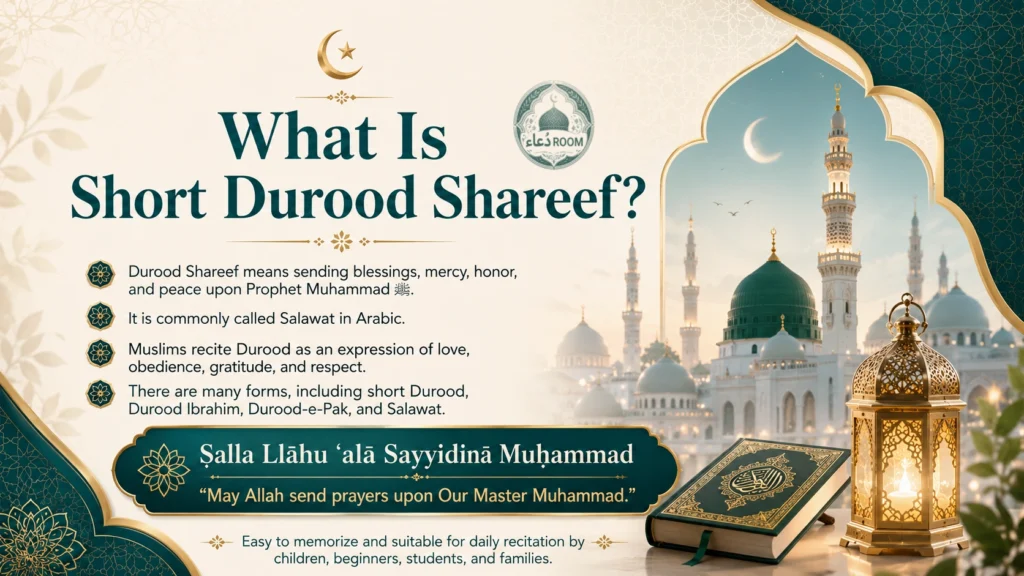
Durood Shareef means sending blessings, mercy, honor, and peace upon Prophet Muhammad ﷺ. It is commonly called Salawat in Arabic. Muslims recite Durood as an expression of love, obedience, gratitude, and respect for the final Messenger of Allah ﷺ.
Durood Shareef is not limited to one wording. There are many authentic and commonly recited forms, including short Durood, Durood Ibrahim, Durood-e-Pak, Salawat, and other beautiful formulas of sending blessings upon the Prophet ﷺ.
A short form mentioned by Salawat.com is:
Ṣalla Llāhu ʿalā Sayyidinā Muḥammad
May Allah send prayers upon Our Master Muhammad. (Salawat.com)
This simple Durood is easy to memorize and can be recited frequently by children, beginners, students, workers, and anyone who wants to increase remembrance of Allah and love for the Prophet ﷺ.
Short Durood Shareef in Arabic, Transliteration, and English Translation
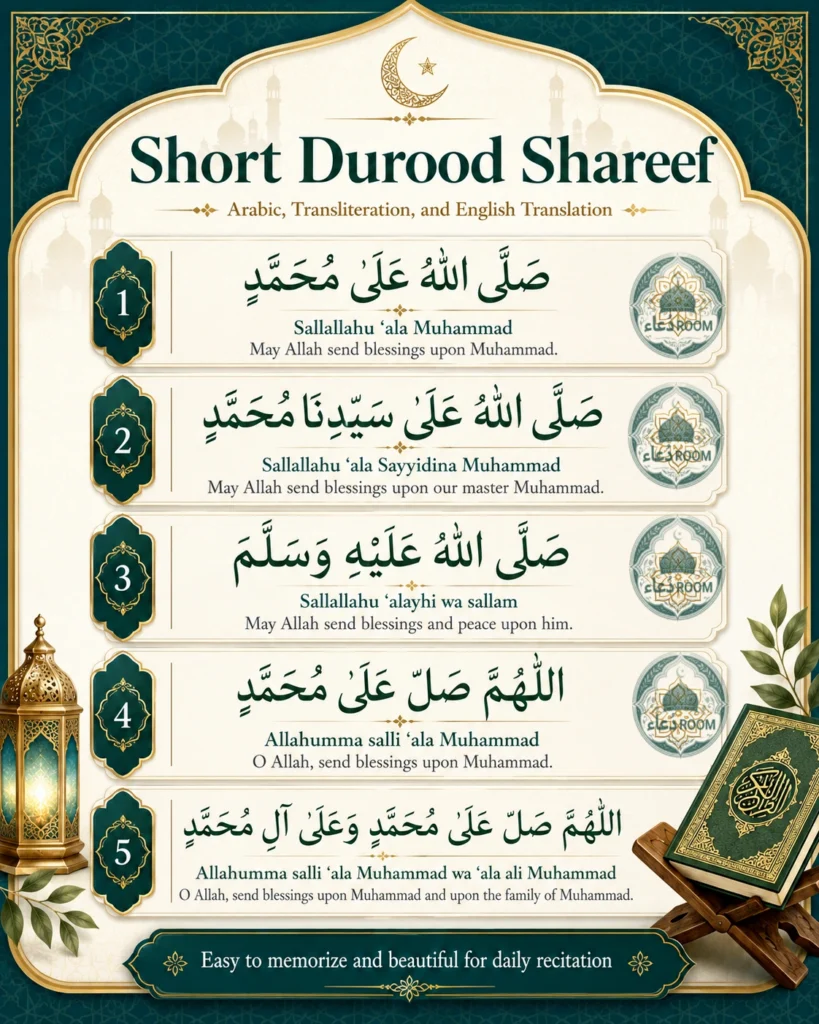
1. Very Short Durood Shareef
Arabic
صَلَّى اللّٰهُ عَلَىٰ مُحَمَّدٍ
Transliteration
Sallallahu ‘ala Muhammad
English Translation
May Allah send blessings upon Muhammad.
This is one of the shortest forms of Durood. It is easy to recite often and suitable for daily dhikr.
2. Short Durood With Respectful Wording
Arabic
صَلَّى اللّٰهُ عَلَىٰ سَيِّدِنَا مُحَمَّدٍ
Transliteration
Sallallahu ‘ala Sayyidina Muhammad
English Translation
May Allah send blessings upon our Master Muhammad.
This form includes the word Sayyidina, meaning our Master, which expresses love and respect for Prophet Muhammad ﷺ.
3. Short Durood With Peace
Arabic
صَلَّى اللّٰهُ عَلَيْهِ وَسَلَّمَ
Transliteration
Sallallahu ‘alayhi wa sallam
English Translation
May Allah send blessings and peace upon him.
This is often said or written after mentioning the name of Prophet Muhammad ﷺ.
4. Short Durood Shareef for Daily Recitation
Arabic
اللّٰهُمَّ صَلِّ عَلَىٰ مُحَمَّدٍ
Transliteration
Allahumma salli ‘ala Muhammad
English Translation
O Allah, send blessings upon Muhammad.
This is a simple and powerful Durood that begins with direct supplication to Allah.
5. Short Durood With Family of the Prophet ﷺ
Arabic
اللّٰهُمَّ صَلِّ عَلَىٰ مُحَمَّدٍ وَعَلَىٰ آلِ مُحَمَّدٍ
Transliteration
Allahumma salli ‘ala Muhammad wa ‘ala aali Muhammad
English Translation
O Allah, send blessings upon Muhammad and upon the family of Muhammad.
This form is more complete because it includes the family of the Prophet ﷺ.
Durood Ibrahim in Arabic, Transliteration, and English Translation
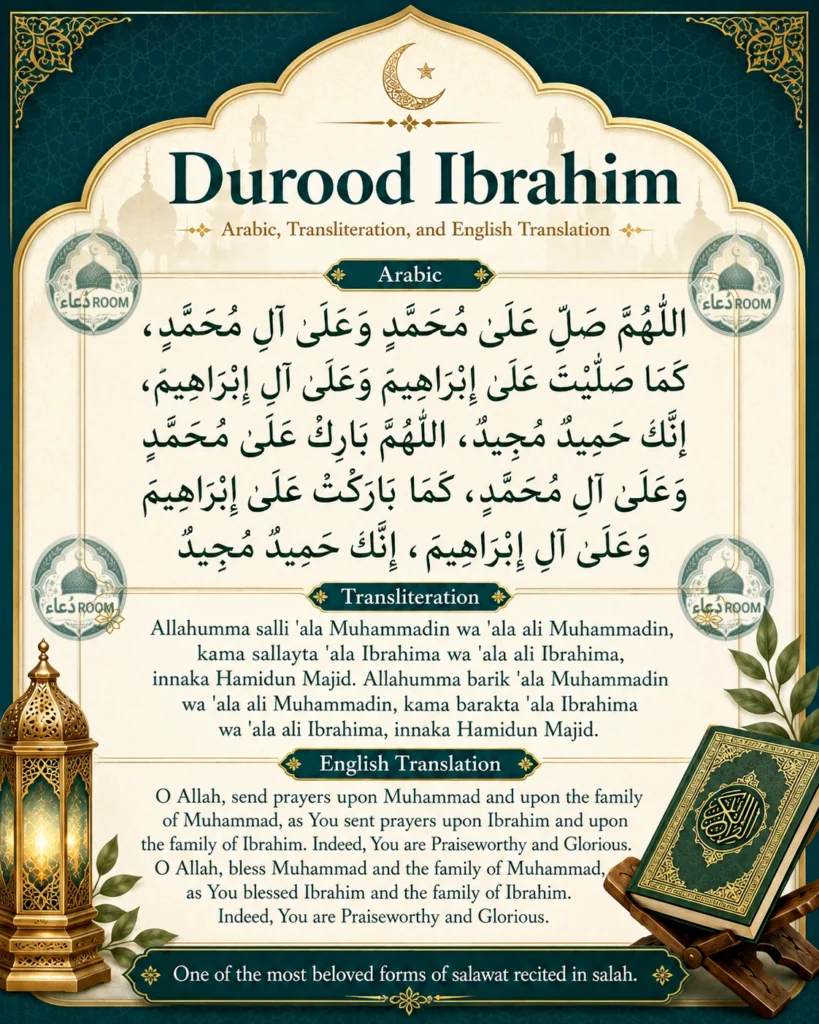
Durood Ibrahim is among the most well-known forms of Durood. It is recited in salah during tashahhud and is one of the most widely memorized forms of Salawat.
Arabic
اللّٰهُمَّ صَلِّ عَلَىٰ مُحَمَّدٍ وَعَلَىٰ آلِ مُحَمَّدٍ، كَمَا صَلَّيْتَ عَلَىٰ إِبْرَاهِيمَ وَعَلَىٰ آلِ إِبْرَاهِيمَ، إِنَّكَ حَمِيدٌ مَجِيدٌ، اللّٰهُمَّ بَارِكْ عَلَىٰ مُحَمَّدٍ وَعَلَىٰ آلِ مُحَمَّدٍ، كَمَا بَارَكْتَ عَلَىٰ إِبْرَاهِيمَ وَعَلَىٰ آلِ إِبْرَاهِيمَ، إِنَّكَ حَمِيدٌ مَجِيدٌ
Transliteration
Allahumma salli ‘ala Muhammad wa ‘ala aali Muhammad, kama sallayta ‘ala Ibrahima wa ‘ala aali Ibrahima, innaka Hamidum Majid. Allahumma barik ‘ala Muhammad wa ‘ala aali Muhammad, kama barakta ‘ala Ibrahima wa ‘ala aali Ibrahima, innaka Hamidum Majid.
English Translation
O Allah, send Your blessings upon Muhammad and upon the family of Muhammad, as You sent blessings upon Ibrahim and upon the family of Ibrahim. Indeed, You are Praiseworthy and Glorious. O Allah, bless Muhammad and the family of Muhammad, as You blessed Ibrahim and the family of Ibrahim. Indeed, You are Praiseworthy and Glorious.
Several hadith narrations mention the Prophet ﷺ teaching companions how to send blessings upon him, including wording that asks Allah to bless Muhammad ﷺ and the family of Muhammad ﷺ as He blessed Ibrahim عليه السلام and the family of Ibrahim عليه السلام. (My Islam)
Why Do We Recite Durood Shareef?
We recite Durood Shareef because Allah commanded believers to send blessings and peace upon Prophet Muhammad ﷺ. This makes Durood not merely a cultural phrase, but an act of worship rooted in the Qur’an. (Quran.com)
We also recite Durood because the Prophet ﷺ is the final Messenger, the mercy to mankind, the one through whom Allah delivered the Qur’an, taught the Sunnah, and guided humanity toward Islam. Sending Durood is a sign of love, gratitude, respect, and connection to his blessed mission.
Durood Shareef reminds us that faith is not only belief in the heart. It is also love, obedience, remembrance, and honor for the Messenger of Allah ﷺ.
Benefits of Reciting Durood Shareef

1. We Obey the Command of Allah
The greatest benefit of Durood Shareef is that we obey Allah. In Surah Al-Ahzab, Allah commands believers to send blessings and peace upon the Prophet ﷺ. (Quran.com)
When we recite Durood, we are not only saying beautiful words. We are responding to a divine command.
2. We Increase Love for Prophet Muhammad ﷺ
Frequent Durood softens the heart and increases love for the Prophet ﷺ. The more we send blessings upon him, the more we remember his mercy, sacrifice, patience, worship, character, and concern for the Ummah.
A heart that remembers the Prophet ﷺ often becomes more eager to follow his Sunnah.
3. We Add Barakah to Our Day
Durood Shareef brings spiritual light into daily life. It can be recited while walking, driving, waiting, working, studying, or sitting quietly. It is short, easy, and powerful.
When our tongues are busy with Durood, our time becomes more blessed.
4. We Improve Our Dua
Many scholars recommend praising Allah and sending Durood upon the Prophet ﷺ when making dua. This gives our supplication better etiquette and reminds us to approach Allah with humility, praise, and love for His Messenger ﷺ.
A dua that begins and ends with praise and Durood feels more complete and spiritually beautiful.
5. We Strengthen Our Islamic Identity
Reciting Durood reminds us who we are. We are followers of Prophet Muhammad ﷺ. Our path is the path of Qur’an, Sunnah, mercy, modesty, truth, patience, worship, and good character.
Durood is not only a phrase; it is a reminder of our connection to the Prophet ﷺ and his teachings.
Best Times to Recite Durood Shareef

Durood Shareef can be recited at any time, but certain moments are especially suitable.
After Salah
After completing obligatory or voluntary prayers, we can include Durood in our dhikr and dua. This keeps the heart connected to Allah and His Messenger ﷺ after worship.
During Dua
Before making personal duas, we can praise Allah and send Durood upon the Prophet ﷺ. This gives beauty and adab to our supplication.
On Friday
Friday is a blessed day in Islam, and Muslims commonly increase Durood on this day. It is a beautiful weekly habit to send abundant blessings upon the Prophet ﷺ.
When Hearing or Writing the Prophet’s Name ﷺ
Whenever we hear, say, read, or write the name of Prophet Muhammad ﷺ, we should send blessings and peace upon him.
In the Morning and Evening
Adding short Durood Shareef to morning and evening dhikr helps us begin and end the day with love for Allah’s Messenger ﷺ.
During Sadness and Anxiety
When the heart feels heavy, Durood can bring comfort. It shifts the tongue away from complaint and toward remembrance.
Short Durood Shareef for WhatsApp Status
These short Durood lines are suitable for WhatsApp status, Instagram captions, Facebook posts, and Islamic reminders.
- Sallallahu ‘ala Muhammad ﷺ
- Allahumma salli ‘ala Muhammad ﷺ
- Peace and blessings upon Prophet Muhammad ﷺ
- Send Durood today; revive your heart.
- The tongue that remembers the Prophet ﷺ is never empty of beauty.
- Make Durood your daily habit.
- Love the Prophet ﷺ, follow his Sunnah, send Durood upon him.
- A day with Durood is a day with barakah.
- Allahumma salli wa sallim ‘ala Nabiyyina Muhammad ﷺ
- Fill your moments with Salawat.
Beautiful Durood Shareef Quotes in English
- Durood is a sign of love for the Prophet ﷺ.
- The heart that sends Salawat often stays connected to mercy.
- When we send Durood, we remember the Messenger who cared deeply for his Ummah.
- Durood beautifies the tongue and softens the heart.
- A believer’s love for the Prophet ﷺ should appear in words, actions, and character.
- Sending blessings upon the Prophet ﷺ is a light for the soul.
- Durood is short on the tongue but heavy in spiritual meaning.
- The more we remember the Prophet ﷺ, the more we should follow his Sunnah.
- Durood is love expressed through remembrance.
- The best love is the love that leads to obedience.
Durood Shareef for Beginners
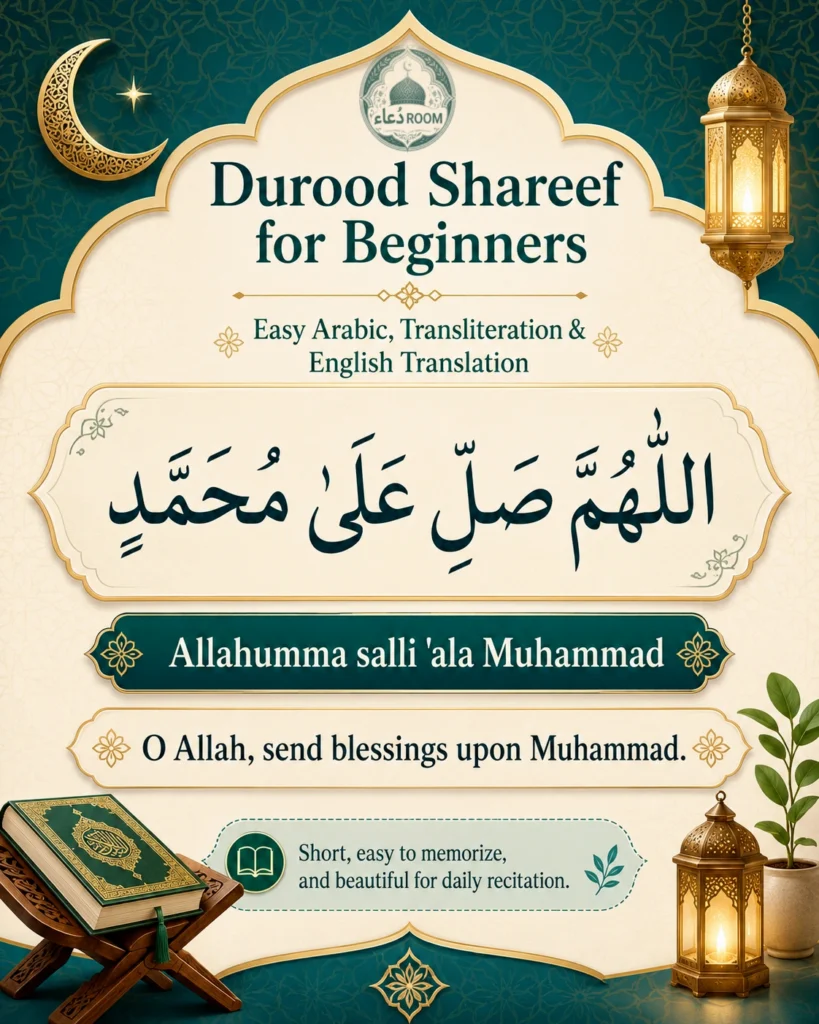
For beginners, the easiest Durood to memorize is:
Arabic
اللّٰهُمَّ صَلِّ عَلَىٰ مُحَمَّدٍ
Transliteration
Allahumma salli ‘ala Muhammad
Meaning
O Allah, send blessings upon Muhammad.
This short Durood can be recited 10 times, 100 times, or as much as possible throughout the day. The goal is not only counting words. The goal is sincerity, love, and consistency.
Durood Shareef for Children
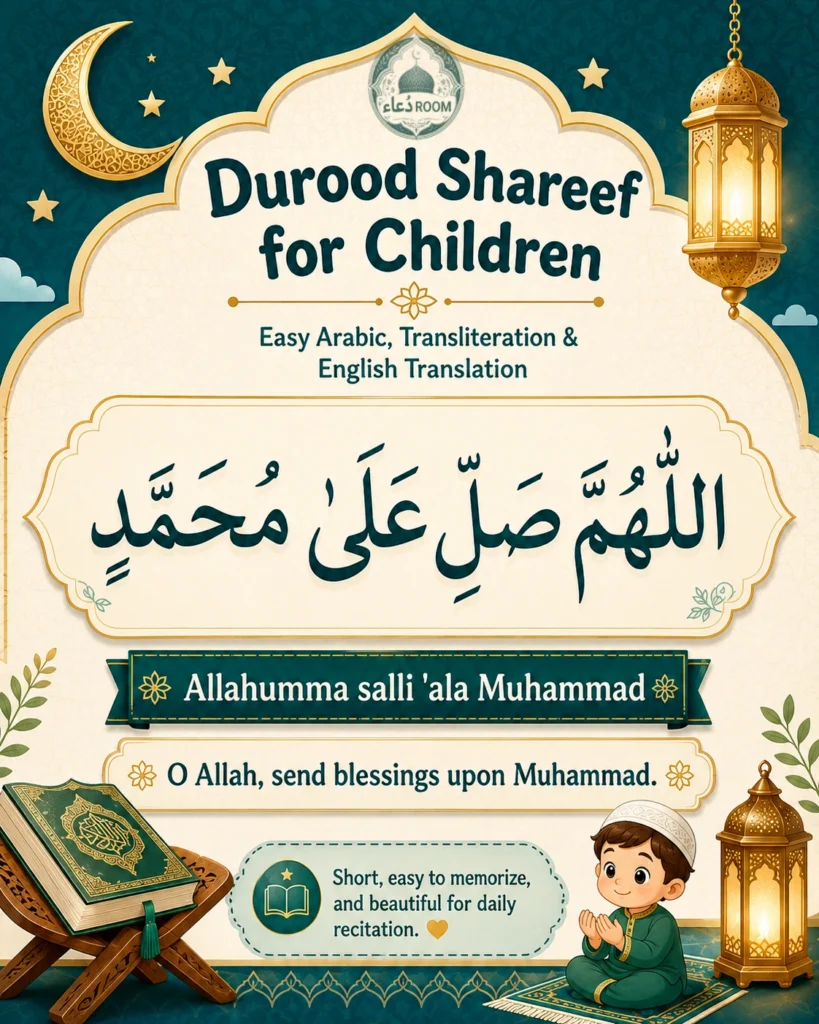
Children can begin with the shortest form:
Sallallahu ‘ala Muhammad ﷺ
Meaning:
May Allah send blessings upon Muhammad ﷺ.
Parents and teachers can help children learn Durood by reciting it after salah, before sleep, on Fridays, and whenever the Prophet’s name ﷺ is mentioned.
Teaching children Durood helps them develop love for Prophet Muhammad ﷺ from an early age.
Difference Between Durood, Salawat, and Salam
Durood
Durood is a commonly used word in Urdu, Persian, and South Asian Muslim communities for sending blessings upon Prophet Muhammad ﷺ.
Salawat
Salawat is the Arabic term commonly used for sending blessings upon the Prophet ﷺ. Salawat.com describes short Salawat as formulas used to send prayers upon the Prophet ﷺ. (Salawat.com)
Salam
Salam means sending peace. In the Qur’anic command, believers are told to invoke blessings and also salute the Prophet ﷺ with peace. (Quran.com)
Together, Durood and Salam express love, honor, blessings, and peace upon Prophet Muhammad ﷺ.
How to Build a Daily Durood Habit

Start Small
Begin with 10 times after each salah. This creates a simple daily routine without difficulty.
Use Empty Moments
Recite Durood while walking, waiting, traveling, or sitting quietly.
Connect It With Friday
Make Friday a special day for increasing Durood.
Recite With Meaning
Do not rush the words only for numbers. Think about the honor of the Prophet ﷺ and the mercy Allah gave to the Ummah through him.
Follow Durood With Sunnah
The strongest sign of love is obedience. We should recite Durood and also try to follow the Prophet’s ﷺ teachings in salah, manners, honesty, mercy, modesty, family life, business, and worship.
Common Mistakes to Avoid When Reciting Durood

Reciting Without Respect
Durood should be recited with love, respect, and presence of heart.
Treating It Only as a Number
Counting is useful, but sincerity is greater. A small number with sincerity is better than a large number recited carelessly.
Ignoring the Sunnah
Sending Durood is beautiful, but it should inspire us to follow the Prophet ﷺ in real life.
Using Incorrect Meanings
We should learn the meaning of the Durood we recite so our hearts connect with the words.
Arguing Over Valid Wordings
There are multiple accepted forms of Salawat. We should choose sound and respectful wording and avoid unnecessary arguments.
Daily Durood Shareef Routine
Start the Day
Recite Short Durood After Fajr
Remember the Prophet ﷺ During Work or Study
Send Durood During Dua
Recite Durood After Salah
Increase Durood on Friday
End the Day With Salawat
Stronger Love and Connection With the Prophet ﷺ
Durood Shareef Flowchart
Frequently Asked Questions About Short Durood Shareef
What is the shortest Durood Shareef?
One very short Durood is:
Sallallahu ‘ala Muhammad ﷺ
Meaning:
May Allah send blessings upon Muhammad ﷺ.
Another short form is:
Allahumma salli ‘ala Muhammad
Meaning:
O Allah, send blessings upon Muhammad.
What is Durood Shareef in English?
Durood Shareef in English means sending blessings and peace upon Prophet Muhammad ﷺ. For example:
O Allah, send blessings upon Muhammad and upon the family of Muhammad.
What is the best Durood Shareef?
Durood Ibrahim is one of the most well-known and complete forms because it is recited in salah and includes blessings upon Prophet Muhammad ﷺ and his family.
Can we recite short Durood daily?
Yes, we can recite short Durood daily. It is easy, beneficial, and suitable for all times. A simple daily habit is to recite it after every salah and whenever the Prophet’s name ﷺ is mentioned.
What should we say after the name of Prophet Muhammad ﷺ?
We commonly say:
Sallallahu ‘alayhi wa sallam
Meaning:
May Allah send blessings and peace upon him.
Is Durood the same as Salawat?
Durood and Salawat both refer to sending blessings upon Prophet Muhammad ﷺ. Durood is commonly used in Urdu and South Asian languages, while Salawat is the Arabic term.
Can beginners recite Durood Shareef?
Yes. Beginners can start with:
Allahumma salli ‘ala Muhammad
It is short, easy to memorize, and beautiful in meaning.
Conclusion: Make Durood Shareef a Daily Light in Our Lives
Durood Shareef is a simple but powerful act of worship. It connects our hearts to Prophet Muhammad ﷺ, reminds us of Allah’s command, and fills our day with blessed remembrance.
We should not limit Durood to special occasions only. We should make it part of our daily life: after salah, during dua, on Friday, before sleep, while traveling, and whenever the blessed name of Prophet Muhammad ﷺ is mentioned.
A tongue that sends Durood often is a tongue busy with honor and love. A heart that loves the Prophet ﷺ should also follow his Sunnah, reflect his mercy, and live with the character he taught.
Allahumma salli wa sallim ‘ala Sayyidina Muhammad wa ‘ala aali Sayyidina Muhammad.
Explore DuaRoom
Visit our Islamic categories and useful resources