Duties of Parents and Rights of Children in Islam
The duties of parents and rights of children in Islam are not small family matters. They are part of a complete moral, spiritual, emotional, and social system given by Allah. Islam teaches that children are not personal property, emotional trophies, or future income sources for parents. Children are an amanah, a sacred trust, and parents are accountable before Allah for how they protect, educate, love, guide, and discipline them.
In Islamic teaching, parenting is not only about providing food, clothes, school fees, and shelter. It also includes faith training, good character, Quran learning, salah, emotional security, fair treatment, protection from harm, and preparation for both this world and the Hereafter. Islamic sources repeatedly emphasize that parents must show justice, affection, mercy, and responsibility toward their children. A 2025 article on the same topic summarizes this clearly: the Quran commands parents to uphold children’s rights, while the Prophetic Sunnah reinforces justice and affection as essential parental duties. (Tohed)
When we understand Islamic parenting properly, we stop seeing children as burdens. We begin seeing them as a path to Allah’s pleasure. Every meal we provide, every kind word we speak, every lesson we teach, every prayer we model, and every moment of patient correction can become an act of worship.
Understanding Children as an Amanah From Allah
In Islam, children belong ultimately to Allah. Parents are entrusted with their care for a limited time. This idea changes the whole meaning of parenting. We are not free to raise children according to anger, ego, culture, mood, or social pressure. We must raise them according to the guidance of the Quran, the Sunnah, and the principles of mercy and justice.
An amanah must be protected. If someone gives us a valuable trust, we do not damage it, neglect it, or treat it carelessly. A child’s heart, faith, body, mind, dignity, and future are all part of this trust. Parents must protect children from spiritual harm, physical harm, emotional harm, moral harm, and educational neglect.
This does not mean parents must be perfect. No parent is perfect. But Islam requires sincere effort, self-correction, repentance, and responsibility. When parents make mistakes, they should not hide behind authority. They should correct themselves and improve their treatment of their children — and in those moments of difficulty and self-doubt, the reminder that Allah never said the journey would be easy gives every struggling parent the strength to keep going with sincerity.
The Prophet Muhammad ﷺ showed mercy to children, loved them, carried them, greeted them, shortened prayer when he heard a child crying, and taught his ummah through compassion. Therefore, Islamic parenting is not built on harshness. It is built on rahmah, wisdom, firmness, and sincere concern for the child’s success in both worlds.
The First Right of Children: Protection of Life and Dignity
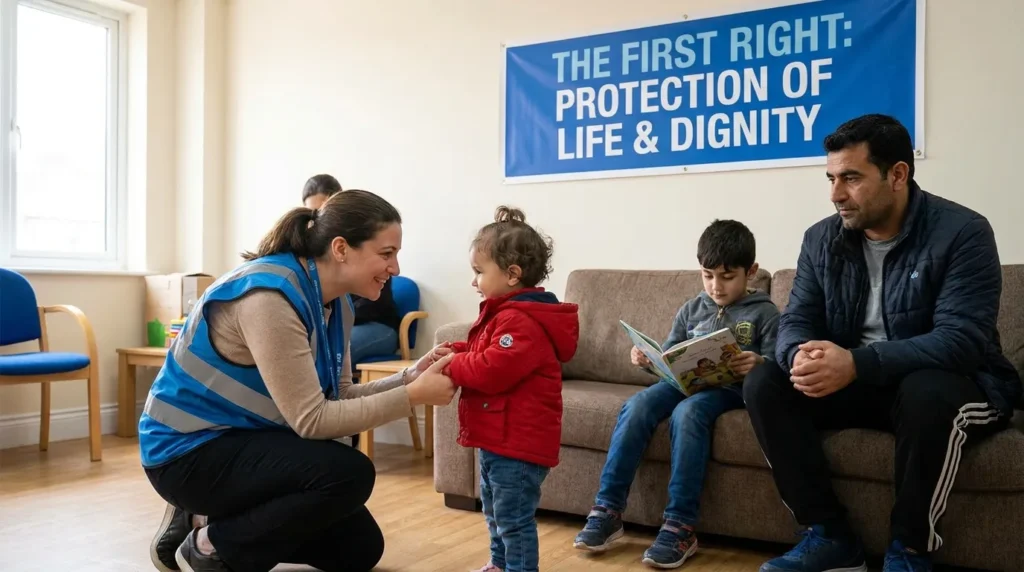
One of the most basic rights of children in Islam is the right to life, safety, and dignity. The Quran strongly condemns harming or killing children out of fear of poverty. Allah says that He provides for them and for their parents. This teaches us that children must never be treated as unwanted burdens or financial mistakes.
The child’s right to protection begins even before birth. Parents must care for the child’s well-being, protect the mother’s health, avoid harmful behavior, and prepare responsibly for the child’s arrival. Islamic discussions on children’s rights often include rights before and after birth, including protection of lineage, life, mind, wealth, and religion. (Al Jumuah Magazine)
After birth, the child has the right to be treated with honor. This includes safe handling, emotional warmth, lawful nourishment, medical care, cleanliness, and protection from abuse. Islam does not allow parents to use their power to humiliate, injure, curse, or emotionally crush a child.
A child’s dignity must be protected in speech as well. Calling children stupid, useless, cursed, ugly, or worthless is not Islamic discipline. Words can become wounds that stay in the heart for years. We should correct behavior without destroying the child’s sense of worth.
The Right to Love, Mercy, and Affection
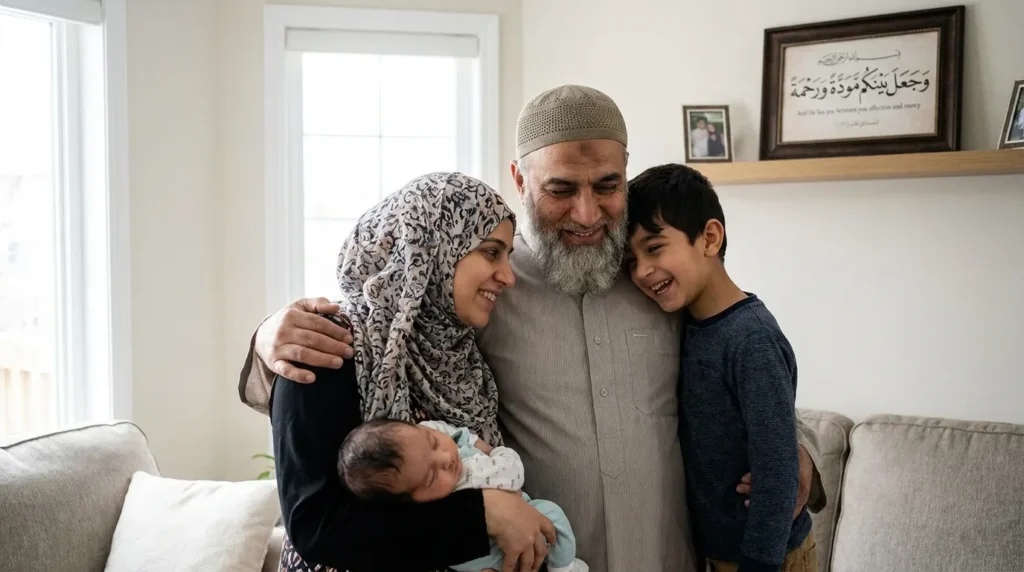
Children need love like plants need sunlight. Without love, they may survive physically but struggle emotionally. Islam recognizes this need clearly. The Prophet ﷺ showed affection to children openly, and his example teaches us that tenderness is not weakness.
Parents should hug their children, smile at them, listen to them, comfort them, and speak to them with warmth. A child who feels loved is more likely to trust guidance. A child who feels rejected may obey outwardly but become distant inwardly.
Love should not be limited to moments of achievement. Children should not feel that they are loved only when they get high marks, memorize a surah, behave perfectly, or make parents proud in front of relatives. They need to know that they are loved even while they are learning, growing, and making mistakes — and understanding what the Quran says about love helps parents see that unconditional love rooted in faith is not a weakness but a prophetic quality that builds trust, security, and lifelong connection between parent and child.
This does not mean spoiling children or accepting bad behavior. Islam teaches balanced parenting. We can love children deeply and still set rules. We can discipline them and still protect their hearts. The strongest parenting combines affection with boundaries.
The Duty to Provide Food, Clothing, Shelter, and Basic Needs
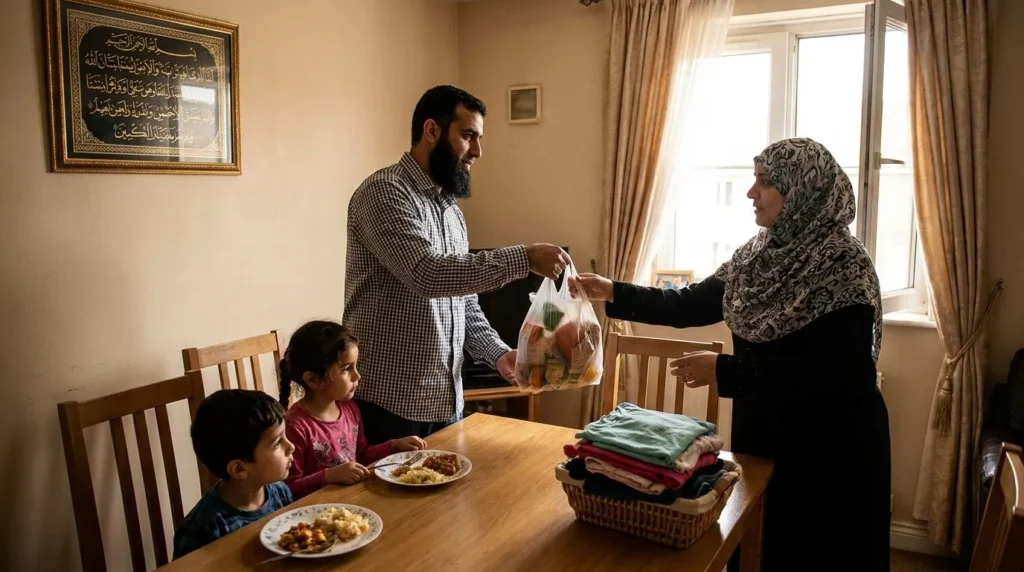
Parents have a duty to provide for their children according to their ability. Children have the right to food, clothing, shelter, healthcare, cleanliness, and essential living needs. Islam does not praise neglect in the name of simplicity or spirituality. A child’s physical needs matter.
The Quran mentions breastfeeding and parental responsibility in Surah Al-Baqarah 2:233, including the father’s duty to provide food and clothing in a fair manner. Islamic resources on children’s rights also highlight that children have automatic rights after birth, including feeding, clothing, healthcare, and care connected with birth. (IslamOnline إسلام أون لاين)
Provision should be halal. Feeding children through unlawful income harms the spiritual environment of the family. Parents should strive to earn through honest work, avoid fraud and oppression, and teach children that halal income is more blessed than easy haram money.
Providing for children also includes emotional provision. A child may live in a beautiful house and still feel abandoned. A parent may buy expensive clothes and still fail to give attention. Islamic parenting requires both material care and heart care.
The Right to a Good Name and Islamic Identity
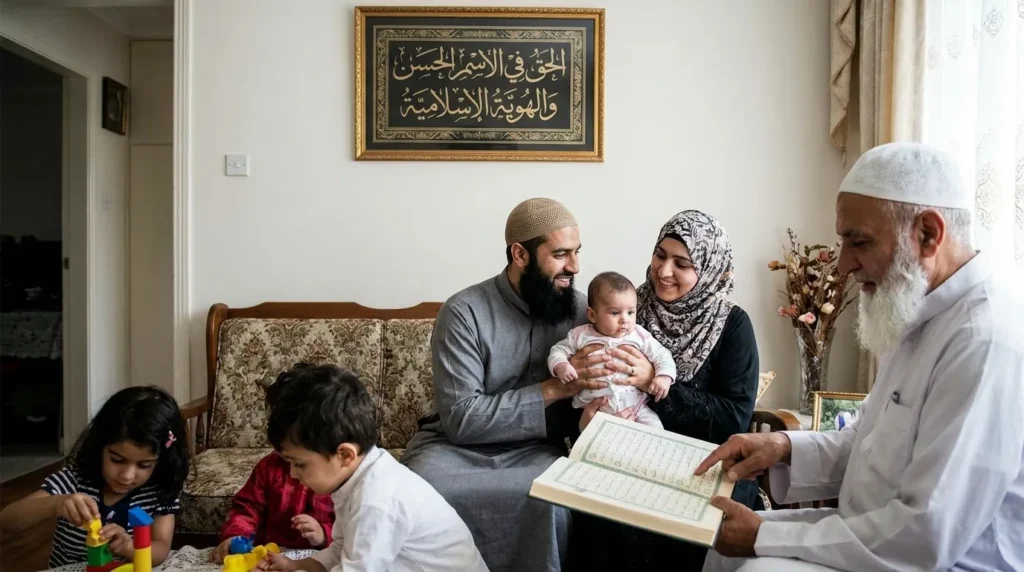
A child has the right to a good name. Names shape identity, and Islam encourages names with good meanings. Parents should avoid names with bad meanings, arrogant associations, or meanings that conflict with Islamic belief.
A good name is more than a label. It becomes part of the child’s self-understanding. When children grow up with names connected to righteous meanings, prophets, noble qualities, or servitude to Allah, they carry a reminder of faith in their daily life.
Along with a good name, children need a healthy Islamic identity. They should grow up knowing that being Muslim is an honor. They should not feel that Islam is only a list of restrictions. They should see Islam as guidance, mercy, beauty, purpose, discipline, and connection with Allah.
Parents can build Islamic identity through stories of the prophets, love for the Prophet Muhammad ﷺ, family salah, Quran recitation, Islamic manners, Ramadan traditions, Eid joy, charity, and daily duas. Identity is built through repeated experiences, not only lectures.
The Duty to Teach Tawheed and Faith
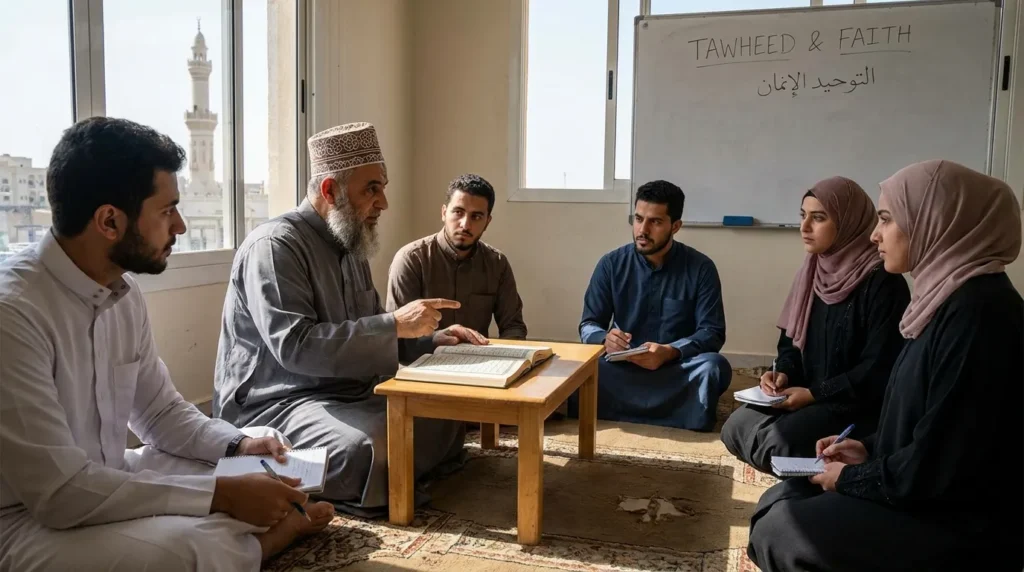
The first and greatest duty of parents is to teach children about Allah. Before children learn long rulings, they should learn tawheed, the oneness of Allah. They should know that Allah created them, provides for them, sees them, hears them, loves good deeds, forgives repentance, and guides those who seek Him.
The Quran gives us the example of Luqman advising his son not to associate partners with Allah. This shows that faith education begins at home. Parents should speak to children about Allah in ways suitable for their age.
For young children, we can say, “Allah gave us food,” “Allah made the sky,” “Allah hears your dua,” and “Allah loves kindness.” For older children, we can explain worship, accountability, destiny, gratitude, and reliance upon Allah more deeply.
Faith should be taught with love and balance. If children hear only fear, punishment, and anger, their understanding of religion may become anxious. They must also hear about Allah’s mercy, forgiveness, generosity, and closeness.
The Duty to Teach Quran
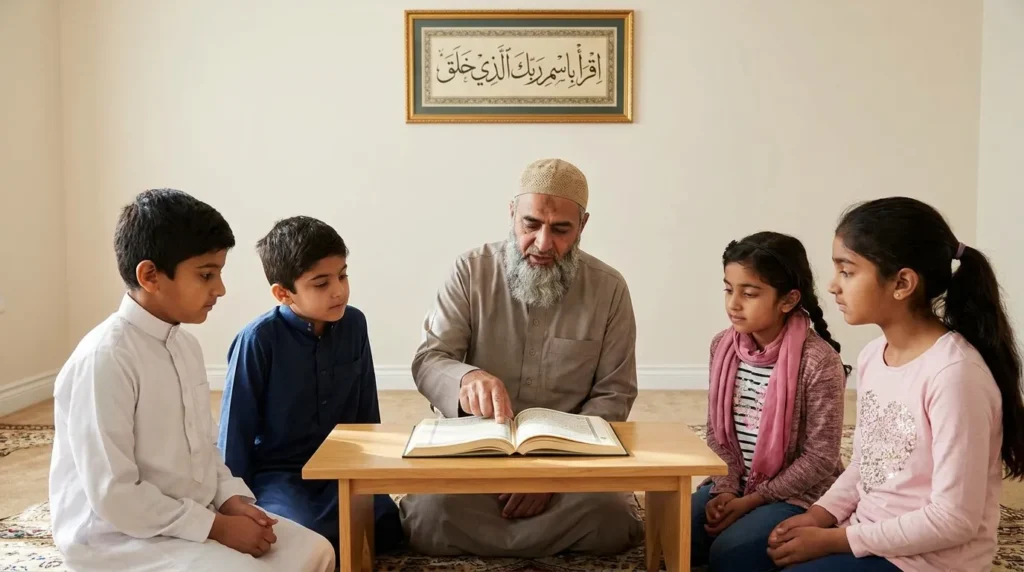
One of the most important duties of parents is to connect children with the Quran. Children have the right to learn the Book of Allah according to their ability. This includes listening, recitation, memorization, meaning, manners, and gradual understanding.
Quran teaching should begin with love. Babies and toddlers can hear Quran recitation. Young children can learn short surahs and Quran stories. Older children can learn Qaida, tajweed, translation, tafsir, and reflection.
The goal is not only that children finish a reading course. The goal is that they develop a relationship with the Quran. They should see it as guidance for life, comfort in sadness, light in confusion, and a source of closeness to Allah.
Parents should avoid turning Quran learning into a battlefield. Shouting, insulting, comparing, and punishing children through Quran lessons can damage their emotional connection with the Book of Allah. Quran time should be disciplined, but also peaceful and encouraging.
The Duty to Teach Salah and Worship
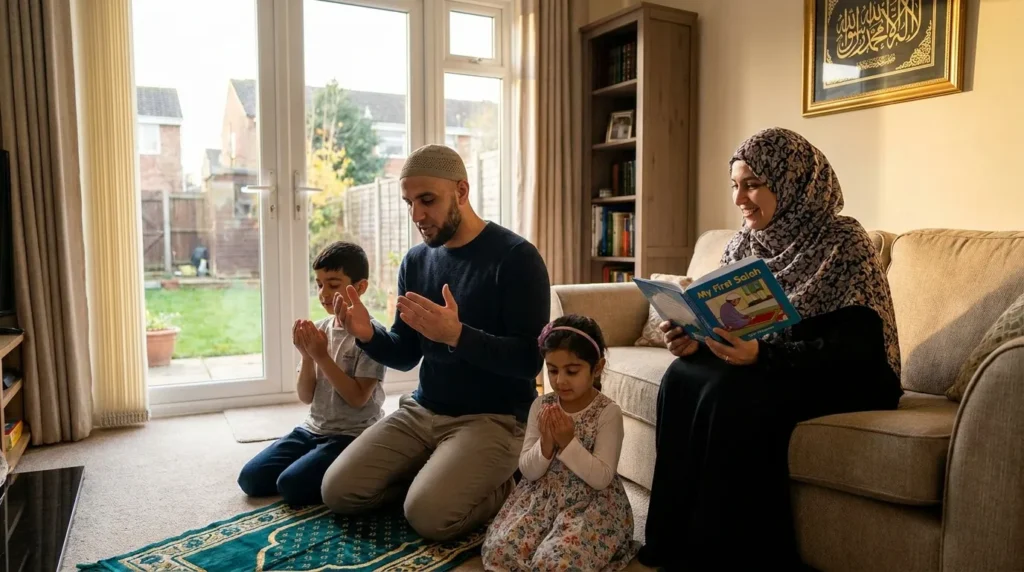
Parents must teach children salah because prayer is the foundation of Muslim life. Children should first see salah being practiced at home. If parents delay prayer, ignore prayer, or treat prayer casually, children absorb that attitude.
Salah training should be gradual. Young children may imitate movements. Around school age, they can learn wudu, prayer names, prayer times, and short surahs. As they grow, they should understand responsibility and consistency.
Allah commands believers to instruct their families to pray and remain steadfast in it. This means parents must not give up after a few reminders. They must continue with patience, dua, encouragement, and good example.
We should present salah as a meeting with Allah, not merely a command shouted across the house. Children should feel that salah brings peace, structure, blessing, and closeness to their Creator.
The Right to Good Upbringing and Manners
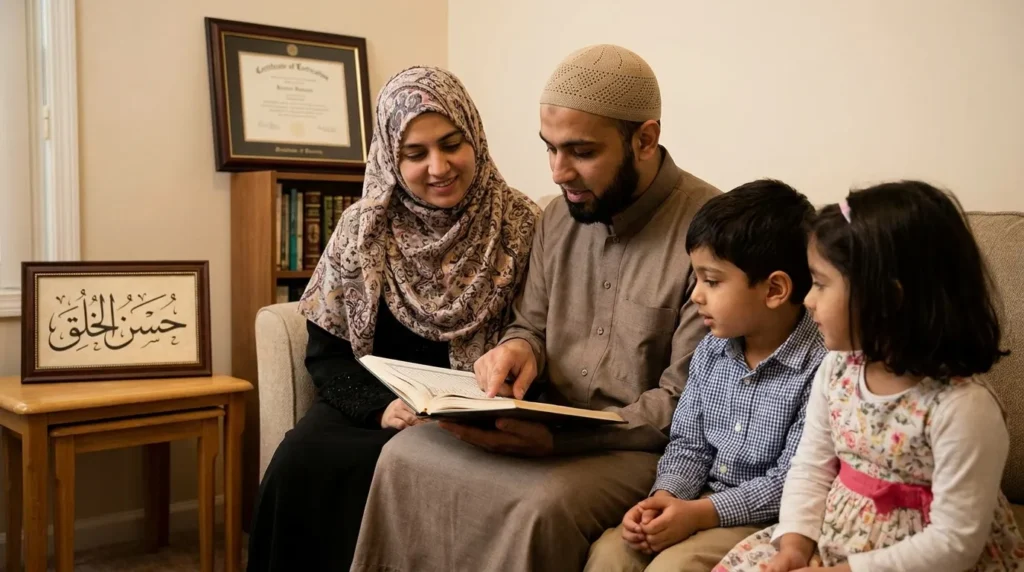
Children have a right to tarbiyah, which means nurturing, training, and developing the whole person. Good upbringing includes manners, speech, cleanliness, honesty, respect, responsibility, and self-control.
Islamic manners begin with simple habits: saying Bismillah, saying Alhamdulillah, greeting with salam, speaking truthfully, respecting elders, showing mercy to younger children, sharing, apologizing, and keeping promises — and for parents looking to build these habits through the words of the Prophet ﷺ, learning Durood Sharif in English is one of the most beautiful daily practices that connects children to prophetic character from a young age.
Parents should teach manners through repetition and example. If we want children to speak politely, we must speak politely. If we want them to avoid lying, they must see honesty in us. If we want them to control anger, we must work on our own anger.
Good upbringing is not achieved through lectures alone. It is built through daily family culture. The dining table, school routine, sibling arguments, shopping trips, guest visits, and bedtime conversations are all opportunities for Islamic training.
The Duty to Educate Children for This World and the Hereafter
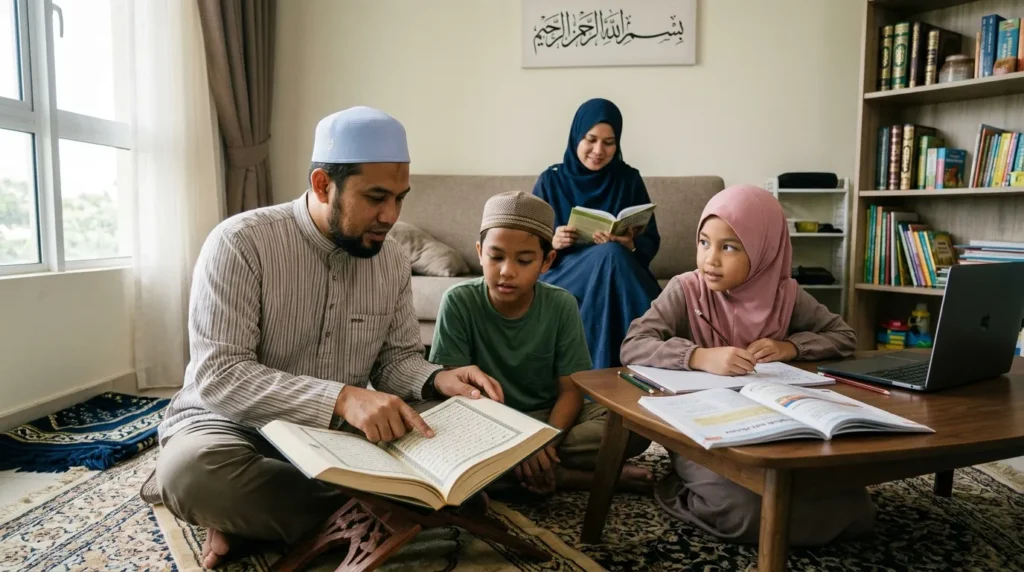
Islam values knowledge. Parents should provide children with both Islamic education and beneficial worldly education. A child should learn religion, but also reading, writing, mathematics, science, communication, life skills, financial responsibility, and critical thinking.
Some parents focus only on school and ignore Islamic education. Others focus only on religious learning and neglect practical worldly preparation. Islam calls for balance. Children should be prepared to worship Allah and live responsibly in the world.
Education should also include moral judgment. Children need to know how to choose good friends, use technology responsibly, avoid harmful content, protect modesty, manage time, and make halal choices.
The Prophet ﷺ encouraged beneficial knowledge, and Islamic civilization historically valued learning. A well-raised Muslim child should be spiritually rooted, intellectually capable, emotionally stable, and socially responsible — and the foundation of that spiritual rootedness begins with understanding the Quranic verses on child upbringing that Allah revealed as a complete roadmap for raising children who are strong in both faith and character.
The Right to Fair Treatment and Justice
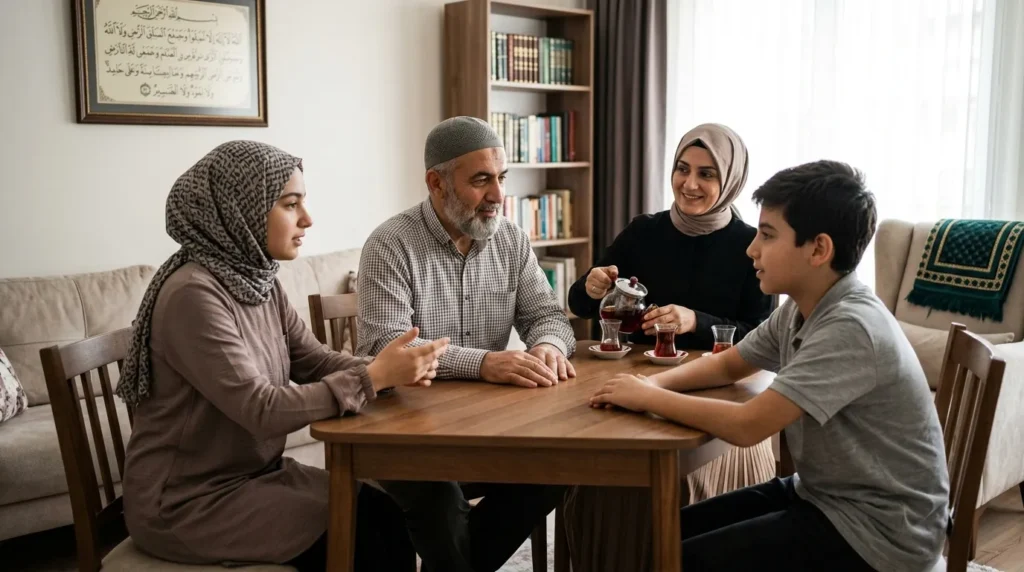
Justice is a major Islamic principle, and it must begin inside the home. Children have the right to be treated fairly. Parents should not show favoritism in love, gifts, attention, praise, discipline, or opportunities.
Favoritism can create jealousy, resentment, and broken sibling relationships. A child who feels constantly ignored or unfairly treated may carry pain into adulthood. Parents must fear Allah in how they distribute affection and resources among children.
Fair treatment does not always mean identical treatment. A sick child may need more care. A younger child may need more supervision. An older child may need more responsibility. But every child should feel equally valued.
Parents should also avoid unfair comparisons. Saying “Why can’t you be like your brother?” or “Your sister is better than you” can damage confidence and love between siblings. Each child has a different nature, pace, and strength.
The Duty to Discipline With Mercy
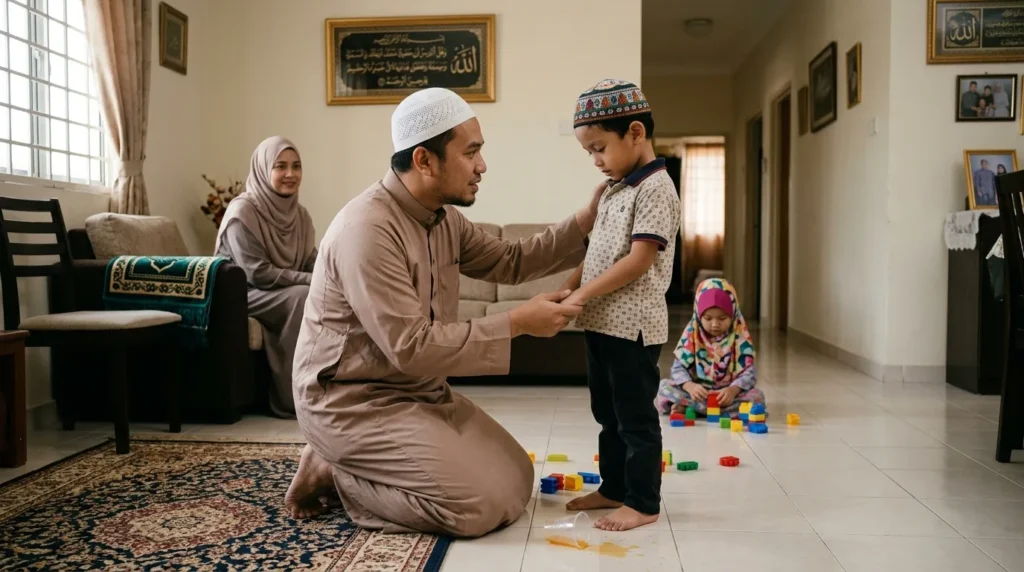
Discipline is necessary, but Islamic discipline must be wise, proportionate, and merciful. The purpose of discipline is guidance, not revenge. Parents should correct children in a way that helps them improve, not in a way that breaks their spirit.
Good discipline begins with clear rules. Children should know what is expected. They should understand consequences before they are punished. Discipline should be consistent, not based on the parent’s mood.
Parents should avoid insults, public humiliation, excessive shouting, threats, curses, and emotional blackmail. These methods may create fear, but they do not create sincere character.
A better method is to explain the mistake, connect it to Islamic values, apply a fair consequence if needed, and then restore love. Children should know that a mistake does not remove them from the parent’s love — and learning how to deal with stubborn children in Islam gives parents the practical Islamic tools to correct difficult behavior while keeping the emotional bond between parent and child strong and secure.
The Right to Emotional Safety
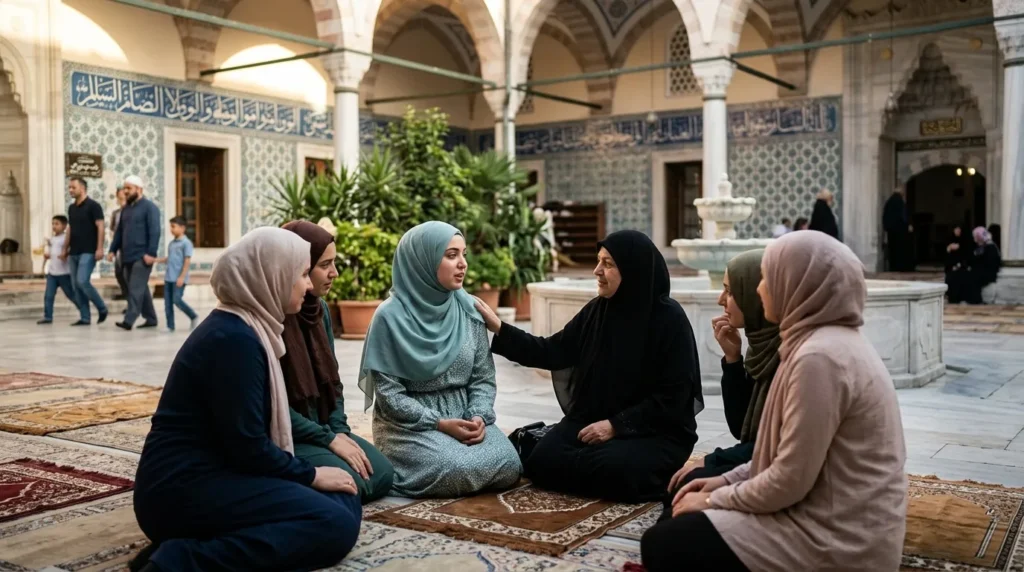
Children have emotional needs. They need to be heard, comforted, reassured, and understood. Islam does not require parents to be cold or emotionally distant. Mercy is part of prophetic character.
Emotional safety means children can speak to parents without constant fear. It means they can admit mistakes, ask questions, express sadness, and seek help. If children fear their parents too much, they may hide problems until those problems become serious.
Parents should listen carefully. Sometimes a child does not need a lecture; they need attention. Sometimes bad behavior is a sign of tiredness, jealousy, fear, or confusion. Wise parents look beneath the surface.
A child who feels emotionally safe is more likely to accept guidance, confess mistakes, and maintain family bonds into adulthood.
The Duty to Protect Children From Harmful Influences
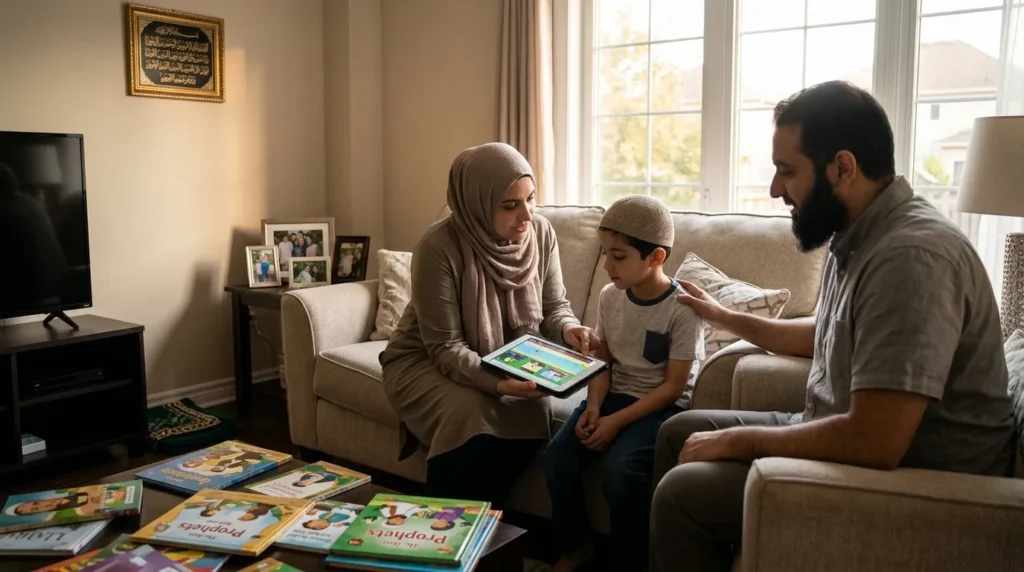
Modern parenting includes protecting children from harmful media, online dangers, bad friendships, addictive games, inappropriate content, bullying, exploitation, and destructive ideologies. This protection is part of Islamic responsibility.
Parents should not hand children unrestricted internet access and then act surprised when they absorb harmful values. Screens can teach children silently for hours. If parents do not guide them, someone else will.
Protection should be balanced. Total isolation is not realistic, but careless freedom is dangerous. Parents should set limits, supervise devices, discuss online behavior, and provide halal alternatives for entertainment and friendship.
Children should also be taught inner protection: taqwa. They should know that Allah sees them even when parents do not. This awareness is stronger than any parental control app.
The Right to Play, Rest, and Childhood
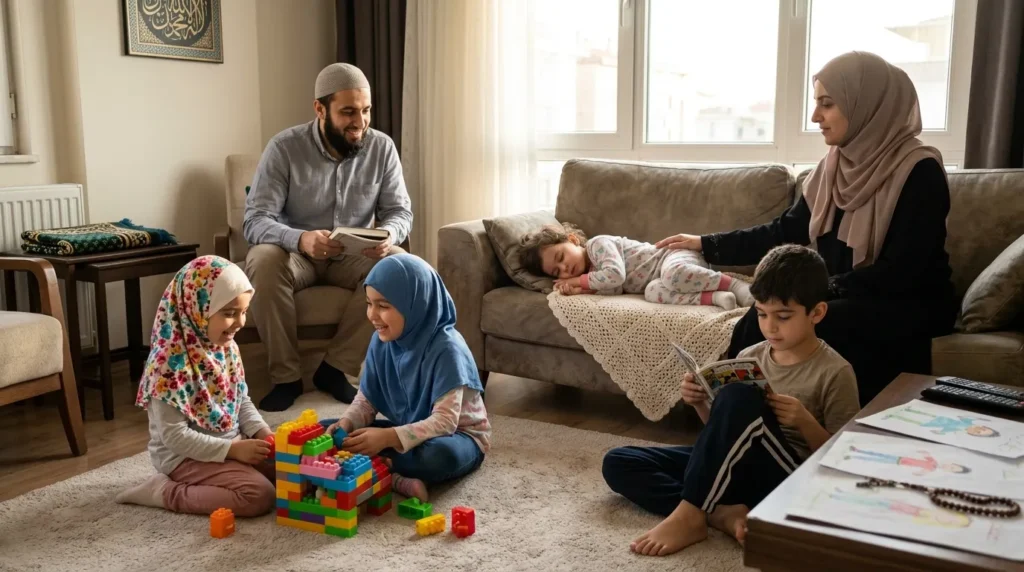
Children are not adults in small bodies. They need play, imagination, movement, laughter, rest, and healthy recreation. Islamic parenting should not turn childhood into constant pressure.
Play helps children learn social skills, creativity, patience, problem-solving, and emotional expression. Parents should allow age-appropriate play and join children sometimes. Playing with children builds love and trust.
Rest is also important. Overloading children with school, tuition, Quran class, chores, and expectations can exhaust them. A tired child may appear disobedient when they are simply overwhelmed.
Islam is balanced. Worship, study, manners, and responsibility matter, but children also need joy. A home with lawful happiness is stronger than a home filled only with commands.
The Duty to Prepare Children for Adulthood
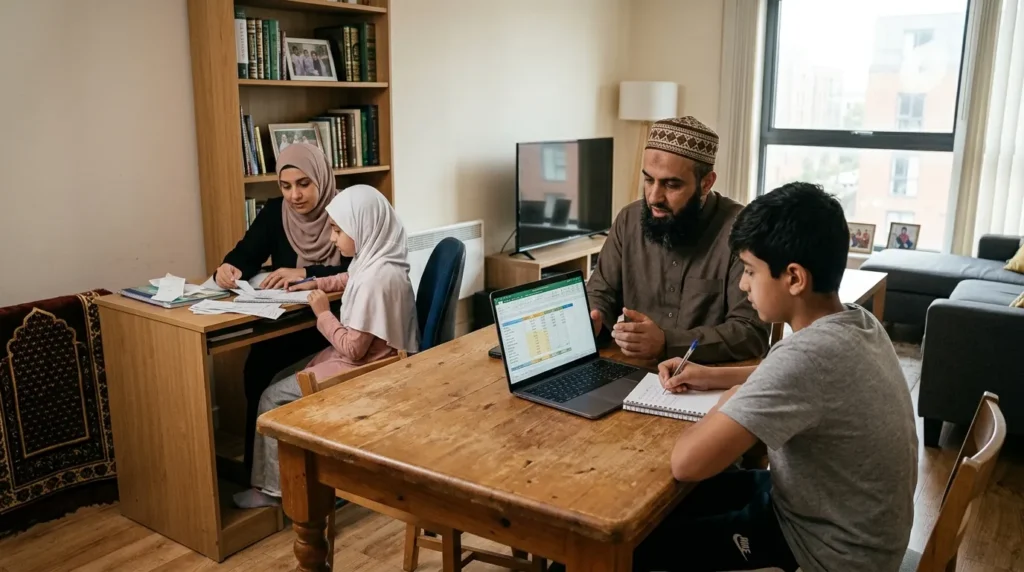
Parents should raise children to become responsible adults, not permanently dependent children. This means teaching life skills gradually. Children should learn cleanliness, time management, money management, communication, cooking basics, helping at home, decision-making, and responsibility.
Older children and teenagers should learn about halal income, modesty, marriage, social boundaries, digital conduct, career planning, and community responsibility. These topics should not be ignored until problems appear — and raising teenagers with a strong Islamic identity becomes significantly easier when the foundation of better husband and wife relationship in Islam is already present at home, because children who grow up watching their parents model respect, honesty, and Islamic values absorb those qualities naturally before they ever need to be taught formally.
Islamic adulthood is not only about earning money. It is about worshipping Allah, fulfilling rights, controlling desires, serving family, respecting others, and living with accountability.
Parents who do everything for their children may think they are showing love, but they may weaken maturity. True love prepares children to stand with faith and responsibility.
The Rights of Parents and Children Are Connected
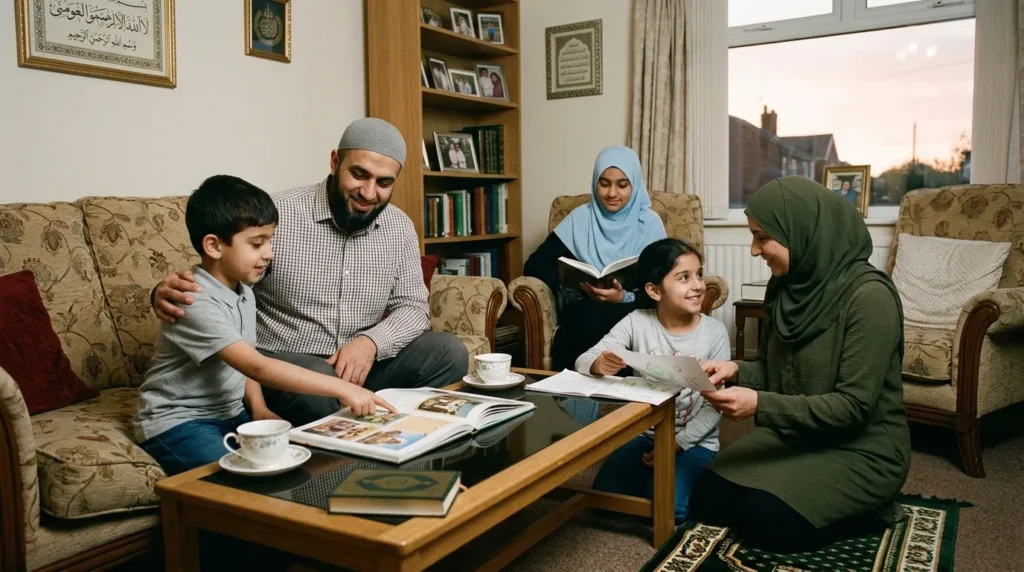
Islam gives rights to both parents and children. Children must respect parents, serve them, speak kindly, and avoid disobedience in lawful matters. At the same time, parents must fulfill children’s rights with mercy and justice.
A healthy Islamic family is not built on one-sided demands. Parents should not speak only about their rights while ignoring their duties. Children should not demand their rights while neglecting respect for parents.
The Quran commands kindness to parents, and Islamic teachings also emphasize parental responsibility toward children. These rights work together to create a balanced family system.
When parents fulfill their duties sincerely, children are more likely to respect them from the heart. When children honor their parents, family life becomes more peaceful and blessed.
Rights of Children and Duties of Parents in Islam
| Rights of Children | Duties of Parents | Practical Example |
|---|---|---|
| Right to Life and Safety | Protect children from harm | Provide a safe home, healthcare, and proper supervision |
| Right to Love | Show affection and care | Hug, praise, listen, and provide emotional support |
| Right to Provision | Provide basic needs | Ensure food, clothing, shelter, and education |
| Right to Faith | Teach Tawheed and Islamic values | Talk about Allah and Islamic teachings daily |
| Right to Quran | Teach Quran recitation and understanding | Create a daily short Quran learning routine |
| Right to Salah | Train children in worship | Pray together and teach wudu step by step |
| Right to Good Manners | Provide good upbringing (Tarbiyah) | Teach honesty, respect, kindness, and gratitude |
| Right to Justice | Treat children fairly | Avoid favoritism and unnecessary comparisons |
| Right to Discipline | Correct with wisdom and mercy | Set clear rules and apply fair consequences |
| Right to Dignity | Avoid humiliation and disrespect | Correct mistakes privately and respectfully |
Common Mistakes Parents Should Avoid
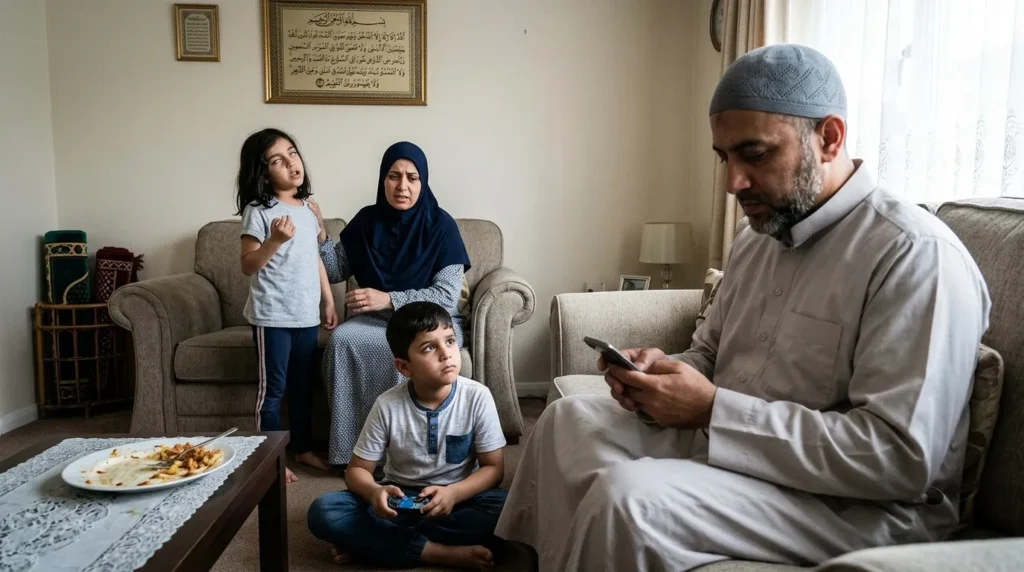
Parents should be careful not to confuse authority with oppression. Islam gives parents respect, but it does not allow injustice. Some common mistakes can seriously harm children’s faith and emotional well-being.
We should avoid comparing children, cursing them, mocking their mistakes, ignoring their feelings, delaying Islamic education, being inconsistent with discipline, showing favoritism, and demanding respect without modeling respect.
We should also avoid outsourcing all parenting. Schools, Quran teachers, relatives, and online classes can help, but parents remain the main shepherds of the child’s heart and character.
Another major mistake is focusing only on worldly success. If children become successful professionals but lose prayer, faith, modesty, honesty, and respect, then the upbringing is incomplete. A Muslim parent must think beyond report cards and careers.
How to Build an Islamic Home That Fulfills Children’s Rights
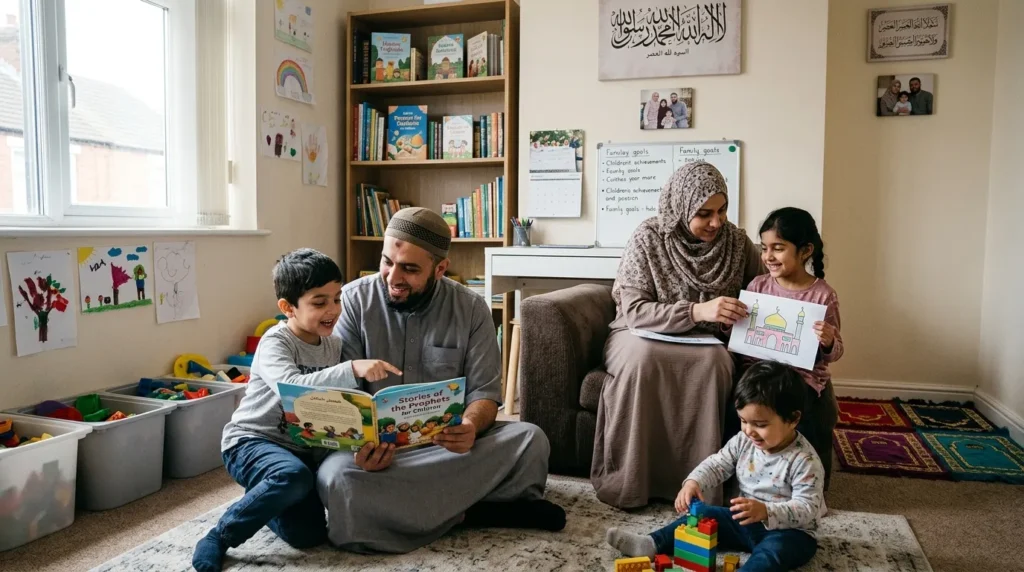
A strong Islamic home does not need to be perfect. It needs direction. Parents can begin with small consistent habits.
We can create a home where salah is prayed on time, Quran is recited daily, meals begin with Bismillah, gratitude is practiced, anger is controlled, apologies are normal, and Islamic reminders are gentle but regular.
Family routines are powerful. A short Quran reading after Maghrib, a weekly Islamic story night, a Friday Durood routine, shared charity, and bedtime duas can shape a child’s heart over years.
Children remember atmosphere. They remember whether home felt safe, whether Islam felt beautiful, whether parents were fair, and whether love was present. That atmosphere becomes part of their faith identity.
FAQs Of Duties of Parents and Rights of Children in Islam
Q1: What are the rights of children in Islam?
Children in Islam have the right to life, dignity, love, lawful provision, a good name, Islamic education, Quran learning, salah training, fair treatment, emotional safety, and merciful discipline. These are not optional — they are obligations parents will be accountable for before Allah.
Q2: What are the duties of parents in Islam toward their children?
Parents in Islam must protect their children’s life and dignity, provide halal food and shelter, teach tawheed and Quran, train them in salah, raise them with good manners, treat them with justice, and discipline them with mercy — because children are an amanah from Allah, not personal property.
Q3: What does Islam say about parenting and raising children?
Islam teaches that children are a sacred trust from Allah and that parents are fully accountable for how they raise them — spiritually, emotionally, physically, and morally. The Prophet ﷺ modeled merciful, loving, and just parenting, and the Quran gives clear guidance on justice, affection, and responsibility toward children.
Q4: Is it haram to treat children unfairly or show favoritism in Islam?
Yes, showing favoritism between children in gifts, love, attention, or discipline is prohibited in Islam because it creates jealousy, resentment, and broken family bonds. The Prophet ﷺ commanded parents to be just among their children, and Allah will question parents about how they fulfilled this duty.
Q5: What is the right of a child to Islamic education in Islam?
Every child has the right to learn tawheed, Quran, salah, Islamic manners, and the knowledge needed for both this world and the Hereafter. Parents are responsible for providing this education at home first, before schools or teachers, because faith training begins in the family.
Q6: How should Muslim parents discipline their children according to Islam?
Islamic discipline must be wise, proportionate, and merciful — with clear rules, fair consequences, and no insults, public humiliation, or emotional abuse. The purpose of discipline in Islam is to guide and improve the child, not to punish from anger or ego.
Q7: What does the Quran say about the rights of children?
The Quran forbids harming children, commands parents to protect them, and gives examples like Luqman advising his son in faith and character as a model of Islamic parenting. Surah Al-Baqarah 2:233 also establishes the father’s duty to provide and the mother’s right to support during breastfeeding, showing that children’s rights are protected from birth.
Conclusion
The duties of parents and rights of children in Islam form a complete framework for family life. Children have the right to life, dignity, love, provision, education, Islamic guidance, Quran learning, salah training, fair treatment, emotional safety, and merciful discipline. Parents have the duty to protect, nurture, teach, correct, provide, and guide with sincerity for the sake of Allah — and for parents who want to raise children who are honest, trustworthy, and strong in character, understanding how to stop children from lying in Islam is one of the most practical places to begin building that foundation of Islamic values at home.
Islamic parenting is not harsh control, and it is not careless freedom. It is a balanced path of love, justice, mercy, responsibility, and faith. We raise children as an amanah from Allah, knowing that their hearts, minds, bodies, and futures deserve careful attention.
When parents fulfill children’s rights, they create homes filled with trust and blessing. When children grow up with faith, love, manners, and responsibility, they become a source of goodness for their families, society, and the ummah.
May Allah guide our children, forgive our parenting mistakes, help us fulfill every trust, and make our families a source of comfort in this world and the Hereafter.