Islamic Guidelines for Parenting and Child Upbringing
Islamic parenting is a sacred responsibility that shapes the heart, character, faith, manners, education, and future of a child. In Islam, children are a trust from Allah, and parents are responsible for nurturing them with mercy, wisdom, discipline, love, and guidance.
Child upbringing in Islam is not limited to feeding, clothing, schooling, or protecting children physically. It includes spiritual training, emotional care, moral development, Islamic education, social responsibility, and preparation for both this world and the Hereafter. We raise children not only to become successful people, but to become righteous servants of Allah, beneficial members of society, and people of good character.
The Islamic approach to parenting is balanced. It combines love with discipline, freedom with responsibility, education with manners, and worldly success with spiritual purpose.
What Is Islamic Parenting and Child Upbringing?
Islamic parenting means raising children according to the guidance of the Quran, the Sunnah of Prophet Muhammad ﷺ, and the moral principles of Islam. It is a complete way of nurturing the child’s body, mind, soul, emotions, behavior, and relationship with Allah.
In Islamic parenting, we do not only ask, “How can our child become successful?” We also ask, “How can our child become truthful, kind, prayerful, respectful, responsible, and conscious of Allah?”
A Muslim parent’s goal is to help the child grow with:
| 🌿 Area of Upbringing | 🎯 Islamic Goal |
|---|---|
| 🕌Faith | Strong belief in Allah. |
| 🤲Worship | Love for salah, Quran, dua, and obedience. |
| ❤️Character | Honesty, modesty, patience, mercy, and respect. |
| 📚Knowledge | Religious and beneficial worldly education. |
| 😊Emotional Health | Security, love, confidence, and stability. |
| 🤝Social Conduct | Kindness to family, neighbors, and the community. |
| ⚖️Discipline | Self-control, responsibility, and accountability. |
| 🌙Purpose | Living for the pleasure of Allah. |
Islamic parenting is therefore a lifelong act of worship.
Children Are an Amanah From Allah
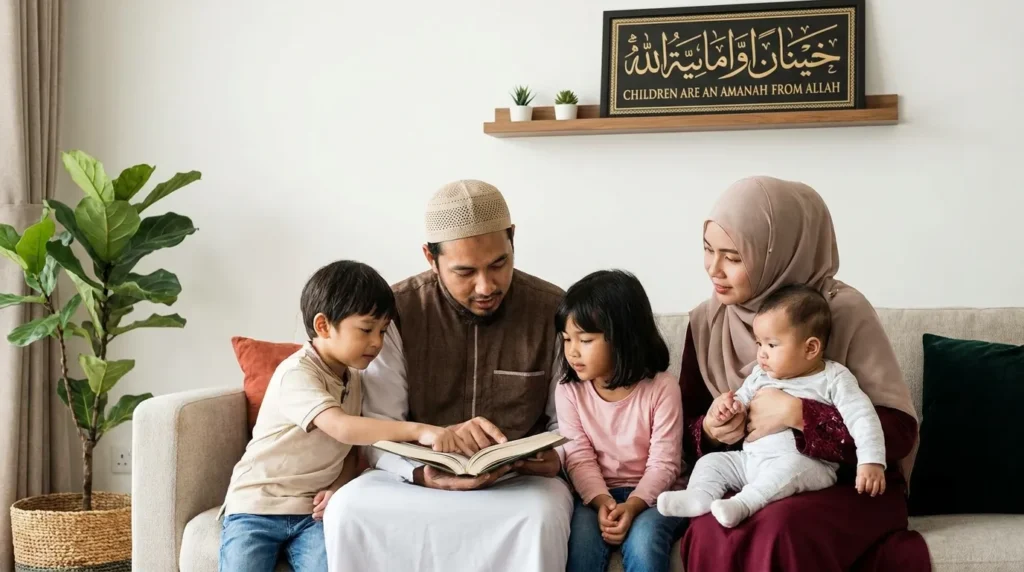
In Islam, children are not possessions. They are an amanah, a trust from Allah. This means parents must care for them responsibly and answer to Allah for how they raised them.
Children have rights over parents. They deserve love, protection, education, good manners, Islamic guidance, fair treatment, emotional security, and a safe environment. Parents should not neglect these rights or misuse their authority.
When we understand children as an amanah, our parenting becomes more patient and intentional. We stop seeing parenting as only a daily burden and begin seeing it as a path to Allah’s pleasure.
Begin Parenting With Sincere Intention
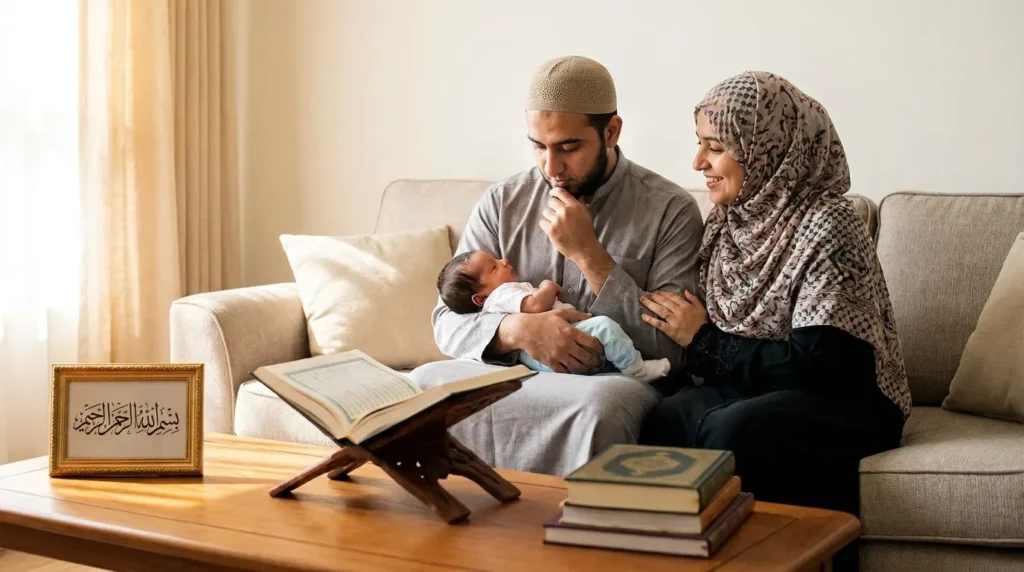
Every important Islamic action begins with intention. Parenting should also begin with sincere niyyah. We raise children for the sake of Allah, hoping they become righteous, beneficial, and guided.
A sincere intention transforms ordinary parenting tasks into worship. Feeding a child, teaching manners, helping with schoolwork, correcting behavior, earning halal income, and comforting a crying child can all become acts of worship when done for Allah.
We should regularly renew our intention:
- We raise our children to know Allah.
- We teach them to love the Quran.
- We guide them toward salah.
- We protect their hearts from harmful influences.
- We prepare them to serve family, society, and the ummah.
- We seek Allah’s pleasure through our parenting.
This intention gives meaning to the difficult parts of parenting.
Give Children a Good Name and Positive Identity
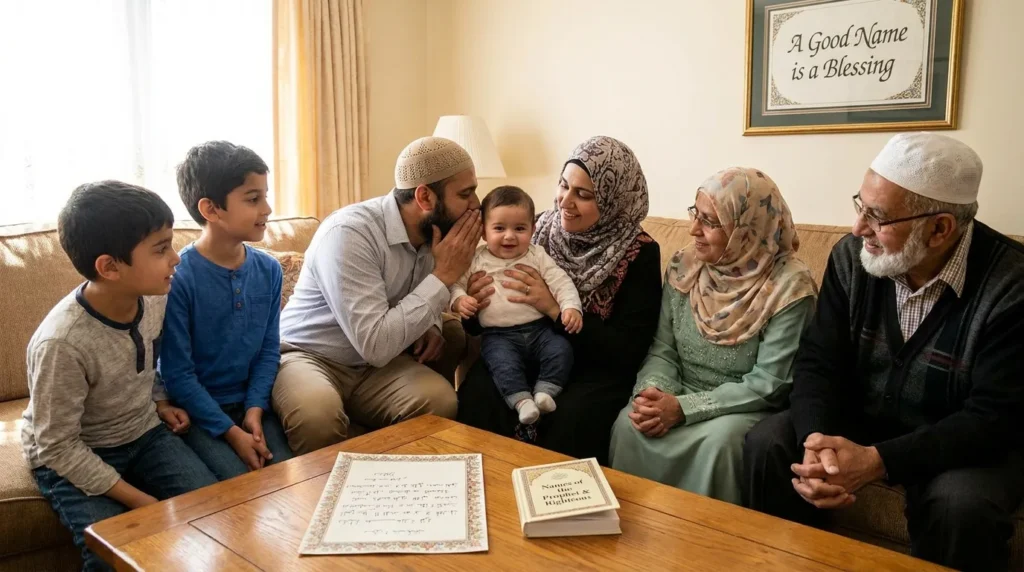
One of the early rights of a child is receiving a good name. A name is part of a child’s identity and can influence how they feel about themselves. Islam encourages names with good meanings, noble associations, and positive spiritual value.
A good Muslim name should be meaningful, respectful, easy to carry, and free from bad meanings. Parents should avoid names that are insulting, arrogant, confusing, or connected with un-Islamic beliefs.
Along with a good name, children need a positive Islamic identity. We should help them feel proud of being Muslim, proud of worshipping Allah, proud of following the Prophet ﷺ, and proud of Islamic manners.
This identity should be built through love, not fear or harshness.
Provide Religious and Worldly Education
Islam values knowledge. Parents are responsible for giving children both Islamic education and beneficial worldly education.
Islamic education helps children understand faith, worship, halal and haram, Quran, duas, manners, the life of the Prophet ﷺ, and accountability before Allah. Worldly education helps them develop skills, earn halal income, serve society, think clearly, and manage life responsibly.
A balanced Muslim child should learn:
| 🕌 Islamic Knowledge | 🌍 Worldly Knowledge |
|---|---|
| 📖Quran Recitation | ✍️Reading and Writing |
| 🕌Basic Aqeedah | ➗Mathematics |
| 🤲Salah and Purification | 🔬Science |
| 📿Duas and Adhkar | 💻Technology |
| 🌿Prophetic Manners | 🗣️Communication |
| ⚖️Halal and Haram | 🧩Problem-Solving |
| 🏛️Islamic History | 💼Career Skills |
| ❤️Good Character | 💰Financial Literacy |
We should not separate religion from daily life. A child should understand that Islam guides school, friendships, money, speech, technology, family life, and personal choices.
Teach Tawheed First To Child
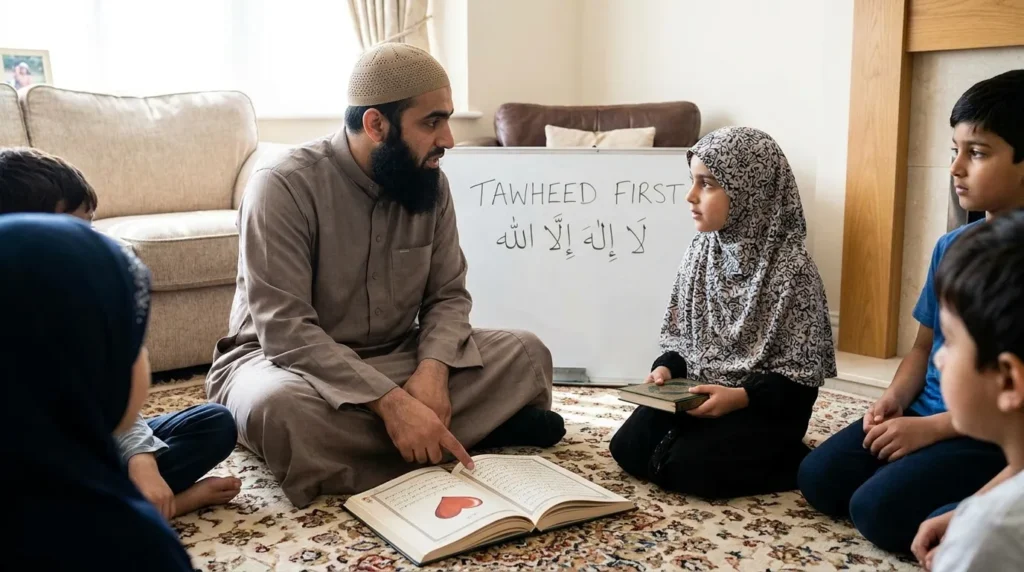
The foundation of Islamic upbringing is tawheed: belief in the oneness of Allah. Children should grow up knowing that Allah created them, provides for them, sees them, hears their duas, loves good deeds, forgives repentance, and guides those who seek Him.
We can teach tawheed in simple words:
- Allah is One.
- Allah created everything.
- Allah gives us food, family, health, and life.
- We worship only Allah.
- We ask Allah for help.
- Allah knows what is in our hearts.
- Allah loves truth, kindness, prayer, and good manners.
Children should not learn about Allah only through fear. They should learn about Allah’s mercy, kindness, forgiveness, generosity, and closeness. A child who loves Allah will find it easier to obey Him.
Build Love for the Quran
The Quran should be central in a Muslim home. Children should hear Quran recitation, see parents reading it, learn short surahs, understand simple meanings, and feel respect for the Book of Allah.
We should introduce the Quran gradually:
| 👶 Age | 📖 Quran Focus |
|---|---|
| 🍼0–3 Years | Listening to Quran recitation to build familiarity and love for the words of Allah. |
| 🎈4–6 Years | Learning Arabic letters, short surahs, and Quran stories in a simple and engaging way. |
| 📚7–9 Years | Studying Qaida, improving Quran recitation, and learning the basics of Tajweed. |
| 🌟10+ Years | Understanding Quranic meanings, studying Tafsir, reflecting on verses, and memorizing the Quran. |
Children should not associate the Quran with shouting, punishment, or pressure. Quran time should be calm, consistent, and encouraging. We can make it part of daily family life through short recitation after salah, bedtime Quran stories, weekly family Quran circles, and simple discussions about meanings.
The goal is not only that children read the Quran. The goal is that they love it, respect it, understand it, and live by it.
Teach Salah With Love and Consistency
Salah is one of the greatest pillars of Muslim life. Parents should introduce prayer early, but with wisdom and gentleness.
Young children learn salah by watching us. If they see parents praying regularly, calmly, and respectfully, they naturally become interested. We can invite them to stand beside us, give them a small prayer mat, teach them simple duas, and praise them when they try.
A practical salah teaching plan:
| 👶 Age | 🕌 Salah Training |
|---|---|
| 🍼2–4 Years | Watch parents pray and lovingly imitate the movements of Salah. |
| 🎈5–6 Years | Learn the names of the five daily prayers and the basic actions of Salah. |
| 📖7 Years | Begin regular prayer training and develop the habit of performing Salah consistently. |
| 💧8–9 Years | Improve consistency in Salah while learning proper Wudu and prayer etiquette. |
| 🌟10+ Years | Strengthen responsibility, accountability, and commitment to performing the five daily prayers. |
Salah should be presented as a meeting with Allah, not merely a duty. We should help children feel that prayer brings peace, protection, guidance, and closeness to their Creator.
Teach Good Manners and Character
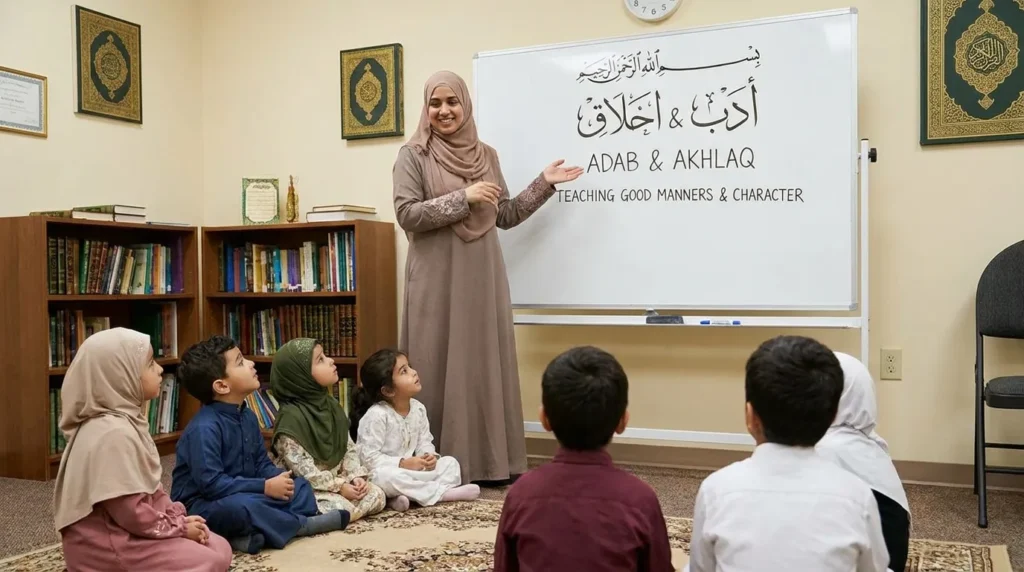
Good character is one of the strongest signs of Islamic upbringing. A child may memorize many facts, but if they are rude, dishonest, selfish, or disrespectful, their upbringing is incomplete.
Islamic manners include:
- Truthfulness
- Respect for parents
- Kindness to siblings
- Mercy toward younger children
- Respect for elders
- Good speech
- Keeping promises
- Patience
- Gratitude
- Modesty
- Forgiveness
- Helping others
- Avoiding arrogance
- Avoiding lying, backbiting, and mockery
Children learn manners through repeated practice. We should correct bad behavior calmly and explain why good behavior matters. We should also model the manners we want to see.
If we want children to speak respectfully, we must speak respectfully. If we want them to apologize, we should apologize when we are wrong. If we want them to be honest, they must see honesty in us.
Model the Behavior We Want Children to Learn
Children copy what they see. Parents are the first and most powerful teachers. A home full of anger cannot easily teach patience. A home full of shouting cannot easily teach gentle speech. A home where salah is delayed cannot easily teach love for prayer.
Our example matters in:
| 🌿 What We Model | 🎯 What Children Learn |
|---|---|
| 🕌Regular Salah | Worship is important. |
| 📖Quran Recitation | The Quran is loved and respected. |
| 🗣️Honest Speech | Truth matters. |
| 🤝Respectful Disagreement | Conflict can be handled with manners. |
| ❤️Helping Others | Serving others is part of Islam. |
| 😌Controlling Anger | True strength is self-control. |
| 🙏Apologizing | Humility is honorable. |
| 🌸Gratitude | Blessings come from Allah. |
Islamic parenting begins with self-improvement. We cannot expect children to become what we refuse to practice.
Provide Emotional Security and Affection
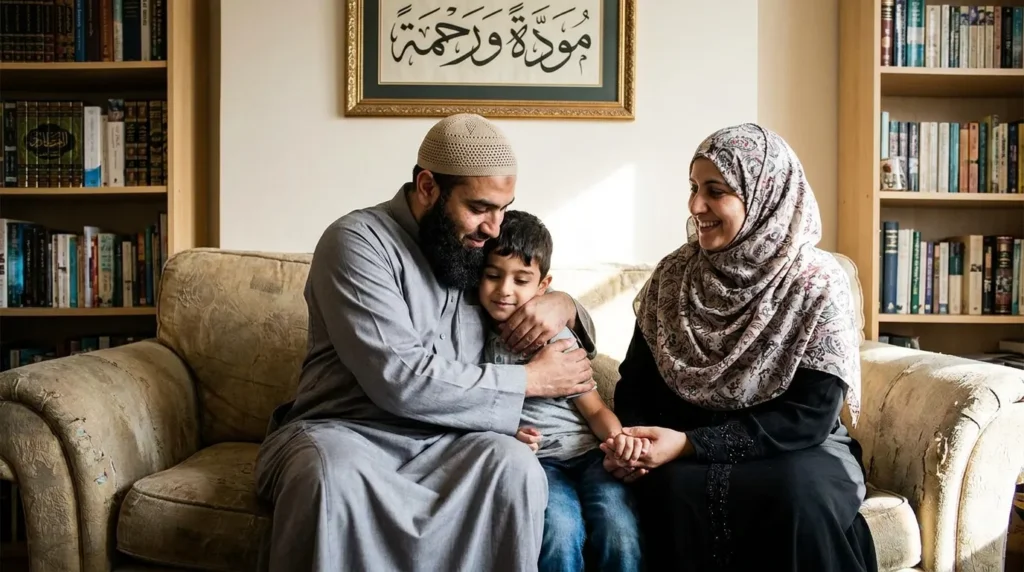
Islamic parenting is not harsh or emotionally distant. The Prophet ﷺ showed love, mercy, patience, and affection toward children. Children need hugs, kind words, attention, comfort, and reassurance.
Emotional security helps children trust their parents. When children feel loved, they are more likely to listen, learn, and accept correction. When children feel rejected or constantly criticized, they may become defensive, fearful, rebellious, or emotionally distant.
We should regularly say:
- “We love you.”
- “We are proud of your effort.”
- “May Allah bless you.”
- “You made a mistake, but you can improve.”
- “We are here to help you.”
- “Allah loves those who try to do good.”
Love does not spoil children. Lack of boundaries spoils them. A child can be deeply loved and well-disciplined at the same time.
Discipline With Mercy and Wisdom
Discipline in Islam is meant to guide, not harm. The purpose of discipline is to teach responsibility, self-control, respect, and awareness of consequences. It should not become revenge, humiliation, or emotional abuse.
Effective Islamic discipline should be:
| ⚖️ Principle | 🌿 Meaning |
|---|---|
| ⚖️Fair | Rules should be applied consistently and without favoritism. |
| 😌Calm | Parents should discipline with self-control, not in uncontrolled anger. |
| 📋Clear | Children should clearly understand which behavior is wrong and why. |
| 🌱Corrective | The purpose of discipline is to improve behavior, not to punish for revenge. |
| 📏Proportionate | The consequence should be appropriate and match the seriousness of the mistake. |
| 🤫Private When Possible | Avoid publicly embarrassing or humiliating children whenever possible. |
| ❤️Merciful | Leave room for repentance, forgiveness, learning, and personal growth. |
We should avoid insults, curses, name-calling, constant threats, and comparisons. These damage the child’s heart. A better approach is to explain, correct, apply fair consequences, and reconnect with love.
Teach Responsibility Through Daily Habits
Children should gradually learn responsibility. Islamic upbringing does not mean doing everything for the child. It means training the child to become capable, trustworthy, and disciplined.
Age-appropriate responsibilities include:
| 👶 Age | 🌱 Responsibility |
|---|---|
| 🧸3–5 Years | Put toys away, say Bismillah, and help with small household tasks. |
| 🏠6–8 Years | Keep the room tidy, learn Wudu, and help set the table. |
| 📚9–11 Years | Complete homework, prepare the school bag, and revise the Quran regularly. |
| 🌟12+ Years | Manage time wisely, help younger siblings, maintain personal hygiene, and plan daily study. |
| 🤝Teens | Develop financial awareness, participate in community service, and establish serious worship habits. |
Responsibility should grow gradually. When children are trusted with small duties, they develop confidence and maturity.
Teach Halal, Haram, and Accountability Gradually
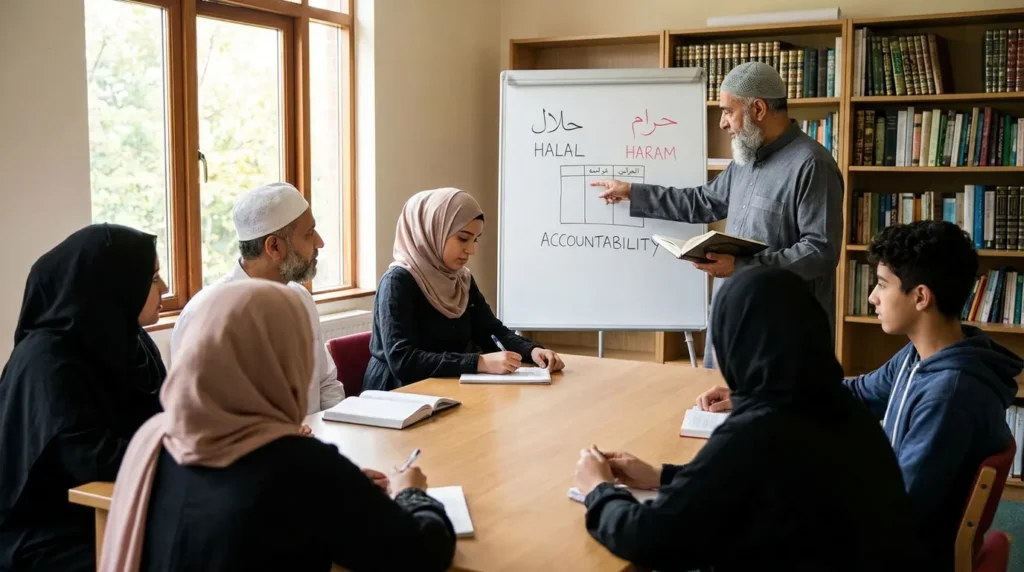
Children need moral boundaries. They should learn that some actions please Allah and some actions displease Him. However, this must be taught gradually and wisely.
Young children need simple explanations:
“Allah loves truth.”
“Allah loves kindness.”
“We do not take what belongs to others.”
“We speak gently.”
“We keep our promises.”
Older children can understand deeper lessons about halal income, modesty, friendships, online behavior, entertainment, speech, and personal choices.
The goal is to develop taqwa: awareness of Allah. Children should learn that even when parents are not watching, Allah knows and sees.
Protect Children From Harmful Influences
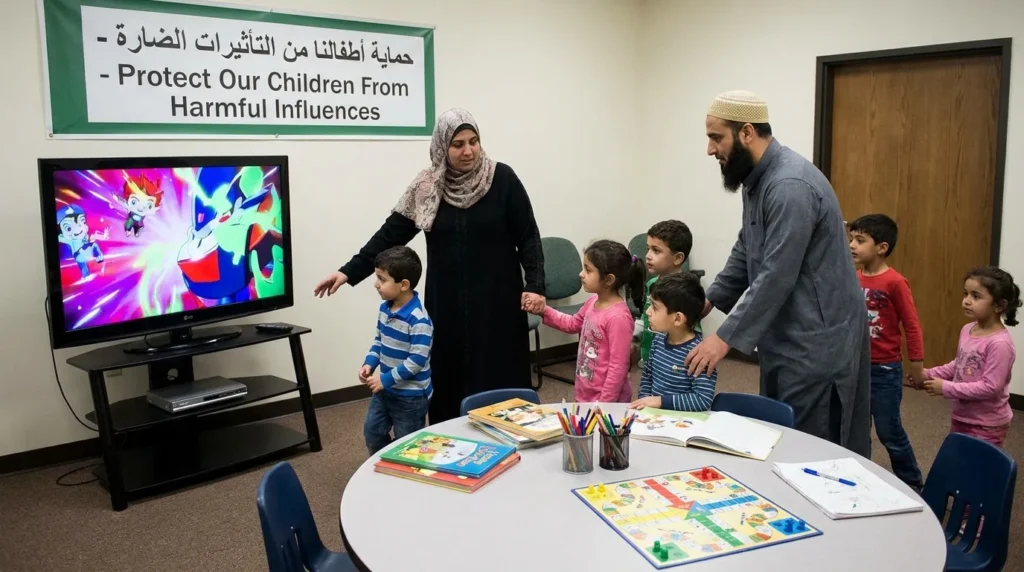
Modern parenting requires attention to media, phones, games, social platforms, friends, and online content. Islamic upbringing means protecting the child’s heart, mind, modesty, faith, and character.
Parents should know what their children watch, who they talk to, what apps they use, what games they play, and what values they absorb.
Protection does not mean creating fear or total isolation. It means wise boundaries.
Healthy digital rules may include:
- No unsupervised internet for young children
- Screen time limits
- No devices at bedtime
- Parent-approved apps
- Open conversations about online dangers
- Islamic alternatives for entertainment
- Teaching modesty and privacy
- Explaining that Allah sees online behavior too
Children need guidance before they face temptation, not only punishment after mistakes.
Encourage Healthy Friendships and Social Manners
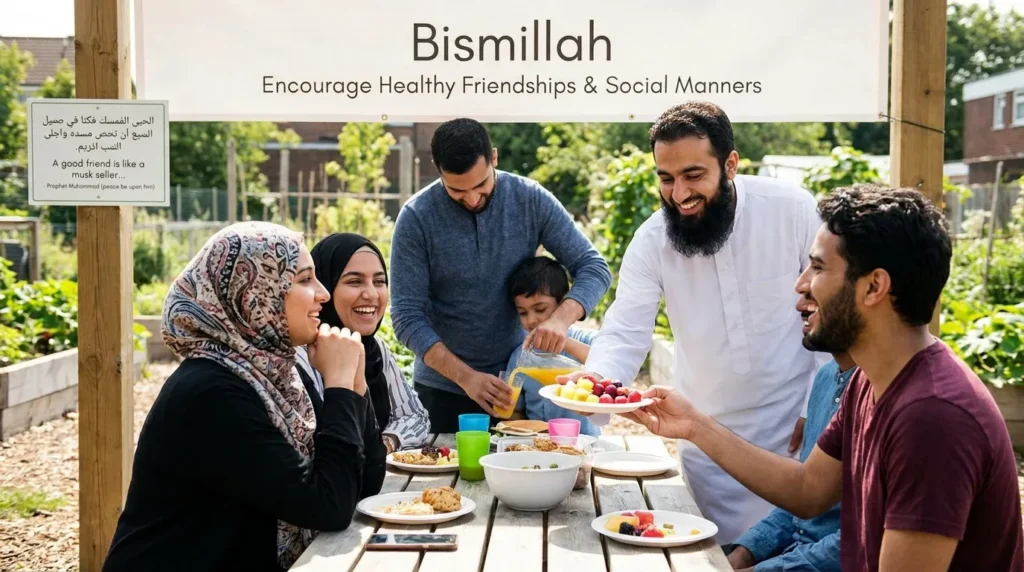
Friends strongly influence children. Parents should help children choose good company and become good companions themselves.
Children should learn how to greet with salam, share, forgive, avoid bullying, speak truthfully, include others, respect differences, and maintain family ties.
We should encourage friendships with children who have good manners, respectful families, and positive habits. We should also invite children into healthy Islamic environments such as masjid programs, Quran circles, family gatherings, sports, and community service.
A child connected to good people is more protected from harmful influences.
Teach Respect for Parents Without Becoming Unjust
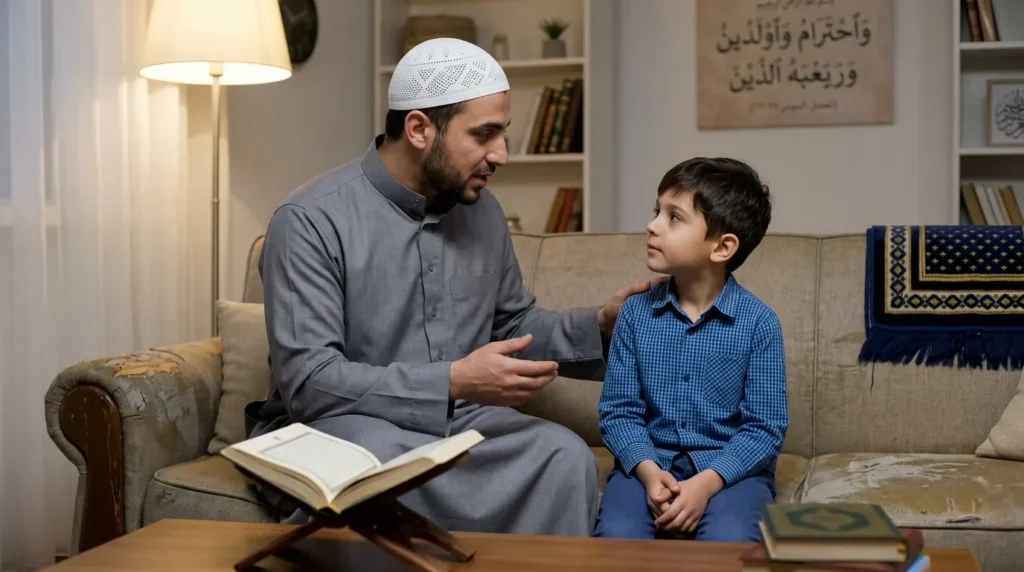
Islam gives parents a high status, but this does not mean parents may act unjustly. Children must learn respect, obedience in good matters, gratitude, and service to parents. At the same time, parents must show mercy, fairness, patience, and wisdom.
Respect is taught best when children experience respectful treatment. If parents constantly shout, insult, or dismiss feelings, children may obey outwardly but feel hurt inwardly.
We should teach children:
- Speak politely to parents.
- Do not shout at parents.
- Help parents.
- Make dua for parents.
- Listen when parents guide.
- Disagree respectfully when needed.
And we should teach ourselves:
- Do not misuse authority.
- Do not humiliate children.
- Do not compare unfairly.
- Do not ignore their emotions.
- Do not demand respect while modeling disrespect.
Islamic family life is built on rights and responsibilities on both sides.
Treat Children Fairly
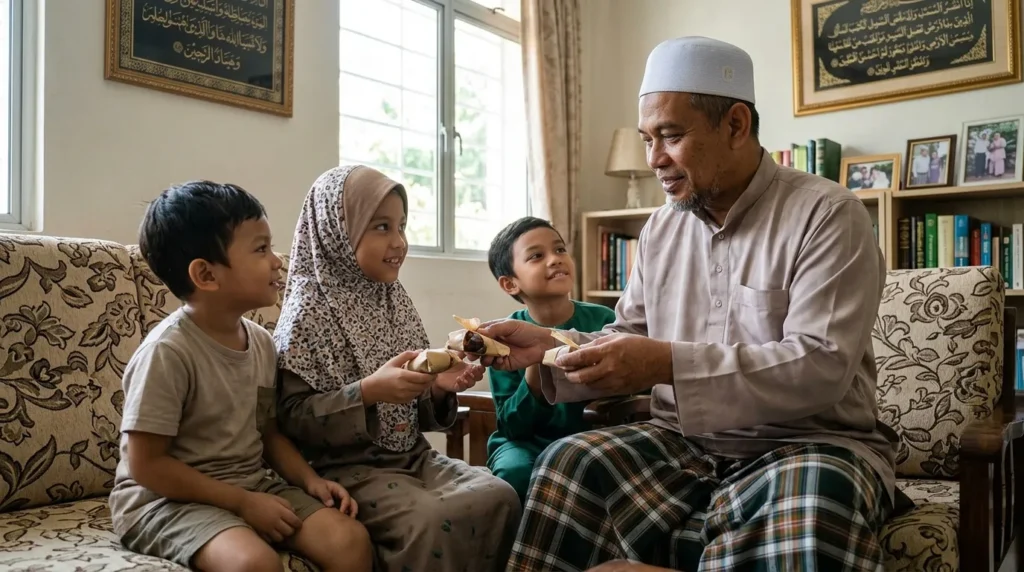
Fairness is essential in Islamic parenting. Children notice favoritism quickly. If one child receives more love, gifts, attention, praise, or leniency, the others may develop jealousy, resentment, or insecurity.
Fairness does not always mean identical treatment. Children have different ages, needs, and personalities. But every child should feel valued, loved, heard, and respected.
Parents should be fair in:
- Giving gifts
- Showing affection
- Listening to concerns
- Correcting mistakes
- Praising achievements
- Spending time
- Making decisions
- Supporting education
Fairness strengthens sibling relationships and family unity.
Balance Love, Discipline, and Freedom
A strong Islamic home has three elements: love, discipline, and freedom within boundaries. Too much harshness can break the child’s spirit. Too much freedom without guidance can lead to irresponsibility. Too much affection without discipline can create entitlement.
Balanced parenting means:
| 👨👩👧 Parenting Element | 🌿 Healthy Form |
|---|---|
| ❤️Love | Warmth, affection, emotional security, and making children feel valued and cared for. |
| ⚖️Discipline | Clear rules, fair consequences, consistency, and teaching accountability with kindness. |
| 🕊️Freedom | Providing age-appropriate choices, encouraging independence, and building confidence. |
| 🕌Guidance | Teaching Islamic values, offering wise advice, and leading by a good example. |
| 🤝Trust | Gradually increasing responsibility, encouraging confidence, and strengthening mutual trust. |
This balance helps children become confident, respectful, and spiritually aware.
Teach Children Through Stories
Stories are powerful in Islamic parenting. Children remember stories more easily than lectures. The Quran itself teaches through stories of prophets, righteous people, communities, tests, patience, repentance, and victory.
Useful Islamic stories for children include:
| 📖 Islamic Story | 🌿 Lesson |
|---|---|
| 🔥Prophet Ibrahim عليه السلام | Tawheed (belief in the Oneness of Allah), courage, and unwavering faith. |
| 🌾Prophet Yusuf عليه السلام | Patience, forgiveness, honesty, and trusting Allah through hardships. |
| 🌊Prophet Musa عليه السلام | Trust in Allah, courage in the face of challenges, and perseverance. |
| 🐋Prophet Yunus عليه السلام | Repentance, hope in Allah’s mercy, and never giving up after mistakes. |
| 🌸Maryam عليها السلام | Modesty, purity, patience, and complete reliance upon Allah. |
| 🛡️People of the Cave | Faith, steadfastness, and Allah’s protection for sincere believers. |
| 📜Luqman’s Advice | Wisdom, gratitude, good character, and righteous parenting. |
After telling a story, we should ask:
“What lesson can we use today?”
“How can we act like this?”
“What does this teach us about Allah?”
This turns stories into character training.
Teach Gratitude and Contentment
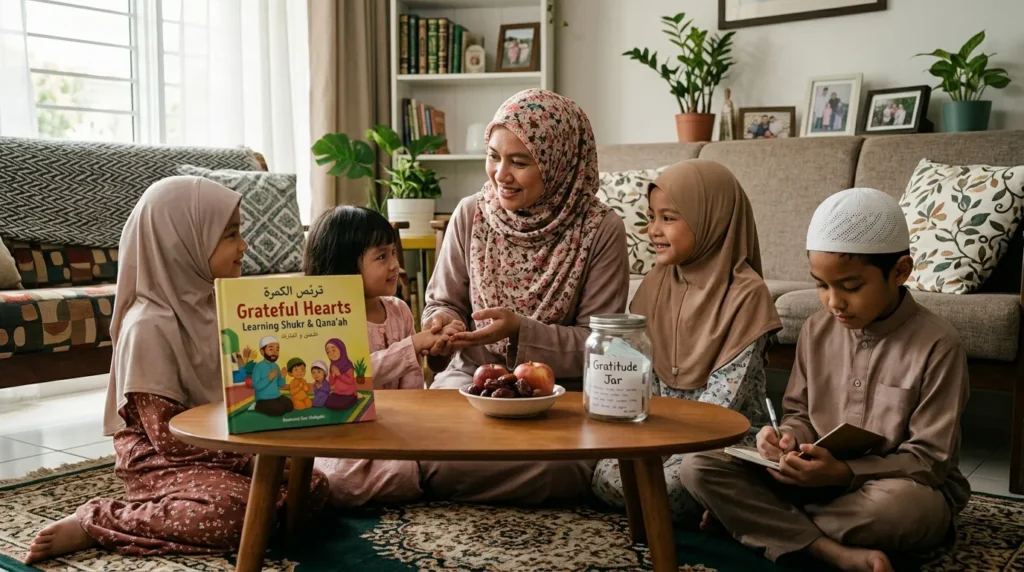
Children should learn to appreciate blessings. Gratitude protects them from selfishness, jealousy, and entitlement.
We can teach gratitude by reminding them to say Alhamdulillah, thank people, care for their belongings, share with others, and notice Allah’s blessings.
Practical gratitude habits include:
- Saying Alhamdulillah after meals
- Thanking parents and teachers
- Donating toys or clothes
- Helping those in need
- Making dua for blessings
- Avoiding waste
- Discussing daily blessings as a family
A grateful child becomes more peaceful and less demanding.
Teach Financial Responsibility
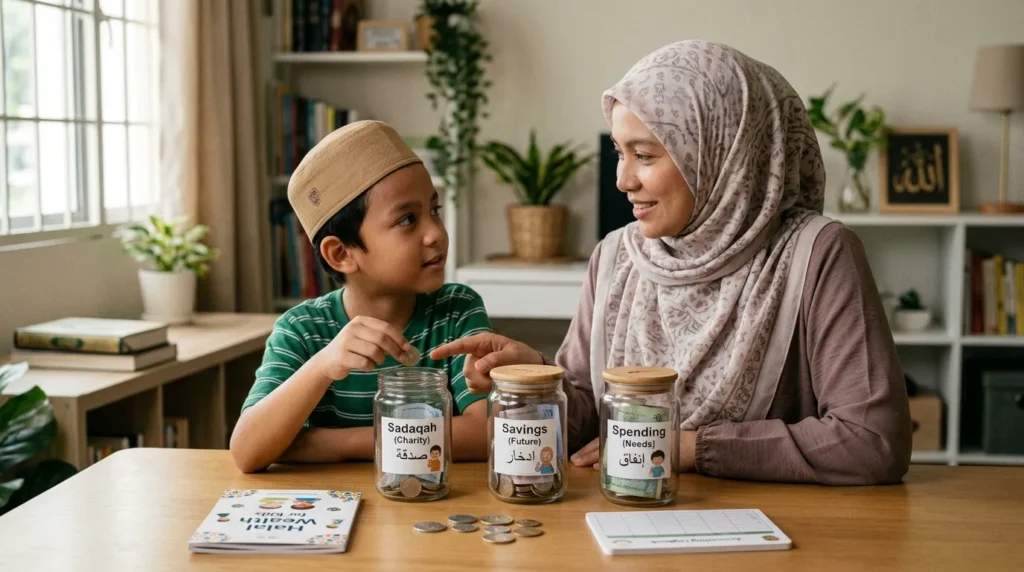
Islamic parenting also includes teaching children about money. Children should understand that wealth is a blessing and a responsibility. Money should be earned through halal means, spent wisely, shared generously, and not wasted.
Children can learn:
- The value of halal income
- Saving money
- Avoiding waste
- Giving sadaqah
- Being content
- Not showing off
- Helping family
- Planning before spending
Financial education protects children from greed, irresponsibility, debt, and materialism.
Care for Physical Health
Islam encourages care for the body. Parents should provide children with proper nutrition, cleanliness, sleep, healthcare, physical activity, and safety.
Children should learn personal hygiene, brushing teeth, bathing, clean clothing, toilet manners, and basic health habits. They should also learn that the body is a trust from Allah.
Healthy routines include:
| 🌿 Area | 💚 Healthy Habit |
|---|---|
| 🍽️Food | Eat halal, clean, nutritious, and balanced meals while avoiding waste. |
| 😴Sleep | Maintain a regular bedtime routine for proper rest and healthy growth. |
| 🧼Hygiene | Practice cleanliness, personal hygiene, and regular grooming. |
| ⚽Exercise | Stay active through sports, outdoor activities, and daily physical play. |
| 🛡️Safety | Ensure a safe environment with proper supervision and protection. |
| 🏥Healthcare | Seek appropriate medical care and treatment whenever illness occurs. |
A healthy body supports worship, learning, and emotional stability.
Care for Mental and Emotional Well-Being
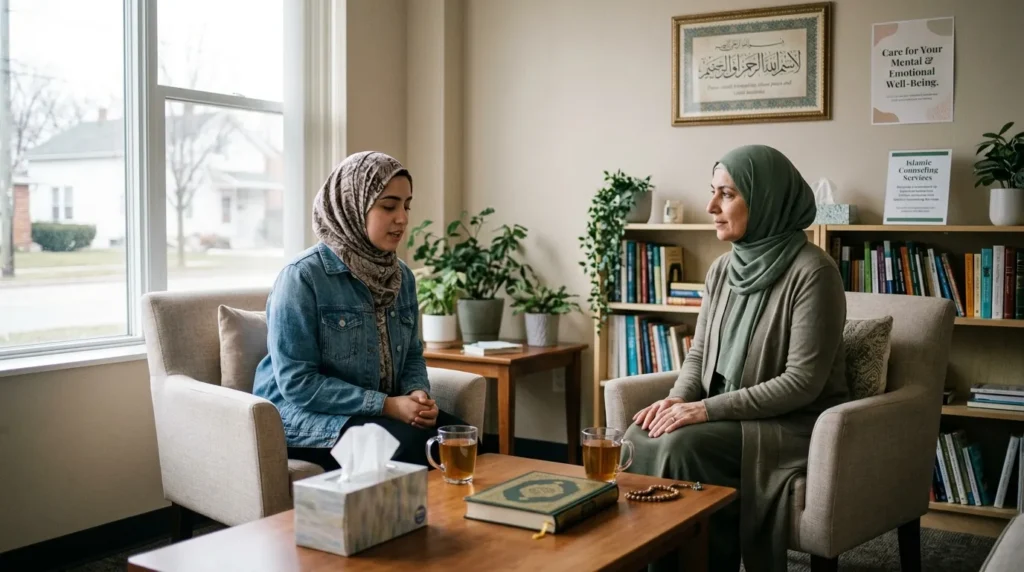
Children can feel stress, fear, sadness, jealousy, anger, loneliness, and confusion. Islamic parenting requires emotional awareness. We should not dismiss children’s feelings with harsh words.
Instead of saying, “Stop crying,” we can say, “Tell us what happened.”
Instead of saying, “You are bad,” we can say, “This action was wrong, and we can fix it.”
Instead of saying, “You always fail,” we can say, “Let us try again together.”
Emotionally healthy children are better able to learn, worship, communicate, and trust their parents.
Build a Strong Parent-Child Relationship
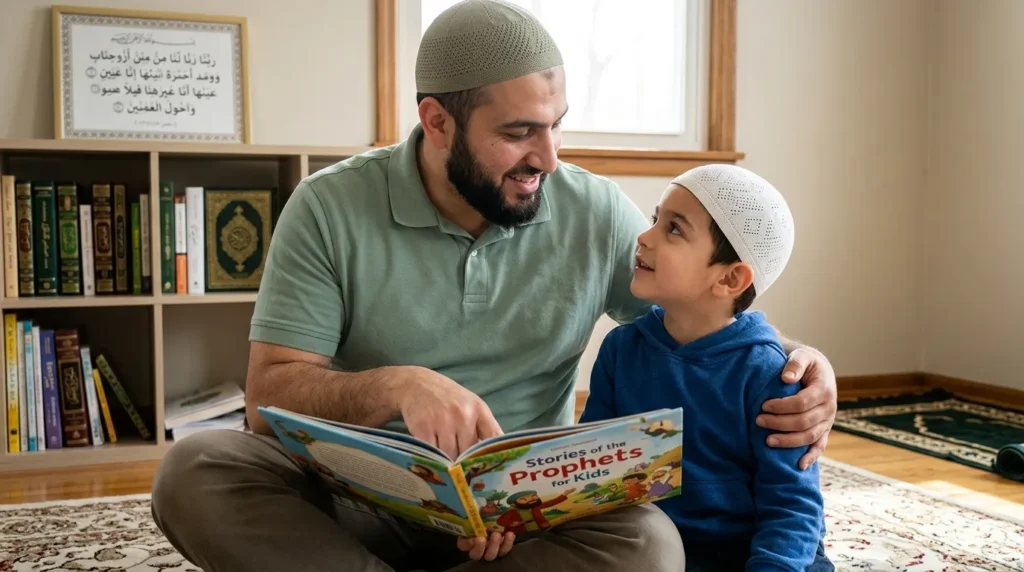
A strong relationship makes guidance easier. Children listen more when they feel connected. Connection is built through time, attention, conversation, affection, shared worship, and shared activities.
Ways to build connection:
- Eat together
- Pray together
- Read Quran together
- Listen without interrupting
- Play with younger children
- Walk or travel together
- Ask about their day
- Praise effort
- Share Islamic reminders gently
- Apologize when wrong
A connected child is more likely to accept advice and return to parents during difficulties.
Parenting Boys and Girls With Islamic Balance
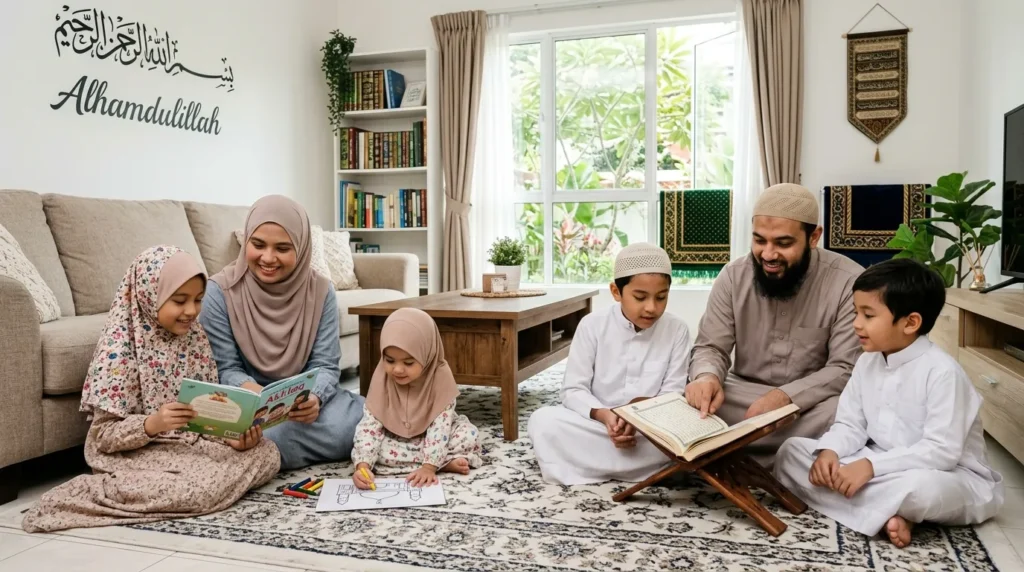
Islam honors both boys and girls. Both deserve love, education, respect, safety, and spiritual guidance. Parents should not favor sons over daughters or daughters over sons.
Boys should be raised with mercy, responsibility, modesty, respect for women, emotional control, and worship. Girls should be raised with confidence, modesty, knowledge, dignity, strength, and love for Allah.
Both boys and girls need:
- Islamic education
- Emotional care
- Quran learning
- Salah training
- Good manners
- Life skills
- Protection
- Confidence
- Respectful treatment
Islamic parenting does not neglect either gender. It nurtures both according to righteousness.
Islamic Parenting in the Teenage Years
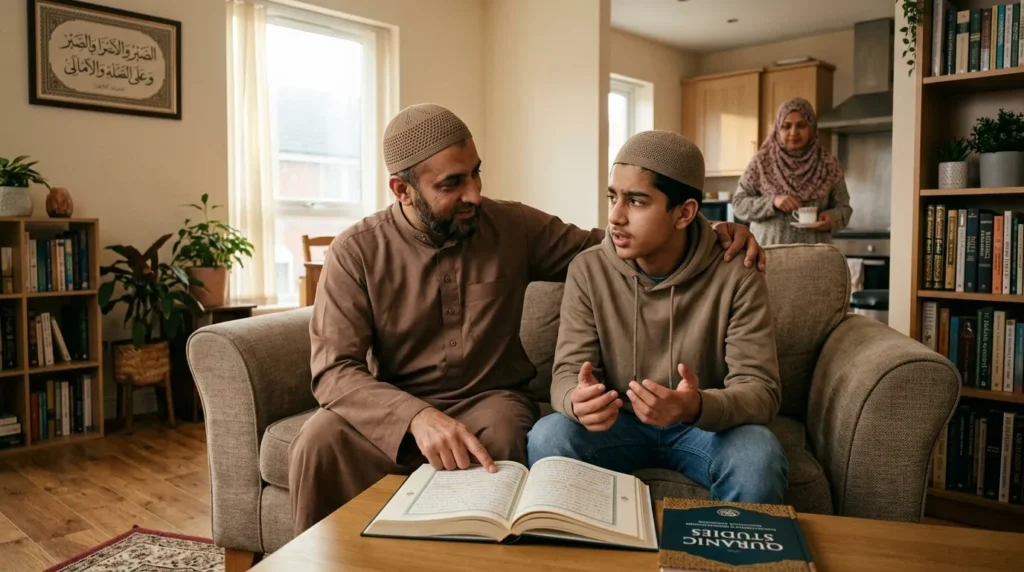
Teenage years require wisdom. Teens are developing independence, identity, emotions, friendships, and personal opinions. Harsh control can push them away. Total freedom can expose them to harm. We need guidance with respect.
For teenagers, parents should:
- Keep communication open
- Explain reasons behind rules
- Respect their growing maturity
- Monitor friendships wisely
- Discuss faith intellectually
- Address doubts calmly
- Teach modesty and boundaries
- Encourage salah responsibility
- Provide halal social outlets
- Avoid humiliation
- Make dua constantly
Teenagers need parents who are firm, loving, and approachable.
Practical Islamic Parenting Plan by Age
| 👶 Age | 🌱 Parenting Focus | ✅ Practical Actions |
|---|---|---|
| 🍼0–2 Years | Love and security | Show affection, make dua for the child, and introduce Quran recitation. |
| 🎈3–5 Years | Manners and imitation | Teach Salam, saying Bismillah, and simple daily duas through example. |
| 🕌6–7 Years | Worship introduction | Begin Salah training and encourage Quran reading habits. |
| 📚8–10 Years | Discipline and responsibility | Assign simple chores, encourage revision, and strengthen good manners. |
| 🌟11–13 Years | Identity and accountability | Teach modesty, halal choices, and deeper Islamic learning. |
| 🤝14+ Years | Maturity and trust | Encourage open dialogue, personal responsibility, and finding purpose. |
Daily Islamic Parenting Routine
| 🕒 Time | 🌿 Parenting Opportunity |
|---|---|
| 🌅Fajr / Morning | Dua, Salah reminder, and creating a positive start to the day. |
| 🍽️Breakfast | Teach Bismillah, gratitude, and encourage meaningful family conversation. |
| 🎒School Time | Teach honesty, effort, responsibility, and respect for teachers. |
| 📚Afternoon | Support homework, household chores, and Quran revision. |
| 🌇Maghrib | Practice family prayer and share a short Islamic reminder. |
| 🍲Dinner | Develop good manners, gratitude, and healthy family conversations. |
| 🌙Bedtime | Make dua, seek forgiveness, share Quran stories, and show affection. |
Small daily habits create lasting Islamic character.
Prophetic Guidance on Raising Children
A beautiful collection of 10 authentic Hadiths on child upbringing, responsibilities, mercy, and parenting in Islam.
The Best Gift
Fairness and Justice Among Children
The Child’s Aqeeqah and Naming
Teaching Prayer at Seven Years
Love and Mercy Towards Children
Choosing a Good Name
Avoiding False Promises to Children
Kissing and Showing Affection to Children
Adhan in the Ear of a Newborn
The Rights of the Child upon the Parent
🌙 Islamic Parenting Journey: Raising a Righteous Child
Common Parenting Mistakes to Avoid
Teaching Islam Only Through Fear
Children need to know Allah’s mercy, love, forgiveness, and generosity, along with accountability.
Correcting Without Connecting
If children only receive criticism, they may resist guidance. Connection makes correction easier.
Neglecting Our Own Example
Children follow what we do more than what we say.
Comparing Children
Comparison creates jealousy, insecurity, and resentment.
Being Too Harsh
Harshness may create outward obedience but inward distance.
Being Too Permissive
Lack of boundaries can harm faith, manners, and responsibility.
Ignoring Emotional Needs
Children need affection, listening, reassurance, and support.
Delaying Islamic Education
Faith, manners, Quran, and salah should be introduced gradually from early childhood.
Essential Rights of Children in Islam
| 🌿 Child’s Right | 💚 Meaning |
|---|---|
| 🛡️Right to Life and Protection | Providing safety, care, dignity, and protection from harm. |
| 📛Right to a Good Name | Giving the child a positive identity and a respectful name. |
| ❤️Right to Love and Mercy | Creating emotional security through affection, kindness, and compassion. |
| 🕌Right to Islamic Education | Teaching faith, worship, Quran, good manners, and Islamic values. |
| 📚Right to Worldly Education | Providing beneficial knowledge, skills, and preparation for life. |
| ⚖️Right to Fair Treatment | Treating children equally without favoritism or injustice. |
| 🌱Right to Discipline with Mercy | Giving guidance and correction without causing harm or humiliation. |
| 🏠Right to Financial Support | Providing food, clothing, shelter, and essential needs. |
| ⭐Right to Good Example | Parents should practice Islamic values and become role models. |
The Role of Dua in Parenting
Parents should never rely only on techniques. Guidance comes from Allah. We teach, advise, discipline, protect, and provide, but Allah controls the hearts.
We should make dua for our children regularly:
- May Allah guide them.
- May Allah protect their faith.
- May Allah make them love the Quran.
- May Allah make them establish salah.
- May Allah give them good character.
- May Allah protect them from harmful influences.
- May Allah make them a source of sadaqah jariyah for us.
Dua should accompany every parenting effort.
Faqs:
1. What does the Quran say about child upbringing?
Answer: The Quran teaches that children are both a sacred trust (Amanah) from Allah and a major spiritual responsibility. Parents are instructed to protect their families from spiritual harm and nurture them with wisdom, gratitude, and moral clarity.
Key Quranic teachings include:
- A Sacred Trust and Test: Children are described as beautiful ornaments of life, but also a spiritual test (Surah Al-Kahf 18:46, Surah At-Taghabun 64:15).
- Spiritual Protection: Allah commands, “O you who have believed, protect yourselves and your families from a Fire…” (Surah At-Tahrim 66:6).
- The Blueprint of Luqman: Surah Luqman outlines the core elements of upbringing: worshiping Allah alone (Tawheed), being dutiful to parents, establishing prayer, showing patience, and maintaining humility (Surah Luqman 31:13-19).
Read more detailed Quranic verses on child upbringing to understand the complete scriptural framework.
2. What is the 7 7 7 rule for parenting in Islam?
Answer: The 7-7-7 rule is a developmental framework for raising children in Islam based on early scholarly wisdom (often attributed to Imam Ali ibn Abi Talib). It divides a child’s development into three distinct 7-year stages:
- First 7 Years (Ages 0 to 7) – Play with them: Focus entirely on showing love, warmth, physical affection, and emotional security. Avoid harsh discipline and build a strong bond of trust through play.
- Second 7 Years (Ages 7 to 14) – Teach and discipline them: Introduce boundaries, formal education, social manners, and spiritual practices like praying. Guide them with gentle but firm consistency.
- Third 7 Years (Ages 14 to 21) – Befriend them: Shift from strict authority to supportive companionship. Consult with them, listen to their opinions, and guide them as a trusted friend to prepare them for independent adulthood.
Implementing this structured parenting timeline aligns your daily guidance with your child’s psychological readiness.
3. How should a mother treat her child in Islam?
Answer: A mother should treat her child with ultimate mercy, physical affection, emotional validation, and gentle instruction, mirroring the compassionate parenting model of the Prophet Muhammad ﷺ.
Islamic principles dictate that a mother should:
- Show Continuous Mercy: The Prophet ﷺ emphasized that those who do not show mercy will not receive mercy. A mother’s soft touch and kind speech are acts of worship.
- Provide Emotional Security: Mothers must listen attentively to their children’s fears and feelings, validating them rather than dismissing them.
- Avoid Harshness and Supplicating Against Them: Discipline should be calm and constructive. Islam discourages shouting, physical harm, or making angry supplications (Duas) against a child, which can corrupt their character.
Remember that in Islam, even a kind word is a form of charity—this starts first with how a mother speaks to her own children.
4. What is the golden rule of Growing child according to Islam?
Answer: The golden rule of growing a child in Islam is leading by example (modeling righteous character) while cultivating God-consciousness (Taqwa).
To successfully apply this golden rule:
- Actions Speak Louder Than Words: Children do what you do, not what you say. If you want your child to love prayer, they must see you performing how to teach your child Salah with joy, peace, and absolute consistency.
- The Prophet’s Rule of Reciprocity: Apply the universal Islamic rule of treating your children with the same respect, patience, and dignity that you would expect others to show to you.
- Connect Them to Allah First: Teach children to love Allah and understand His blessings before introducing the fear of punishment.
5. Who is responsible for the upbringing of a child in Islam?
Answer: In Islam, the responsibility for child upbringing (Tarbiyah) is shared equally and collectively by both the mother and the father.
The Prophet Muhammad ﷺ explicitly detailed this shared responsibility:
“Every one of you is a shepherd and is responsible for his flock… A man is a guardian of his family and is responsible for his flock; a woman is a guardian of her husband’s house and children and is responsible for her flock…” (Sahih al-Bukhari).
- The Father’s Role: Primarily responsible for providing lawful (Halal) sustenance, physical protection, overall leadership, and establishing a secure, faith-based environment.
- The Mother’s Role: Primarily responsible for early emotional development, nurturing daily character, and acting as the primary source of love and early home education.
6. What rights do children have over their parents in Islam?
Answer: In Islam, children are born with fundamental rights that parents are divinely obligated to fulfill. These rights begin before birth and continue into adulthood.
The core rights of children include:
- The Right to Life and Preservation: Total protection from physical harm and neglect.
- The Right to a Good Name: Parents must select a beautiful, respectful name with a positive meaning.
- The Right to Lineage and Care: Legitimate identity, breastfeeding, and physical maintenance (food, shelter, clothing).
- The Right to Fair and Equal Treatment: Parents must never show favoritism or bias among siblings.
- The Right to Moral and Spiritual Education (Tarbiyah): Teaching them faith, values, and life skills.
For a deeper dive into these divine obligations, read about the complete duties of parents and rights of children in Islam.
7. What is the main task of a mom in Islam in upbringing a child according to Islam?
Answer: The main task of a mother in Islam is to serve as the child’s first school (Al-Madrasatul Ula), shaping their innate goodness (Fitrah), moral compass, and emotional security.
A mother fulfills this primary task by:
- Instilling Faith and Values: She is the primary source of early Islamic knowledge, introducing her child to the love of Allah, the Prophet ﷺ, and beautiful manners (Akhlaq).
- Building Emotional Resilience: Through secure attachment and unconditional love, she provides the safety net a child needs to grow into a confident, stable adult.
- Modeling Everyday Sunnah: She shapes the child’s subconscious habits simply through how she speaks, behaves, handles stress, and treats others in the household.
Conclusion: Raising Children With Islamic Values
Islamic guidelines for parenting and child upbringing give us a complete and balanced path. We raise children with faith, love, knowledge, manners, discipline, emotional care, physical protection, and social responsibility.
We begin with sincere intention and the understanding that children are an amanah from Allah. We teach tawheed, Quran, salah, good manners, honesty, modesty, gratitude, and responsibility. We discipline with mercy, educate with wisdom, protect with awareness, and love with consistency.
The goal of Islamic parenting is not only to raise children who succeed in this world. The greater goal is to raise children who know Allah, love the Quran, follow the Prophet ﷺ, serve others, control their desires, respect their parents, and seek success in the Hereafter.
May Allah guide our children, strengthen our families, and make our homes places of faith, mercy, knowledge, and righteousness.