How Parents Can Encourage Children to Love the Quran
Helping children love the Quran is one of the most beautiful responsibilities we carry as Muslim parents. The goal is not only to make our children read Arabic words correctly, memorize short surahs, or complete lessons on time. The deeper goal is to help their hearts feel attached to the Quran as a source of guidance, peace, comfort, wisdom, and closeness to Allah.
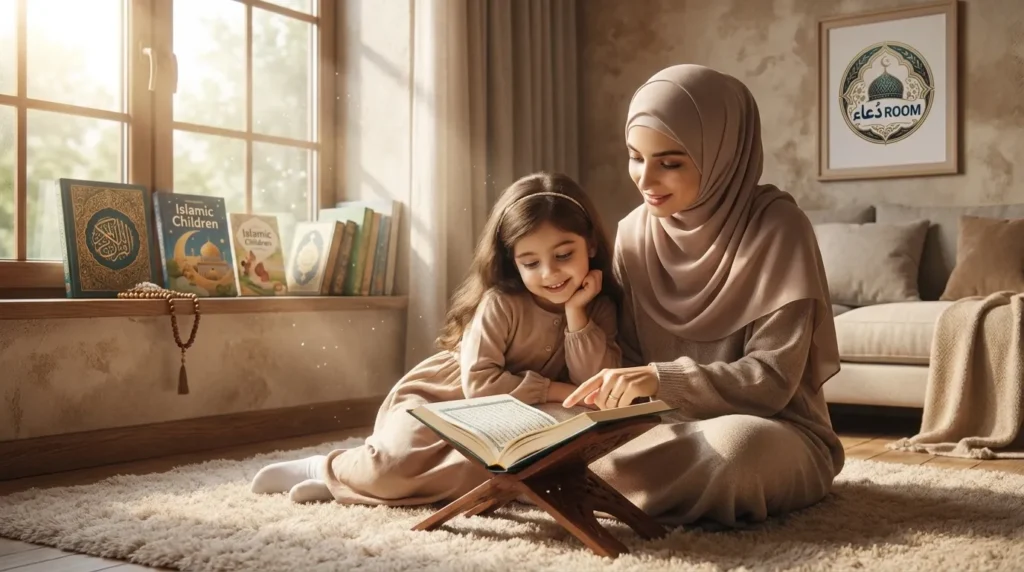
When the Quran becomes part of family life, children begin to see it as something warm and meaningful rather than a strict subject or forced duty. We build this love through our own example, gentle teaching, beautiful recitation, simple explanations, Quranic stories, patient encouragement, and a home environment where the words of Allah are respected and loved.
Understanding What It Means for Children to Love the Quran
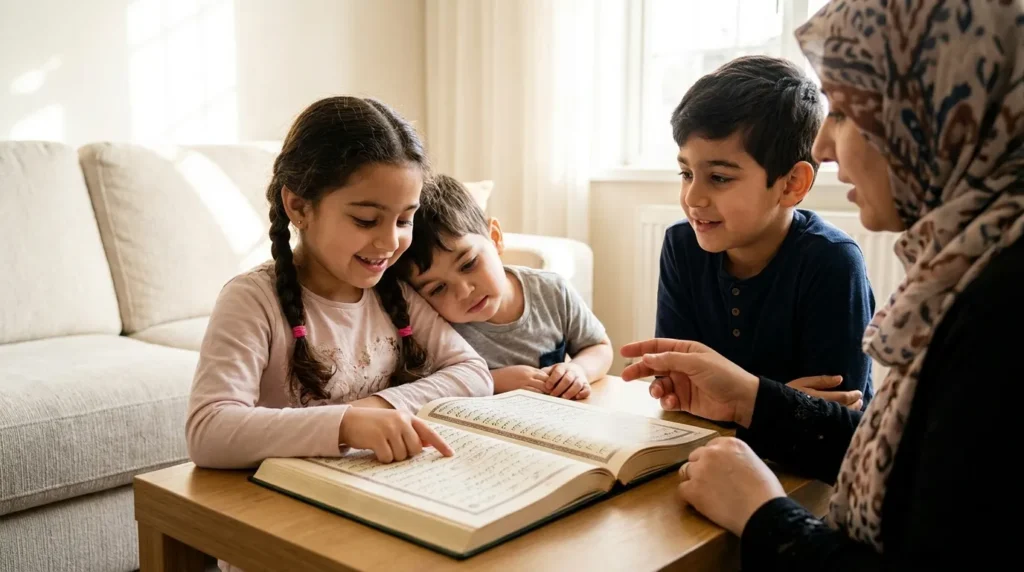
Before we teach children to love the Quran, we must understand what that love looks like. A child who loves the Quran may not always sit for long lessons or memorize quickly. Love begins in small signs: listening quietly to a recitation, asking about a story, repeating a short surah, holding their own Quran with care, or feeling happy when praised for learning an ayah.
Love for the Quran grows gradually. It is built through emotion, repetition, understanding, and positive memories. If a child connects the Quran with fear, pressure, shouting, or punishment, they may learn the words but feel distant from the message. If the child connects the Quran with mercy, beauty, family attention, and spiritual comfort, the Quran becomes part of their identity.
As parents, we are not only teaching letters and sounds. We are shaping a lifelong relationship between our children and the Book of Allah.
Start With Our Own Relationship With the Quran

Children learn more from what they see than from what they are told. If they see us reciting the Quran regularly, listening to it with respect, reflecting on its meaning, and trying to live by its guidance, they naturally understand that the Quran is important.
We should allow our children to see the Quran in our daily lives. They should see us reading after Fajr, listening during quiet moments, revising memorization, or opening a translation to understand a verse. We do not need to make every moment formal. A child watching a parent recite with calmness and love receives a powerful lesson without a lecture.
When we say, “This ayah gives us hope,” or “This surah reminds us to be patient,” children begin to understand that the Quran is not only for the prayer mat or classroom. It is guidance for real life.
Create a Quran-Friendly Home Environment
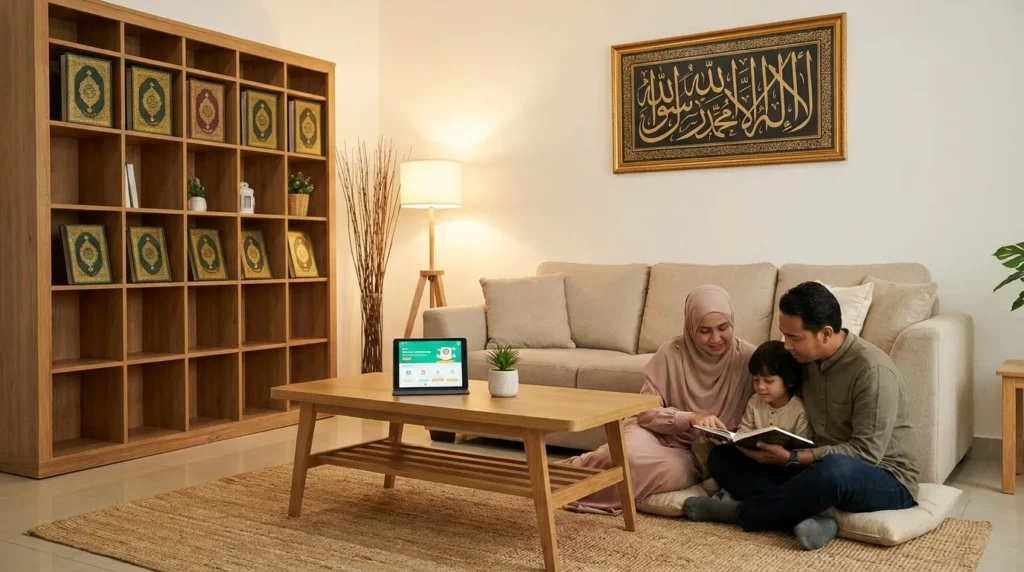
A home that encourages love for the Quran does not need to be perfect. It needs to be intentional. We can create a peaceful atmosphere where the Quran is present, respected, and easy to access.
A Quran-friendly home may include a clean shelf for Qurans and Islamic books, a small prayer area, children’s Quran storybooks, Arabic alphabet cards, simple tafsir books for young readers, and regular recitation in the background. The aim is to make the Quran visible and familiar.
Children should feel that the Quran belongs in the home, not only in the mosque or madrasa. When the Quran is part of bedtime, morning routines, family discussions, Ramadan activities, and moments of difficulty, it becomes emotionally connected to family love and spiritual safety.
Make Quran Learning Gentle, Joyful, and Age-Appropriate
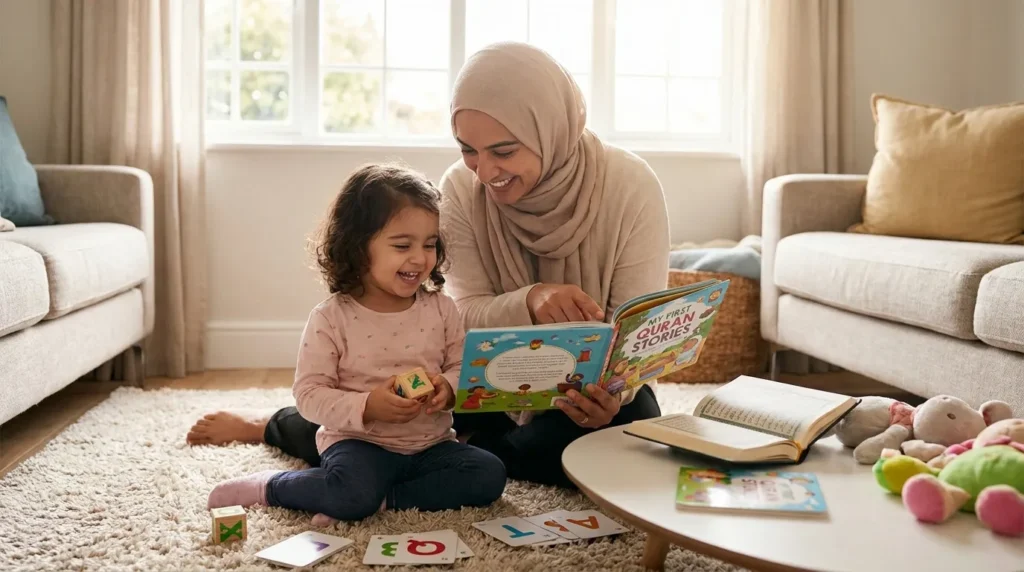
Children have different attention spans, learning styles, and emotional needs. A three-year-old, seven-year-old, and twelve-year-old cannot be taught in the same way. If we want children to love the Quran, we must teach according to their age and ability.
For toddlers, listening and imitation are enough. They may hear short surahs repeatedly, watch parents recite, and repeat simple words. For young children, colorful visuals, short sessions, stories, and praise work well. For older children, understanding meaning, asking questions, memorization goals, tajweed improvement, and personal reflection become more important.
Short and consistent sessions are usually better than long and stressful ones. Ten joyful minutes every day can be more effective than one long lesson filled with pressure. We should protect the child’s heart from associating the Quran with boredom, anger, or shame.
Teach Meaning To Child , Not Only Recitation
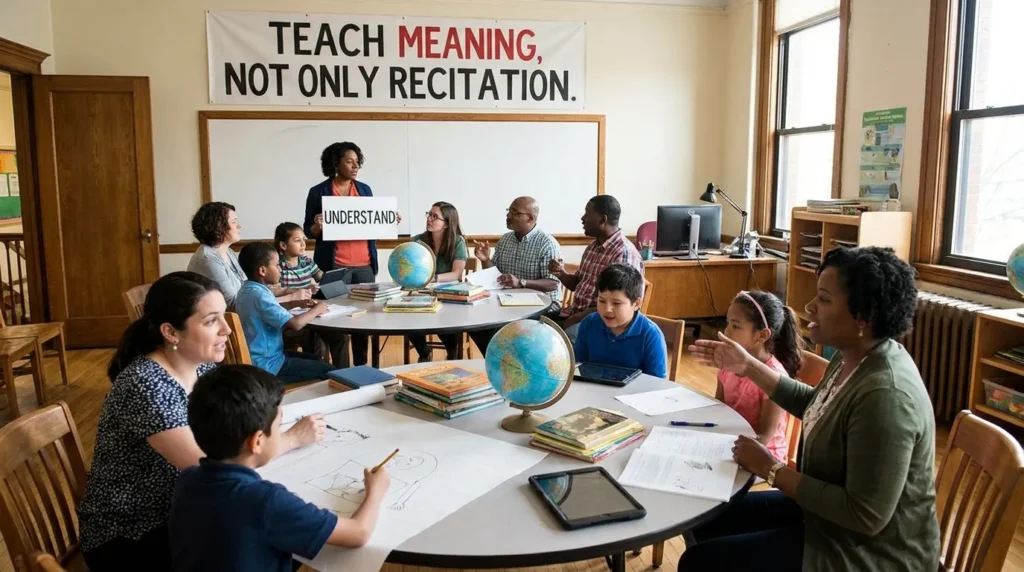
Recitation is essential, but understanding gives the Quran life in a child’s heart. When children know what they are reciting, they feel more connected to the words. Even simple meanings can transform their experience.
For example, when a child memorizes Surah Al-Fatihah, we can explain that we are praising Allah, asking Him for help, and asking Him to guide us to the straight path. When they learn Surah Al-Ikhlas, we can explain that it teaches us about the oneness of Allah. When they recite Surah Al-Falaq and Surah An-Nas, we can explain that these surahs teach us to seek Allah’s protection.
We do not need complicated tafsir for young children. Simple, accurate, age-appropriate explanations are enough. The more they understand, the more they feel that the Quran is speaking to them.
Use Quranic Stories to Build Love and Imagination
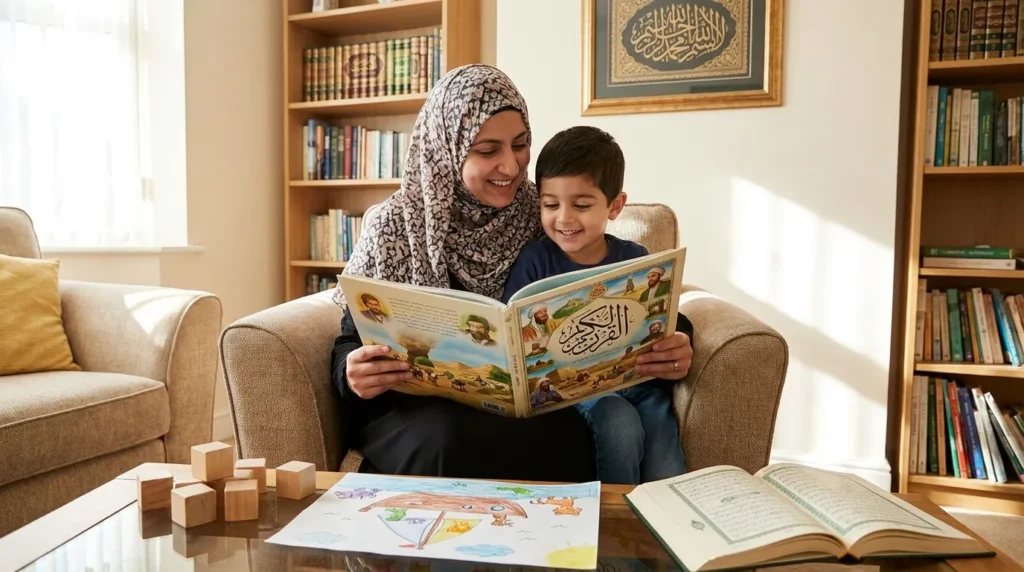
Children naturally love stories. The Quran contains powerful stories that teach faith, courage, patience, honesty, gratitude, repentance, and trust in Allah. Stories of Prophet Yusuf, Prophet Musa, Prophet Ibrahim, Prophet Nuh, Prophet Yunus, Maryam, and the People of the Cave can deeply inspire children when told with warmth and clarity.
When sharing Quranic stories, we should focus on the lesson. Prophet Yusuf teaches patience and forgiveness. Prophet Musa teaches courage and trust in Allah. Prophet Ibrahim teaches sincerity and obedience. Prophet Yunus teaches repentance and hope. Maryam teaches purity, strength, and reliance on Allah.
After telling a story, we can ask gentle questions:
“What did we learn from this story?”
“How can we be patient like Prophet Yusuf?”
“When should we ask Allah for help?”
This turns Quran learning into reflection, not just information.
Build a Daily Quran Routine Without Pressure
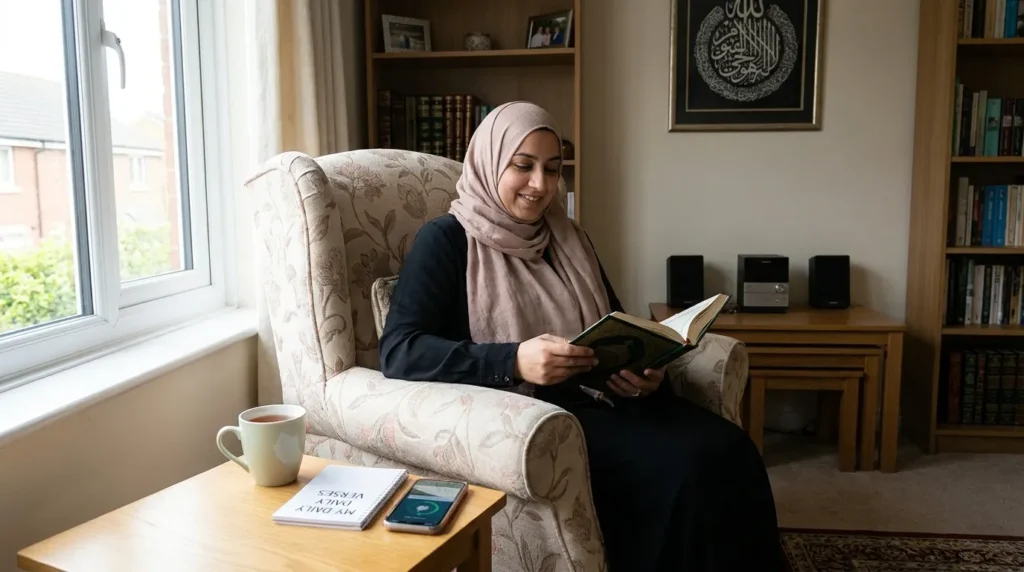
Love grows through consistency. A simple daily Quran routine helps children feel that the Quran is a normal and beloved part of life. The routine should be realistic, peaceful, and suitable for the family schedule.
A good routine may include listening to Quran after Fajr, reading one short surah after Maghrib, revising memorization before bedtime, or discussing one ayah during family time. The routine does not need to be long. It needs to be steady.
Children feel secure when routines are predictable. If Quran time happens daily with kindness, they begin to expect it and accept it. Over time, this consistency builds fluency, memorization, confidence, and emotional attachment.
Encourage Listening to Beautiful Quran Recitation
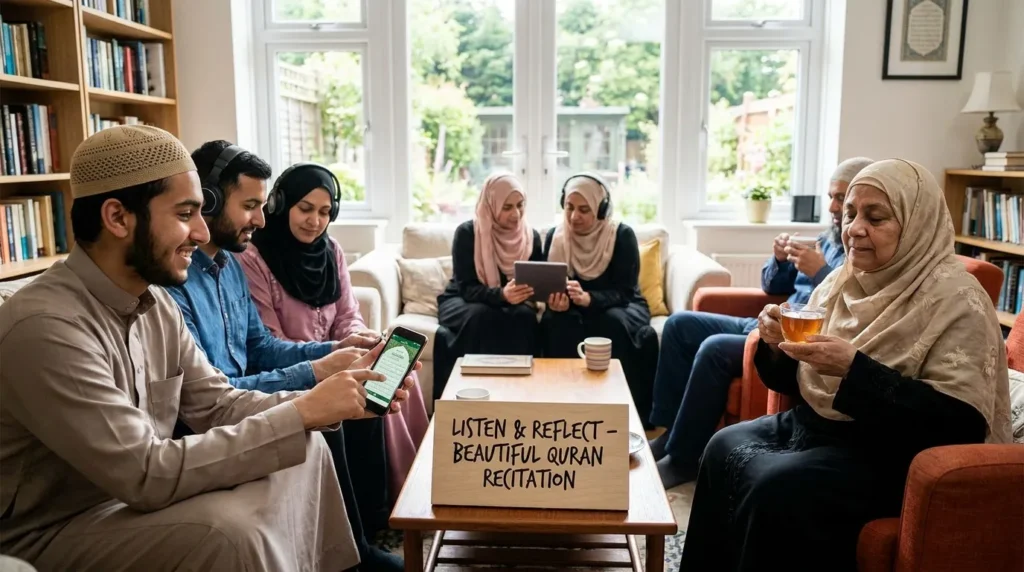
Listening is one of the easiest ways to introduce children to the Quran. Even before children can read, they can become familiar with the rhythm, sound, and beauty of Quranic recitation. Repeated listening also supports memorization.
We can play short surahs during calm moments, before sleep, in the car, or during quiet family time. However, listening should be respectful. The Quran should not become background noise in a chaotic environment where no one pays attention. We should teach children that when the Quran is recited, we listen with respect.
Parents can also recite aloud themselves. A parent’s voice often has a special emotional effect on a child. Even if our recitation is simple, children feel love and sincerity when they hear us recite.
Give Children Their Own Quran or Learning Materials
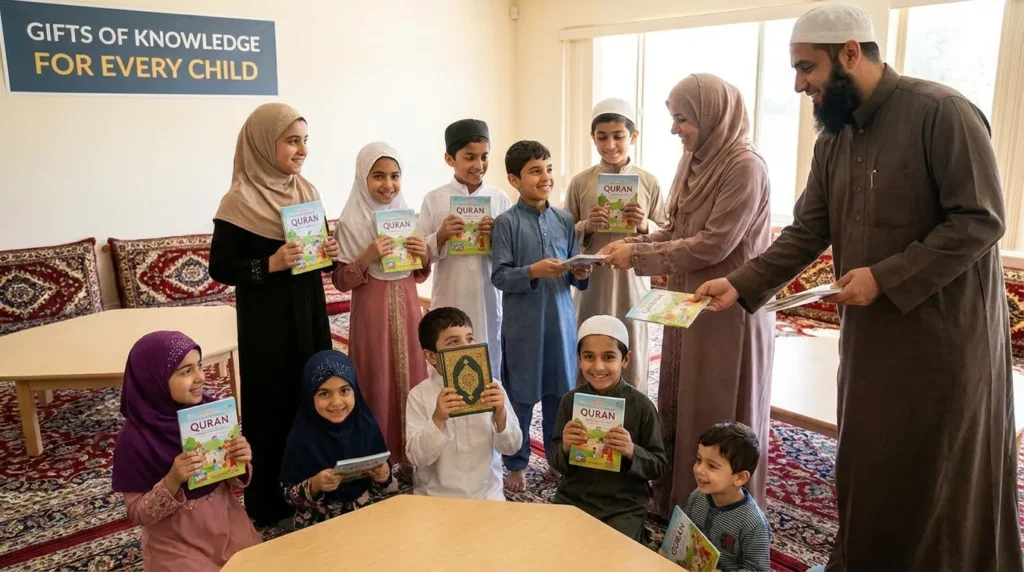
When children are old enough, giving them their own Quran, Qaida, juz amma book, or Quran journal can make learning personal. A child may feel proud when they have their own copy, bookmark, Quran cover, or progress chart.
For younger children, printed surahs, flashcards, Arabic letter sheets, and picture-based Islamic books can help. For older children, a translation, simple tafsir, tajweed guide, or memorization planner can make learning more independent.
Ownership creates responsibility. When children have their own learning materials, they begin to see themselves as active learners, not only students being instructed by adults.
Connect the Quran With Daily Life
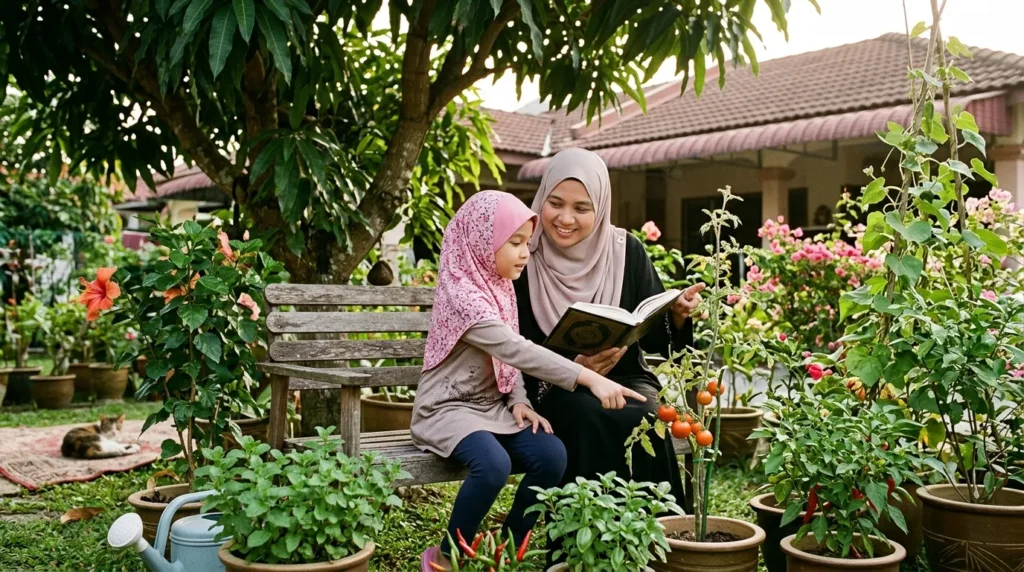
Children love the Quran more when they see how it helps them in real situations. We should connect Quranic teachings with everyday moments.
When a child tells the truth, we can remind them that Allah loves honesty. When siblings share, we can connect it with kindness and good character. When the child feels afraid, we can recite protective surahs. When they feel sad, we can remind them that Allah is near. When they succeed, we can teach gratitude. When they make a mistake, we can teach repentance and Allah’s mercy.
This approach helps children understand that the Quran is not separate from life. It guides speech, manners, emotions, worship, family relationships, and choices.
Avoid Forcing, Shaming, or Comparing Children
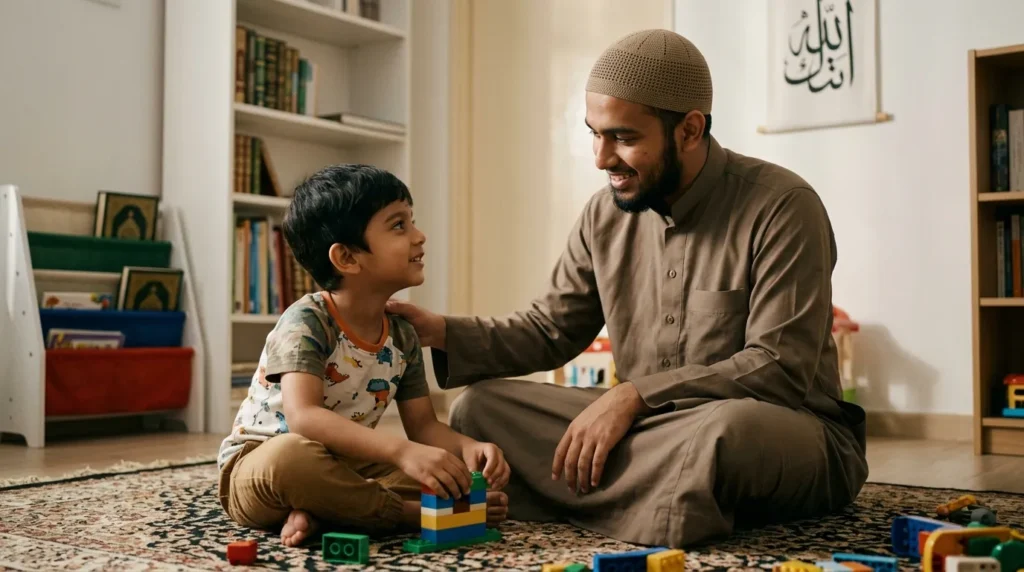
One of the biggest mistakes parents can make is turning Quran learning into a source of fear. Harshness may produce short-term obedience, but it can damage long-term love.
We should avoid saying things like, “Your cousin memorized more than you,” “You are lazy,” or “Allah will be angry with you if you do not read.” Fear-based teaching can make the child anxious and resistant.
Correction is necessary, especially in recitation and tajweed, but correction should be gentle. We can say, “Let us try that word again,” or “You are improving; this sound needs a little more practice.” Children should feel safe making mistakes during learning.
Comparison weakens confidence. Encouragement builds it.
Praise Effort More Than Speed
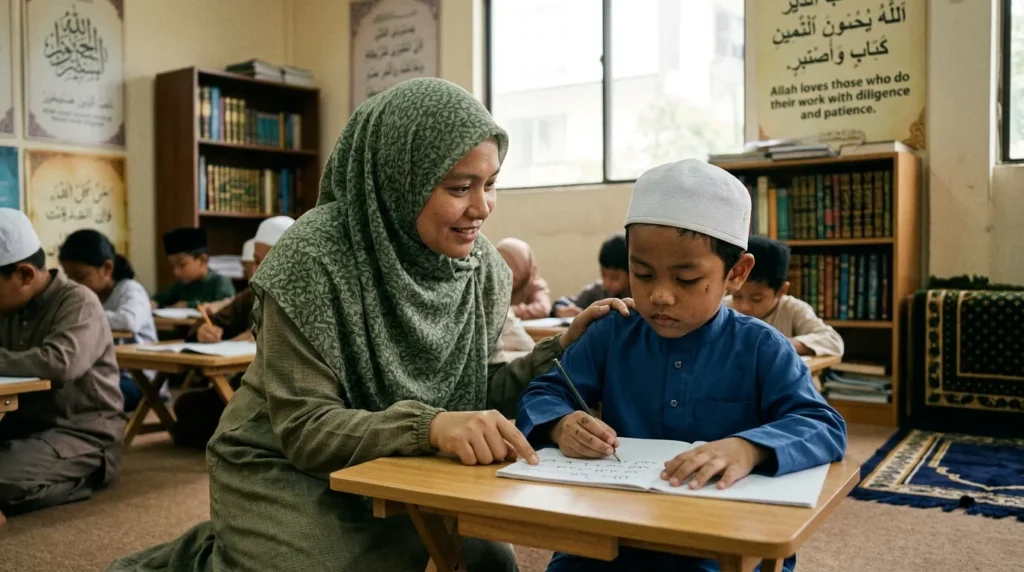
Some children memorize quickly. Others need more repetition. Some pronounce Arabic letters easily. Others struggle. Our focus should be effort, sincerity, and consistency rather than speed.
When a child tries hard, we should praise the effort:
“We are proud that you practiced today.”
“You repeated that ayah with patience.”
“Your recitation is becoming clearer.”
“You did not give up, and that is excellent.”
This kind of praise teaches children that Quran learning is a journey. They do not need to be perfect to be loved and appreciated.
Use Rewards Wisely Without Making the Quran a Transaction
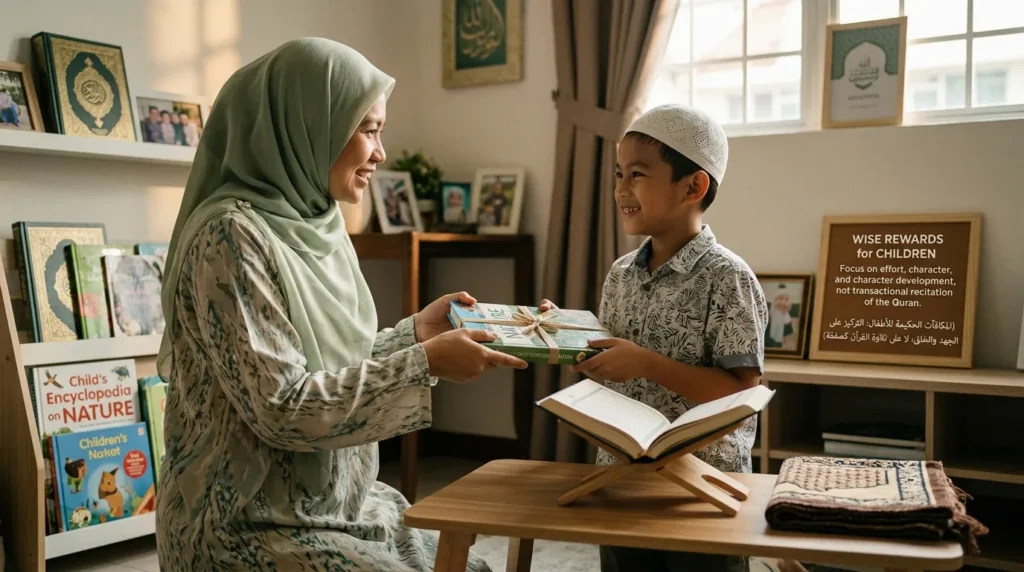
Rewards can motivate children, especially young ones. Stickers, stars, certificates, small gifts, special desserts, or family celebrations can make learning exciting. However, rewards should support love, not replace sincerity.
We should balance external rewards with spiritual meaning. For example, after a child memorizes a surah, we can celebrate and also say, “May Allah place this surah in your heart and make it a light for you.”
The reward should not become the only reason they learn. Over time, we gently shift the focus from gifts to confidence, closeness to Allah, and the joy of achievement.
Make Quran Learning Interactive
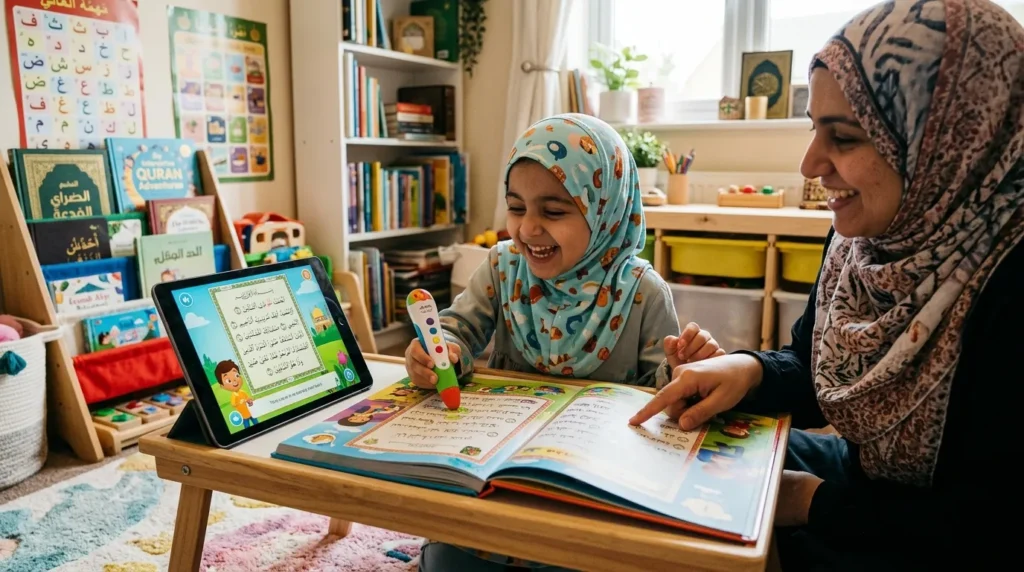
Children learn best when they participate actively. Instead of only sitting and repeating, we can use interactive methods.
We can create matching games with Arabic letters, arrange ayahs in order, use flashcards for short surahs, ask children to identify repeated words, draw lessons from Quranic stories, or create a family Quran quiz. We can also let children act out moral lessons from stories without disrespecting prophets or sacred matters.
For visual learners, charts and colors help. For auditory learners, repeated listening helps. For kinesthetic learners, movement-based games and writing activities help. When we match teaching methods to the child’s style, Quran learning becomes easier and more enjoyable.
Encourage Questions About the Quran
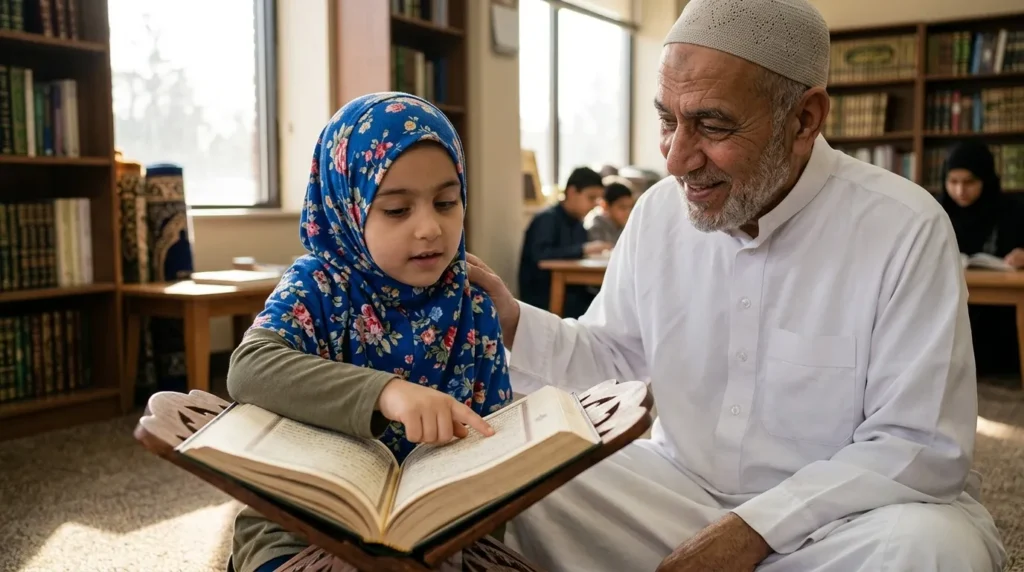
Children ask many questions. Sometimes their questions may seem simple, surprising, or difficult. We should welcome their curiosity. A child who asks questions is trying to understand.
If a child asks, “Why did Allah reveal the Quran?” we can explain that the Quran guides us to know Allah, worship Him, and live correctly. If they ask, “Why is the Quran in Arabic?” we can explain that Allah revealed it in Arabic, and Muslims around the world learn to recite it in the original language while also understanding its meaning through explanation and translation.
If we do not know an answer, we should say, “We will learn this from a reliable teacher or scholar.” This teaches honesty and respect for knowledge.
Choose the Right Quran Teacher
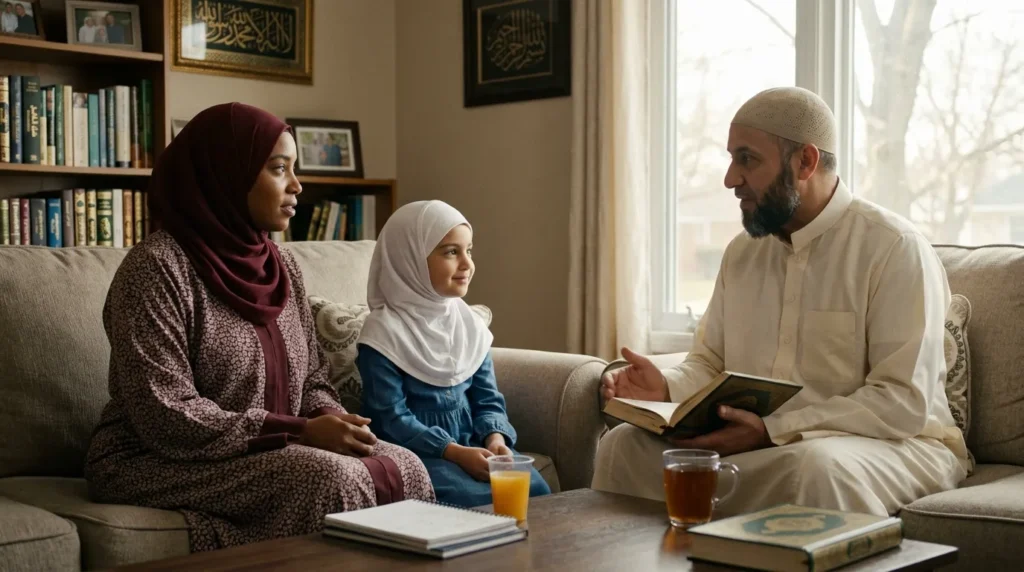
A good Quran teacher can strengthen a child’s love for the Quran. A harsh or careless teacher can weaken it. Parents should choose teachers who are qualified, patient, respectful, and child-friendly.
The teacher should correct recitation properly but kindly. They should understand the child’s level and avoid unnecessary pressure. They should encourage progress and communicate with parents.
Parents should also remain involved. We should not hand over the entire responsibility to the teacher. The teacher supports the process, but love for the Quran is built mainly at home.
Help Children Memorize With Understanding and Revision
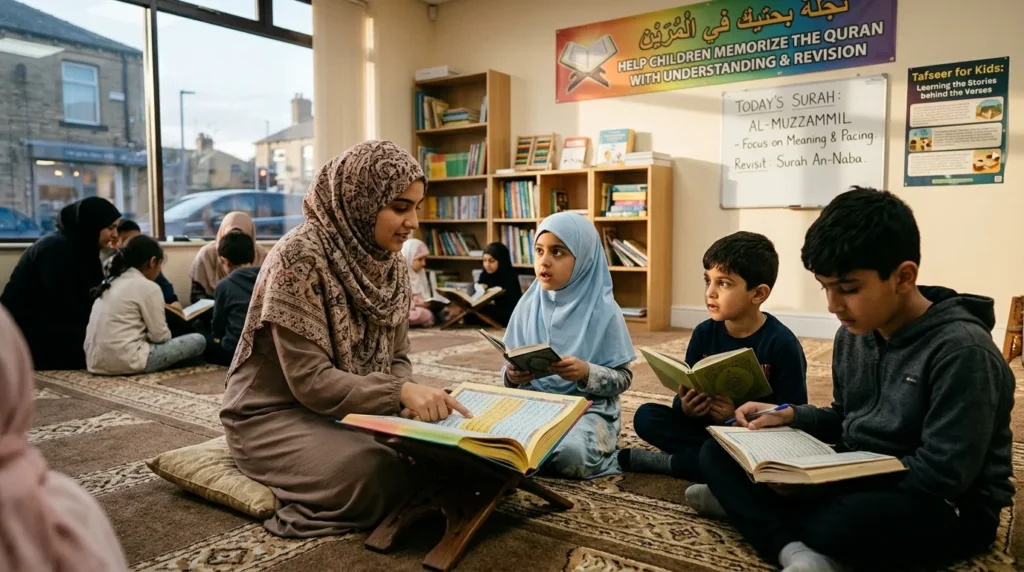
Memorization is a noble goal, but it should be managed carefully. Children need repetition, routine, and revision. Memorizing without review can lead to frustration when they forget.
A simple memorization method may include listening first, repeating after a parent or teacher, reading slowly, memorizing one small section, revising the same section several times, and then connecting it with the next ayah.
Understanding the meaning also helps memorization. When children know the message of a surah, they remember it more deeply. Revision should be part of the plan from the beginning.
Teach Basic Quran Etiquette
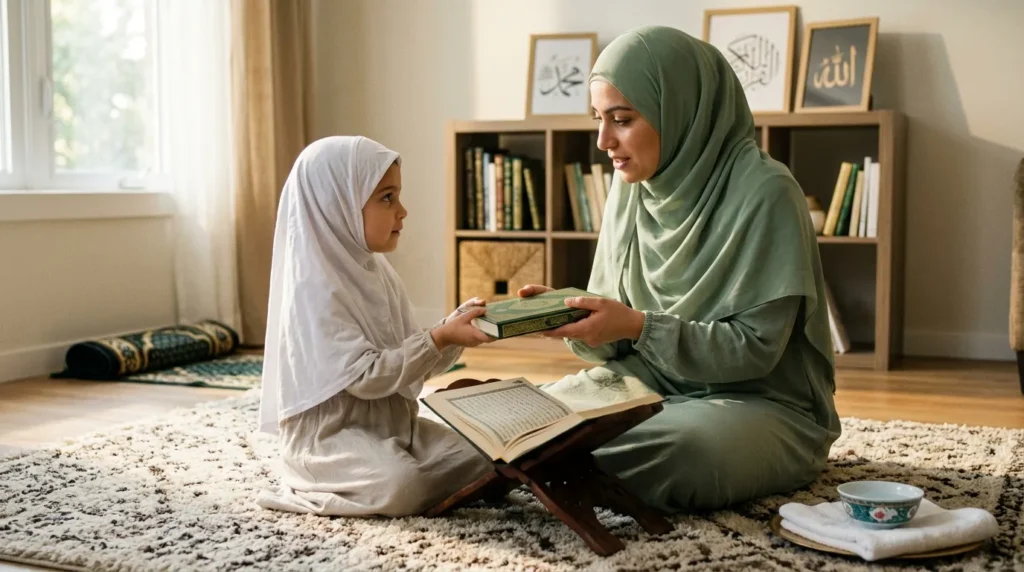
Love includes respect. Children should learn how to treat the Quran with care. We can teach them to keep the Quran in a clean place, handle it respectfully, avoid placing it on the floor, listen attentively during recitation, and maintain good manners during Quran time.
This educational lesson on respecting the Qur’an for kids is highly relevant as it guides children through the essential daily etiquettes of handling, reading, and listening to the Holy Book with proper reverence.
Etiquette should be taught gently. Young children may make mistakes because they are still learning. Instead of reacting with anger, we should calmly guide them: “We keep the Quran high because it is the Book of Allah.”
Respectful habits formed early can stay with them for life.
Use Technology Carefully for Quran Learning
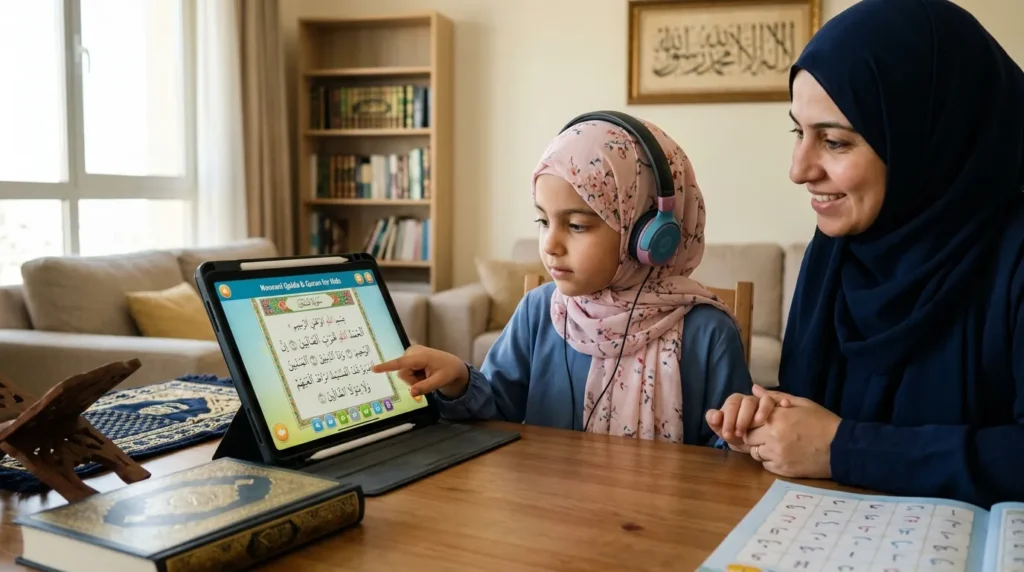
Technology can support Quran learning when used wisely. Quran apps, audio recitations, children’s Islamic videos, digital flashcards, and online classes can be helpful. However, technology should not replace parental involvement.
Parents should check content quality, avoid excessive screen time, and ensure that digital Quran learning remains respectful and focused. A beautiful app can help with pronunciation, repetition, and memorization, but the warmth of a parent sitting with a child cannot be replaced.
The best approach is balanced: use technology as a tool, not as the main relationship.
Make Ramadan a Season of Quran Love
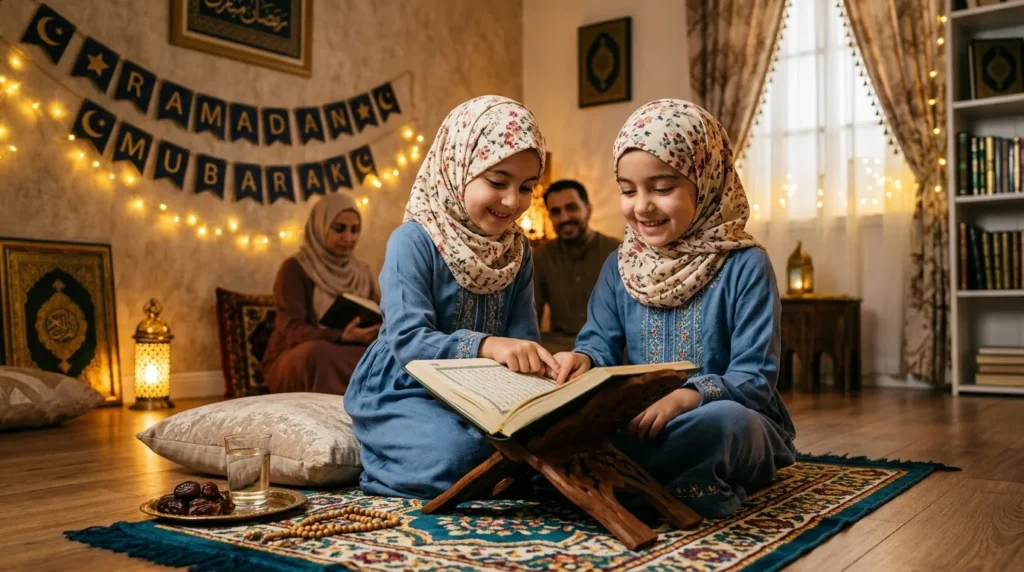
Ramadan is a powerful time to strengthen children’s connection with the Quran. Children see adults reciting more, attending taraweeh, making dua, and focusing on worship. This creates a special emotional environment.
We can prepare a Ramadan Quran plan for children according to their age. Younger children can listen to short surahs, color Quran-themed activity pages, or learn one new dua. Older children can complete a small reading goal, memorize selected surahs, or reflect on one ayah daily.
Family Quran circles during Ramadan can become memories children cherish for years.
Build a Family Quran Circle
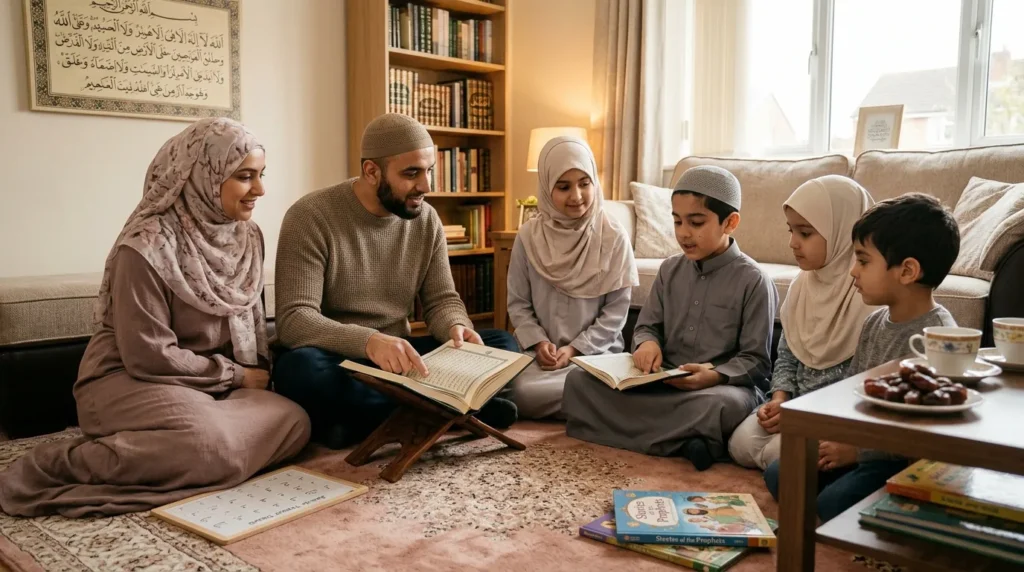
A family Quran circle does not need to be formal. It can be a weekly gathering where everyone sits together for fifteen to twenty minutes. One person recites, another reads a simple meaning, and the family discusses one lesson.
Children can participate by reading a short surah, sharing what they learned, asking a question, or choosing a story for the week. The goal is not perfection. The goal is togetherness around the Quran.
When children see the whole family gathering for the Quran, they feel that the Quran is central to family life.
Help Children See the Quran as Mercy and Guidance
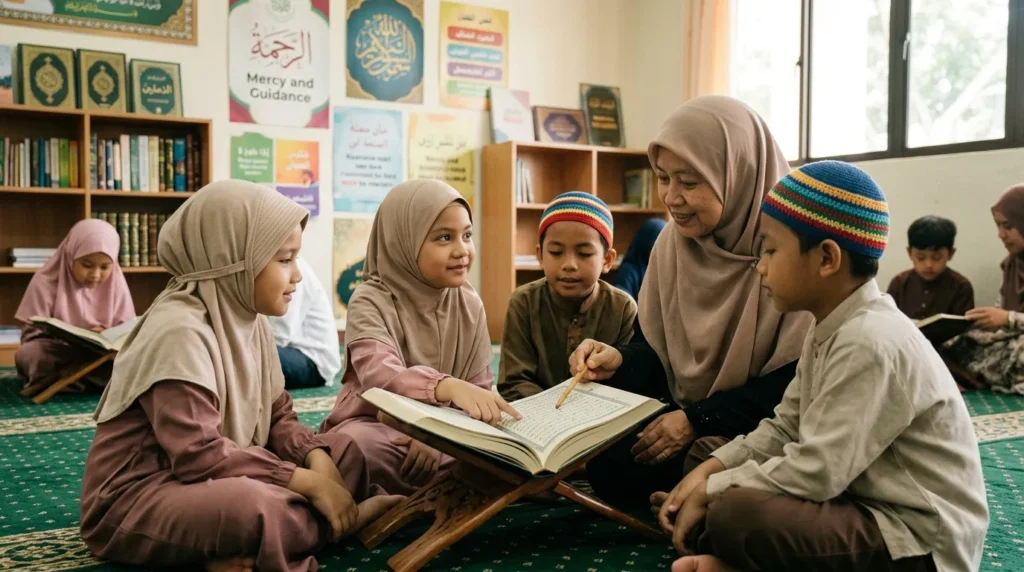
Children should not only hear about rules. They should also hear about Allah’s mercy, forgiveness, kindness, and guidance. The Quran teaches accountability, but it also gives hope.
We should tell children that the Quran helps us when we are confused, comforts us when we are sad, guides us when we make choices, and brings us closer to Allah. This balanced understanding protects children from seeing religion as only restriction.
A child who sees the Quran as mercy will return to it in moments of need.
Common Mistakes Parents Should Avoid
Making Quran Time Too Long
Long sessions can exhaust children. Short, regular, focused sessions are usually more effective.
Correcting Every Mistake Harshly
Too much correction can make children afraid to recite. Correction should be patient and encouraging.
Focusing Only on Memorization
Memorization is important, but meaning, manners, love, and application are also essential.
Comparing Siblings
Each child has a different pace. Comparison creates jealousy and discouragement.
Using the Quran as Punishment
The Quran should never feel like a punishment. It should be associated with guidance, peace, and love.
Ignoring Our Own Example
Parents cannot expect children to love the Quran if they never see the Quran loved at home.
Age-by-Age Quran Love Plan for Children
| 👶 Age Group | 🎯 Main Goal | 📖 Practical Approach |
|---|---|---|
| 🍼0–3 Years | Familiarity with sound | Play gentle Quran recitation, recite aloud, and repeat short Surahs. |
| 🌱4–6 Years | Love and recognition | Share Quran stories, teach Arabic letters, short Surahs, and encourage with praise. |
| 📚7–9 Years | Routine and basic understanding | Build daily recitation habits, teach simple meanings, and use a memorization chart. |
| ✨10–12 Years | Confidence and reflection | Practice Tajweed, learn translation, and discuss Quran lessons as a family. |
| 🌟13+ Years | Personal connection | Study Tafsir, maintain Quran journaling, set independent goals, and apply teachings. |
Practical Weekly Quran Routine for Families
| 📅 Day | 📖 Activity | ⏳ Duration |
|---|---|---|
| 🌙Monday | Listen to one short Surah and repeat it. | 10 minutes |
| ✨Tuesday | Learn meanings of selected Quranic words. | 10 minutes |
| 🔄Wednesday | Revise memorized Surahs and strengthen recall. | 10–15 minutes |
| 📚Thursday | Read a Quranic story and discuss its lessons. | 15 minutes |
| 🕌Friday | Family Quran circle with shared learning and reflection. | 20 minutes |
| 🎯Saturday | Quran game or quiz to make learning enjoyable. | 15 minutes |
| 💭Sunday | Reflection, gentle review, and connection with Quran teachings. | 10 minutes |
📖 Building a Child’s Love for the Quran
Powerful Ways to Make the Quran Part of Everyday Life
We can mention Quranic values during normal family moments. When eating, we teach gratitude. When speaking, we teach honesty. When helping others, we teach kindness. When facing difficulty, we teach patience and tawakkul. When making mistakes, we teach repentance.
This method helps children understand that the Quran is not only recited; it is lived.
A child who learns that the Quran guides behavior will begin to see it as a companion for life.
The Role of Dua in Helping Children Love the Quran
Parents should never underestimate the power of dua. Guidance comes from Allah. We make effort, teach gently, provide resources, and create routines, but Allah opens hearts.
We should regularly ask Allah to make the Quran beloved to our children, to make it easy for them to recite and understand, and to make it a light in their hearts.
A beautiful parental habit is to make dua for children after salah, during suhoor, on Fridays, and in the last part of the night. Our children need our teaching, but they also need our sincere prayers.
Encourage Children to Love the Quran
Divine Guidance
5 Inspiring Quranic Ayat on Knowledge, Remembrance & Family Duties
| Reference | Meaning & Context |
|---|---|
| Surah Al-Baqarah Ayah 2:152 |
“So remember Me; I will remember you. And be grateful to Me and do not deny Me.” View on Quran.com |
| Surah At-Tahrim Ayah 66:6 |
“O you who have believed, protect yourselves and your families from a Fire whose fuel is people and stones…” View on Quran.com |
| Surah Luqman Ayah 31:13 |
“And [remember] when Luqman said to his son while he was advising him, ‘O my son, do not associate [anything] with Allah. Indeed, association [with Him] is great injustice.'” View on Quran.com |
| Surah At-Talaq Ayah 65:3 |
“And He will provide for him from where he does not expect. And whoever relies upon Allah – then He is sufficient for him.” View on Quran.com |
| Surah Al-Baqarah Ayah 2:255 |
“Allah! There is no deity except Him, the Ever-Living, the Sustainer of all existence. Neither drowsiness overtakes Him nor sleep…” View on Quran.com |
Prophetic Wisdom
5 Heartwarming Hadiths on Character, Quranic Education & Love
| Source Book | Meaning & Context |
|---|---|
| Sahih Al-Bukhari Book 66, Hadith 49 |
“The best of you are those who learn the Quran and teach it to others.” Verify on Sunnah.com |
| Sahih Al-Bukhari Book 56, Hadith 201 |
“A kind word is a form of charity.” Verify on Sunnah.com |
| Sahih Muslim Book 25, Hadith 20 |
“When a man dies, his deeds come to an end except for three: … recurring charity, knowledge which is beneficial, or a righteous child who prays for him.” Verify on Sunnah.com |
| Sunan Abi Dawud Book 2, Hadith 105 |
“Command your children to pray (Salah) when they are seven years old…” Verify on Sunnah.com |
| Sahih Muslim Book 4, Hadith 71 |
“Whoever sends blessings (Durood) upon me once, Allah will send blessings upon him ten times.” Verify on Sunnah.com |