What Age Do We Teach Our Child Quran?
One of the most common questions Muslim parents ask is: What age should we teach our child Quran? The answer is simple but important: we can introduce the Quran from birth through listening and love, begin basic recognition in early childhood, start structured learning around age four to six, and gradually move toward fluent recitation, tajweed, and memorization as the child becomes ready.
There is no single fixed age that applies to every child. Some children are ready for formal Quran lessons at four. Others may need more time and begin properly at six or seven. What matters most is not starting early only for the sake of speed. What matters is beginning in the right way, with love, patience, consistency, and age-appropriate teaching.
The Quran should enter a child’s life as mercy, beauty, guidance, and comfort. When children are introduced to the Quran gently, they are more likely to love it, respect it, recite it, memorize it, and live by it as they grow older.
The Best Age to Start Teaching Quran to Children
The best age to teach Quran depends on what we mean by “teaching.” If we mean listening to Quran, then we can begin from infancy. If we mean recognizing Arabic letters, we can begin around three to five years old. If we mean structured Qaida and recitation, many children are ready around four to six years old. If we mean serious memorization, many children begin around six or seven, depending on their ability, attention span, and interest.
A helpful way to understand Quran education is by stages:
| 👶 Child’s Age | 📖 Quran Learning Stage | 🌱 Best Approach |
|---|---|---|
| 0–2 years | Listening and emotional connection | Gentle recitation, parents reading aloud |
| 3–4 years | Recognition and imitation | Arabic letters, short surahs, Quran stories |
| 5–6 years | Basic structured learning | Qaida, makharij basics, short daily lessons |
| 7–9 years | Fluency and memorization | Recitation practice, tajweed, revision |
| 10+ years | Deeper understanding | Translation, tafsir, reflection, application |
This staged approach helps us avoid pressure. A child does not need to master everything at once. We build the foundation slowly.
Can We Introduce the Quran From Birth?
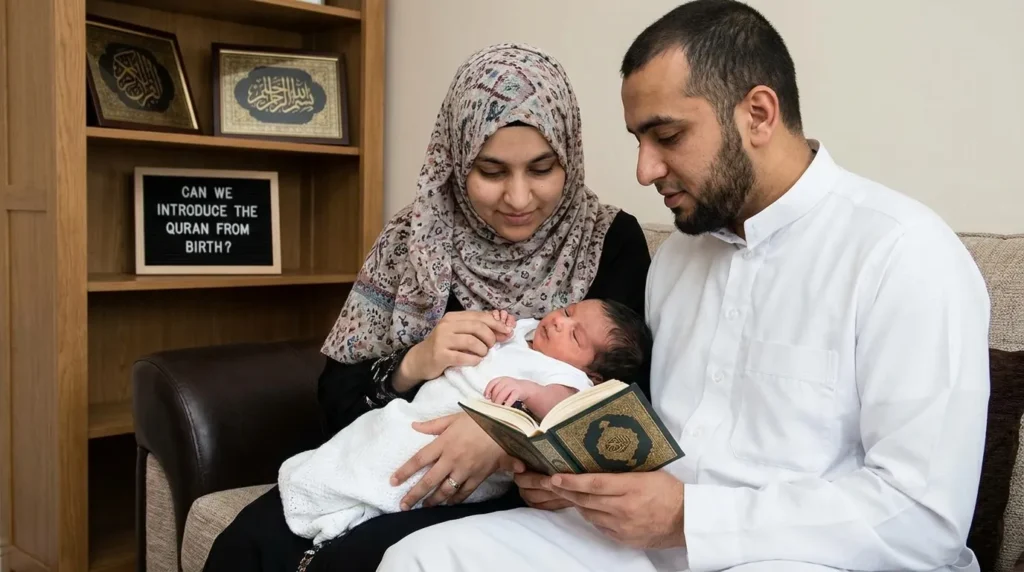
Yes, we can introduce the Quran from birth, but not through formal lessons. At this stage, the goal is familiarity and love. Babies and toddlers absorb sound, rhythm, emotion, and routine. When they hear Quran recitation regularly in a calm home, the Quran becomes familiar to them before they understand words.
Parents can recite short surahs while holding the child, play gentle Quran recitation at suitable times, or read Quran after salah while the child is nearby. The aim is not to test the child or expect repetition. The aim is to make the Quran part of the home atmosphere.
A child who grows up hearing Quran may later find Quran learning easier and more emotionally natural.
Age 2 to 4: Building Love Before Formal Learning
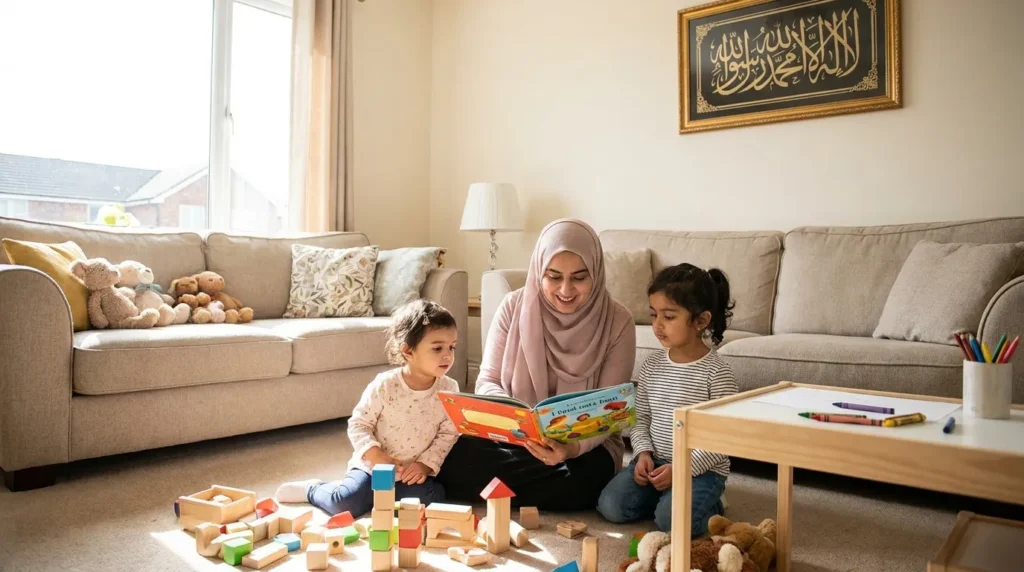
Between the ages of two and four, children are curious, active, and highly responsive to repetition. This is a beautiful age to build love for the Quran without pressure. We can teach through sound, short phrases, stories, pictures, and daily habits.
At this age, we can introduce:
- Short surahs through listening
- Simple Arabic letters
- Quranic stories in child-friendly language
- Respect for the Quran
- Basic Islamic words such as Allah, Quran, salah, dua, and Jannah
- Repeating small phrases after parents
A child may memorize small parts of Surah Al-Fatihah, Surah Al-Ikhlas, Surah Al-Falaq, or Surah An-Nas simply by hearing them often. We should praise every small effort.
The key at this age is joy. Lessons should feel like bonding, not school pressure.
Age 4 to 6: Starting Qaida and Basic Quran Reading
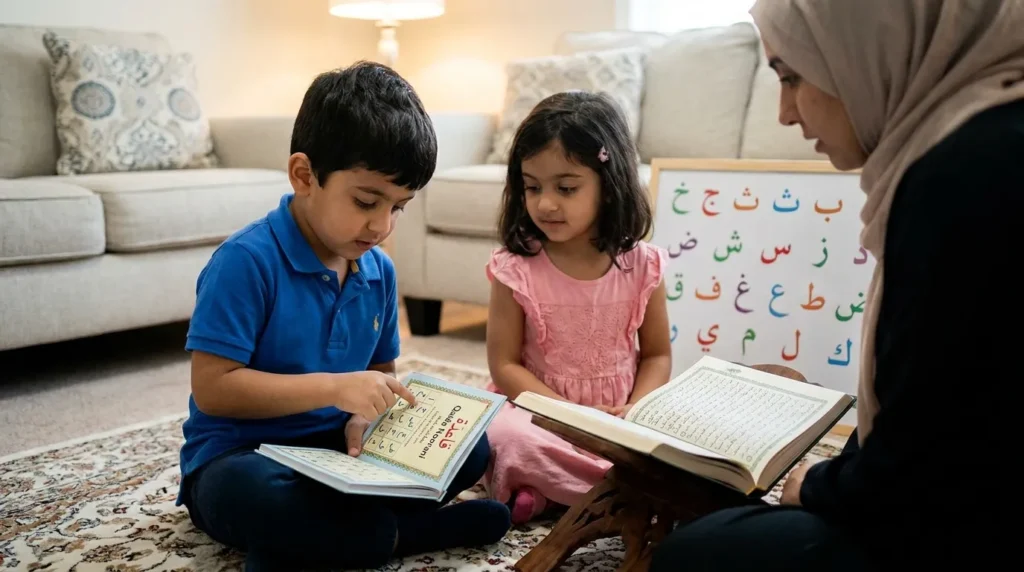
Many children are ready to begin basic Quran reading between four and six years old. This is usually the age when children can sit for short periods, recognize letters, repeat sounds, and follow simple instructions.
At this stage, we can begin with a Qaida or beginner Quran reading book. The child learns Arabic letters, joining letters, vowel sounds, tanween, sukoon, shaddah, madd, and basic pronunciation.
However, the lessons should remain short. Ten to fifteen minutes daily is often enough. Long lessons can make the child tired and resistant.
A good routine at this age may include:
| 📖 Activity | ⏳ Duration |
|---|---|
| Letter or Qaida practice | 5–10 minutes |
| Listening to one short surah | 3–5 minutes |
| Repeating after parent or teacher | 5 minutes |
| Praise or small reward | 1 minute |
The goal is to build confidence. If the child enjoys Quran time, progress will come naturally.
Age 6 to 7: A Strong Age for Structured Quran Learning
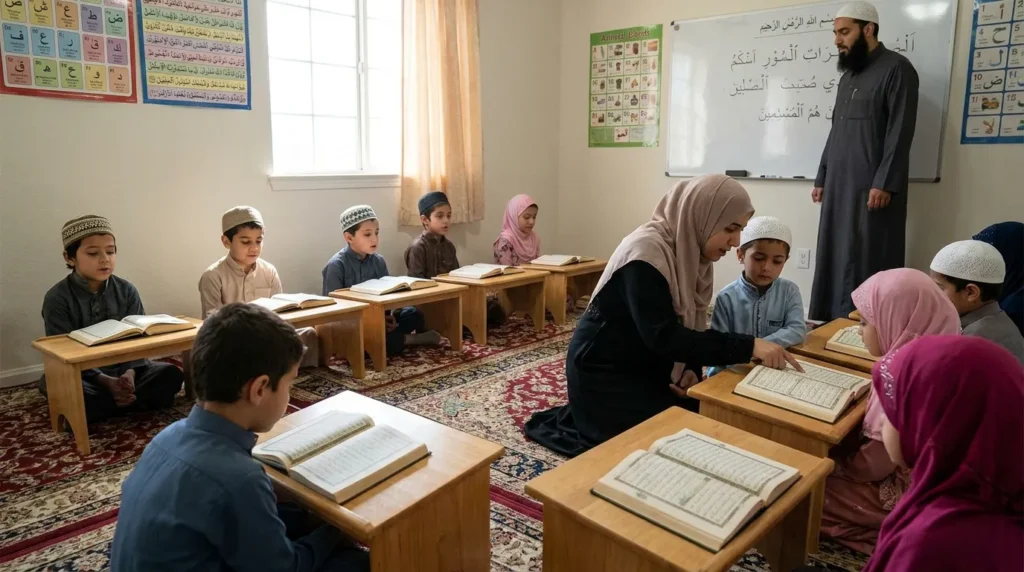
Around six or seven, many children become more prepared for regular Quran study. They can usually sit longer, remember instructions, revise lessons, and understand simple meanings. This is often a good age for structured recitation and early tajweed practice.
At this stage, we can focus on:
- Fluent Qaida completion
- Correct letter pronunciation
- Reading short Quranic passages
- Memorizing short surahs
- Learning basic meanings
- Building daily revision habits
- Understanding Quran etiquette
This is also a suitable age to introduce a Quran teacher if parents need support. The teacher should be gentle, qualified, and experienced with children.
When Should Children Start Memorizing the Quran?
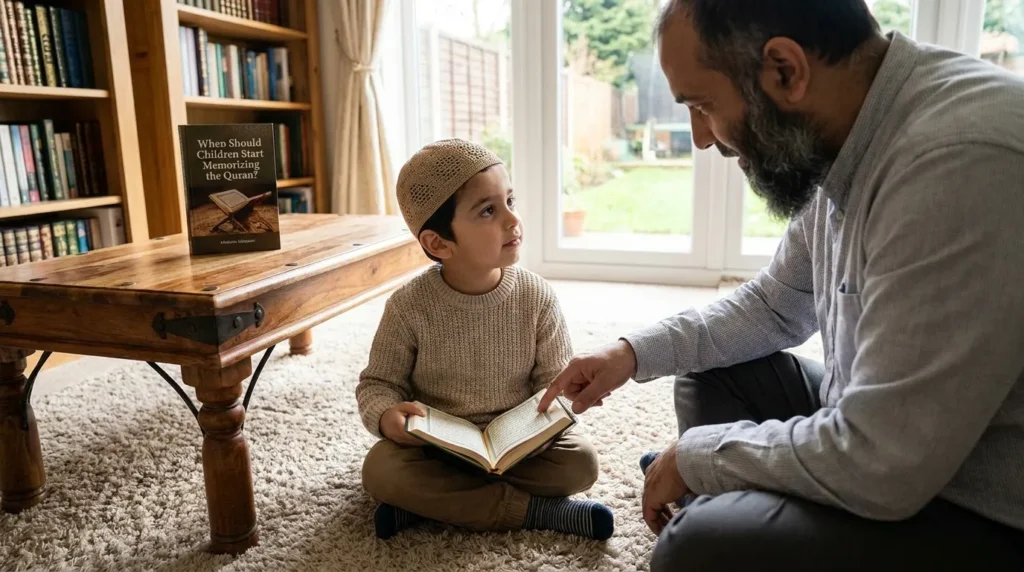
Children can begin memorizing short surahs as early as three or four through listening and repetition. However, serious memorization should begin when the child is emotionally and mentally ready. For many children, this is around six to eight years old.
Before starting serious memorization, we should ask:
- Can the child repeat accurately?
- Can the child revise previous lessons?
- Can the child sit for a short focused session?
- Does the child enjoy or at least accept Quran learning?
- Is the child able to handle gentle correction?
- Is there a parent or teacher available for regular revision?
Memorization without revision can become stressful. A child may memorize quickly but forget quickly if there is no review system. Therefore, memorization should always include daily revision.
Should We Teach Quran Before School Age?
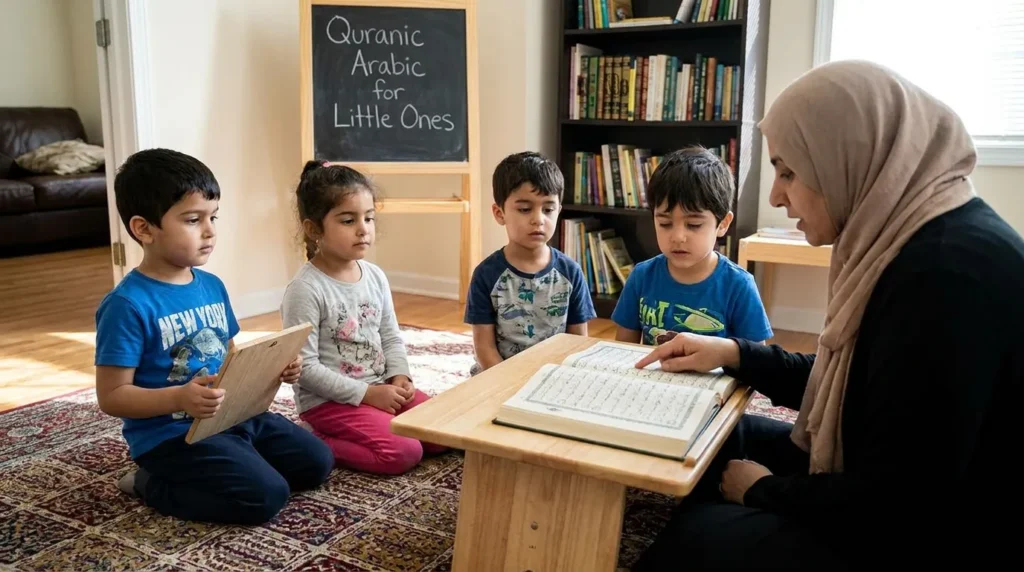
Yes, but the method should match the child’s age. Before school age, children should not be forced into long formal lessons. Instead, we can introduce the Quran through listening, repetition, stories, and simple recognition.
Preschool Quran learning should be light, loving, and flexible. If the child is interested, we can teach letters. If the child is not ready, we can continue with listening and stories. Readiness matters more than age.
A child who starts at five with love may progress better than a child who starts at three with pressure.
Signs Our Child Is Ready to Learn Quran
Every child develops differently. Instead of focusing only on age, we should look for readiness signs.
A child may be ready for Quran lessons if they can:
| 🌱 Readiness Sign | 📖 What It Means |
|---|---|
| Sit for 5–10 minutes | Ready for short lessons |
| Repeat sounds | Ready for letter pronunciation |
| Recognize shapes | Ready for Arabic letters |
| Follow simple instructions | Ready for Qaida practice |
| Show interest in Quran | Ready for positive routine |
| Remember short phrases | Ready for small memorization |
| Accept gentle correction | Ready for recitation improvement |
If some signs are missing, we do not need to worry. We can continue with gentle exposure and try again later.
What Should We Teach First: Qaida, Surahs, or Arabic Letters?
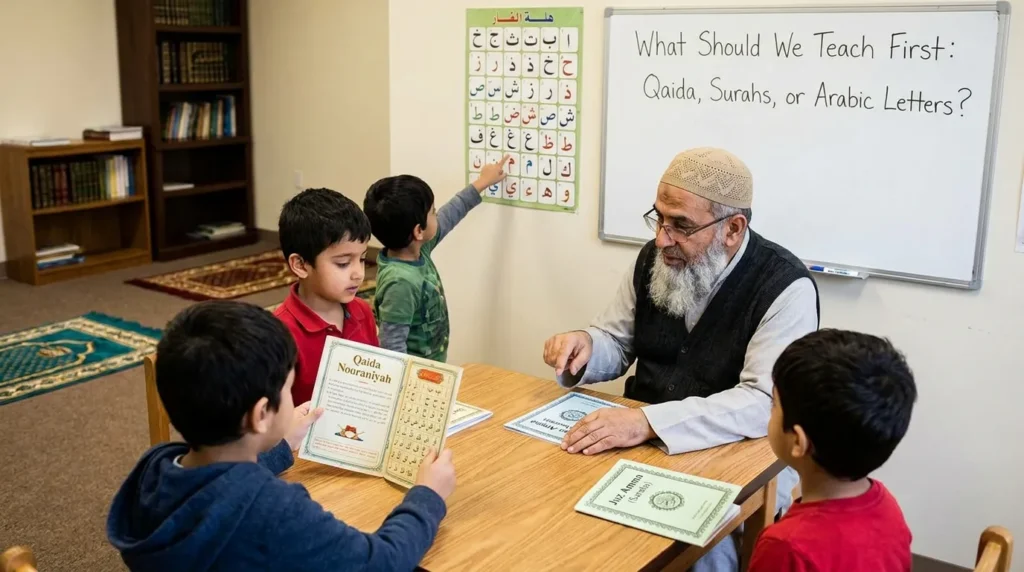
For most children, the best starting point is a combination of listening, Arabic letters, and short surahs.
We can begin with Arabic letters through a Qaida, while also helping the child memorize very short surahs by listening. The child does not need to read perfectly before memorizing small surahs. Many children memorize by hearing before they can read.
A balanced beginner plan includes:
- Listening to short surahs
- Learning Arabic letters
- Practicing correct sounds
- Repeating short ayahs
- Learning simple meanings
- Building respect for the Quran
This balance keeps Quran learning complete and meaningful.
How Long Should a Child’s Quran Lesson Be?
A child’s Quran lesson should be short enough to protect interest and long enough to build consistency. The younger the child, the shorter the lesson.
| 👶 Age | ⏳ Suggested Lesson Length |
|---|---|
| 2–3 years | 2–5 minutes |
| 4–5 years | 5–10 minutes |
| 6–7 years | 10–15 minutes |
| 8–10 years | 15–25 minutes |
| 11+ years | 25–40 minutes |
Daily consistency is more powerful than long occasional lessons. A peaceful ten-minute lesson every day can create better results than a one-hour lesson once a week.
How Parents Can Start Teaching Quran at Home
Parents do not need to be perfect reciters to begin building Quran love at home. We can start with simple, consistent actions.
We can choose a fixed Quran time, such as after Fajr, after Maghrib, or before bedtime. We can begin with one short surah, one letter, or one small Qaida page. We can sit beside the child, recite slowly, ask them to repeat, and praise effort.
A simple home routine may look like this:
| 🔢 Step | 📖 Activity |
|---|---|
| 1 | Begin with Bismillah |
| 2 | Revise yesterday’s lesson |
| 3 | Learn one new letter, word, or ayah |
| 4 | Listen to correct recitation |
| 5 | Repeat gently |
| 6 | End with praise and dua |
The routine should feel calm. If the child is tired, sick, or upset, we can shorten the lesson rather than forcing it.
Choosing the Right Quran Teacher for a Child
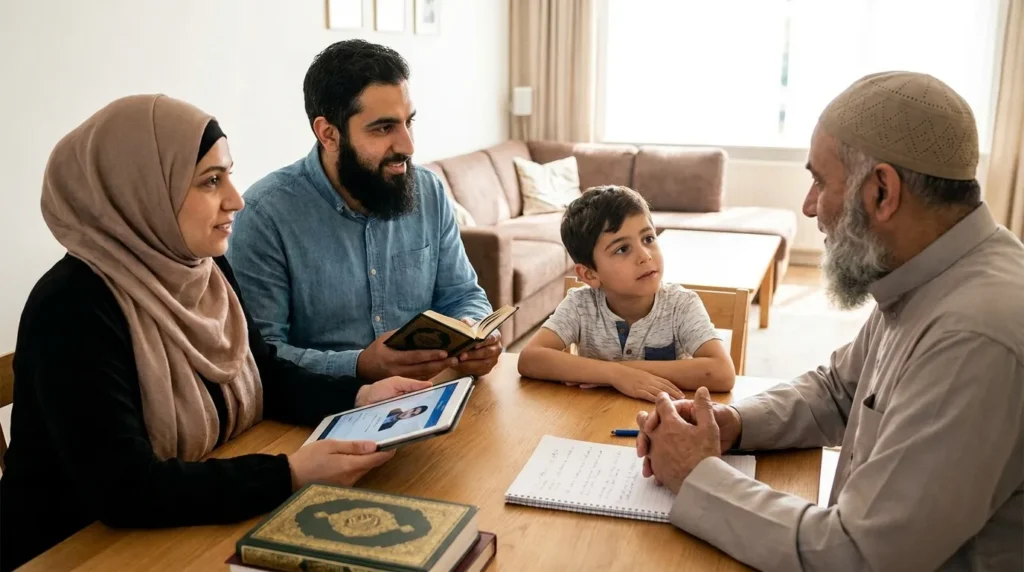
A Quran teacher can have a lifelong effect on a child’s relationship with the Quran. We should choose carefully.
A good Quran teacher should be:
- Patient and kind
- Qualified in Quran recitation
- Able to teach children
- Gentle in correction
- Consistent with lessons
- Clear with parents about progress
- Focused on love and respect, not fear
The teacher should not humiliate, shout, compare, or rush the child. If a child becomes fearful, anxious, or resistant after lessons, parents should observe closely and communicate with the teacher.
The right teacher helps the child feel capable and connected.
Online Quran Classes: What Age Is Suitable?
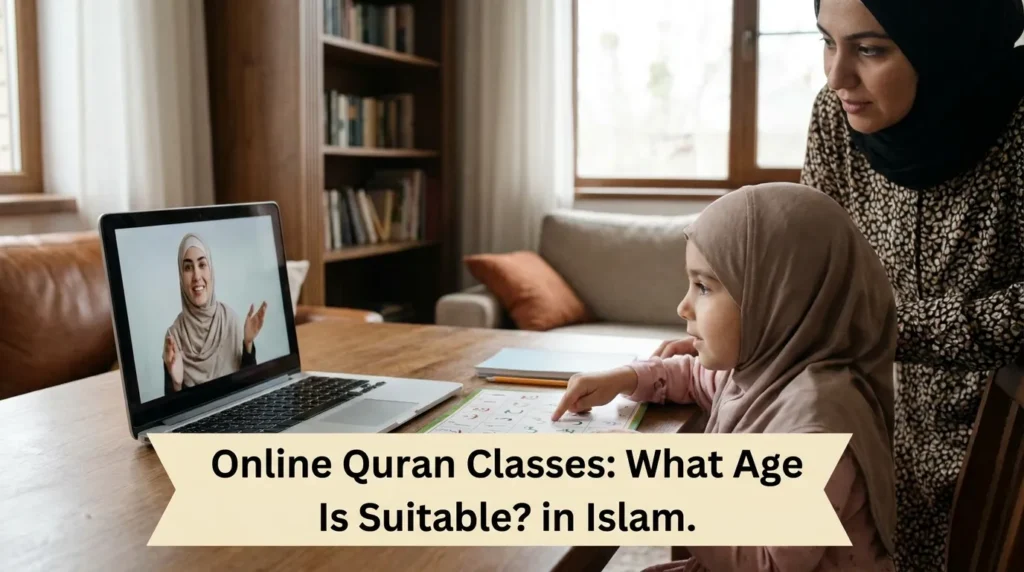
Online Quran classes can be useful, especially when a qualified local teacher is not available. However, online learning requires focus, screen discipline, and parental support.
For very young children under five, online Quran classes may be difficult unless a parent sits with them. Children aged six and above often manage better with short online sessions.
For online Quran learning, we should ensure:
- The teacher is qualified
- The session is short and interactive
- Parents monitor the class
- The child is not left alone for long sessions
- The teacher uses gentle methods
- Revision is done outside class
Online classes should support learning, not replace parental involvement.
Teaching Tajweed: When Should Children Start?
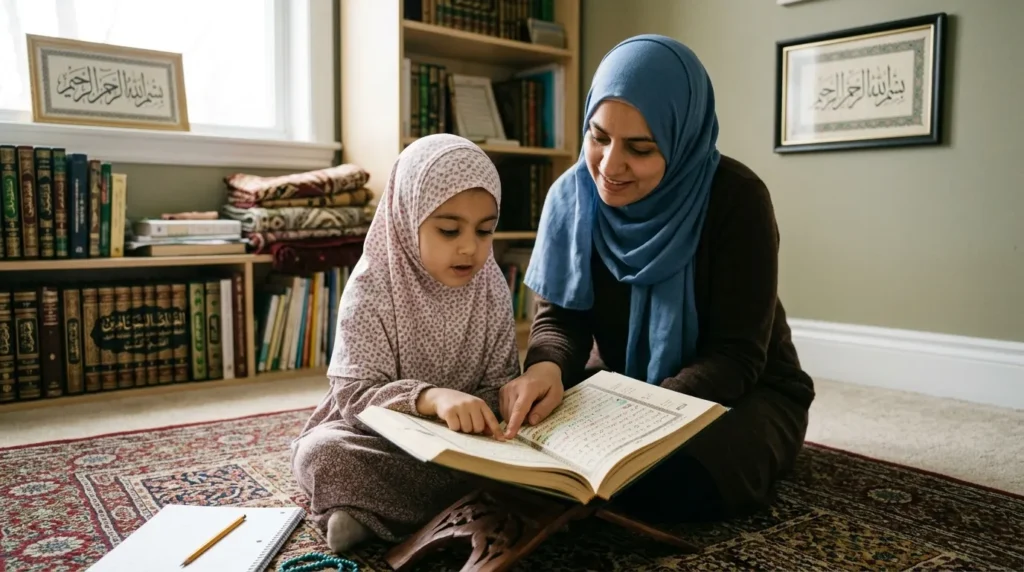
Children can begin basic tajweed early, but it should be introduced naturally. At first, the child should learn correct letter sounds and simple pronunciation. Formal tajweed rules can come later.
For young children, tajweed should focus on practical recitation:
- Correct makharij
- Clear vowels
- Avoiding major pronunciation mistakes
- Listening and repeating
- Stretching sounds correctly where needed
Around seven or eight, many children can begin learning simple tajweed rules by name. Older children can study rules more formally.
The goal is not to overwhelm the child with terminology. The goal is beautiful and correct recitation.
Teaching Quran Meaning and Translation to Children
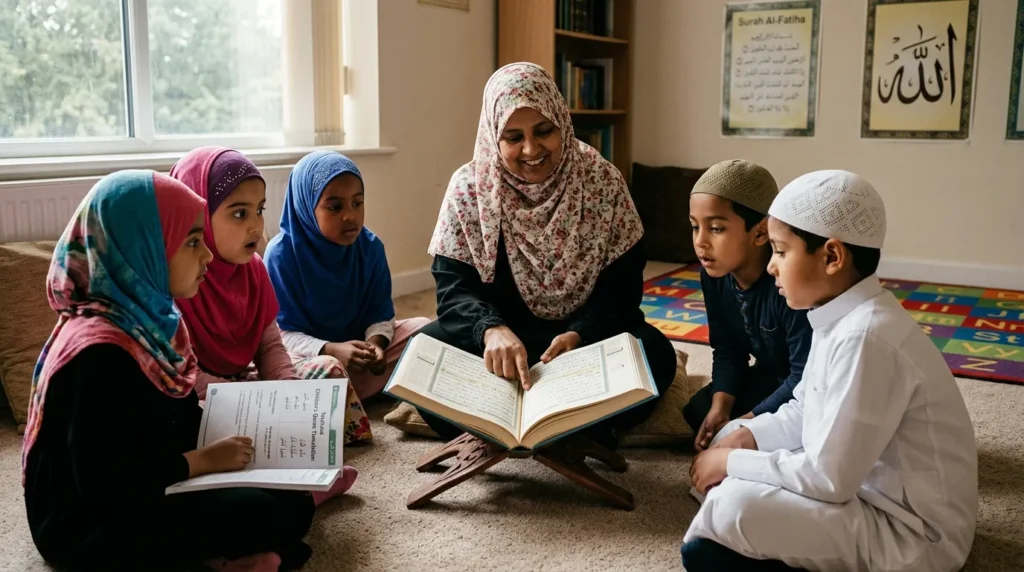
Children should not only learn to recite. They should also understand the message in a simple way. Even young children can understand basic meanings.
When teaching Surah Al-Fatihah, we can explain that we praise Allah and ask Him for guidance. When teaching Surah Al-Ikhlas, we can explain that Allah is One. When teaching Surah Al-Falaq and Surah An-Nas, we can explain that we ask Allah for protection.
Understanding creates love. A child who knows what they are reciting feels more connected to the Quran.
For older children, we can introduce simple translation, short tafsir, and Quran journaling.
⚠️ Common Mistakes Parents Make When Starting Quran Lessons
📖 Best Quran Learning Plan by Age
Sample Daily Quran Routine for Children
| 🕒 Time | 📖 Activity | 🌱 Benefit |
|---|---|---|
| 🌅Morning | Listen to short Quran recitation. | Builds familiarity with the Quran. |
| 🎒After School | Practice Qaida or Quran reading. | Builds Quran reading skills. |
| 🌇After Maghrib | Revise memorized Surahs. | Strengthens memory and improves retention. |
| 🌙Bedtime | Listen to a Quran story or learn simple meanings. | Builds love and emotional connection with the Quran. |
This routine can be adjusted according to school, family schedule, and the child’s energy.
📖 Quran Learning Journey by Age
How to Keep Children Motivated in Quran Learning
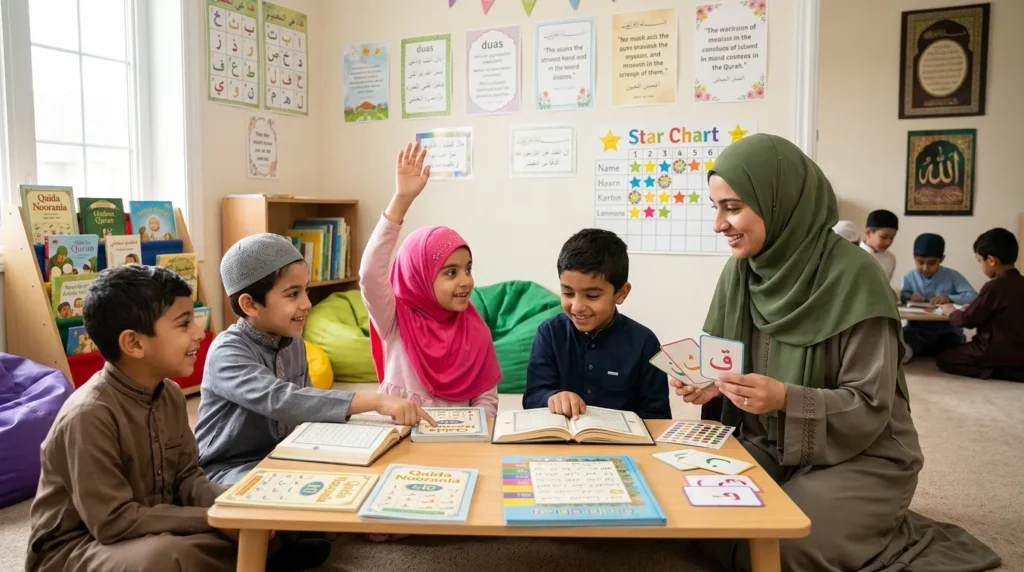
Children stay motivated when they feel successful. We should break lessons into small goals and celebrate progress. A child may receive praise for learning one letter, reading one line, memorizing one ayah, or improving pronunciation.
Helpful motivation methods include:
- Sticker charts
- Quran progress boards
- Family praise
- Small certificates
- Special dua after completing a surah
- Sharing progress with grandparents
- Gentle competitions without pressure
Motivation should not become bribery. Rewards should support the child’s love, not replace sincerity.
Should We Force a Child to Learn Quran?
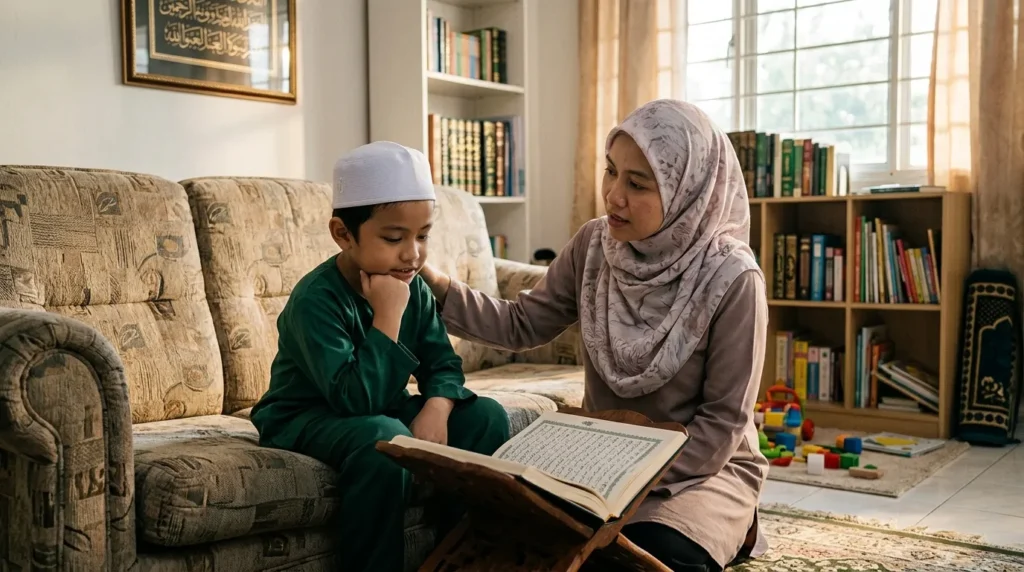
Children need discipline, but force should not be the foundation of Quran learning. A routine is important, but harshness can harm the child’s emotional connection with the Quran.
If a child resists, we should first understand the reason. The lesson may be too long, the teacher may be too strict, the child may be tired, or the method may not match the child’s learning style.
Instead of forcing, we can shorten lessons, change timing, add variety, use more listening, include stories, or sit with the child during class.
Firmness with mercy is better than pressure without understanding.
What If Our Child Starts Late Learning Quran?
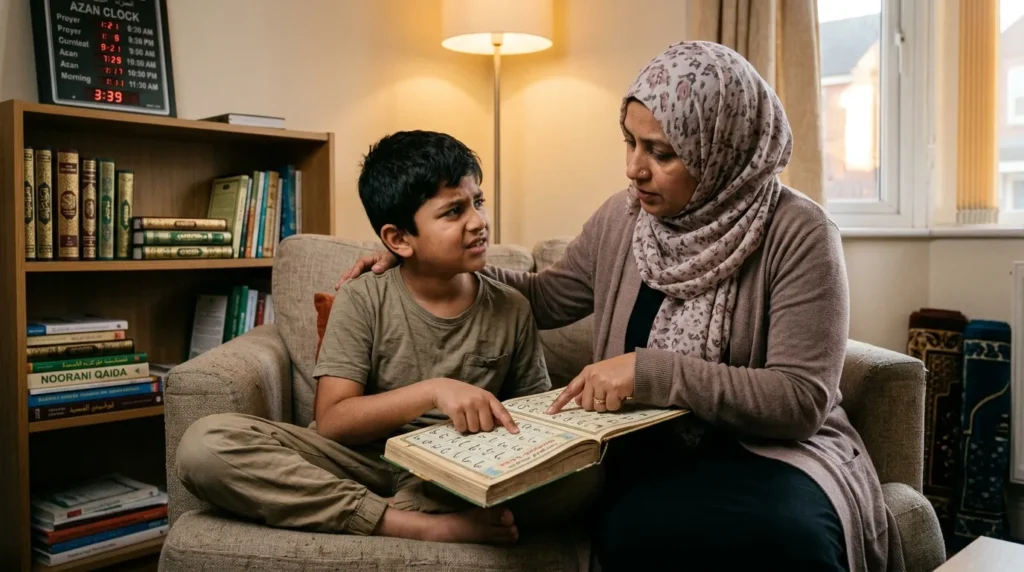
If a child starts Quran learning at eight, ten, or even older, it is not too late. Many children begin later and still become excellent reciters and memorizers. A late start with sincerity and consistency is better than an early start filled with stress.
For older beginners, we should avoid making them feel ashamed. We can create a clear plan, choose a supportive teacher, and focus on steady improvement.
The Quran is guidance for every age. The door is always open.
What Age Should We Teach Our Child Quran?
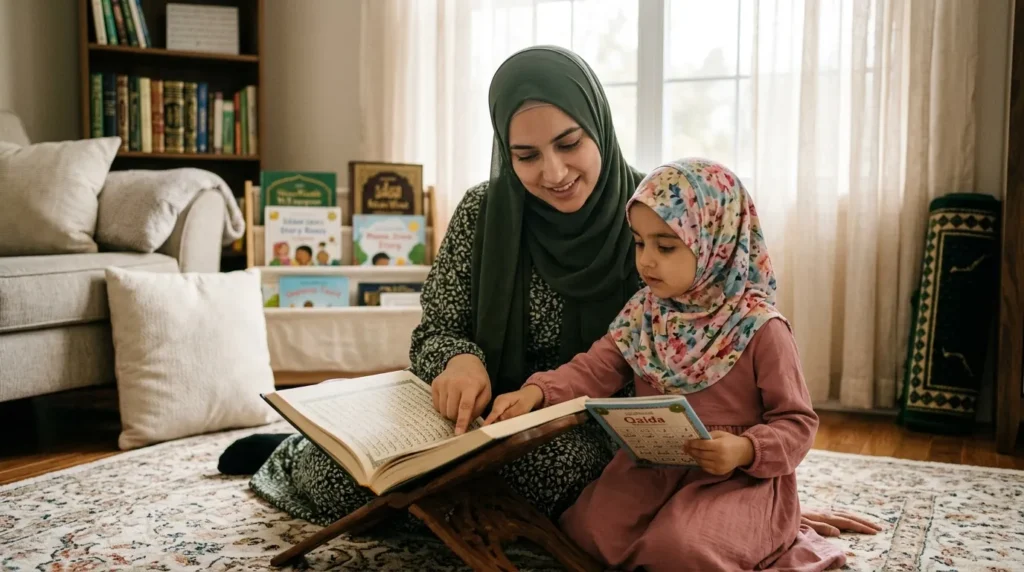
We can introduce the Quran from birth through listening and love. We can begin Arabic letters and short surahs around three to four. We can start structured Qaida and basic Quran reading around four to six. We can move into stronger recitation, tajweed, and memorization around six to eight, depending on the child’s readiness.
The best age is not only a number. The best age is when the child is ready, supported, encouraged, and taught with mercy.
Our goal is not simply to make our child finish Qaida quickly or memorize many surahs early. Our goal is to raise a child who loves the Quran, respects it, understands it, recites it correctly, and turns to it throughout life.
May Allah make the Quran beloved to our children, a light in our homes, and a guide for our families.
What Age Do We Teach Our Child Quran? Best Age to Start
Quranic Foundations
Divine Guidance on Childhood Development & Learning
| Reference | Arabic & English Meaning |
|---|---|
| Surah Ar-Rum Ayah 30:30 |
فِطْرَتَ اللَّهِ الَّتِي فَطَرَ النَّاسَ عَلَيْهَا “…Adhere to the fitrah of Allah upon which He has created all people…” View on Quran.com |
| Surah Luqman Ayah 31:17 |
يَا بُنَيَّ أَقِمِ الصَّلَاةَ وَأْمُرْ بِالْمَعْرُوفِ وَانْهَ عَنِ الْمُنْكَرِ “O my son, establish prayer, enjoin what is right, forbid what is wrong…” View on Quran.com |
| Surah Al-Alaq Ayah 96:1 |
اقْرَأْ بِاسْمِ رَبِّكَ الَّذِي خَلَقَ “Recite/Read in the name of your Lord who created.” View on Quran.com |
| Surah An-Nahl Ayah 16:78 |
وَاللَّهُ أَخْرَجَكُمْ مِنْ بُطُونِ أُمَّهَاتِكُمْ لَا تَعْلَمُونَ شَيْئًا وَجَعَلَ لَكُمُ السَّمْعَ وَالْأَبْصَارَ وَالْأَفْئِدَةَ “And Allah has extracted you from the wombs of your mothers not knowing a thing, and He made for you hearing and vision and intellect…” View on Quran.com |
| Surah Taha Ayah 20:132 |
وَأْمُرْ أَهْلَكَ بِالصَّلَاةِ وَاصْطَبِرْ عَلَيْهَا “And enjoin prayer upon your family [and people] and be steadfast therein…” View on Quran.com |
Prophetic Wisdom
Foundational Sunnah and Ages of Childhood Education
| Source Book | Arabic & English Meaning |
|---|---|
| Sunan Abi Dawud Book 2, Hadith 105 |
مُرُوا أَوْلاَدَكُمْ بِالصَّلاَةِ وَهُمْ أَبْنَاءُ سَبْعِ سِنِينَ “Command your children to pray when they are seven years old…” Verify on Sunnah.com |
| Sahih Al-Bukhari Book 23, Hadith 112 |
كُلُّ مَوْلُودٍ يُولَدُ عَلَى الْفِطْرَةِ “Every child is born on a fitrah (natural disposition)…” Verify on Sunnah.com |
| Sahih Al-Bukhari Book 3, Hadith 17 |
اللَّهُمَّ عَلِّمْهُ الْكِتَابَ “O Allah! Teach him the Book (the Quran).” [Prophet’s supplication for the young Ibn Abbas] Verify on Sunnah.com |
| Jami` At-Tirmidhi Book 27, Hadith 58 |
مَا نَحَلَ وَالِدٌ وَلَدًا مِنْ نُحْلٍ أَفْضَلَ مِنْ أَدَبٍ حَسَنٍ “There is no gift that a father gives his child more virtuous than good manners.” Verify on Sunnah.com |
| Sunan Ibn Majah Introduction, Hadith 224 |
طَلَبُ الْعِلْمِ فَرِيضَةٌ عَلَى كُلِّ مُسْلِمٍ “Seeking knowledge is a duty upon every Muslim.” Verify on Sunnah.com |
FAQs:
Quran Learning for Kids FAQ
While informal exposure (hearing recitation in the home) should start from infancy, formal, structured learning typically begins between the ages of 4 and 7.
Every child develops at their own pace. Focus on their individual verbal development, attention span, and emotional readiness rather than forcing a strict age deadline.
According to the Sunnah of Prophet Muhammad (ﷺ), children should be encouraged to pray (Salah) at seven years old. At this age, basic recitation of mandatory Surahs (like Surah Al-Fatihah) is taught and integrated into their daily routine.
By age ten, prayer and regular daily recitation become a firm habit and a structural part of their spiritual training.
At three years old, teaching should be entirely focused on auditory absorption and warm emotional associations:
- Play soft Quranic recitation in the background during quiet playtimes or while they fall asleep.
- Recite short, protective Surahs (like Al-Ikhlas, Al-Falaq, and An-Nas) gently together during snuggle time.
- Use colorful Arabic letter blocks, puzzle boards, or illustrated Islamic storybooks to build visual familiarity.
- Keep all interaction playful, affectionate, and completely free of correction or pressure.
Mistakes are an essential and healthy part of learning. Avoid negative language such as “No” or “Wrong.” Instead, use encouraging and collaborative phrasing:
- “That was beautiful! Let’s try to polish that one word together.”
- “You are doing amazing! Let’s see if we can stretch this sound just a little bit more.”
This approach ensures they feel entirely safe making mistakes, protecting their confidence and their love for the lessons.
If a child resists, it is a sign to step back and re-evaluate. Never use yelling, pressure, or punishment, as this links the Quran with feelings of anxiety and fear. Instead:
- Shorten the sessions to just 3 to 5 minutes at a time.
- Tie Quran time to a beloved daily ritual, like cuddle time, or follow it up with a small treat.
- Ensure they see you reading and finding joy in the Quran yourself, leading through silent inspiration.
Consistency is far more valuable than duration. A steady **10 to 15-minute daily lesson** is infinitely more effective for a child’s long-term retention and emotional connection than a heavy 1-hour session once a week.
Always end the lesson while the child is still happy and engaged. This leaves them looking forward to their next session.