How to Teach Durood Sharif to Children in a Fun and Engaging Way
Teaching children Durood Sharif is one of the most beautiful ways we can help them build love for the Prophet Muhammad ﷺ from an early age. When children learn to send blessings upon the Prophet ﷺ, they are not only memorizing Arabic words; they are learning respect, love, gratitude, and connection with Islamic values. The best way to teach Durood Sharif to children is not through pressure or long lectures. We should make it joyful, simple, repeated, meaningful, and connected to daily life.
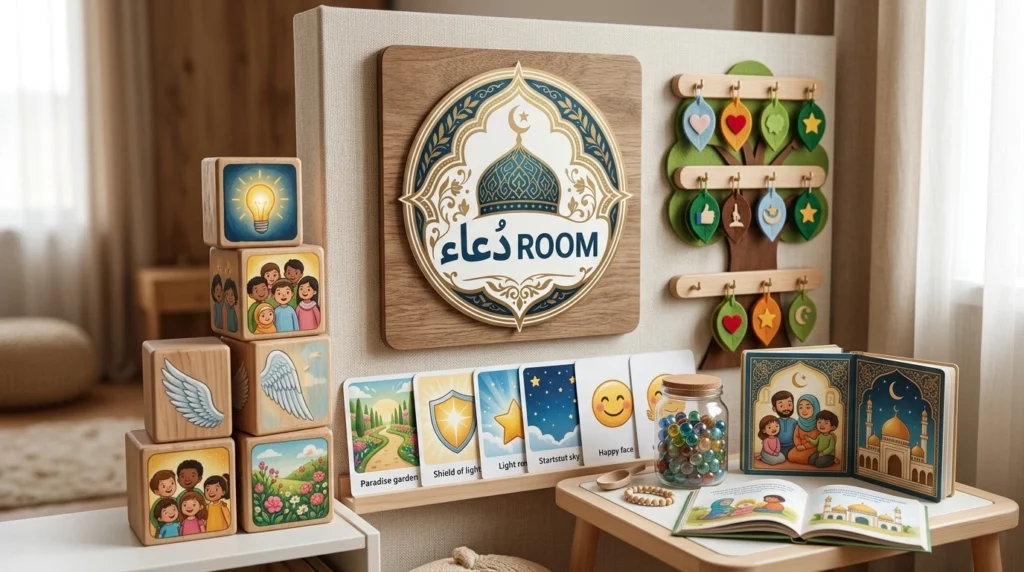
Children learn best when their hearts are involved. If we teach Durood Sharif with warmth, stories, rhythm, praise, and family participation, they begin to enjoy it naturally. Our goal is not only that children can recite Durood Sharif correctly, but that they understand its beauty and feel happy when reciting it.
What is Durood Shareef and How to Teach Durood Sharif to Children?
Durood Sharif means sending blessings and peace upon Prophet Muhammad ﷺ. It is a special form of love, respect, and dua for the Prophet ﷺ. Muslims recite Durood Sharif in salah, during duas, on Fridays, after hearing the Prophet’s name ﷺ, and at many blessed moments throughout the day.
For children, we can explain Durood Sharif in very simple words:
“Durood Sharif is a beautiful dua in which we ask Allah to send blessings and peace upon our beloved Prophet Muhammad ﷺ.”
This simple explanation is enough for young children. We do not need to make the concept complicated. First, we help them love the words. Then, as they grow older, we explain the deeper meaning.
Why We Should Teach Durood Sharif to Children Early

Teaching children Durood Sharif early helps them develop a loving relationship with the Prophet Muhammad ﷺ. Children who regularly hear and recite Durood Sharif begin to recognize the Prophet ﷺ as someone special, beloved, and central to their faith.
Durood Sharif also builds Islamic identity. When children learn that Muslims send blessings upon the Prophet ﷺ, they feel part of a beautiful tradition shared by Muslims around the world. It becomes a spiritual habit that stays with them as they grow.
Early learning is also powerful because children memorize through repetition. A child may not understand every word at first, but repeated listening helps the words settle in their memory. Later, when meaning is explained, the child already feels familiar with the recitation.
Start With Love Before Memorization

Before asking children to memorize Durood Sharif, we should help them love the Prophet ﷺ. Memorization without love can feel like a task. Love makes memorization easier and more meaningful.
We can begin by telling children simple stories from the life of Prophet Muhammad ﷺ. We can tell them how kind he was to children, how gently he spoke, how he cared for the poor, how he loved mercy, and how he taught Muslims to worship Allah.
When children hear that the Prophet ﷺ was loving, truthful, generous, patient, and merciful, their hearts become soft toward him. Then, when we teach them Durood Sharif, they understand that these words are connected to someone they love.
Choose a Short Durood Sharif for Beginners

For young children, we should begin with a short and easy form of Durood Sharif. Long versions may be difficult at first, especially for children who are still learning Arabic pronunciation.
A simple beginner-friendly Durood is:
اللهم صل على محمد
Allahumma salli ‘ala Muhammad
O Allah, send blessings upon Muhammad ﷺ.
This short version is easy to repeat and memorize. Once the child becomes confident, we can gradually teach a longer form, such as Durood Ibrahim, which is recited in salah.
We should avoid rushing. A child who learns one short Durood with love and confidence has already started a beautiful habit.
Teach Durood Sharif Through Repetition

Children learn through repetition. The more they hear Durood Sharif, the more naturally they will remember it. We can repeat it at different moments during the day without making it feel like a formal lesson.
For example, we can recite Durood Sharif:
- After salah
- Before making dua
- On Friday
- Before bedtime
- In the car
- During family Islamic learning time
- After hearing the name of Prophet Muhammad ﷺ
Repetition should be gentle and cheerful. We can say, “Let us recite Durood Sharif together three times.” This makes the child feel included rather than tested.
Use Melody and Rhythm to Make Learning Easier
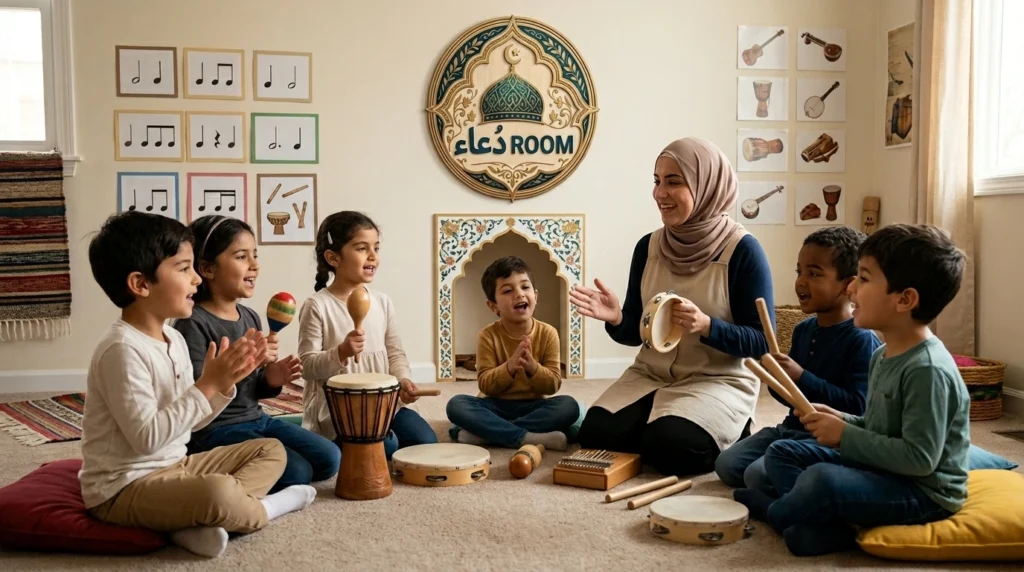
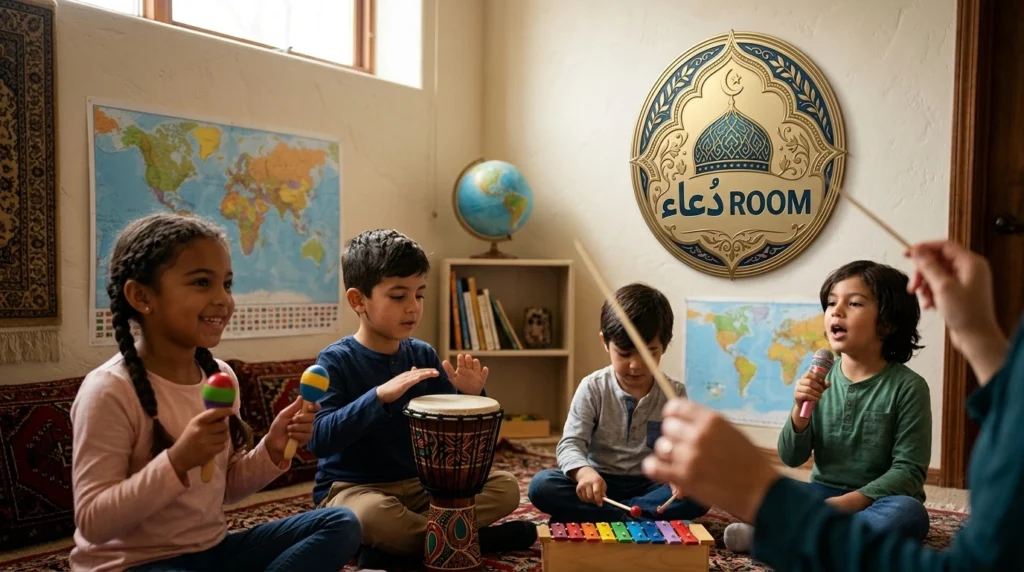
Children enjoy rhythm. A calm and beautiful tone can make Durood Sharif easier to memorize. We do not need to turn it into entertainment, but we can recite it with a soft, pleasant, and repeated rhythm.
When children hear the same rhythm daily, they begin to follow along. The sound becomes familiar, like a peaceful pattern in their mind. This is especially helpful for younger children who learn more by listening than by reading.
Parents can recite slowly, pause after each phrase, and allow the child to repeat. For example:
Parent: Allahumma
Child: Allahumma
Parent: salli
Child: salli
Parent: ‘ala Muhammad
Child: ‘ala Muhammad
This call-and-response method keeps the child engaged.
Explain the Meaning in Child-Friendly Words
Children should not only repeat words without knowing anything about them. Even a simple meaning can create a stronger connection.
We can explain:
“When we recite Durood Sharif, we are asking Allah to send special blessings and peace upon our beloved Prophet Muhammad ﷺ.”
For older children, we can explain that the Prophet ﷺ taught us Islam, showed us how to pray, how to be kind, how to speak truthfully, and how to live in a way that pleases Allah. Therefore, sending blessings upon him is a way of showing love and gratitude.
Meaning gives life to memorization. When children know what they are saying, they recite with more respect and feeling.
Tell Stories About the Prophet ﷺ

Stories are one of the best ways to teach children Islamic values. Before or after teaching Durood Sharif, we can share short stories about the Prophet ﷺ. These stories should be simple, warm, and suitable for the child’s age.
We can tell children about:
- The Prophet’s ﷺ kindness to children
- His love for mercy
- His honesty and trustworthiness
- His care for animals
- His patience with people
- His beautiful manners
- His love for his ummah
After telling a story, we can say:
“Because we love Prophet Muhammad ﷺ, we send Durood upon him.”
This connects the recitation with emotion and understanding.
Create a Daily Durood Sharif Routine

A simple routine helps children remember Durood Sharif naturally. The routine should be short and easy to follow. We do not need long sessions. Just a few minutes every day can make a big difference.
A good daily routine may look like this:
| Time | Activity |
|---|---|
| After Fajr or Maghrib | Recite Durood Sharif three times together |
| Before dua | Begin and end with Durood Sharif |
| Bedtime | Recite Durood Sharif softly before sleep |
| Friday | Recite extra Durood as a family |
This routine makes Durood Sharif part of family life. Children begin to expect it, remember it, and eventually recite it on their own.
Make Friday Special for Durood Sharif

Friday is a special day for Muslims, and it is a beautiful opportunity to encourage children to recite more Durood Sharif. We can create a small family Friday habit that children look forward to.
For example, every Friday we can gather for a short Islamic family time. We can recite Durood Sharif together, tell one story about the Prophet ﷺ, make dua, and praise the children for participating.
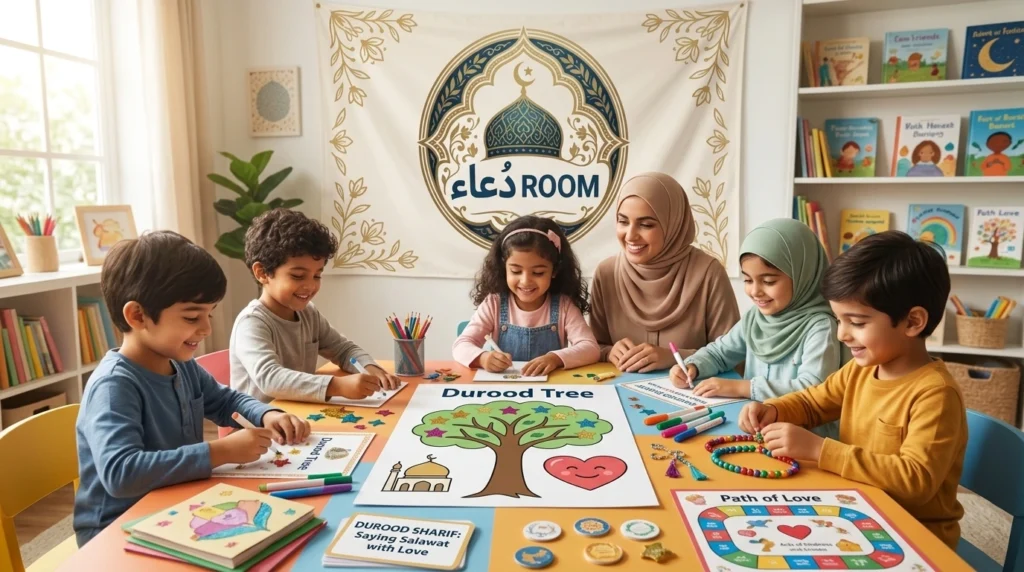
We can also create a Friday Durood Chart. Each time the child recites Durood Sharif, they place a star on the chart. At the end of the day, we can celebrate their effort with kind words, a hug, or a small family treat.
The purpose is not competition. The purpose is motivation and love.
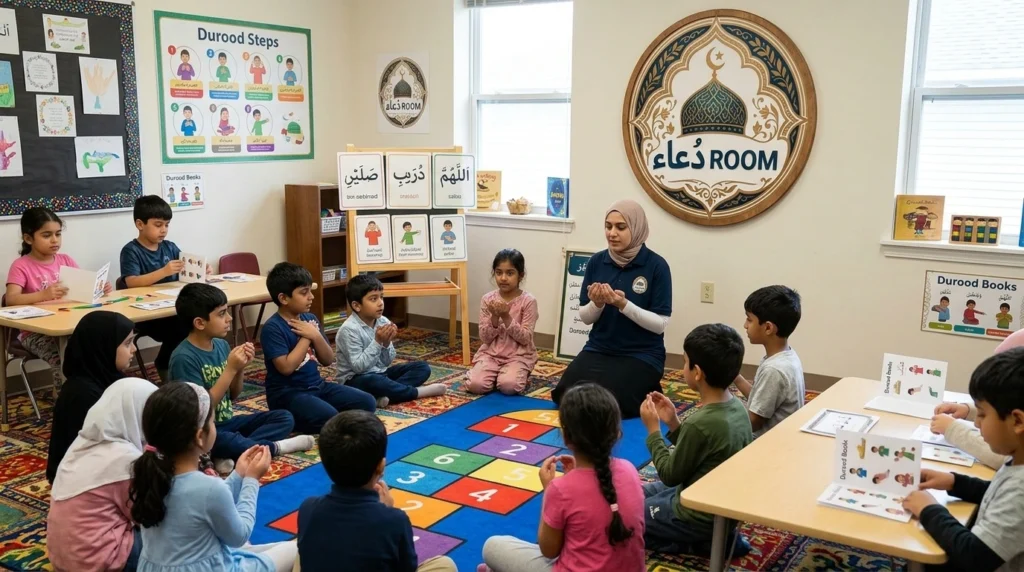
Use Visual Learning Tools

Many children learn better when they can see what they are learning. Visual tools can make Durood Sharif more memorable and exciting.
We can use:
- Colorful Durood Sharif cards
- Arabic and transliteration posters
- Reward charts
- Flashcards
- Printable worksheets
- A small Durood journal
- Islamic storybooks about the Prophet ﷺ
For younger children, we can place a simple Durood Sharif poster near their study table or prayer area. Seeing it daily helps them become familiar with the words.
For older children, we can ask them to decorate a page with Durood Sharif written beautifully. This makes the learning personal and creative.
Teach Durood Sharif With Actions and Activities

Children love activities. We can make Durood learning interactive without losing respect for the words.
For example, we can create a simple matching activity where children match Arabic words with transliteration. We can ask them to arrange printed words of Durood Sharif in the correct order. We can also use a gentle repeat-after-me circle where each family member recites one phrase.
Another activity is a Durood Treasure Jar. Every time the child recites Durood Sharif, they place a small bead, button, or paper star into a jar. At the end of the week, the jar shows their effort. This gives children a visual sense of progress.
The activity should support learning, not distract from respect.
Praise Effort, Not Perfection
Children may mispronounce words at first. They may forget parts, mix sounds, or become shy. This is normal. We should correct gently and praise their effort.
Instead of saying, “You said it wrong,” we can say:
“That was a good try. Let us say it slowly together.”
Instead of saying, “You forgot again,” we can say:
“You are learning. Every time you repeat it, it becomes easier.”
Positive words build confidence. When children feel safe, they are more willing to practice. If they feel embarrassed, they may avoid reciting.
Teach Correct Pronunciation Slowly

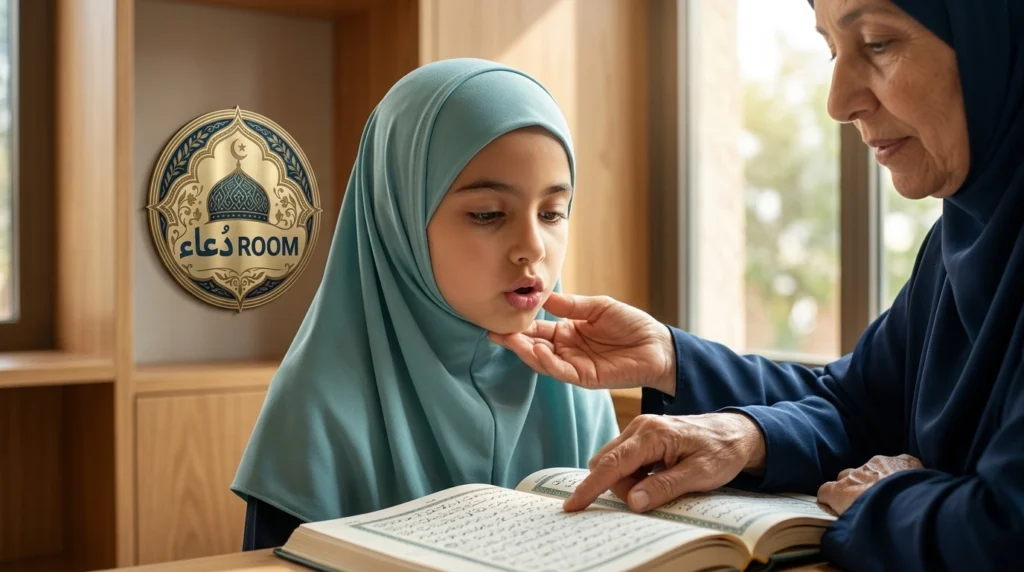
Durood Sharif should be taught with correct pronunciation, but we should not overwhelm children. Arabic sounds may be difficult, especially if Arabic is not the child’s first language.
We should break the words into small parts:
Allahumma
salli
‘ala
Muhammad
Then we should ask the child to repeat each part slowly. If they struggle, we can repeat the sound gently. A qualified Quran teacher can also help improve pronunciation.
Correct pronunciation matters, but love and patience matter too. We should guide without making the child afraid.
Connect Durood Sharif With Salah
Children will eventually hear and recite Durood Ibrahim in salah. We can explain that Durood Sharif is also part of prayer. This helps them understand that it is not only something we say separately, but something deeply connected to worship.
For younger children, we can simply say:
“In salah, we also send blessings upon Prophet Muhammad ﷺ.”
For older children, we can gradually teach Durood Ibrahim. We can divide it into small sections and practice one line at a time. Since Durood Ibrahim is longer, it should be taught slowly and revised often.
Make Family Participation Part of Learning

Children feel more excited when the whole family participates. If only the child is asked to recite, they may feel like they are being tested. But if parents, siblings, and grandparents recite together, it becomes a family habit.
We can create a short family routine:
- Everyone sits together for two minutes.
- A parent recites Durood Sharif slowly.
- Children repeat together.
- Someone shares one good quality of the Prophet ﷺ.
- The family ends with dua.
This kind of routine strengthens both Islamic learning and family bonding.
Use Bedtime as a Peaceful Learning Moment

Bedtime is a wonderful time to teach Durood Sharif. Children are calmer, the environment is quiet, and the heart is more receptive.
We can sit beside the child, recite Durood Sharif softly, and ask them to repeat after us. Then we can tell a short story about the Prophet ﷺ or remind them that sending blessings upon him is a beautiful deed.
This creates a peaceful emotional connection. The child begins to associate Durood Sharif with comfort, love, and safety.
Avoid Making Durood Sharif a Burden

The biggest mistake we should avoid is turning Durood Sharif into a stressful task. If children feel forced, pressured, or criticized, they may resist.
We should avoid:
- Shouting during practice
- Comparing children
- Making fun of mistakes
- Forcing long sessions
- Giving difficult targets too early
- Using Durood as punishment
- Making the child recite in front of others when shy
A child’s heart is delicate. We should protect their love for Islamic learning by keeping the experience positive.
Simple Weekly Plan to Teach Durood Sharif
| Day | Focus | Activity |
|---|---|---|
| Monday | Listening | Parent recites slowly, child listens |
| Tuesday | Repetition | Child repeats each phrase |
| Wednesday | Meaning | Explain the words simply |
| Thursday | Practice | Recite together after salah |
| Friday | Extra Durood | Family Durood time |
| Saturday | Story | Share a story about the Prophet ﷺ |
| Sunday | Review | Recite together and praise progress |
This plan is simple, flexible, and suitable for most families. We can adjust it according to the child’s age and attention span.
Best Short Durood Sharif for Children

For beginners, we can teach this short form:
Arabic:
اللهم صل على محمد
Transliteration:
Allahumma salli ‘ala Muhammad
Meaning:
O Allah, send blessings upon Muhammad ﷺ.
Once children learn this, we can gradually introduce longer forms. The key is to move step by step, not all at once.
How to Teach Durood Ibrahim to Children
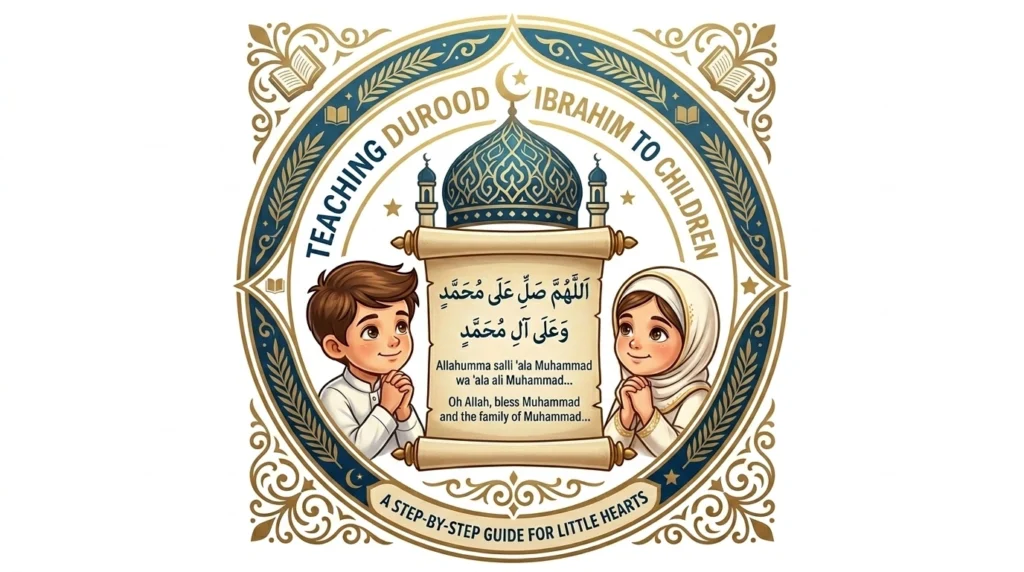
Durood Ibrahim is recited in salah, so children should eventually learn it. Since it is longer, we should divide it into small sections.
We can teach one phrase every few days and revise constantly. For example:
Allahumma salli ‘ala Muhammad
Then later:
wa ‘ala aali Muhammad
After the child becomes comfortable, we add the next phrase. This slow method prevents confusion and helps the child feel successful.
We should also let children hear Durood Ibrahim often. Listening makes memorization much easier.
Encourage Children to Recite Durood When They Hear the Prophet’s Name ﷺ
A beautiful habit is teaching children to say sallallahu alayhi wa sallam when they hear the name of Prophet Muhammad ﷺ. At first, they may need reminders. Over time, it becomes natural.
We can gently say:
“Whenever we hear the Prophet’s name, we send peace and blessings upon him.”
Then we can say it together. This habit teaches respect and keeps the Prophet ﷺ present in the child’s heart.
FAQs
1. What is Durood Sharif in simple words for children?
Durood Sharif is a beautiful dua in which Muslims ask Allah to send blessings and peace upon Prophet Muhammad ﷺ.
2. What is the best age to teach Durood Sharif to children?
Children can start learning Durood Sharif from an early age through listening, repetition, and simple explanations.
3. Which Durood Sharif is best for beginners?
A short and easy Durood for beginners is Allahumma salli ‘ala Muhammad, which means “O Allah, send blessings upon Muhammad ﷺ.”
4. How can I make Durood Sharif easy for children to memorize?
You can make it easy by repeating it daily, reciting slowly, using a gentle rhythm, and breaking the words into small parts.
5. Should children learn the meaning of Durood Sharif?
Yes, children should learn a simple meaning so they understand that Durood Sharif is a way of showing love and respect for Prophet Muhammad ﷺ.
6. How can parents make Durood Sharif fun for children?
Parents can use stories, flashcards, reward charts, bedtime recitation, family practice, and Friday Durood activities.
7. How often should children recite Durood Sharif?
Children can recite Durood Sharif daily after salah, before dua, at bedtime, on Fridays, and whenever they hear the name of Prophet Muhammad ﷺ.
8. How can I teach correct pronunciation of Durood Sharif?
Teach pronunciation slowly by dividing the words into small parts and asking the child to repeat each part gently.
9. How do I teach Durood Ibrahim to children?
Teach Durood Ibrahim step by step, one phrase at a time, and revise regularly so the child does not feel overwhelmed.
10. What should parents avoid while teaching Durood Sharif?
Parents should avoid shouting, pressure, comparison, punishment, long sessions, and making children feel embarrassed about mistakes.
Conclusion
Teaching Durood Sharif to children should be a journey of love, patience, and joy. We begin by helping children love Prophet Muhammad ﷺ, then we introduce short and easy forms of Durood Sharif, repeat them daily, explain their meaning, and connect them with family routines, salah, Friday, bedtime, and Islamic stories.
When we teach with kindness, children do not feel that Durood Sharif is a burden. They feel that it is a beautiful way to remember and honor the beloved Prophet ﷺ. Through gentle repetition, meaningful explanation, praise, and family participation, Durood Sharif becomes part of their daily life.
Our goal is not only correct memorization. Our goal is to raise children whose hearts are connected to Allah, whose tongues remember the Prophet ﷺ with love, and whose lives reflect the beautiful manners of Islam. May Allah fill our homes with love for the Prophet Muhammad ﷺ and make our children among those who send abundant blessings upon him.