
Rabiul Awal Month Prayers: A Simple Guide to Nawafil, Dua, and Wazaif
Rabiul Awal has started, and you want to make the most of it. But you are not sure which prayers are real Sunnah and which ones are just popular customs. This guide gives you both — clearly marked — so you can worship with confidence.

Rabiul Awal (also spelled Rabi ul Awwal) is the third month of the Islamic calendar. Muslims hold it dear because Prophet Muhammad ﷺ was born in this month. Many people also believe he passed away in this same month. This mix of joy and reflection makes Rabiul Awal a special time for extra prayer, dua, and durood shareef (blessings sent upon the Prophet ﷺ).
What Makes Rabiul Awal Special?
Rabiul Awal is special because it holds the Prophet’s ﷺ birth and, according to most scholars, his passing too. This double weight — a joyful start and a heavy ending — is why Muslims mark this month with more worship than usual.
The name “Rabi ul Awal” means “the first spring.” Long ago, Arabs named months after seasons. Today the Islamic calendar follows the moon, not the seasons, so Rabiul Awal can fall in any time of year.
Two big events happened in this month:
- The birth of Prophet Muhammad ﷺ in Makkah, most scholars say on a Monday, 12th Rabi ul Awal.
- The Hijrah (migration) journey that ended with the Prophet ﷺ reaching Madina, and the building of the first mosque in Islam at Quba.
Is There a Special Dua for Rabiul Awal?
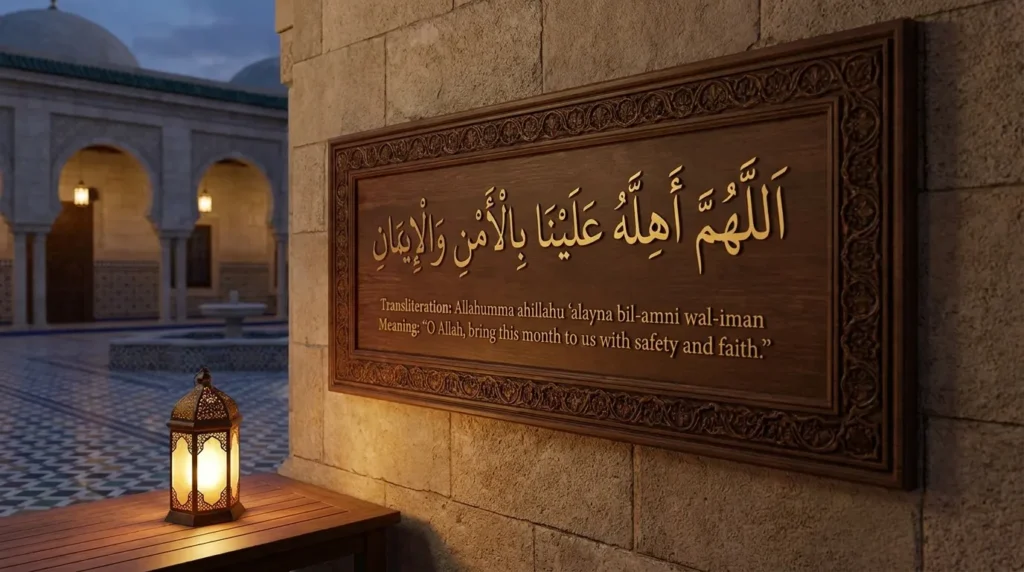
No single dua is written just for Rabiul Awal in the Quran or in Sahih hadith. Many honest scholars and Islamic charities say this plainly. What you can do is increase general duas of gratitude, ask Allah for guidance, and send blessings on the Prophet ﷺ more often. That is not a weak substitute — it is the real Sunnah way to mark this month.
A simple, well-known dua many people say at the start of a new Islamic month is:
Arabic: اللَّهُمَّ أَهِلَّهُ عَلَيْنَا بِالْأَمْنِ وَالْإِيمَانِ Transliteration: Allahumma ahillahu ‘alayna bil-amni wal-iman Meaning: “O Allah, bring this month to us with safety and faith.”
This dua is not tied to Rabiul Awal alone. It fits the start of any Islamic month, and there is nothing wrong with using it now.
1st Rabiul Awal Special Dua: What You Can Say
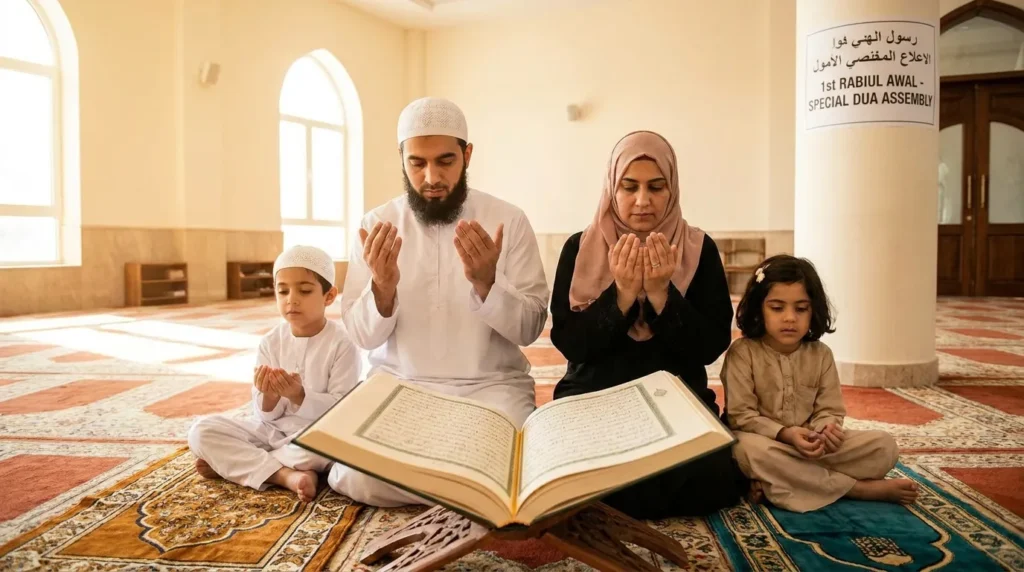
On the 1st of Rabiul Awal, you can combine the new-month dua above with extra durood shareef and a short prayer asking Allah to let you use this month well. Here is a simple three-part routine for the first night or day:
- Say the new-month dua above.
- Send durood (blessings) on the Prophet ﷺ at least a few times.
- Ask Allah in your own words to help you follow the Prophet’s ﷺ example this month.
You do not need Arabic memorized for step three. Allah understands every language. Just speak from your heart.
Rabiul Awal Month Prayers: What the Sunnah Actually Recommends
The Sunnah does not add a new prayer type just for Rabiul Awal. Instead, it tells you to do more of what the Prophet ﷺ already did often: send blessings on him, fast on Mondays, give charity, and read his life story. Here is a clear breakdown so you know exactly what is authentically recorded, and where it comes from.
| Practice | What To Do | Hadith or Quran Source |
|---|---|---|
| Send durood (salawat) | Say a durood phrase often throughout the day. | Qur’an 33:56; Sahih Muslim 408 |
| Fast on Monday | Fast from dawn to sunset on Mondays this month. | Sahih Muslim 1162 |
| Study the Seerah | Read the Prophet’s ﷺ life story, one chapter at a time. | General encouragement in Islamic scholarship |
| Give charity | Give even a small amount regularly. | Sunan an-Nasa’i and other collections on charity’s reward |
| Improve character | Work on patience, honesty, and kindness. | Musnad Ahmad 8595 |
This table matters because most Rabiul Awal articles online only list vague “tips.” Here, each act has a real source you can check yourself.
Rabiul Awal Nawafil Step by Step
How to Pray 2-Rakat Nafl
This prayer follows the same basic steps as your normal salah. Here is a simple, standard method you can follow.
Make wudu (ablution) if you do not already have it.
Face the Qibla and make your intention (niyyah) in your heart — for example: “I intend to pray two rakat nafl for Allah’s sake.”
Say Allahu Akbar to start, then recite Surah Al-Fatiha.
Recite a short surah after Al-Fatiha, such as Surah Al-Ikhlas.
Go into ruku (bowing), then stand back up.
Go into sujood (prostration) twice, with a short sitting between them.
Repeat these steps for the second rakat.
Finish by sitting for tashahhud, then send durood on the Prophet ﷺ.
End with salam to your right, then your left.
🌙 When Can You Pray It?
You can pray this two-rakat nafl any night in Rabiul Awal after Isha or in the last third of the night (also called Tahajjud time), whichever suits your routine.
📌 A Note on Longer, Night-Specific Nawafil
You may see posts online listing exact rakat counts for each night of Rabiul Awal — for example, “16 rakat on the 1st night” or “4 rakat with Surah Yasin on the 3rd night.”
These are popular customs in some communities, not practices recorded in Sahih Bukhari or Sahih Muslim.
There is nothing wrong with praying extra nafl on any night you choose. Just know the difference between a confirmed Sunnah act (such as Monday fasting or durood) and a well-loved local custom, so your intention stays honest.
Durood Shareef Reward in Rabiul Awal
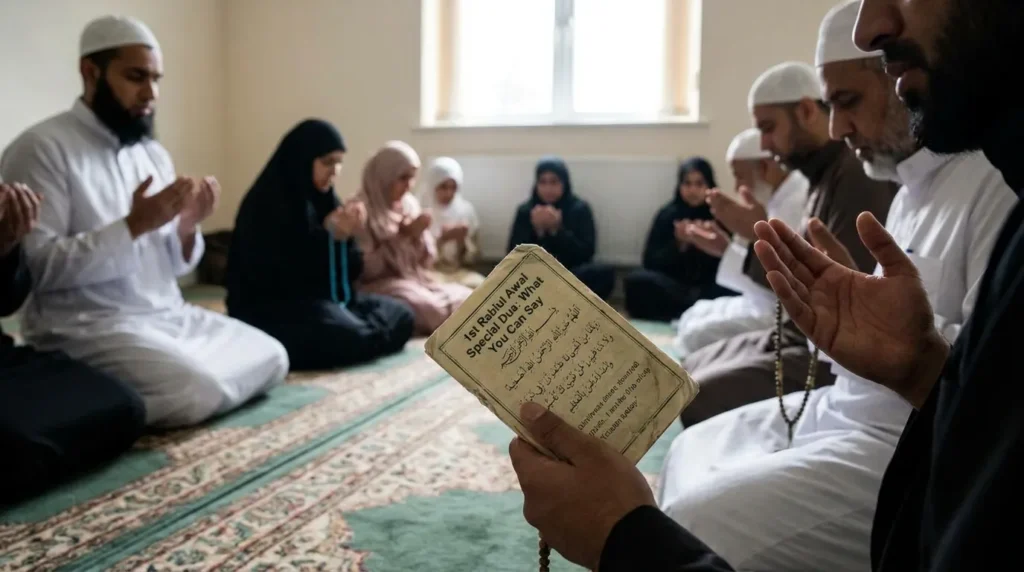
Sending durood on the Prophet ﷺ carries one of the clearest, best-documented rewards in all of Islam: Allah returns it to you tenfold. Rabiul Awal, as the month of his birth, is a natural time to increase this practice.
The Prophet ﷺ said:
“He who blesses me once, Allah would bless him ten times.” — Sahih Muslim 408
A longer version adds more detail:
“Whoever sends salah upon me once, Allah will send salah upon him tenfold, and will erase ten sins from him, and will raise him ten degrees in status.” — Sunan an-Nasa’i
This command also comes straight from the Quran:
“Indeed, Allah and His angels send blessings on the Prophet. O you who believe, send blessings on him and greet him with peace.” — Surah Al-Ahzab 33:56
A short and easy durood you can repeat many times a day is:
Arabic: صَلَّى اللَّهُ عَلَيْهِ وَسَلَّمَ Transliteration: Sallallahu alayhi wasallam Meaning: “May Allah’s peace and blessings be upon him.”
For a longer version with full meaning explained, see our guide on short durood shareef in English. If you want to know the best times to recite it, we cover that in when should you send durood shareef
12 Rabiul Awal Night Prayers (English)
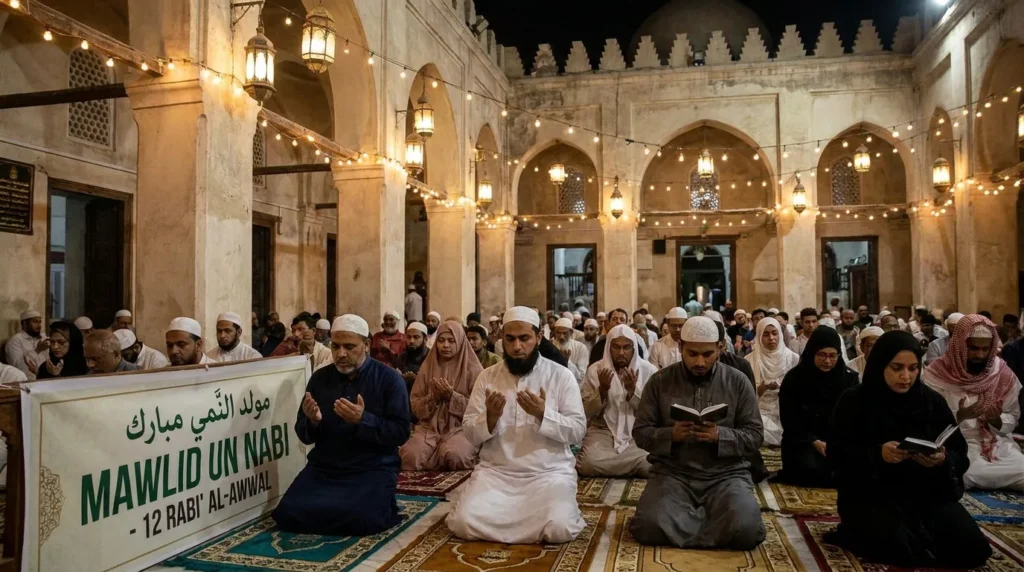
The night of 12 Rabiul Awal is widely marked as the Prophet’s ﷺ birth night, though scholars are not fully unanimous on the exact date. Many Muslims spend this night in extra worship: nafl prayer, Quran recitation, and durood.
A simple English-friendly plan for the night:
- Pray your normal Isha salah on time.
- Add two or four rakat nafl using the steps above.
- Recite Surah Al-Ahzab verse 56 and reflect on its meaning.
- Send durood in sets — for example, 100 times, spread across the night.
- Make dua for your family, your community, and the wider Muslim ummah (nation).
- Read a portion of the Seerah before sleeping.
Important honesty note: Public gatherings and celebrations on 12 Rabiul Awal (often called Mawlid or Eid Milad-un-Nabi) are practiced warmly across much of the Muslim world, especially in South Asia. At the same time, some scholars view marking a specific celebration day as a later addition, not something the earliest generation of Muslims did. Reasonable, sincere Muslims hold different views here. Whichever you choose, keep the heart of it the same: loving the Prophet ﷺ and following his example, not just marking a date.
Rabiul Awal Month Wazaif: A Word of Caution and Guidance
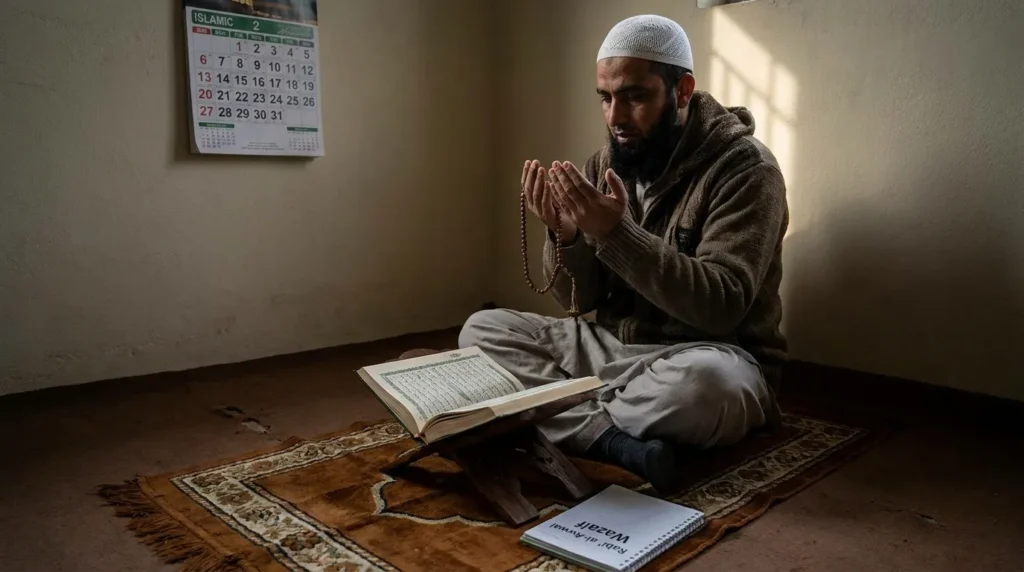
Wazaif (singular: wazifa) means a set spiritual practice repeated for a specific goal, like reciting a phrase a fixed number of times. Many wazaif circulate for Rabiul Awal, often promising things like visions of the Prophet ﷺ or guaranteed answered prayers for a fixed rakat count.
Here is simple, honest guidance:
- Durood, Quran recitation, and dua are always good, in any amount, any night.
- Be careful with claims of guaranteed rewards tied to an exact number of rakat or repetitions that you cannot trace to Sahih Bukhari, Sahih Muslim, or another major hadith book. Some are from respected devotional writers; some are unverified.
- Never feel your worship is wasted if you skip a specific wazifa. Allah rewards sincerity and consistency, not just exact formulas.
- If you are teaching children about this month, start with the basics of love for the Prophet ﷺ. Our piece on how to teach durood shareef to children can help you build that habit early.
If your main goal this month is simply strengthening your salah and worship overall, our guide on the importance of salah in Islam is a good next read. And if you want a short verse to hold onto during quiet moments in Rabiul Awal, look at the benefits and meaning of Ayatul Kursi
Quick Reference: Rabiul Awal Do’s
| When | What To Do |
|---|---|
| Every day this month | Send durood often, even short ones like “Sallallahu alayhi wasallam”. |
| Every Monday | Fast from dawn to sunset if you are able. |
| Any night | Pray 2–4 rakat nafl following the standard steps. |
| 12th night | Add extra durood, Quran reading, and dua; join a gathering if your community holds one. |
| Throughout | Give a small charity regularly, even daily. |
| Throughout | Read one Seerah chapter or story at a time. |
FAQ: Rabiul Awal Prayers and Duas
Is there a specific salah (prayer) only for Rabiul Awal?
No. There is no separate salah type created just for this month. You increase your normal nafl prayers and durood instead of adding a new prayer form.
What is the best dua to read in Rabiul Awal?
Any sincere dua works, but the new-month dua (“Allahumma ahillahu alayna bil-amni wal-iman”) paired with frequent durood is a simple, well-rounded choice.
Is it correct to fast on 12 Rabiul Awal because it is the Prophet’s ﷺ birthday?
Scholars differ on this. Fasting on Mondays year-round is clearly established from Sahih Muslim 1162. Some scholars discourage singling out one calendar date each year for fasting as a birthday marker, seeing it as a later addition. If in doubt, fasting on Mondays generally, which naturally may fall on the 12th some years, is the safer, agreed-upon path.
How many times should I recite durood shareef in Rabiul Awal?
There is no fixed number required. More is better, based on Sahih Muslim 408’s promise of a tenfold reward for each time. Many people aim for 100 or more a day during this month, but any amount said sincerely counts.
What are the main nawafil people pray in Rabiul Awal?
Most people pray simple 2 or 4-rakat nafl prayers after Isha or in the last third of the night, following the standard nafl method described above. Longer, night-specific rakat lists you see online are popular customs, not confirmed hadith practices.
Do all Muslims celebrate 12 Rabiul Awal the same way?
No. Some hold gatherings, Seerah talks, and Naat recitals (poems praising the Prophet ﷺ). Others mark the day quietly through personal worship only. Both approaches come from love for the Prophet ﷺ.
What should I focus on if I only have a little time each day this month?
Pick two things: durood shareef and one page of Seerah reading. Both are light on time but heavy in reward and meaning.
A Closing Word
Rabiul Awal is not about chasing a perfect checklist. It is about remembering a man who changed the world with mercy, and letting that memory soften your own heart this month. Whether you pray two rakat or twenty, say durood once or a hundred times, what matters most is that you mean it. May this month leave you closer to Allah and to the example of His Messenger ﷺ.