Taqabbalallahu Minna Wa Minkum: Meaning, Arabic & Reply
On Eid day, you will hear Muslims saying this phrase again and again. Maybe someone said it to you and you did not know what to say back. Don’t worry. In this simple guide, we will explain everything in easy words — what it means, how to write it in Arabic, how to say it correctly, and how to reply when someone says it to you.
Quick Answer
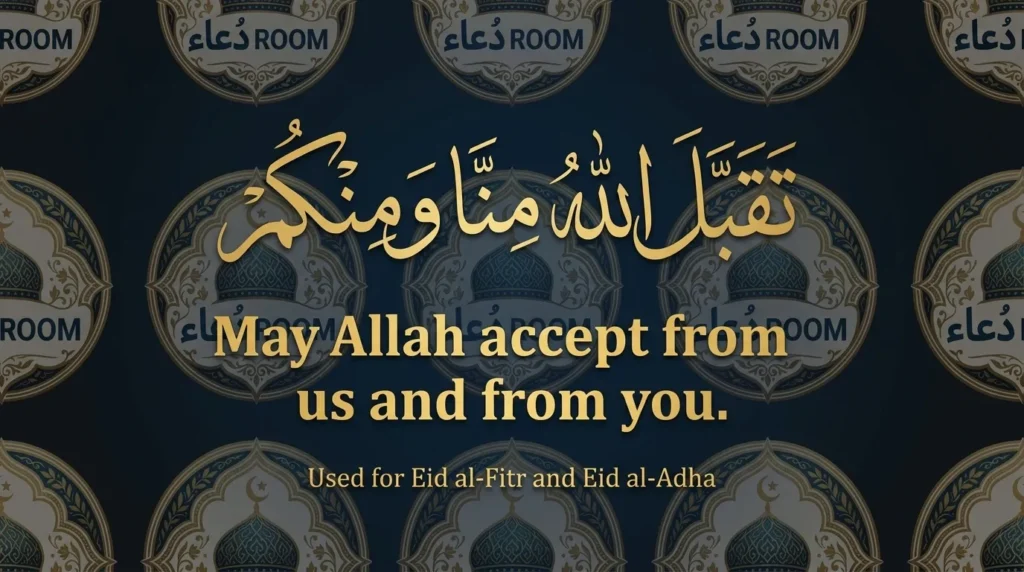
Taqabbalallahu Minna Wa Minkum Written in Arabic
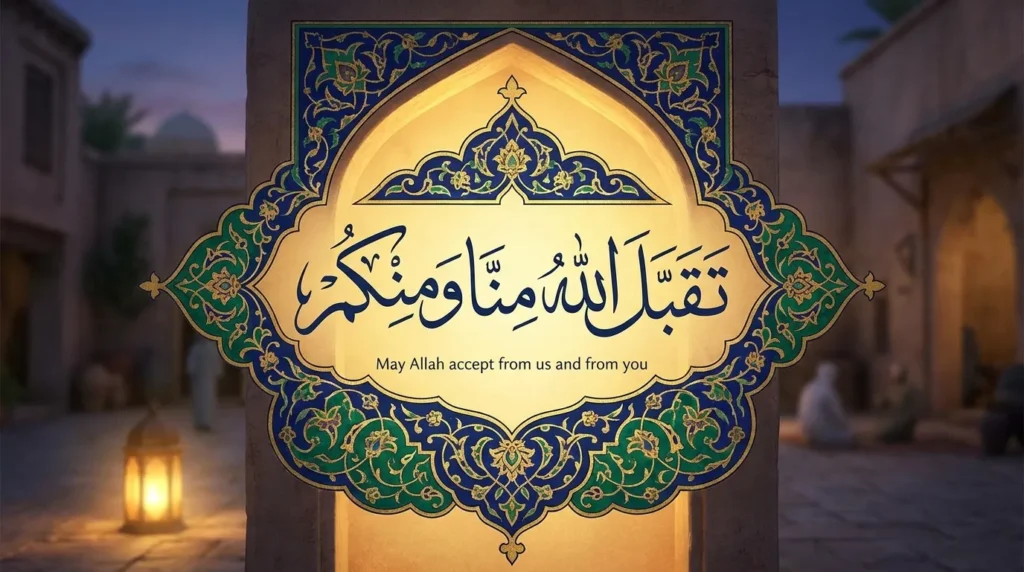
With vowel marks (harakat):
تَقَبَّلَ اللهُ مِنَّا وَمِنْكُمْ
Without vowel marks (simple Arabic):
تقبل الله منا ومنكم
Transliteration (English letters): Taqabbalallahu Minna Wa Minkum Also written as: Taqabbal Allahu Minna Wa Minkum
You may see it spelled in different ways online, such as “Taqaballahu Minna Wa Minkum” or “Taqabbal Allah minna wa minkum.” Don’t worry about these small differences. They are all just different ways of writing the same Arabic phrase in English letters. If you’re looking for more short Arabic duas you can learn and share, our guide to Durood Tanjeena is a good place to start.
What Does Taqabbalallahu Minna Wa Minkum Mean?
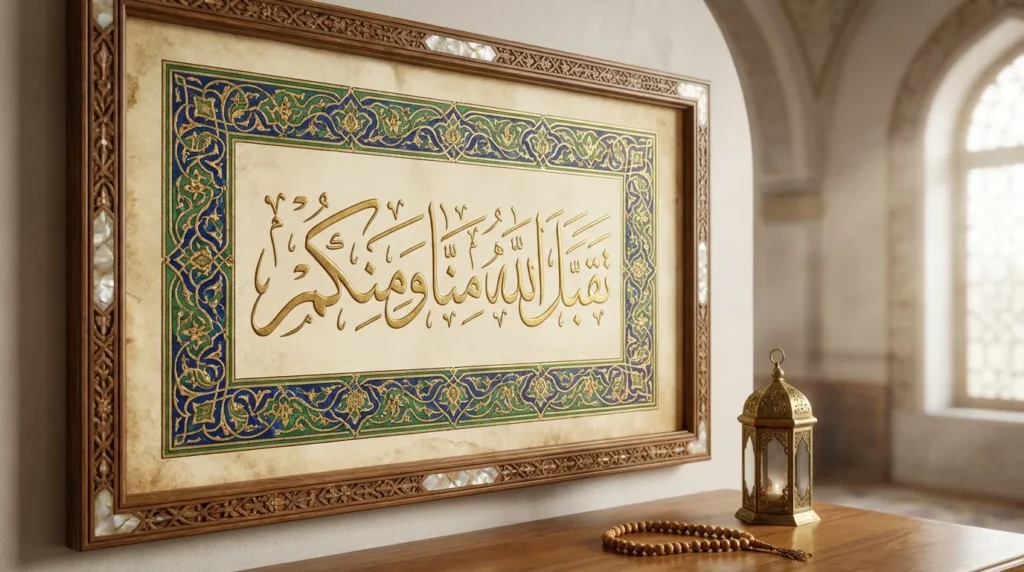
The simple meaning is:
“May Allah accept from us and from you.”
That’s it. It is a short dua (prayer). When a Muslim says this to another Muslim, they are praying that Allah accepts the good deeds of both people — like their fasting, their prayers, their charity, and their sacrifice.
It is not just a “Happy Eid” type greeting. It carries a deeper meaning. It is a prayer for each other, hoping that all the good things you did are accepted by Allah.
What Does “Accept” Refer To?
When Muslims ask Allah to “accept” from them, they are asking Allah to accept their worship and good deeds. These can include:
- Fasting during Ramadan (before Eid al-Fitr)
- The five daily prayers, and extra night prayers in Ramadan
- Charity given during Ramadan or the days before Eid al-Adha
- The animal sacrifice offered on Eid al-Adha
- General good deeds, kindness, and patience shown during the year
So when someone says “Taqabbalallahu Minna Wa Minkum” to you, they are quietly hoping that none of your effort and worship goes to waste, and that Allah accepts it with His mercy. This is the same spirit behind the importance of salah in Islam — worship is only meaningful when it is offered sincerely and, God willing, accepted.
Word-by-Word Meaning
If you want to understand each word, here is a simple breakdown:
| Arabic | Transliteration | Meaning |
|---|---|---|
| تَقَبَّلَ | Taqabbala | May He accept |
| اللهُ | Allahu | Allah |
| مِنَّا | Minna | From us |
| وَ | Wa | And |
| مِنْكُمْ | Minkum | From you |
When you put it all together, it reads: “May Allah accept from us and from you.”
How to Pronounce Taqabbalallahu Minna Wa Minkum
Say it slowly, breaking it into small parts:
Ta-qab-bal-lā-hu min-nā wa min-kum
English transliteration can only approximate Arabic pronunciation, so listening to a fluent Arabic speaker is the best way to learn the exact sounds. Practice it a few times and it will come naturally.
When Do Muslims Say This Phrase?
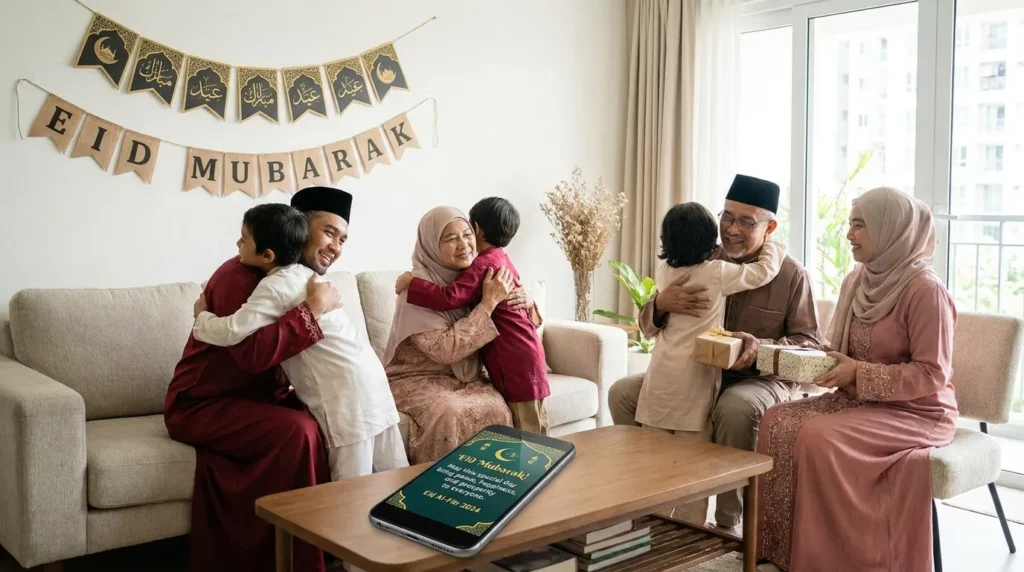
Muslims usually say “Taqabbalallahu Minna Wa Minkum” on:
- Eid al-Fitr (after the month of Ramadan fasting)
- Eid al-Adha
- When meeting other Muslims around Eid, including after the Eid prayer
- When meeting family and friends on Eid day
- In Eid messages, cards, and greetings sent to loved ones
It is commonly exchanged when Muslims meet or greet one another around Eid. There is no need to restrict it to one exact moment.
Is Taqabbalallahu Minna Wa Minkum a Sunnah?
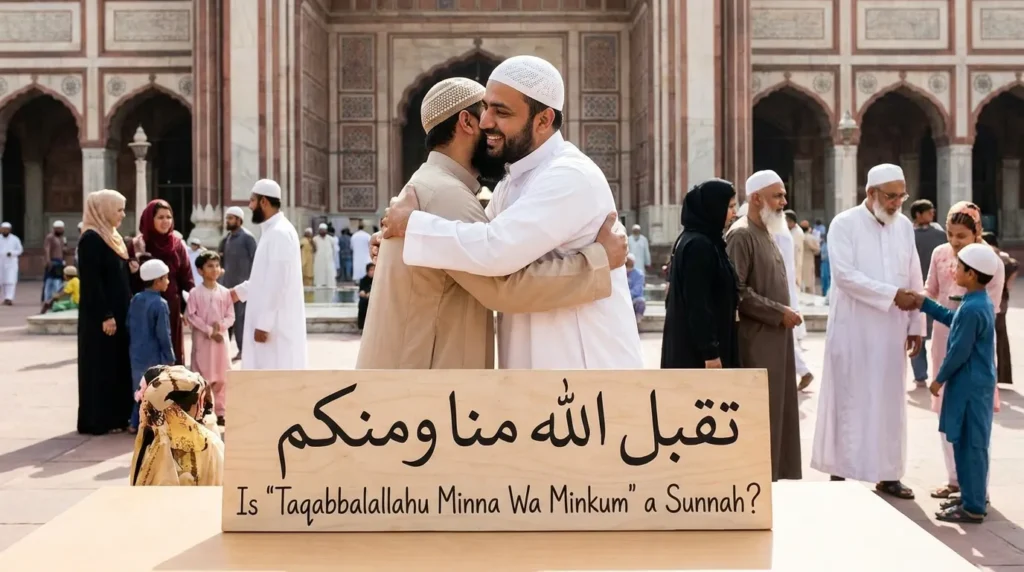
This is an important question, so let’s answer it honestly and carefully.
Taqabbalallahu Minna Wa Minkum is not established as a specific Eid greeting that the Prophet Muhammad ﷺ instructed Muslims to say in these exact words.
However, there are reports that the Companions used this greeting with one another on Eid. This report is traced back to Jubayr ibn Nufayr, and the hadith scholar Ibn Hajar al-Asqalani considered the chain of this report to be “hasan” — meaning good and acceptable. As explained by Islam Question & Answer, a number of the Companions and early Imams, including Imam Ahmad, were known to exchange this greeting or return it when others offered it to them.
Imam Ahmad ibn Hanbal was also reported to have accepted this greeting when others offered it to him, even though he did not initiate it himself.
For this reason, scholars have generally regarded saying it as a permissible and good Eid greeting — reported from the practice of the Companions, rather than something the Prophet ﷺ specifically instructed Muslims to say in these exact words.
How to Reply to Taqabbalallahu Minna Wa Minkum
If someone says this to you, what should you say back? Here are some simple ways to respond:
1. Say the same phrase back The simplest response is to return the same dua: “Taqabbalallahu Minna Wa Minkum.” According to MyIslam, this same phrase is reported in accounts of Eid greetings exchanged among the Companions.
2. Say “Ameen” This means “Ameen” to the prayer the other person just made for you.
3. Say “Wa Iyyakum” Wa Iyyakum (وَإِيَّاكُمْ) means “And you too” or “And may it be the same for you.”
You can return the same greeting, respond with “Ameen,” or use another appropriate response such as “Wa Iyyakum.” The simplest and most common response is to return the same dua.
Taqabbalallahu Minna Wa Minkum vs Eid Mubarak
People often mix these two up, but they are different:
| Phrase | Meaning | Type |
|---|---|---|
| Taqabbalallahu Minna Wa Minkum | May Allah accept from us and from you | A dua (prayer) |
| Eid Mubarak | Blessed Eid | A general greeting |
“Eid Mubarak” is like wishing someone a happy celebration. “Taqabbalallahu Minna Wa Minkum” is a prayer asking Allah to accept their good deeds. As Islamtics notes, the two phrases serve different purposes, so you can use both together — for example: “Eid Mubarak! Taqabbalallahu Minna Wa Minkum.”
Taqabbalallahu Minna Wa Minkum Saleh Al-Amal
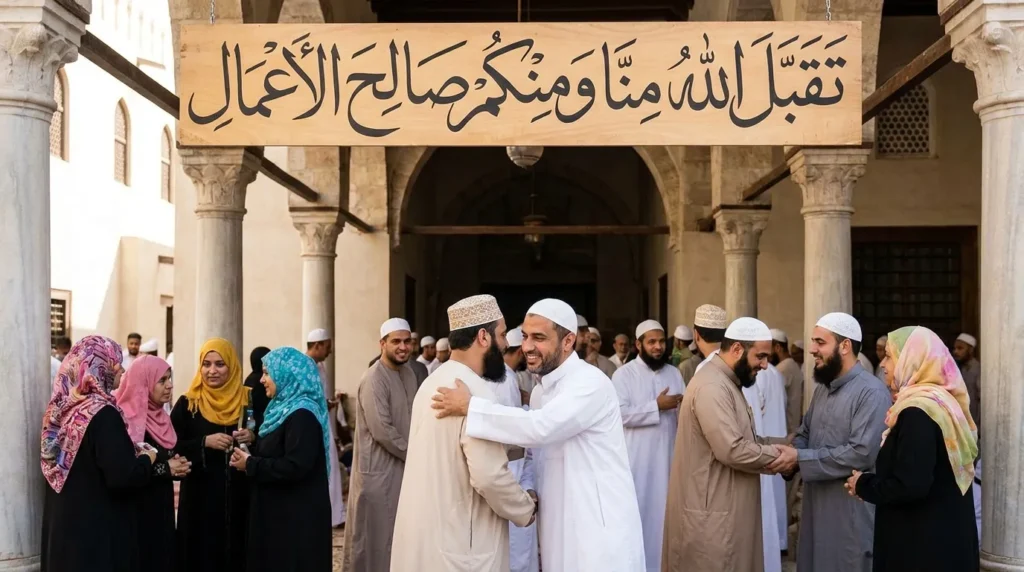
Sometimes you may hear a longer version of this phrase:
تَقَبَّلَ اللهُ مِنَّا وَمِنْكُمْ صَالِحَ الأَعْمَال
Taqabbalallahu Minna Wa Minkum Saleh Al-Amal
You may come across this longer wording, which asks Allah to accept our righteous deeds and yours. It conveys the same general idea of asking Allah to accept good deeds, though it is a related, longer wording rather than an identical form with the same historical status as the shorter phrase.
Common Spelling Variations
Since this phrase is Arabic, it gets written in English letters in a few different ways. Here are the common ones you may come across:
- Taqabbalallahu Minna Wa Minkum
- Taqabbal Allahu Minna Wa Minkum
- Taqaballahu Minna Wa Minkum
- Taqabbal Allah minna wa minkum
All of these are simply different English spellings of the same Arabic phrase. Don’t get confused by the small spelling differences — they all mean the same thing.
Example Eid Messages Using This Phrase
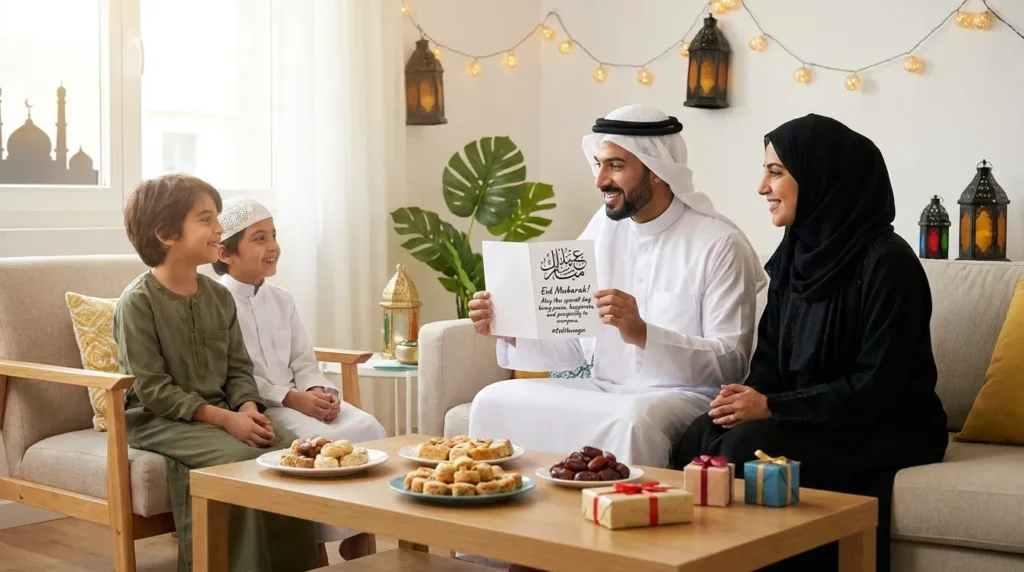
If you want to send this greeting in a text message, card, or social media post, here are a few simple examples you can use or adapt:
- “Eid Mubarak! Taqabbalallahu Minna Wa Minkum.”
- “Wishing you and your family a blessed Eid. Taqabbalallahu Minna Wa Minkum — may Allah accept our good deeds and yours.”
- “May this Eid bring peace and joy to your home. Taqabbalallahu Minna Wa Minkum Saleh Al-Amal.”
- Simply replying to a message: “Wa Iyyakum, Eid Mubarak to you too.”
You don’t need a long message. Even a short, sincere line means a lot on Eid day.
Common Mistakes to Avoid
When people write or say this phrase, a few small mistakes are common. Here’s what to watch for:
- Dropping the double “b”: “Taqabala” is not the same as “Taqabbala.” The double letter matters for correct pronunciation, even though the general meaning is still understood.
- Treating it as obligatory: As explained above, it is not a required part of Eid. Saying “Eid Mubarak” alone is also completely fine.
- Assuming it’s from the Quran: It is not a Quranic verse. It comes from the reported practice of the Companions.
- Overcomplicating the reply: You do not need a long or fancy response. A simple “Taqabbalallahu Minna Wa Minkum” or “Ameen” is enough.
Frequently Asked Questions
What does Taqabbalallahu Minna Wa Minkum mean?
It means “May Allah accept from us and from you.”
How do you reply to Taqabbalallahu Minna Wa Minkum?
You can say it back, say “Ameen,” or say “Wa Iyyakum” (and you too).
What is Taqabbalallahu Minna Wa Minkum in Arabic?
تَقَبَّلَ اللهُ مِنَّا وَمِنْكُمْ
How do you pronounce Taqabbalallahu Minna Wa Minkum?
Ta-qab-bal-lā-hu min-nā wa min-kum.
Is Taqabbalallahu Minna Wa Minkum a Sunnah?
It is reported from the practice of the Companions and regarded by scholars as a permissible and good Eid greeting, though it is not a direct command from the Prophet ﷺ.
Is Taqabbalallahu Minna Wa Minkum mentioned in the Quran?
No. It is a dua that comes from the reported practice of the Prophet’s Companions, not a Quranic verse.
Is it mandatory to say this on Eid?
No. It is not obligatory. Muslims may use this Eid greeting without considering it a required part of Eid.
When should you say Taqabbalallahu Minna Wa Minkum?
Any time during Eid al-Fitr or Eid al-Adha, especially when meeting family, friends, or others after the Eid prayer.
Can I say Eid Mubarak instead?
Yes. “Eid Mubarak” is also acceptable. Many people use both together.
Is it used for both Eid al-Fitr and Eid al-Adha?
Yes, it is used for both.
What does Taqabbalallahu Minna Wa Minkum Saleh Al-Amal mean?
It is a longer version meaning “May Allah accept our righteous deeds and yours.”
Final Words
“Taqabbalallahu Minna Wa Minkum” is a small phrase, but it carries a beautiful meaning. It is not just a greeting — it is a prayer for someone else, hoping that Allah accepts their worship and good deeds. Next time you hear it on Eid, you will know exactly what it means and exactly what to say back.
Whether you write it as “Taqabbalallahu Minna Wa Minkum” or any of its common spellings, use it with sincerity. A short dua exchanged with a warm heart carries far more meaning than the exact wording used.
May Allah accept from all of us.
Related reading on DuaRoom: Ramadan Quotes, Quran Verses, Hadith and Fasting, Importance of Salah in Islam, and Durood Tanjeena.