Complete Namaz with Urdu Translation: Step-by-Step Guide
Many people pray every day but do not know the exact meaning of the words. If you want to learn the complete namaz with Urdu translation, you are in the right place.
Knowing the meaning of your prayer is very important. It stops your mind from wandering. It helps you focus on Allah. When you understand the words, prayer feels like a gift instead of a daily task.
This guide explains the complete prayer process. We use very simple English words. We will show the Arabic text, how to read it, and give the clear Urdu meaning.
What is Namaz?
Namaz (Salah) is the daily prayer that Muslims perform five times a day. It is a direct link between you and Allah. Understanding the importance of salah in Islam helps you build a strong habit.
The Five Daily Prayers (Fard Rak’ahs)
Before starting, it is helpful to know how many obligatory (Fard) cycles, known as rak’ahs, are in each daily prayer. Sunnah and Nafl (voluntary) rak’ahs are prayed separately from these fard rak’ahs.
| Prayer Name | Time of Day | Fard Rak’ahs |
|---|---|---|
| Fajr | Dawn | 2 |
| Zuhr | Midday | 4 |
| Asr | Afternoon | 4 |
| Maghrib | Just after sunset | 3 |
| Isha | Night | 4 |
What You Need Before Namaz
Before you stand for prayer, you must prepare:
- Wudu (Ablution): Wash your hands, mouth, nose, face, arms, head, and feet.
- Clothes: Wear clean clothes that cover your body properly.
- Place: Find a clean spot to pray.
- Qibla: Face the Kaaba in Mecca.
The Niyyah (Intention)
Before starting, you make an intention in your heart. You silently know which prayer you are offering (like Fajr or Zuhr) and how many cycles (rak’ahs) you will pray. You do not need to say this out loud.
How to Pray a 2-Rak’ah Prayer (Step-by-Step)
The morning prayer (Fajr) has 2 fard (obligatory) rak’ahs. Here is exactly what you do and say from start to finish.
1. Takbeer-e-Tehreema (Starting)
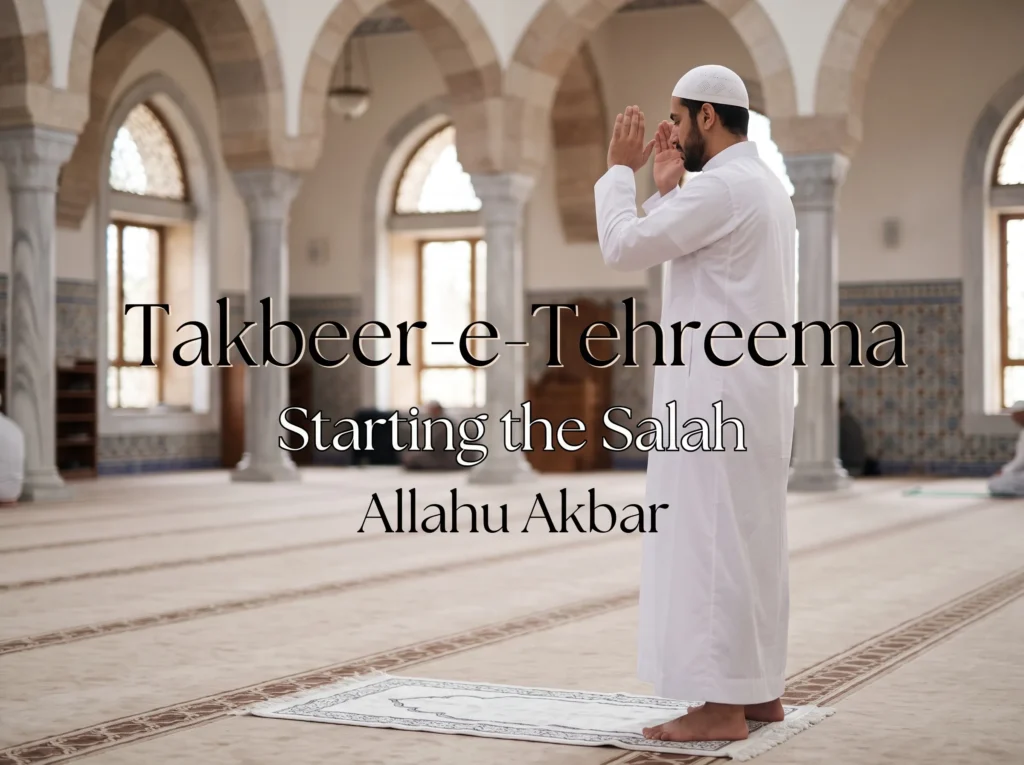
You raise your hands to your ears (or shoulders) and say the opening words. You now leave the world behind.
Arabic: اللَّهُ أَكْبَرُ
Transliteration: Allahu Akbar.
Urdu Translation: اللہ سب سے بڑا ہے۔ (Allah is the greatest.)
2. Sana (Praising Allah)
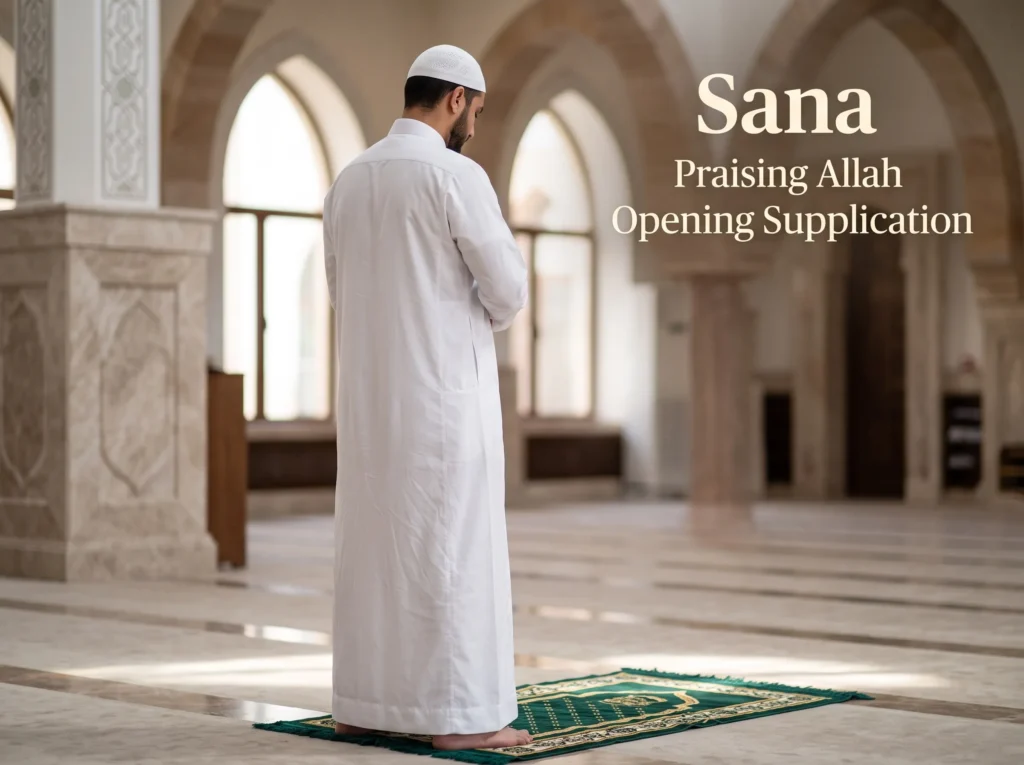
After the opening Takbeer, many Muslims recite Sana before beginning Surah Al-Fatihah. Place your hands in the position followed by your school of jurisprudence.
Arabic: سُبْحَانَكَ اللَّهُمَّ وَبِحَمْدِكَ، وَتَبَارَكَ اسْمُكَ، وَتَعَالَى جَدُّكَ، وَلَا إِلَهَ غَيْرُكَ
Transliteration: Subhanaka Allahumma wa bihamdika, wa tabarakas muka, wa ta’ala jadduka, wa la ilaha ghairuk.
Urdu Translation: اے اللہ! تو پاک ہے خوبیوں والا ہے۔ تیرا نام برکت والا ہے۔ تیری شان اونچی ہے۔ اور تیرے سوا کوئی عبادت کے لائق نہیں۔ (Glory be to You, O Allah… There is no god but You.)
3. Ta’awwudh and Tasmiyah
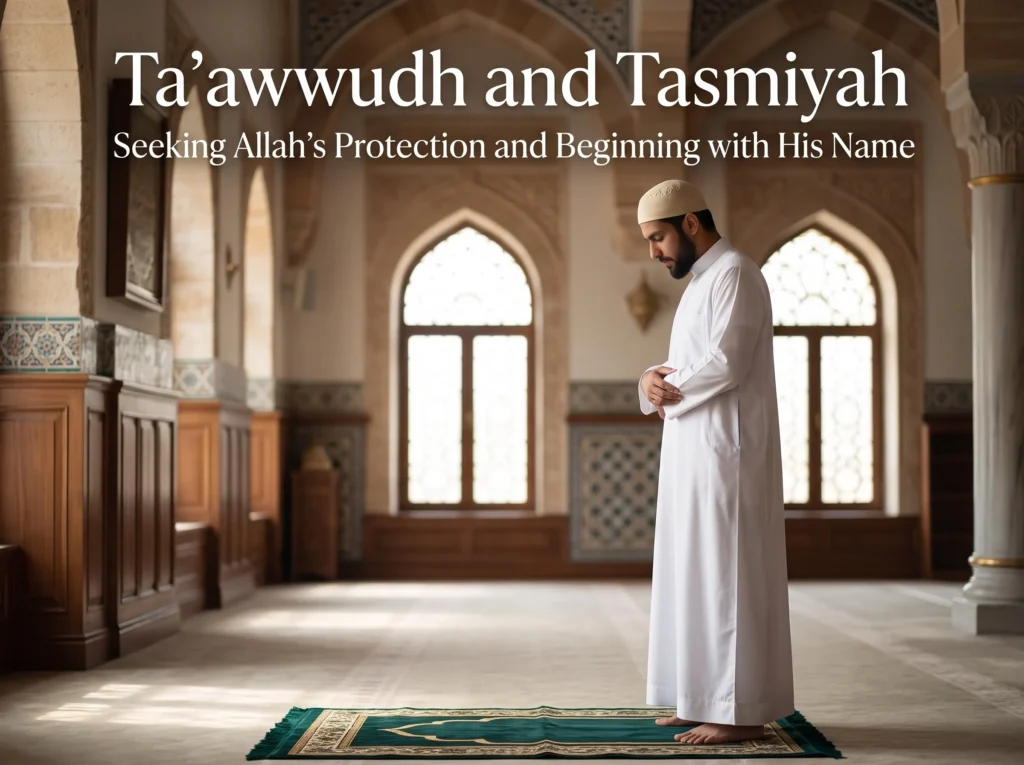
Seeking refuge with Allah is prescribed before reading the Quran. You ask Allah to keep the devil away.
Arabic: أَعُوذُ بِاللَّهِ مِنَ الشَّيْطَانِ الرَّجِيمِ
Transliteration: A’udhu billahi minash shaitanir rajeem.
Urdu Translation: میں شیطان مردود سے اللہ کی پناہ مانگتا ہوں۔ (I seek safety with Allah from the rejected devil.)
Next, you say the name of Allah.
Arabic: بِسْمِ اللَّهِ الرَّحْمَٰنِ الرَّحِيمِ
Transliteration: Bismillahir Rahmanir Raheem.
Urdu Translation: اللہ کے نام سے شروع جو بڑا مہربان نہایت رحم والا ہے۔ (In the name of Allah, the Most Kind, the Most Merciful.)
4. Surah Al-Fatihah
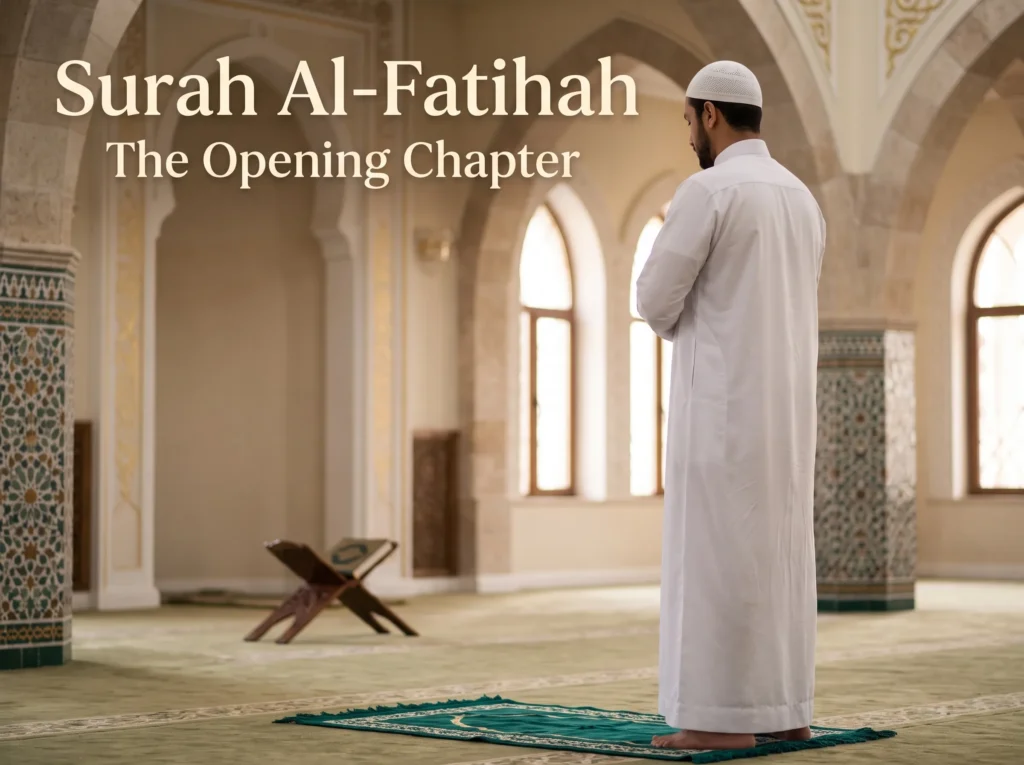
Surah Al-Fatihah has a central place in Salah. The Prophet ﷺ taught that a prayer is not complete without it, according to the hadith narrated in Sahih al-Bukhari. (The details of reciting Al-Fatihah behind the imam differ among Islamic schools of thought).
Arabic: الْحَمْدُ لِلَّهِ رَبِّ الْعَالَمِينَ
Transliteration: Alhamdulillahi Rabbil ‘aalameen.
Urdu Translation: سب تعریفیں اللہ کے لیے ہیں جو تمام جہانوں کا پالنے والا ہے۔ (All praise is for Allah, Lord of all worlds.)
Arabic: الرَّحْمَٰنِ الرَّحِيمِ
Transliteration: Ar-Rahmanir-Raheem.
Urdu Translation: جو بڑا مہربان نہایت رحم والا ہے۔ (The Most Kind, the Most Merciful.)
Arabic: مَالِكِ يَوْمِ الدِّينِ
Transliteration: Maaliki yawmid-deen.
Urdu Translation: جو انصاف کے دن کا مالک ہے۔ (Master of the Day of Judgment.)
Arabic: إِيَّاكَ نَعْبُدُ وَإِيَّاكَ نَسْتَعِينُ
Transliteration: Iyyaaka na’budu wa iyyaaka nasta’een.
Urdu Translation: ہم تیری ہی عبادت کرتے ہیں اور تجھ ہی سے مدد مانگتے ہیں۔ (You alone we worship, and You alone we ask for help.)
Arabic: اهْدِنَا الصِّرَاطَ الْمُسْتَقِيمَ
Transliteration: Ihdinas-siraatal-mustaqeem.
Urdu Translation: ہمیں سیدھا راستہ دکھا۔ (Guide us to the straight path.)
Arabic: صِرَاطَ الَّذِينَ أَنْعَمْتَ عَلَيْهِمْ غَيْرِ الْمَغْضُوبِ عَلَيْهِمْ وَلَا الضَّالِّينَ
Transliteration: Siraatal-ladheena an’amta ‘alaihim ghayril-maghdoobi ‘alaihim wa lad-daalleen.
Urdu Translation: ان لوگوں کا راستہ جن پر تو نے انعام کیا۔ ان کا نہیں جن پر غضب کیا گیا اور نہ گمراہوں کا۔ (The path of those You have blessed. Not of those who earned anger, nor of those who went astray.)
5. Reading Another Surah
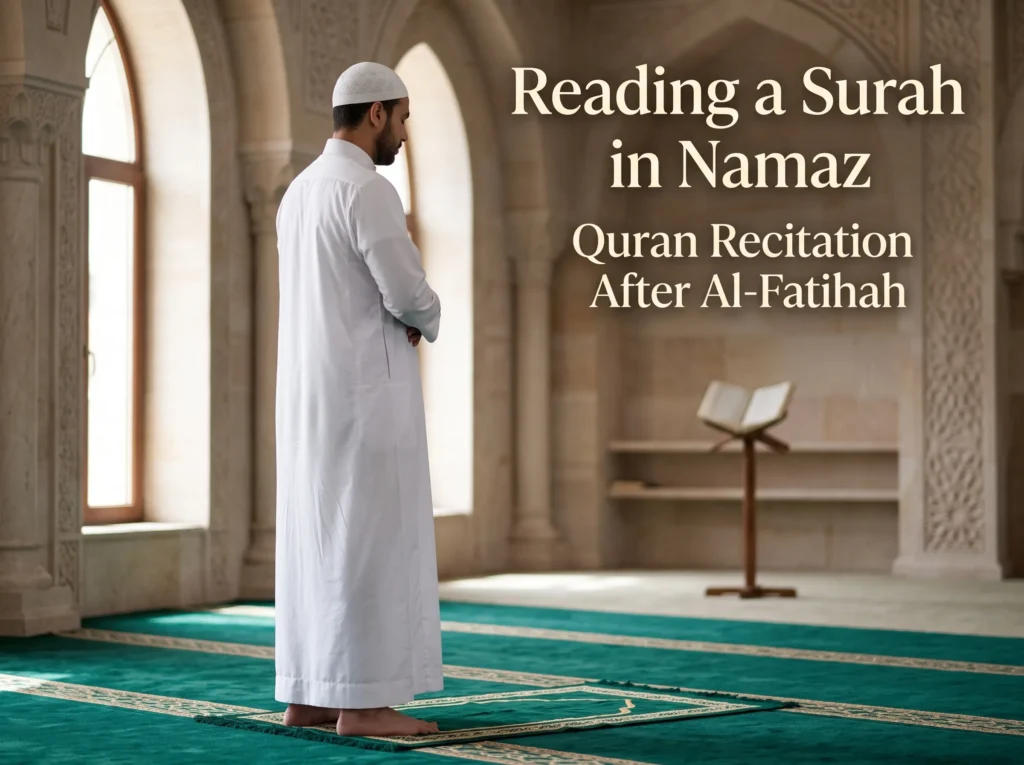
In this example of a two-rak’ah Fard prayer, read another portion of the Quran after Al-Fatihah in each rak’ah. A short, common choice is Surah Al-Ikhlas.
Arabic: قُلْ هُوَ اللَّهُ أَحَدٌ
Transliteration: Qul huwallahu ahad.
Urdu Translation: کہہ دیجیے کہ وہ اللہ ایک ہے۔ (Say, He is Allah, the One.)
6. Ruku (Bowing Down)
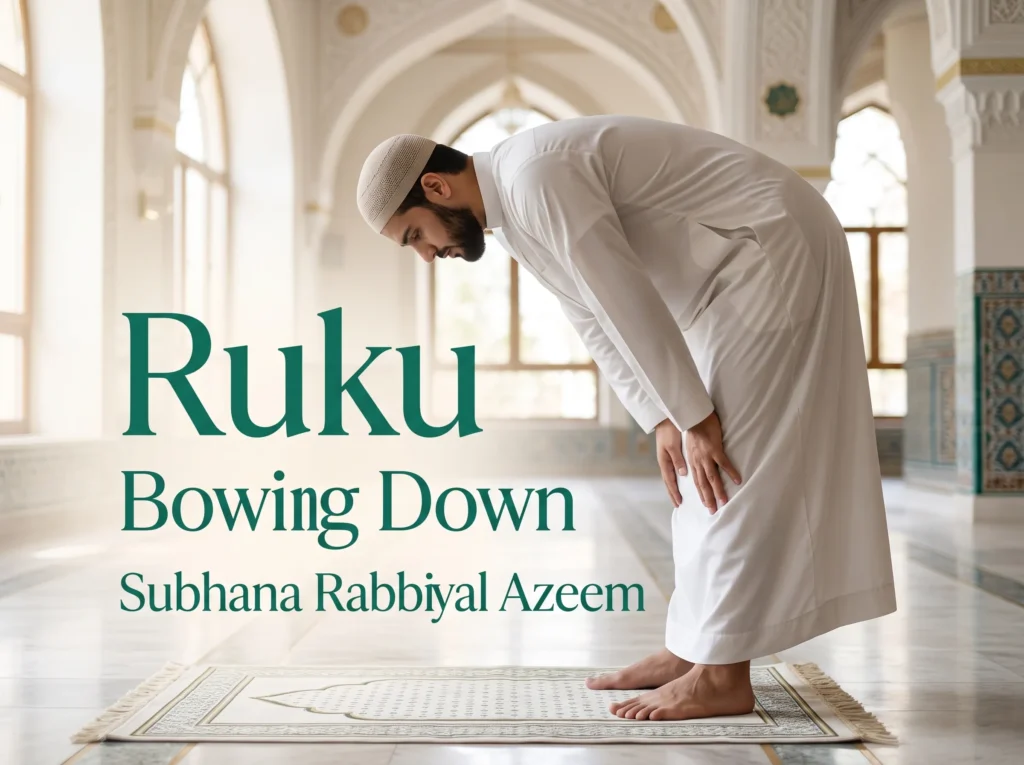
You say Allahu Akbar and bow. Keep your back flat. You praise Allah in this position. You can also praise Him during your day by saying Subhanallahi wa bihamdihi.
Arabic: سُبْحَانَ رَبِّيَ الْعَظِيمِ
Transliteration: Subhana Rabbiyal Azeem. (Say this 3 times).
Urdu Translation: پاک ہے میرا رب عظمت والا۔ (Glory to my Lord, the Great.)
7. Qawmah (Standing Back Up)
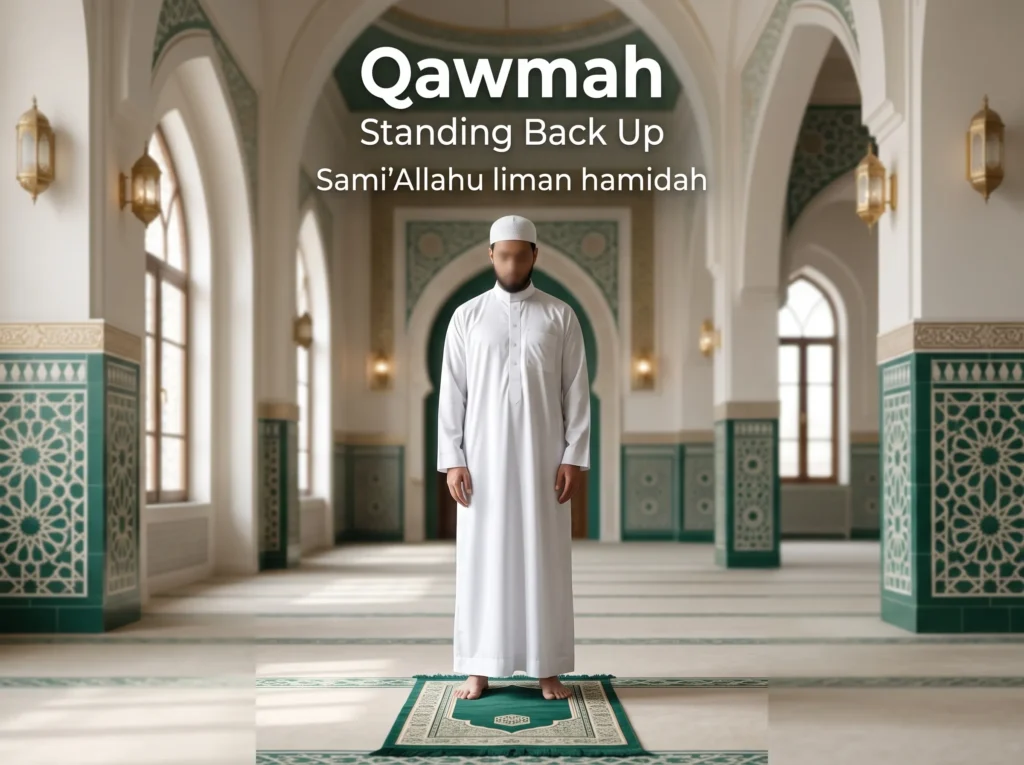
You stand back up from bowing. As you rise, you say:
Arabic: سَمِعَ اللَّهُ لِمَنْ حَمِدَهُ
Transliteration: Sami’Allahu liman hamidah.
Urdu Translation: اللہ نے اس کی سن لی جس نے اس کی تعریف کی۔ (Allah hears the one who praises Him.)
When standing completely, you say:
Arabic: رَبَّنَا وَلَكَ الْحَمْدُ
Transliteration: Rabbana walakal hamd.
Urdu Translation: اے ہمارے رب! تمام تعریفیں تیرے ہی لیے ہیں۔ (Our Lord, to You belongs all praise.)
8. First Sujood (Prostration)
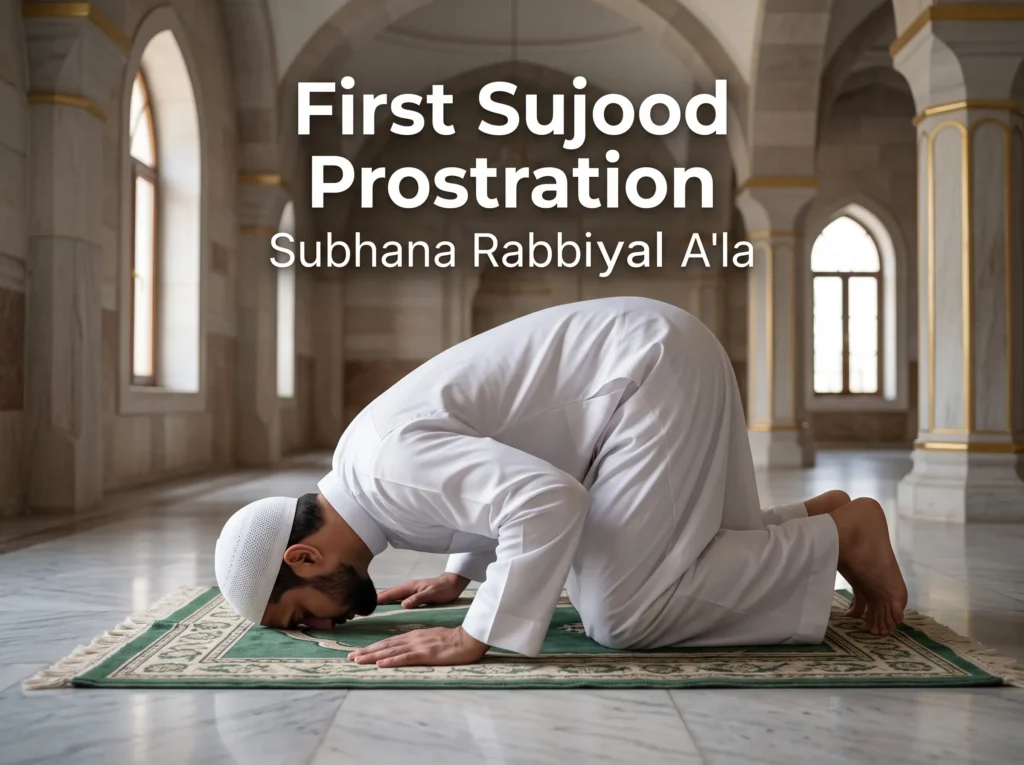
You say Allahu Akbar and place your knees, hands, forehead, and nose on the ground. It reminds you of your humility before Allah.
Arabic: سُبْحَانَ رَبِّيَ الْأَعْلَى
Transliteration: Subhana Rabbiyal A’la. (Say this 3 times).
Urdu Translation: پاک ہے میرا رب بڑی شان والا۔ (Glory to my Lord, the Most High.)
9. Sitting (Jalsa) and Second Sujood
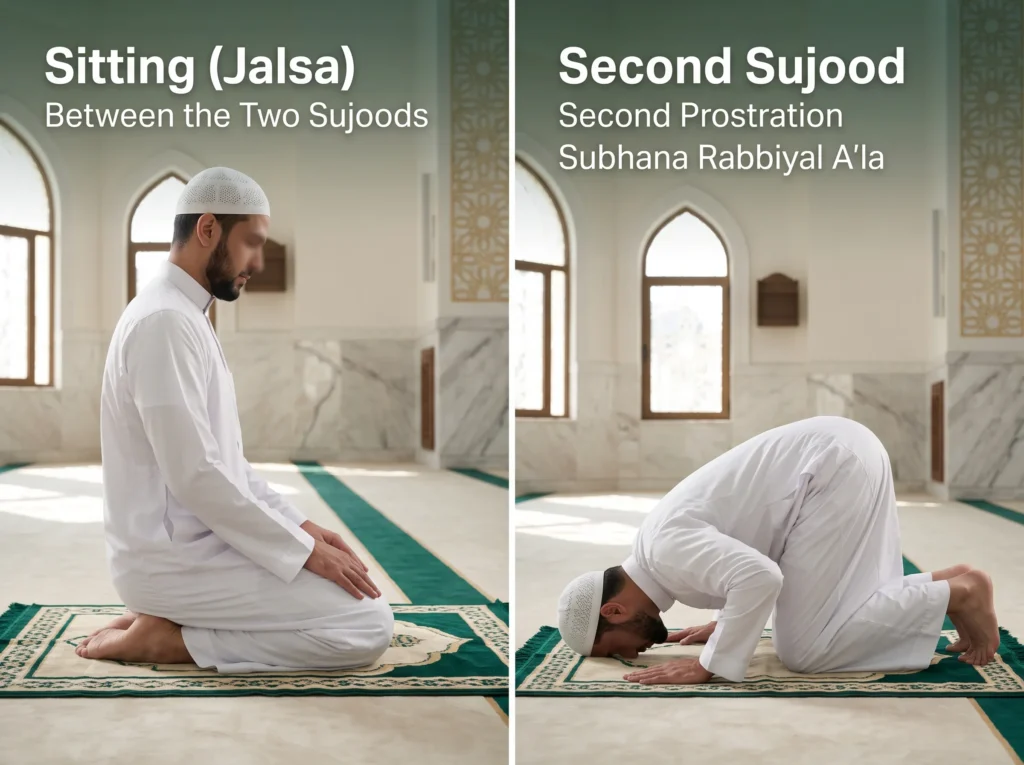
Say Allahu Akbar and sit up for a brief moment. Then say Allahu Akbar again and go down for a second Sujood. You say Subhana Rabbiyal A’la three times again.
10. The Second Rak’ah
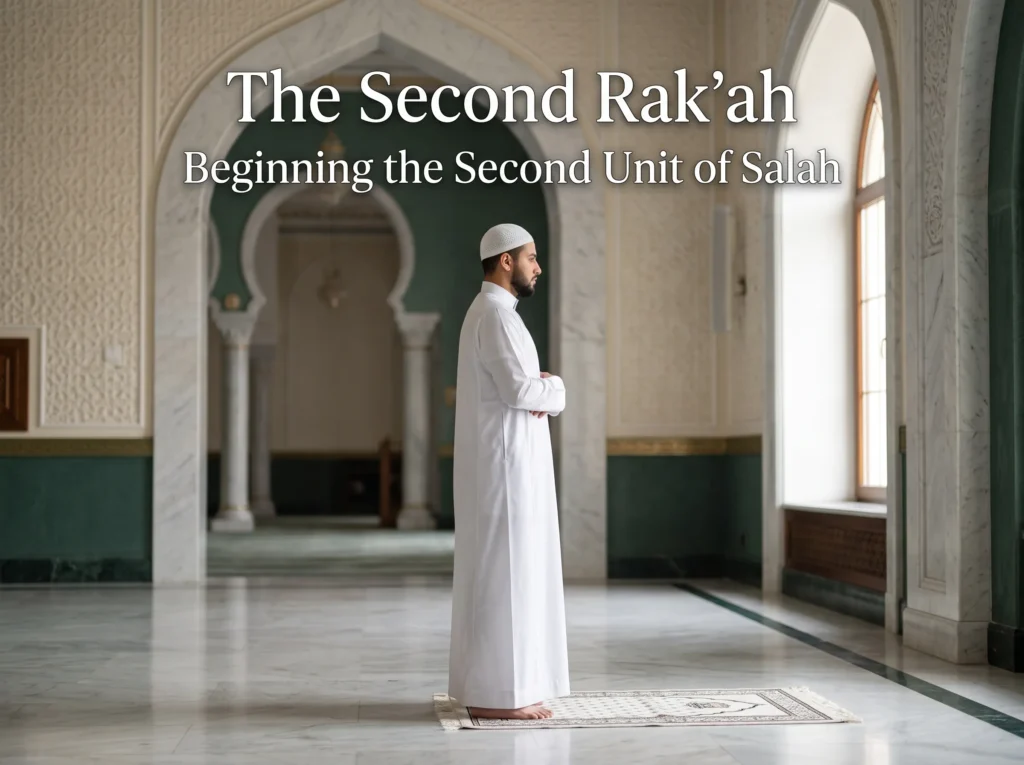
Say Allahu Akbar and stand all the way back up. You have completed one rak’ah.
For the second rak’ah, you do not read Sana. You start directly with Bismillah, read Surah Al-Fatihah, and read another short Surah. Then you do Ruku and the two Sujoods exactly as you did before.
11. Tashahhud (Final Sitting)
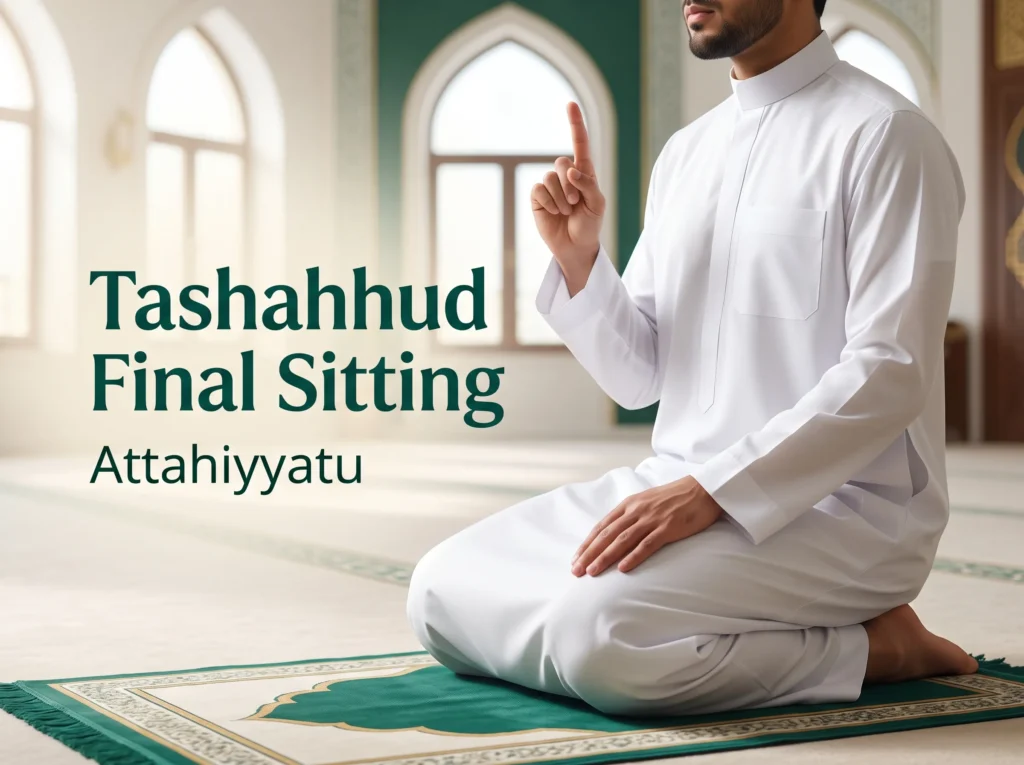
After the second Sujood of the second rak’ah, you sit down. You stay sitting. First, you read the Attahiyat. The Tashahhud is a supplication and testimony that the Prophet ﷺ taught his Companions.
Arabic: التَّحِيَّاتُ لِلَّهِ وَالصَّلَوَاتُ وَالطَّيِّبَاتُ
Transliteration: At-tahiyyatu lillahi was-salawatu wat-tayyibat.
Urdu Translation: تمام زبانی، جسمانی اور مالی عبادتیں اللہ ہی کے لیے ہیں۔ (All worship of tongue, body, and wealth is for Allah.)
Arabic: السَّلَامُ عَلَيْكَ أَيُّهَا النَّبِيُّ وَرَحْمَةُ اللَّهِ وَبَرَكَاتُهُ
Transliteration: As-salamu ‘alaika ayyuhan-Nabiyyu wa rahmatullahi wa barakatuh.
Urdu Translation: اے نبی! آپ پر سلامتی ہو اور اللہ کی رحمت اور اس کی برکتیں ہوں۔ (Peace be upon you, O Prophet, and the mercy of Allah and His blessings.)
Arabic: السَّلَامُ عَلَيْنَا وَعَلَى عِبَادِ اللَّهِ الصَّالِحِينَ
Transliteration: As-salamu ‘alaina wa ‘ala ‘ibadillahis-saliheen.
Urdu Translation: ہم پر اور اللہ کے نیک بندوں پر سلامتی ہو۔ (Peace be upon us and the righteous servants of Allah.)
Arabic: أَشْهَدُ أَنْ لَا إِلَهَ إِلَّا اللَّهُ وَأَشْهَدُ أَنَّ مُحَمَّدًا عَبْدُهُ وَرَسُولُهُ
Transliteration: Ash-hadu an la ilaha illallahu wa ash-hadu anna Muhammadan ‘abduhu wa rasuluh.
Urdu Translation: میں گواہی دیتا ہوں کہ اللہ کے سوا کوئی معبود نہیں اور میں گواہی دیتا ہوں کہ محمد (صلی اللہ علیہ وسلم) اس کے بندے اور رسول ہیں۔ (I bear witness there is no god but Allah, and I bear witness Muhammad is His servant and messenger.)
12. Durood-e-Ibrahim (Sending Blessings)
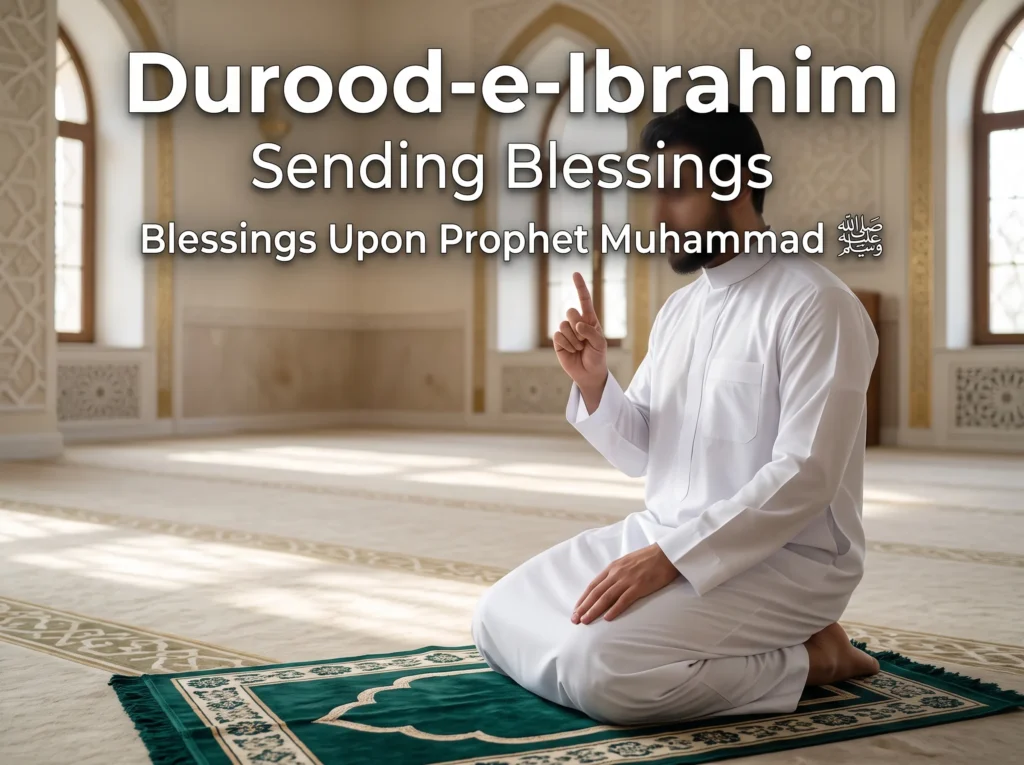
While still sitting, you send blessings to Prophet Muhammad (PBUH).
Arabic: اللَّهُمَّ صَلِّ عَلَى مُحَمَّدٍ وَعَلَى آلِ مُحَمَّدٍ كَمَا صَلَّيْتَ عَلَى إِبْرَاهِيمَ وَعَلَى آلِ إِبْرَاهِيمَ إِنَّكَ حَمِيدٌ مَجِيدٌ
Transliteration: Allahumma salli ‘ala Muhammadin wa ‘ala aali Muhammadin kama sallaita ‘ala Ibraheema wa ‘ala aali Ibraheema innaka Hameedum Majeed.
Urdu Translation: اے اللہ! رحمت نازل فرما محمد (صلی اللہ علیہ وسلم) پر اور ان کی آل پر… (O Allah, send blessings upon Muhammad and the family of Muhammad…)
Arabic: اللَّهُمَّ بَارِكْ عَلَى مُحَمَّدٍ وَعَلَى آلِ مُحَمَّدٍ كَمَا بَارَكْتَ عَلَى إِبْرَاهِيمَ وَعَلَى آلِ إِبْرَاهِيمَ إِنَّكَ حَمِيدٌ مَجِيدٌ
Transliteration: Allahumma barik ‘ala Muhammadin wa ‘ala aali Muhammadin kama barakta ‘ala Ibraheema wa ‘ala aali Ibraheema innaka Hameedum Majeed.
Urdu Translation: اے اللہ! برکت نازل فرما محمد (صلی اللہ علیہ وسلم) پر اور ان کی آل پر… (O Allah, send grace upon Muhammad and the family of Muhammad…)
13. Dua and Salam (Ending)
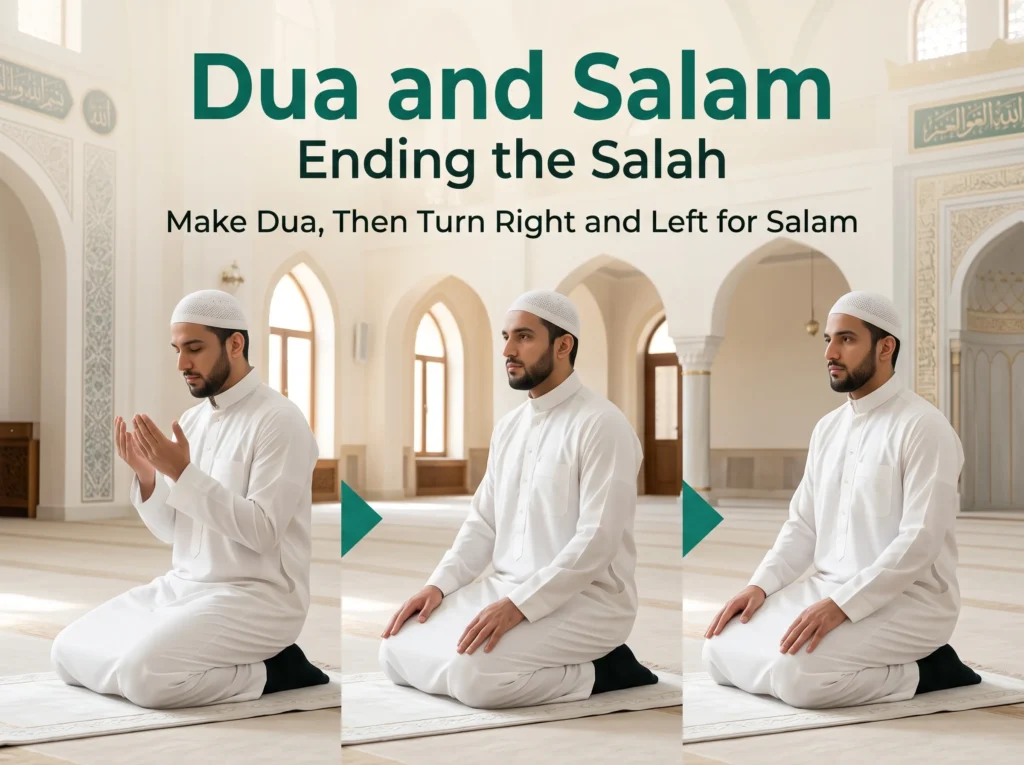
Before ending, you can read a final dua, such as asking for forgiveness (Rabbanagh-firli). Finally, you turn your head to the right, then left, saying:
Arabic: السَّلَامُ عَلَيْكُمْ وَرَحْمَةُ اللَّهِ
Transliteration: As-salamu ‘alaikum wa rahmatullah.
Urdu Translation: تم پر سلامتی ہو اور اللہ کی رحمت ہو۔ (Peace and the mercy of Allah be upon you.)
After the prayer, you may recite Ayatul Kursi as part of your post-prayer remembrance. Also, remember to say a quick dua when entering and leaving the masjid.
Note on Prayer Variations: The basic prayer structure is shared by Muslims worldwide, but some specific details differ between schools of Islamic jurisprudence (madhhabs). This guide presents a common and widely accepted method. If you follow a particular madhhab, follow its trusted prayer guide for specific minor details.
How a 3-Rak’ah Namaz Works (Maghrib)
The Maghrib prayer has 3 rak’ahs.
- Pray the first two rak’ahs normally.
- Sit for the first Tashahhud (read only Attahiyat). Do not read Durood yet.
- Say Allahu Akbar and stand up for the third rak’ah.
- In the third rak’ah, read only Surah Al-Fatihah (no extra Surah).
- Do Ruku and Sujood.
- Sit for the final Tashahhud. Read Attahiyat, Durood, Dua, and finish with Salam.
How a 4-Rak’ah Namaz Works (Zuhr, Asr, Isha)
For 4-rak’ah fard prayers, follow these steps:
- Pray the first two rak’ahs normally.
- Sit for the first Tashahhud (read only Attahiyat).
- Stand up for the third rak’ah. Read only Surah Al-Fatihah. Do Ruku and Sujood.
- Stand up for the fourth rak’ah. Read only Surah Al-Fatihah. Do Ruku and Sujood.
- Sit down for the final sitting. Read Attahiyat, Durood, Dua, and finish with Salam.
(Note: The recitation details for Sunnah and Nafl prayers can differ depending on the type of prayer and the school of jurisprudence. Follow the method taught by your trusted scholar or madhhab).
Quick Namaz Translation Table
Here is a short table showing the main phrases. You can screenshot this to help you memorize.
| Prayer Action | What You Say (Arabic) | Short Urdu Translation (Tarjuma) |
|---|---|---|
| Starting | Allahu Akbar | اللہ سب سے بڑا ہے۔ |
| Bowing (Ruku) | Subhana Rabbiyal Azeem | پاک ہے میرا رب عظمت والا۔ |
| Standing Up | Sami’Allahu liman hamidah | اللہ نے اس کی سن لی جس نے اس کی تعریف کی۔ |
| Head on Floor | Subhana Rabbiyal A’la | پاک ہے میرا رب بڑی شان والا۔ |
| Finishing | As-salamu ‘alaikum… | تم پر سلامتی ہو اور اللہ کی رحمت ہو۔ |
Common Questions (FAQ) About Namaz:
What is the complete Namaz translation in Urdu?
It means the full Arabic prayer translated into the Urdu language, explaining the meaning of every step from the first Takbeer to the final Salam.
Is it necessary to know the namaz ka tarjuma?
Knowing the meaning of the words is not a condition for the validity of the prayer. However, understanding what you recite can help you develop greater focus and awareness in Salah.
What do we say in Ruku and Sujood in Urdu?
In Ruku, we say “پاک ہے میرا رب عظمت والا” (Glory to my great Lord). In Sujood, we say “پاک ہے میرا رب بڑی شان والا” (Glory to my most high Lord).
What is the meaning of Attahiyat in Urdu?
Attahiyat means offering greetings to Allah. The Urdu meaning starts with: “تمام زبانی، جسمانی اور مالی عبادتیں اللہ ہی کے لیے ہیں۔” (All worship of tongue, body, and wealth is for Allah).
What is the Urdu translation of Sana in Namaz?
Sana is a prayer of praise. The Urdu meaning starts with: “اے اللہ! تو پاک ہے خوبیوں والا ہے۔” (O Allah, You are pure and full of praise).
Take your time and learn one part at a time. If you are a parent, practice as you teach your child salah. Understanding the words can help you pray with greater focus and awareness. May Allah accept your prayers.