
Durood Tanjeena: Full Arabic, Transliteration, Translation, Benefits & Wazifa
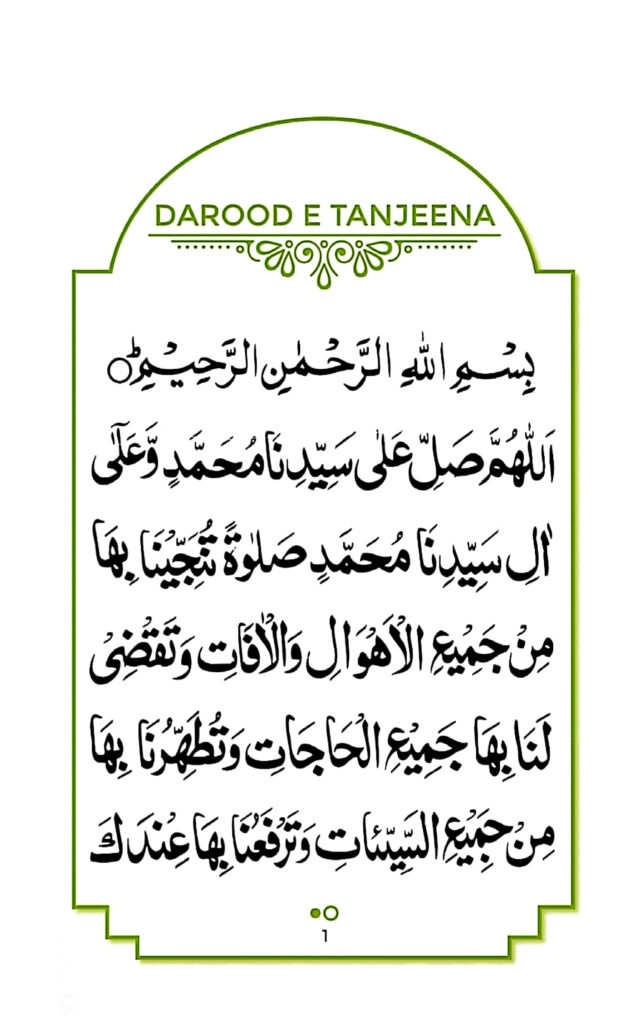
Durood Tanjeena is a well-known durood (blessing) that Muslims recite upon Prophet Muhammad ﷺ. People recite it when they are facing a hard time, feeling worried, or waiting for a need to be fulfilled. It is also called Durood e Tanjeena, Durood Tunjina, Darood Tanjeena, and Durood e Tunajjina. All these names point to the same durood — only the spelling changes.
In this article, you will find the full Arabic text, easy transliteration, English translation, meaning, history, benefits, and the traditional ways people recite it as a wazifa. Please remember one thing before you start: the benefits and recitation counts mentioned below are reported practices passed down by scholars and pious people. They are not guarantees. Only Allah gives, and a Muslim should always keep full trust (tawakkul) in Him while making dua.
In short: Durood Tanjeena is a commonly recited salawat in which Muslims ask Allah to send blessings upon Prophet Muhammad ﷺ and seek relief from difficulties, fulfilment of needs, forgiveness, and goodness in this life and the Hereafter.
Durood Tanjeena Full Arabic Text
Here is the complete Arabic text of Durood Tanjeena. You can read it directly or use it to memorize the durood.
Durood Tanjeena Arabic With Clear Text
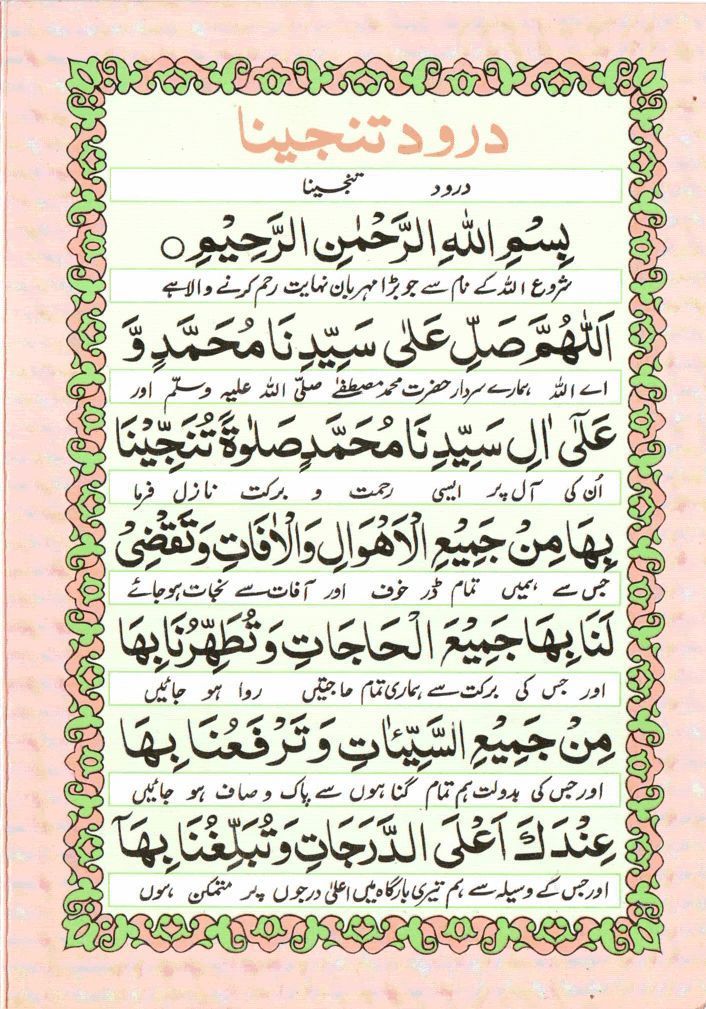
اللَّهُمَّ صَلِّ عَلَى سَيِّدِنَا مُحَمَّدٍ وَعَلَى آلِ سَيِّدِنَا مُحَمَّدٍ صَلَاةً تُنْجِينَا بِهَا مِنْ جَمِيعِ الْأَهْوَالِ وَالْآفَاتِ، وَتَقْضِي لَنَا بِهَا جَمِيعَ الْحَاجَاتِ، وَتُطَهِّرُنَا بِهَا مِنْ جَمِيعِ السَّيِّئَاتِ، وَتَرْفَعُنَا بِهَا عِنْدَكَ أَعْلَى الدَّرَجَاتِ، وَتُبَلِّغُنَا بِهَا أَقْصَى الْغَايَاتِ مِنْ جَمِيعِ الْخَيْرَاتِ فِي الْحَيَاةِ وَبَعْدَ الْمَمَاتِ، إِنَّكَ عَلَى كُلِّ شَيْءٍ قَدِيرٌ
Durood Tanjeena Full Picture
[Insert a high-resolution Durood Tanjeena calligraphy image here — full Arabic text in large, clear script, one line per sentence, on a plain background so it is easy to read and easy to share. Use descriptive alt text such as “Durood Tanjeena full Arabic text image” and a filename like durood-tanjeena-full-picture.jpg for SEO.]
Download or save this Durood Tanjeena full picture for easy daily recitation. Keeping a saved image on your phone makes it simple to read the durood even when you don’t have this page open.
Durood Tanjeena Transliteration
If you cannot read Arabic, this transliteration will help you say the words correctly. Read it slowly, line by line.
Allahumma salli ‘ala sayyidina Muhammadin
wa ‘ala aali sayyidina Muhammadin
salaatan tunjeena bihaa min jamee’il ahwaali wal-aafaat,
wa taqdee lanaa bihaa jamee’al haajaat,
wa tutahhiruna bihaa min jamee’is sayyi’aat,
wa tarfa’unaa bihaa ‘indaka a’lad-darajaat,
wa tuballighunaa bihaa aqsal-ghaayaat,
min jamee’il khayraati fil-hayaati wa ba’dal-mamaat.
Innaka ‘ala kulli shay’in qadeer.
This is also written as Durood Tunjina transliteration or Durood Tunajjina transliteration in different places. These spellings are commonly used in English for the same durood, although transliterations can vary.
Durood Tanjeena English Translation
O Allah, send blessings upon our leader Muhammad and upon the family of our leader Muhammad — blessings that will save us from all fears and troubles, that will fulfil all our needs, that will clean us from all sins, that will raise us to the highest ranks in Your sight, and that will bring us to the best end in every good thing, in this life and after death. Surely You have power over all things.
Meaning of Durood Tanjeena
In simple words, this durood is a request to Allah. It asks Allah to send blessings on Prophet Muhammad ﷺ and, through that blessing, to give the reciter:
- Protection and rescue from fear and difficulty
- Fulfilment of one’s needs
- Forgiveness and cleaning from sins
- A higher rank in front of Allah
- Goodness in this world
- Goodness after death
These are the things people hope for when they recite this durood. As mentioned earlier, hoping for these things is normal, but no specific outcome is promised in a fixed or automatic way. Everything remains in Allah’s hands.
What Is Durood Tanjeena?
What Does Durood Tanjeena Mean?
The word “Tanjeena” (also written Tunjina or Tunajjina) comes from an Arabic root that means “to save” or “to rescue.” So Durood Tanjeena means “the durood that saves us” or “the blessing that rescues us.” It is a request for Allah to save the reciter from hardship through sending blessings on the Prophet ﷺ.
Why Is It Called Salat al-Tanjeena?
In Arabic, this durood is called Salat al-Tanjeena (صلاة التنجينا), which means “the prayer of deliverance.” It is called this because the wording of the durood directly asks Allah for rescue (najat) from all kinds of fear, harm, and hardship.
Other Names of Durood Tanjeena
This durood is known by several names in different countries and languages:
- Salat al-Tanjeena
- Salat al-Munjiyya (the prayer of rescue)
- Durood Tunjina
- Durood Tunajjina
- Durood e Tanjeena
- Darood e Tanjeena
- Shalawat Munjiyat (common name in Southeast Asia)
Sending durood on the Prophet ﷺ is a well-known and beloved practice among Muslims. If you also want a short, easy durood to recite daily, you can read our short Durood Shareef in English guide.
Origin and History of Durood Tanjeena
Who Introduced Durood Tanjeena?
This durood is traditionally linked to Shaykh Musa al-Darir, a pious scholar from the past. It is also recorded by later scholars in well-known collections of salawat.
Story of Shaykh Musa al-Darir
A popular story tells that Shaykh Musa al-Darir was travelling by sea when a heavy storm hit the ship. In this account, he saw the Prophet Muhammad ﷺ in a dream, who told him to recite this durood 1,000 times. He began reciting it with his companions, and by the time they had read it around 300 times, the storm began to calm down, and the ship reached safety. This story has been passed down for generations and is one of the main reasons this durood is linked with protection and relief from danger.
Historical References to Durood Tanjeena
This durood also appears in later respected works on salawat, including collections compiled by well-known scholars. Some versions include extra words of blessing on the Prophet’s family, showing that slightly different wordings have circulated over time while the core meaning stays the same. For the full answer on whether this durood comes from the Quran or an authentic hadith, see the section below: Is Durood Tanjeena in the Quran or Hadith?
Durood Tanjeena Benefits and Virtues
Reported virtues of Durood Tanjeena include the following. Please read these as traditional beliefs, not guaranteed results.
Durood Tanjeena for Relief From Difficulties
Many Muslims recite this durood when going through a hard time, believing it may bring relief and ease, following the tradition connected to the storm at sea.
Durood Tanjeena for Anxiety and Worry
People experiencing worry or restlessness often recite this durood to calm the heart, alongside other forms of dhikr and dua. If you often feel anxious, our article on Hasbunallahu wa Ni’mal Wakeel meaning, hadith and benefits may also help.
Durood Tanjeena for Protection
This durood is traditionally recited for protection from harm, danger, and unseen troubles.
Durood Tanjeena for Fulfillment of Needs
Because the durood itself asks Allah to fulfil “all our needs,” many people recite it while making dua for a specific need (hajat).
Durood Tanjeena for Peace and Spiritual Comfort
Many Muslims find that reciting durood with attention and sincerity brings them spiritual comfort and peace of heart. Many people say this durood slowly, with full attention, as a way to calm their mind before or after prayer.
Benefits of Reciting Durood Tanjeena Daily
Reported virtues of daily recitation include:
- Seeking Allah’s mercy and closeness to the Prophet ﷺ
- Hoping for forgiveness of sins
- Building a habit of remembering Allah and the Prophet ﷺ every day
- Seeking peace of mind during a difficult season of life
Sending blessings on the Prophet ﷺ in general carries strong reward. According to a hadith in Sahih Muslim, a person who sends blessings upon the Prophet ﷺ once receives ten blessings from Allah in return. This applies to sending durood in general, and reciting Durood Tanjeena is one way of doing that.
Durood Tanjeena Wazifa
In common usage, “wazifa” refers to a regular devotional practice of reciting a Quranic verse, dua, dhikr, or durood, sometimes with a specific number or routine attached to it. Below is guidance on how people commonly use Durood Tanjeena as a wazifa.
How to Read Durood Tanjeena as a Wazifa
- Make wudu if possible (this is not compulsory, but it adds respect to the practice).
- Sit in a clean, quiet place.
- Recite Durood Ibrahim once or twice before starting (this is a good habit before making dua).
- Recite Durood Tanjeena the number of times you have chosen.
- After finishing, make sincere dua to Allah in your own words.
Durood Tanjeena Wazifa for Difficulties
Some people recite it a set number of times daily during a hard period of life, along with sincere dua for ease.
Durood Tanjeena Wazifa for Hajat
When someone has a specific need (hajat), they may recite this durood along with other duas asking Allah to fulfil that need. You may also find our guide on powerful dua for rizq helpful if your need is related to provision or income.
Durood Tanjeena Wazifa for Protection
Some recite it seeking protection for themselves, their family, or during travel.
Durood Tanjeena Wazifa for Peace of Heart
Reciting it slowly and with focus is believed to bring calm and comfort to a troubled heart.
Important note: No specific number of recitations is written in the Quran or in an authentic hadith as a fixed, guaranteed formula. Any number you choose is simply a personal practice of dhikr, not a magic formula. Keep your trust in Allah, not in the number itself.
How Many Times Should You Read Durood Tanjeena?

Various devotional routines mention different numbers for reciting Durood Tanjeena, but these numbers are not established as obligatory or universally prescribed in the Quran or authentic hadith. They come from personal and community practice, not from a fixed religious ruling.
Durood Tanjeena 7 Times
Some personal routines mention reciting it 7 times, often after a prayer, as a short daily practice. This is a matter of personal habit rather than an established rule.
Durood Tanjeena 11 Times
Reciting it 11 times is mentioned in some personal routines, especially by those with limited time. As with other counts, this is not backed by a specific, authenticated source.
Durood Tanjeena 41 Times
Some people recite it 41 times over a set number of days when facing a specific difficulty, again as a matter of personal practice rather than an established religious requirement.
Durood Tanjeena 100 Times
Reciting it 100 times a day, often split across different times, is also mentioned in various devotional routines. This number, too, is a personal practice and not a fixed rule.
Durood Tanjeena 1000 Times
Unlike the numbers above, reciting Durood Tanjeena 1,000 times has a specific traditional source: the story of Shaykh Musa al-Darir, who is said to have been instructed in a dream to recite it 1,000 times during a severe storm at sea. Because of this story, some people choose to recite it 1,000 times when facing a serious hardship, sometimes spread across several days.
Since none of these numbers come from a fixed command in the Quran or an authentic hadith, you should not treat any of them — 7, 11, 41, 100, or 1,000 — as a guaranteed formula for getting your wish. Choose a number that fits your daily routine and recite with sincerity, keeping your trust in Allah rather than in the number itself.
How to Recite Durood Tanjeena
Step 1: Make Your Intention
Before you begin, quietly intend in your heart why you are reciting this durood — for example, seeking Allah’s help, sending blessings on the Prophet ﷺ, or asking for relief from a difficulty.
Step 2: Recite Durood
Read the Arabic text, or the transliteration if you cannot read Arabic, slowly and with attention to the meaning.
Step 3: Make Dua to Allah
After finishing your recitation, raise your hands and make dua to Allah in your own words, asking for what you need.
Step 4: Remain Consistent
Try to make this durood, or any durood, a regular part of your day rather than reciting it only once and stopping. A small, consistent practice may be easier to maintain than a large amount of recitation done only occasionally.
Durood Tanjeena After Salah
Can I Read Durood Tanjeena After Every Prayer?
Yes. Many people add this durood to their short dhikr routine after the five daily prayers, alongside tasbih and other duas.
Can I Read Durood Tanjeena in the Morning?
Yes, a person may recite Durood Tanjeena in the morning as part of their personal dhikr routine.
Can I Read Durood Tanjeena at Night?
Yes, a person may also recite it at night as part of their personal devotional routine, including before sleeping. To know more about the best times to send blessings on the Prophet ﷺ, see our article on when should you send Durood Shareef.
Durood Tanjeena and Wudu
Do you need wudu to recite Durood Tanjeena?
No, wudu is not compulsory for reciting a durood or dua, since it is not the same as formal salah. However, being in a state of wudu is respectful and is often preferred when remembering Allah and the Prophet ﷺ. If you are unsure about a specific situation, it is best to ask a qualified local scholar. To understand more on the importance of prayer and purity in daily worship, see our article on the importance of salah in Islam.
Can Women Read Durood Tanjeena During Their Period?
Yes. Scholars generally agree that a woman on her period can recite durood, dhikr, and dua, since these are different from reciting the Quran or performing formal salah. This exact question has been addressed by scholars, who confirm that daily duas and durood, including Durood Tanjeena, can be recited during menstruation. You can read a detailed fatwa on this topic here: Darul Ifta Birmingham – Can a Woman on Her Periods Recite Durood Shareef?
For a personal ruling on your own situation, it is always best to ask a qualified scholar you trust.
Durood Tanjeena in Urdu
Durood Tanjeena Urdu Translation
اے اللہ! ہمارے سردار محمد ﷺ اور ان کی آل پر ایسا درود بھیج جس کی برکت سے ہمیں ہر خوف اور آفت سے نجات ملے، ہماری تمام حاجتیں پوری ہوں، ہم تمام گناہوں سے پاک ہوں، ہمارے درجات بلند ہوں، اور ہمیں دنیا اور آخرت میں ہر بھلائی کی انتہا تک پہنچا دے۔ بے شک تو ہر چیز پر قادر ہے۔
Durood Tanjeena Ka Matlab in Urdu
اس درود کا مطلب یہ ہے کہ ہم اللہ سے دعا کرتے ہیں کہ نبی کریم ﷺ پر ایسی رحمت نازل فرمائے جس کے ذریعے ہمیں مشکلات سے نجات، حاجتوں کی تکمیل، گناہوں کی معافی، اور دنیا و آخرت میں بھلائی حاصل ہو۔
Durood Tanjeena Ka Wazifa in Urdu
بہت سے لوگ اس درود کو روزانہ ایک مقررہ تعداد میں پڑھتے ہیں، خاص طور پر مشکل وقت میں، اللہ سے مدد اور آسانی کی امید کے ساتھ۔
दुरूद तंजीना का हिंदी अनुवाद
Durood Tanjeena का सरल हिंदी अर्थ और इसका संक्षिप्त संदेश।
दुरूद तंजीना का हिंदी अनुवाद
“ऐ अल्लाह! हमारे सरदार मुहम्मद ﷺ और उनके परिवार पर ऐसी रहमत नाज़िल फरमा जिसकी बरकत से हमें हर डर और मुसीबत से निजात मिले, हमारी सारी हाजतें पूरी हों, हम सब गुनाहों से पाक हो जाएं, हमारे दर्जे बुलंद हों, और हमें दुनिया व आख़िरत में हर भलाई तक पहुँचा दे। बेशक तू हर चीज़ पर क़ादिर है।”
दुरूद तंजीना क्यों पढ़ा जाता है?
यह दुरूद मुश्किलों से राहत, हाजत की पूर्ति और दिल की शांति के लिए पढ़ा जाता है। इसमें अल्लाह से डर और मुसीबत से निजात, जरूरतों की पूर्ति, गुनाहों से पाकी और दुनिया व आख़िरत की भलाई की दुआ की जाती है।
Durood Tanjeena vs Durood Ibrahim
Which Durood Is Durood Tanjeena?
Durood Tanjeena is a separate, independently transmitted durood with its own specific wording, focused on asking for rescue, protection, and fulfilment of needs.
Is Durood Tanjeena the Same as Durood Ibrahim?
No. Durood Ibrahim is the durood recited in salah, during the tashahhud, and its wording and source are different from Durood Tanjeena. Both are ways of sending blessings on the Prophet ﷺ, but they should not be treated as the same text or used interchangeably in salah. If you would like to teach children about durood, our guide on how to teach Durood Sharif to children may be useful.
Is Durood Tanjeena in the Quran or Hadith?
This is one of the most important questions about Durood Tanjeena, so here is a direct, combined answer.
The exact wording of Durood Tanjeena is not a verse of the Quran, and it is not recorded as an authenticated (sahih) hadith of the Prophet ﷺ in the main hadith collections such as Sahih Bukhari or Sahih Muslim. It is best understood as a durood that was transmitted through pious scholars over the centuries, based on the story linked to Shaykh Musa al-Darir, and later included in respected books of salawat.
That said, sending blessings on the Prophet ﷺ in general — as a category of worship — is clearly commanded in the Quran. Allah says that He and His angels send blessings upon the Prophet, and believers are told to ask for blessings and peace upon him (Surah Al-Ahzab, 33:56). You can read this verse here: Quran 33:56 on Quran.com.
So while the general act of sending durood is firmly established in the Quran and Sunnah, this specific wording of Durood Tanjeena should be understood as a transmitted, traditional practice — not as a direct Quranic verse or a hadith from Sahih Bukhari or Sahih Muslim. Many Muslims recite it out of love for the Prophet ﷺ and trust in its reported history, while keeping this distinction clear.
Meaning of Durood Tanjeena
A simple explanation of each line of this beautiful durood and the supplication it contains.
“Allahumma Salli Ala Sayyidina Muhammad”
This means “O Allah, send blessings upon our leader Muhammad.” This is the opening request, asking Allah to bless the Prophet ﷺ.
“Salatan Tunajjina Biha Min Jami’il Ahwali Wal Afat”
This means “a blessing through which You save us from all fears and calamities.” Here the durood asks for protection and rescue from every kind of danger.
“Wa Taqdi Lana Biha Jami’il Hajat”
This means “and through which You fulfil all our needs.” This part is a direct request for Allah to complete our needs, big or small.
“Wa Tutahhiruna Biha Min Jami’is Sayyi’at”
This means “and through which You purify us from all sins.” This line is a request for forgiveness and inner cleanliness from wrongdoing.
“Wa Tarfa’una Biha A’lad Darajat”
This means “and through which You raise us to the highest ranks.” Here the reciter asks Allah to raise their status and honour in His sight.
“Wa Tuballighuna Biha Aqs’al Ghayat”
This means “and through which You bring us to the furthest goals.” This is a request to reach the very best outcome in every matter.
“Min Jami’il Khairati Fil Hayati Wa Ba’dal Mamat”
This means “of all good things, in this life and after death.” The durood ends by asking for goodness both in this world and in the hereafter.
Frequently Asked Questions About Durood Tanjeena
What is Durood Tanjeena?
It is a well-known durood recited upon Prophet Muhammad ﷺ, asking Allah for rescue from difficulty, fulfilment of needs, and goodness in this life and the next.
What does Durood Tanjeena mean?
It means “the durood that saves us” or “the blessing of deliverance,” coming from the Arabic root meaning “to rescue.”
What are the benefits of Durood Tanjeena?
Reported benefits include relief from hardship, help with anxiety, protection, fulfilment of needs, and peace of heart. These are traditional beliefs, not guaranteed outcomes.
How many times should I read Durood Tanjeena?
There is no fixed number required in Islam. Common practices include 7, 11, 41, 100, or 1,000 times, based on tradition rather than a strict religious rule.
Can I read Durood Tanjeena 100 times?
Yes, many people recite it 100 times daily as a personal practice.
Can I read Durood Tanjeena 1000 times?
Yes, especially during hard times, following the tradition connected to Shaykh Musa al-Darir. This is a personal practice, not an obligation.
Is Durood Tanjeena mentioned in the Quran?
No, its exact wording is not a verse of the Quran. However, sending blessings upon the Prophet ﷺ is commanded in the Quran in general terms.
Is Durood Tanjeena mentioned in Hadith?
Its exact wording is not recorded in the main authentic hadith collections. It comes through scholarly transmission connected to Shaykh Musa al-Darir.
Can I read Durood Tanjeena every day?
Yes, it can be added to your daily dhikr and dua routine.
Can I read Durood Tanjeena after Salah?
Yes, many people recite it after their daily prayers.
Can I read Durood Tanjeena without wudu?
Yes, wudu is not required for reciting durood or dua, though it is respectful to be in wudu if possible.
Can women read Durood Tanjeena during menstruation?
Yes, scholars generally permit reciting durood and dhikr during menstruation, since it is different from Quran recitation or formal salah.
Can Durood Tanjeena be read for a Hajat?
Yes, many people recite it while making dua for a specific need.
What is the difference between Durood Tanjeena and Durood Ibrahim?
Durood Ibrahim is recited within salah during tashahhud and has a different, separately established wording. Durood Tanjeena is a separate durood, transmitted through scholarly tradition, mainly recited outside of salah.
What is another name for Durood Tanjeena?
It is also called Salat al-Tanjeena, Salat al-Munjiyya, Durood Tunjina, and Durood Tunajjina.
What is the correct spelling: Tanjeena, Tunjina, or Tunajjina?
All these spellings refer to the same durood. The differences are just in how the Arabic word is written in English letters.
Sources and References
- Quran, Surah Al-Ahzab 33:56 — Quran.com
- Sahih Muslim 408, on the reward of sending blessings upon the Prophet ﷺ — Sunnah.com
- Darul Ifta Birmingham, fatwa on reciting durood and dua during menstruation — daruliftabirmingham.co.uk
- The story of Shaykh Musa al-Darir and the origin of Durood Tanjeena, as recorded in traditional collections of salawat and passed down through generations of scholars
This article summarises reported history and traditional practice. For personal religious rulings, always consult a qualified local scholar.
Final Thoughts
Durood Tanjeena is a well-loved durood among Muslims across the world. Its words ask Allah for relief from fear, fulfilment of needs, forgiveness of sins, and goodness in this life and the next. While many people recite it seeking these blessings, it is important to remember that no fixed number or method guarantees a specific result — full trust and reliance belongs to Allah alone. To learn more about placing trust in Allah while making dua, read our article on Tawakkul in Islam.
Whatever your situation, try to make sending durood on the Prophet ﷺ a regular part of your life — not just Durood Tanjeena, but durood in general. It is a simple act of love for the Prophet ﷺ that carries great reward, and it keeps the heart connected to Allah.