
Ashab e Kahf Complete Quran Explanation, Lessons & Facts
Have you ever heard the story of some young men who slept inside a cave for hundreds of years and woke up as if only one day had passed? This is not a fairy tale. It is a true story that Allah tells us in the Holy Quran. It is the story of Ashab e Kahf, also called the People of the Cave or the Companions of the Cave.
This story is found in Surah Al-Kahf, the 18th chapter of the Quran. Muslims all over the world read this surah every Friday because of its special blessings. Inside it, the Lord of the Worlds tells us about a group of young believers who ran away from a cruel king to save their faith. They hid in a cave, and Allah (SWT) made them sleep for 309 years. When they woke up, they thought they had slept for only a day.
In the Western world, this same story is sometimes known as the Seven Sleepers of Ephesus, though the Quran does not say for certain that there were exactly seven of them.
In this article, we will explain everything in very simple words — the story itself, a verse-by-verse walk through Surah Al-Kahf 18:9–26, common misconceptions, the debate over the cave’s location, hadith and tafsir, and the lessons this story holds for us today.
Quick Facts: Ashab e Kahf at a Glance
| Topic | Information |
|---|---|
| Mentioned in | Surah Al-Kahf (Chapter 18) |
| Quran verses | 18:9–26 |
| Sleep duration | 309 lunar years |
| Dog’s traditional name | Qitmir (from Islamic tradition, not the Quran) |
| Exact number of sleepers | Unknown — Allah alone knows |
| Location of the cave | Unknown — commonly claimed sites in Jordan and Turkey |
| Related Christian legend | Seven Sleepers of Ephesus |
| Main lesson | Tawheed, tawakkul, and the reality of resurrection |
| Sunnah connection | Reciting Surah Al-Kahf every Friday |
What Does Ashab e Kahf Mean?
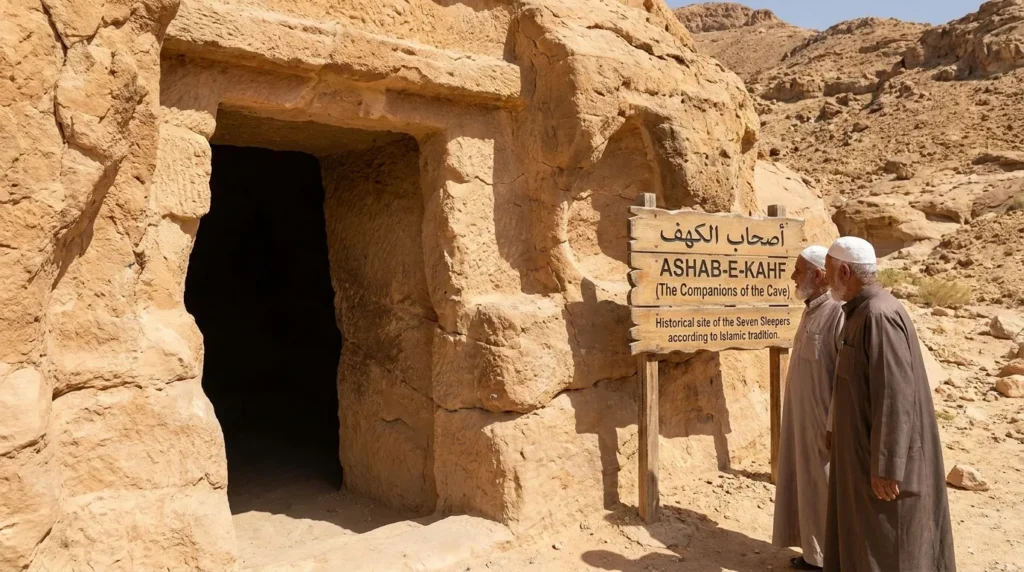
The words Ashab e Kahf come from Arabic. “Ashab” means “companions” or “people,” and “Kahf” means “cave.” So Ashab e Kahf simply means “People of the Cave” or “Companions of the Cave.”
You may also see this name written in different ways, such as Ashab al Kahf, Ashabul Kahf, or Ashab ul Kahf. All of these spellings mean the same thing. In English, people usually call them the People of the Cave or the Companions of the Cave.
This name is used because these young men left their homes and hid inside a cave to protect their belief in one God. The name of the whole 18th chapter of the Quran, Surah Al-Kahf, also comes from this same word “Kahf” (cave), because this story is one of the main stories told in that surah. You will sometimes also see the related name Al-Raqim mentioned alongside the story — a term scholars have connected either to the inscribed tablet placed near the cave or to the valley/mountain where the cave itself was believed to be located.
Who Were Ashab e Kahf?
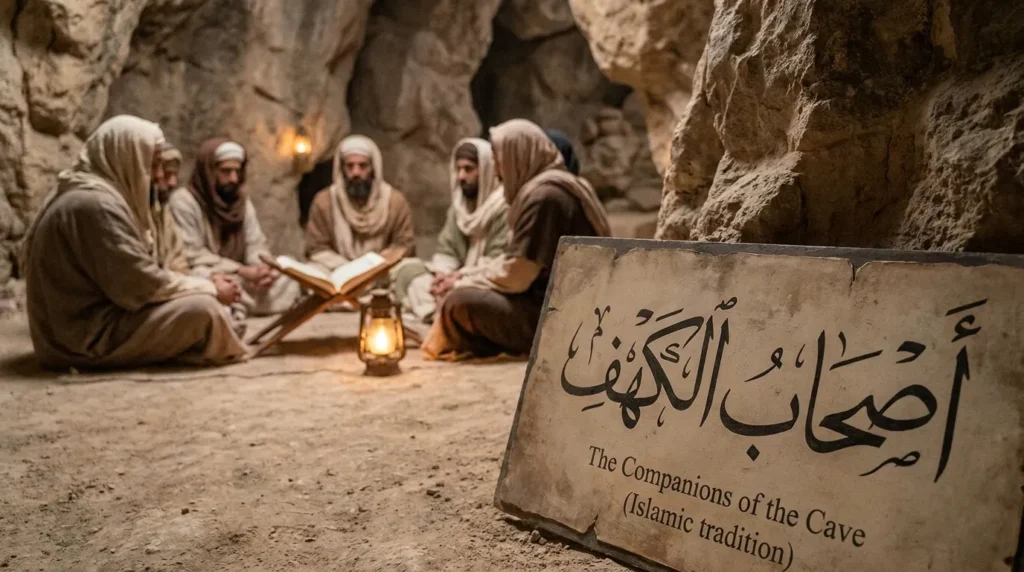
Ashab e Kahf were a small group of young men who lived a long time ago in a town ruled by a king who did not believe in the Creator of the heavens and the earth. At that time, most people in the town worshipped idols. The king forced everyone to worship these idols too, and anyone who refused could be punished or even killed.
But these young men were different. Deep in their hearts, they held firm to tawheed — belief in the oneness of God — the Rabb of all the worlds. They did not agree with the false worship going on around them, but at first they had to hide their true belief because it was dangerous to speak openly against the king.
One day, these young men came together, maybe by chance, maybe by Allah’s plan, and each one found out that the others also secretly believed in the same truth. This gave them courage. Together, they made a promise to stay firm on this belief no matter what happened. When the news reached the king that some young men in his kingdom refused to worship idols, they were called before him and questioned about their faith.
They stood before the king and told him clearly that they believed only in the Lord of the heavens and the earth, and they would never worship anyone else besides Him. This was a very brave thing to do, because kings in those days had full power over people’s lives. Rather than give up their belief, these young men chose to run away and hide, trusting that Allah Almighty would protect them. If you want to read about how Islam teaches us to keep trusting Allah even when life feels hard, this piece on tawakkul in Islam explains the meaning and benefits of that trust in detail.
Ashab e Kahf Story in the Quran
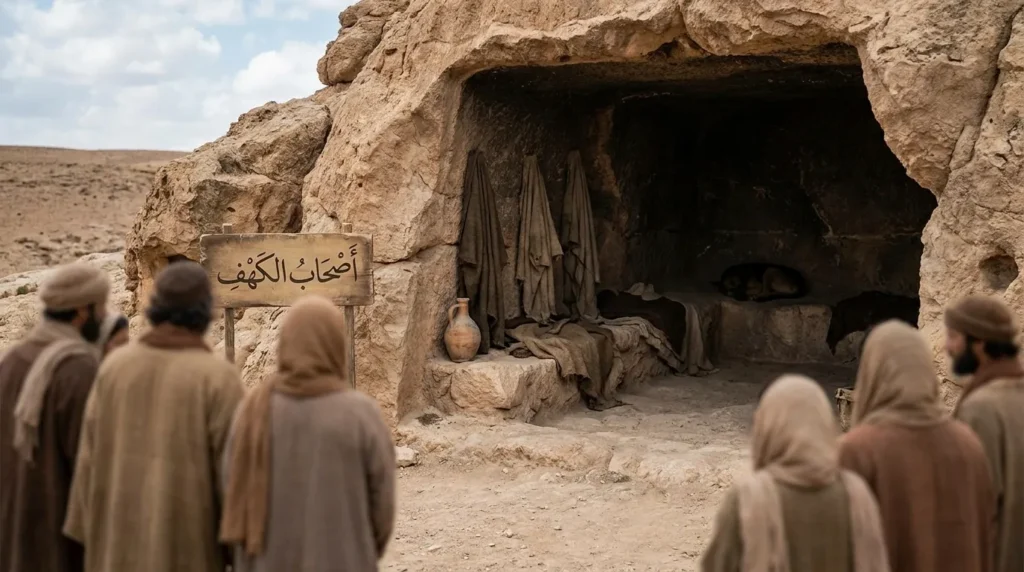
The full story of Ashab e Kahf is told in Surah Al-Kahf, verses 9 to 26. Let’s go through the story step by step, in the order it happened.
The Tyrant King
The story begins in a town ruled by a king who forced his people to worship idols instead of the one true God. He did not tolerate anyone who disagreed with him. Life under his rule was full of fear, and anyone caught believing differently could face serious punishment. Many historians link this setting to the persecution of monotheists under the Roman emperor Decius, who is remembered for enforcing empire-wide sacrifice to Roman gods.
The Young Believers
A group of young men in this town held on to belief in one God, even though it was risky. The Quran tells us that Allah had guided their hearts and given them extra strength and steadiness in their belief. They were young, but their faith was firm, and Allah praised them by saying that He had increased them in guidance.
Seeking Refuge in the Cave
When the pressure from the king became too much, these young men decided to leave everything behind — their homes, their families, their comfort — and run to a cave in the mountains. Before entering, they prayed to Allah, asking Him for mercy and asking Him to make their situation easy for them. This single prayer shows their complete trust in Allah’s care during the most frightening moment of their lives. If you want to understand the meaning and power of a very similar prayer of reliance on Allah, this article about Hasbunallahu wa ni’mal Wakeel is worth reading.
Allah Causes Them to Sleep
Once inside the cave, Allah placed a heavy sleep over them, sealing off their hearing so that nothing outside could wake them. The Quran describes how Allah also turned their bodies from side to side, so their skin would not get damaged by touching the ground for such a long time. Their dog stretched out its front legs at the entrance of the cave, standing guard the whole time. Allah also made anyone who came near the cave feel a strange fear, so no one dared to disturb them.
Waking After 309 Years
After many years passed, Allah woke them up. They had no idea how long they had been sleeping. Some of them thought they had slept for only a day or part of a day. Their bodies had not aged the way a normal sleeping person’s body would over hundreds of years — this itself was one of the great miracles of the story.
Their Return to Society
Feeling hungry, one of them was sent into the town with an old silver coin to quietly buy some food. But when he tried to pay with the coin, people were shocked, because it was from an era long past. Word spread quickly, and soon the townspeople and even the ruler of that later time came to see them. By this time, the kingdom’s ruler and the people believed in the one Creator — showing how much the world had changed while the young men slept. Some historians connect this later, believing ruler to the Byzantine emperor Theodosius II, who reigned centuries after Decius and during a time when Christianity (a form of monotheism, from the Islamic perspective) had become the accepted faith of the empire.
Their Legacy
After this meeting, Allah caused the young men’s story to become known to everyone, so people could see with their own eyes that Allah has full power over life, death, and time. Their case became a living sign to prove that resurrection after death is real and possible, no matter how impossible it may seem — a theme that connects directly to Islamic eschatology and the Last Day.
Surah Al-Kahf 18:9–26: Verse-by-Verse Explanation
This section walks through the relevant verses one at a time, giving the meaning, the context, and the lesson of each. (Translations below convey the meaning of the verses rather than reproducing any single copyrighted translation word for word.)
Ashab al-Kahf — The Companions of the Cave
A verse-by-verse reflection on the story of the believing youths, their courage, their dua, Allah’s protection, and the reminder that the unseen belongs to Allah alone.
The story of the Companions of the Cave is narrated in Surah Al-Kahf, verses 18:9–26. These verses teach faith, tawheed, courage, reliance upon Allah, humility before the unseen, and trust in Allah’s perfect knowledge.
Verse 9
18:9 • The Cave and the Signs of Allahأَمْ حَسِبْتَ أَنَّ أَصْحَـٰبَ ٱلْكَهْفِ وَٱلرَّقِيمِ كَانُوا۟ مِنْ ءَايَـٰتِنَا عَجَبًا
Meaning
Allah asks whether the Prophet ﷺ thought that the Companions of the Cave and the inscription (Al-Raqim) were anything strange among His signs.
Context
This opening verse frames the whole story as one of Allah’s many wonders — remarkable, but not beyond His power.
Lesson
No matter how extraordinary a trial or miracle looks to us, nothing is difficult for Allah.
Verse 10
18:10 • The Dua of the Young Believersإِذْ أَوَى ٱلْفِتْيَةُ إِلَى ٱلْكَهْفِ فَقَالُوا۟ رَبَّنَآ ءَاتِنَا مِن لَّدُنكَ رَحْمَةًۭ وَهَيِّئْ لَنَا مِنْ أَمْرِنَا رَشَدًۭا
Meaning
The young men fled to the cave and prayed, asking their Lord to grant them mercy from Himself and to prepare for them right guidance in their affair.
Context
This is the moment right before Allah puts them to sleep — a short but powerful prayer at the point of maximum uncertainty.
Lesson
When a situation feels completely out of our hands, the correct response is sincere dua, not despair.
Verse 11
18:11 • Allah’s Protectionفَضَرَبْنَا عَلَىٰٓ ءَاذَانِهِمْ فِى ٱلْكَهْفِ سِنِينَ عَدَدًۭا
Meaning
Allah struck over their ears, sealing their hearing, within the cave for a number of years.
Context
This verse describes the actual beginning of the miraculous sleep.
Lesson
Allah can place a believer into safety in ways no human being could plan or arrange.
Verse 12
18:12 • Allah’s Perfect Knowledge of Timeثُمَّ بَعَثْنَـٰهُمْ لِنَعْلَمَ أَىُّ ٱلْحِزْبَيْنِ أَحْصَىٰ لِمَا لَبِثُوٓا۟ أَمَدًۭا
Meaning
Allah then raised them up again in order to make clear which of the two groups was better able to calculate the length of time they had remained.
Context
This verse sets up the theme of the story testing people’s sense of time and their trust in Allah’s precise knowledge.
Lesson
Human estimation is limited; only Allah’s knowledge is complete.
Verse 13
18:13 • Young Believers Increased in Guidanceنَحْنُ نَقُصُّ عَلَيْكَ نَبَأَهُم بِٱلْحَقِّ ۚ إِنَّهُمْ فِتْيَةٌ ءَامَنُوا۟ بِرَبِّهِمْ وَزِدْنَـٰهُمْ هُدًۭى
Meaning
Allah narrates their story in truth — they were young men who believed in their Lord, and Allah increased them in guidance.
Context
This verse confirms that the account is factual, not legend, and identifies the youths as believers whose guidance Allah strengthened.
Lesson
Sincere belief, even among the young, can be nurtured and increased by Allah.
Verse 14
18:14 • Firmness of the Heartوَرَبَطْنَا عَلَىٰ قُلُوبِهِمْ إِذْ قَامُوا۟ فَقَالُوا۟ رَبُّنَا رَبُّ ٱلسَّمَـٰوَٰتِ وَٱلْأَرْضِ لَن نَّدْعُوَا۟ مِن دُونِهِۦٓ إِلَـٰهًۭا لَّقَدْ قُلْنَآ إِذًۭا شَطَطًا
Meaning
Allah made their hearts firm when they stood up and declared that their Lord is the Lord of the heavens and the earth, and that they would never call upon any god besides Him.
Context
This is their public declaration of tawheed before the ruling authorities of their time.
Lesson
Firmness of heart in the moment of testing is itself a gift from Allah, granted to those who are sincere.
Verse 15
18:15 • Faith and Clear Reasoningهَـٰٓؤُلَاءِ قَوْمُنَا ٱتَّخَذُوا۟ مِن دُونِهِۦٓ ءَالِهَةًۭ ۖ لَّوْلَا يَأْتُونَ عَلَيْهِم بِسُلْطَـٰنٍۭ بَيِّنٍۢ ۖ فَمَنْ أَظْلَمُ مِمَّنِ ٱفْتَرَىٰ عَلَى ٱللَّهِ كَذِبًۭا
Meaning
They point out that their own people worship other gods without any clear authority, and ask who could be more wrong than someone who invents a lie against Allah.
Context
The young men reason logically with their community rather than simply rejecting it outright.
Lesson
Standing firm in faith does not mean abandoning reason — true belief and clear thinking go together.
Verses 16–18
18:16–18 • Refuge, Mercy and Divine Protectionوَإِذِ ٱعْتَزَلْتُمُوهُمْ وَمَا يَعْبُدُونَ إِلَّا ٱللَّهَ فَأْوُۥٓا۟ إِلَى ٱلْكَهْفِ يَنشُرْ لَكُمْ رَبُّكُم مِّن رَّحْمَتِهِۦ وَيُهَيِّئْ لَكُم مِّنْ أَمْرِكُم مِّرْفَقًۭا
وَتَرَى ٱلشَّمْسَ إِذَا طَلَعَت تَّزَٰوَرُ عَن كَهْفِهِمْ ذَاتَ ٱلْيَمِينِ وَإِذَا غَرَبَت تَّقْرِضُهُمْ ذَاتَ ٱلشِّمَالِ وَهُمْ فِى فَجْوَةٍۢ مِّنْهُ ۚ ذَٰلِكَ مِنْ ءَايَـٰتِ ٱللَّهِ
وَتَحْسَبُهُمْ أَيْقَاظًۭا وَهُمْ رُقُودٌۭ ۚ وَنُقَلِّبُهُمْ ذَاتَ ٱلْيَمِينِ وَذَاتَ ٱلشِّمَالِ ۖ وَكَلْبُهُم بَـٰسِطٌۭ ذِرَاعَيْهِ بِٱلْوَصِيدِ
Meaning
They decide to withdraw to the cave, asking Allah to spread His mercy over them and make their affair easy. Allah describes the sun moving away from the cave at sunrise and sunset without striking them directly, while they lay in an open space with their dog stretched out at the entrance.
Context
These verses give the vivid physical description of the cave and the sleepers’ protected position within it.
Lesson
Allah cares for the smallest physical details of a believer’s protection — nothing about their safety is left to chance.
Verse 19
18:19 • Awakening and Cautious Planningوَكَذَٰلِكَ بَعَثْنَـٰهُمْ لِيَتَسَآءَلُوا۟ بَيْنَهُمْ ۚ قَالَ قَآئِلٌۭ مِّنْهُمْ كَمْ لَبِثْتُمْ ۖ قَالُوا۟ لَبِثْنَا يَوْمًا أَوْ بَعْضَ يَوْمٍۢ ۚ قَالُوا۟ رَبُّكُمْ أَعْلَمُ بِمَا لَبِثْتُمْ
Meaning
Allah raised them up so they could question one another. One asked how long they had stayed; they replied a day or part of a day, then agreed that Allah knows best, and sent one of them into the town with their silver coin to find the purest food.
Context
This verse captures their confusion upon waking and their careful, cautious plan to buy food without drawing attention.
Lesson
Even in confusion, the believers’ instinct was caution, humility, and referring the matter back to Allah’s knowledge.
Verse 20
18:20 • Protecting Faith With Wisdomإِنَّهُمْ إِن يَظْهَرُوا۟ عَلَيْكُمْ يَرْجُمُوكُمْ أَوْ يُعِيدُوكُمْ فِى مِلَّتِهِمْ وَلَن تُفْلِحُوٓا۟ إِذًا أَبَدًۭا
Meaning
They acknowledge that if the townspeople were to discover them, they might be stoned or forced back into disbelief, and that they would never succeed if that happened.
Context
This shows their continued fear of persecution even after such a long time had passed, since they had no way of knowing the world had changed.
Lesson
Protecting one’s faith can require real caution and wisdom, not just boldness.
Verse 21
18:21 • A Sign of the Resurrectionوَكَذَٰلِكَ أَعْثَرْنَا عَلَيْهِمْ لِيَعْلَمُوٓا۟ أَنَّ وَعْدَ ٱللَّهِ حَقٌّۭ وَأَنَّ ٱلسَّاعَةَ لَا رَيْبَ فِيهَا
Meaning
Allah caused the people of the town to discover them so that everyone would know Allah’s promise of resurrection is true and that the Hour is coming without doubt.
Context
The verse shifts to the reaction of the wider community once the sleepers were found.
Lesson
Allah can turn a private trial into a public proof that benefits generations of people who were not even alive during the original test.
Verse 22
18:22 • Do Not Argue About What Allah Left Unspecifiedسَيَقُولُونَ ثَلَـٰثَةٌۭ رَّابِعُهُمْ كَلْبُهُمْ وَيَقُولُونَ خَمْسَةٌۭ سَادِسُهُمْ كَلْبُهُمْ رَجْمًۢا بِٱلْغَيْبِ ۖ وَيَقُولُونَ سَبْعَةٌۭ وَثَامِنُهُمْ كَلْبُهُمْ ۚ قُل رَّبِّىٓ أَعْلَمُ بِعِدَّتِهِم
Meaning
People will say there were three, with their dog the fourth; others will say five, with their dog the sixth — both guessing blindly; and others will say seven, with their dog the eighth. Allah tells the Prophet ﷺ that his Lord knows best their number.
Context
This is the key verse establishing that the exact number was intentionally left unclear.
Lesson
Some details are simply not meant to be known, and true knowledge means knowing where to stop debating.
Verses 23–24
18:23–24 • “If Allah Wills” — In Sha Allahوَلَا تَقُولَنَّ لِشَا۟ىْءٍ إِنِّى فَاعِلٌۭ ذَٰلِكَ غَدًا
إِلَّآ أَن يَشَآءَ ٱللَّهُ ۚ وَٱذْكُر رَّبَّكَ إِذَا نَسِيتَ وَقُلْ عَسَىٰٓ أَن يَهْدِيَنِ رَبِّى لِأَقْرَبَ مِنْ هَـٰذَا رَشَدًۭا
Meaning
Allah instructs the Prophet ﷺ never to say, “I will do that tomorrow,” without adding “if Allah wills,” and to remember his Lord whenever he forgets, trusting that Allah can guide him even closer to what is right.
Context
These verses appear within the passage and connect the story to the principle of submitting every future plan to Allah’s will.
Lesson
Every plan a believer makes must be tied to Allah’s will — a principle at the heart of tawakkul.
Verse 25
18:25 • Three Hundred Years and Nine Moreوَلَبِثُوا۟ فِى كَهْفِهِمْ ثَلَـٰثَ مِا۟ئَةٍۢ سِنِينَ وَٱزْدَادُوا۟ تِسْعًۭا
Meaning
They remained in their cave for three hundred years, and nine more were added.
Context
This verse gives the duration stated in the Qur’an: 300 years plus 9.
Lesson
Allah’s timing operates on a scale far beyond ordinary human life, yet every year is precisely accounted for.
Verse 26
18:26 • Allah Alone Knows the Unseenقُلِ ٱللَّهُ أَعْلَمُ بِمَا لَبِثُوا۟ ۖ لَهُۥ غَيْبُ ٱلسَّمَـٰوَٰتِ وَٱلْأَرْضِ ۖ أَبْصِرْ بِهِۦ وَأَسْمِعْ ۚ مَا لَهُم مِّن دُونِهِۦ مِن وَلِىٍّۢ وَلَا يُشْرِكُ فِى حُكْمِهِۦٓ أَحَدًۭا
Meaning
Say: Allah knows best how long they remained; to Him belongs the unseen of the heavens and the earth. How perfectly He sees and hears! They have no protector besides Him, and He shares His rule with no one.
Context
This closing verse returns the entire matter back to Allah’s complete and exclusive knowledge and authority.
Lesson
The story closes exactly where it began — with a reminder that Allah alone truly knows the unseen, and tawheed is central to the message of the entire account.
Why Did Ashab e Kahf Sleep for 309 Years?
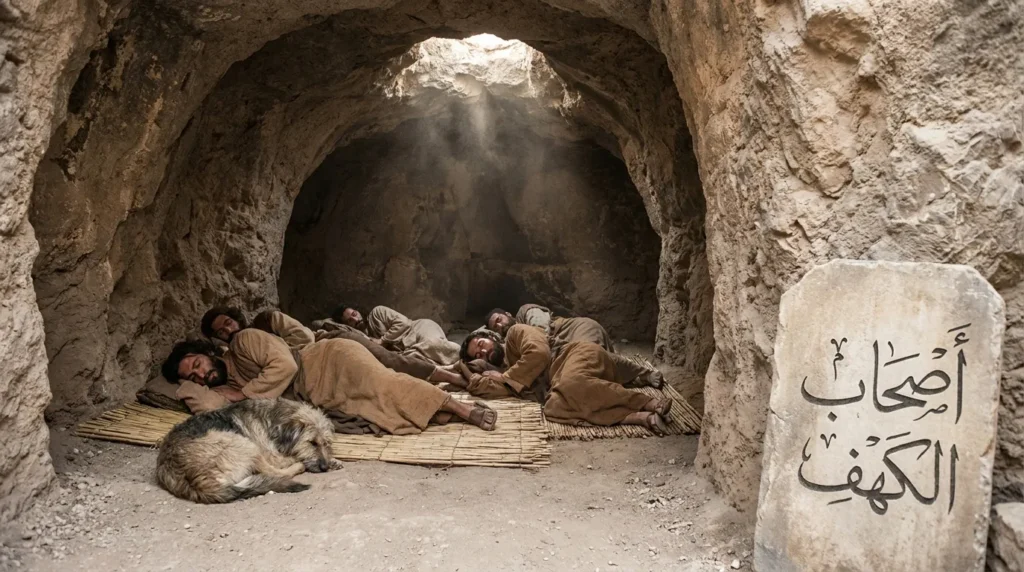
The Quran does not go into deep detail about exactly why Allah chose the number 309, but it gives us the wisdom behind the long sleep. Surah Al-Kahf verse 25 tells us that they remained in the cave for three hundred years, and nine more were added.
Scholars explain this sleep in the following ways:
- It was a miracle to show that Allah has power over time, life, and death.
- It was a proof of resurrection for people who doubted whether Allah could bring the dead back to life.
- It was a way to protect the young men from the tyrant king and give them safety without fighting or bloodshed.
- It let them wake up in a better time, when belief in the one Creator was accepted, so their sacrifice was rewarded with peace instead of more persecution.
So this long sleep was not just something strange that happened — it carried a deep message for everyone who hears the story: Allah’s plan is always greater than what we can see in the moment.
How Many Were Ashab e Kahf?
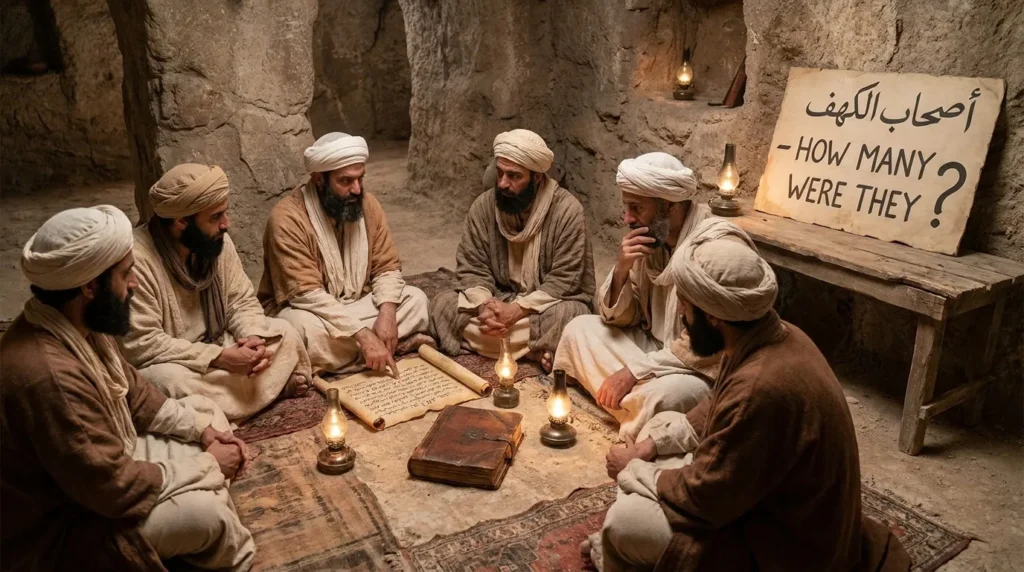
People often ask exactly how many young men were in the cave. Interestingly, the Quran itself does not give us a clear, final number. In Surah Al-Kahf, verse 22, Allah mentions that some people guessed there were three (with their dog as the fourth), some guessed five (with their dog as the sixth), and some guessed seven (with their dog as the eighth) — and Allah says that only He truly knows the correct number.
The Quran even tells the Prophet Muhammad ﷺ not to argue about this detail with people, except in a light and general way, and not to ask anyone for their opinion on it either. This is a strong lesson in itself: the Quran is teaching us that some details are not important for our faith or guidance, and we should not get stuck arguing over facts that Allah has deliberately left unclear. What truly matters is the lesson of faith and trust the story teaches, not the head count.
Why Allah Did Not Mention Their Names
One detail many readers notice is that the Quran never names the young men, the king, the town, or even the cave itself with certainty. This is not an accident — scholars point to several reasons behind this intentional silence.
- The lesson matters more than the names. The Quran is a book of guidance, not a history textbook. Knowing the personal names of the sleepers would not add anything to the faith, patience, and trust the story is meant to teach.
- The Quran often emphasizes guidance over historical minutiae. Across many Quranic stories, specific dates, locations, and identities are left out on purpose, so that the reader focuses on the moral and spiritual message rather than getting lost in historical detail that cannot be verified anyway.
- It keeps the focus on faith instead of personalities. If the young men had been named and turned into individual celebrated figures, later generations might have begun venerating the people themselves rather than reflecting on the tawheed they stood for. Leaving them unnamed keeps the spotlight on Allah’s power and the believers’ sincerity, not on personal fame.
This is one of the more thoughtful angles of the story — a reminder that the Quran’s silence is often just as deliberate and meaningful as its speech.
Qitmir – The Dog of Ashab e Kahf
One of the most loved details of this story is the dog that stayed with the young men. Popular tradition gives this dog the name Qitmir, although this exact name is not mentioned in the Quran itself — it comes from later Islamic tradition and storytelling.
The Quran describes the dog stretching out its two front paws at the entrance of the cave, staying there the entire time the young men slept. This small detail carries a big meaning: even the loyalty of an animal is mentioned by Allah in His Book, showing that faithfulness and companionship matter, no matter how small the creature.
Many scholars point out that Qitmir is remembered as a symbol of loyalty and closeness to righteous people. There’s an old saying used across the Muslim world — that staying close to good, God-fearing people benefits even those who are not from among them, just as this dog benefited from being close to the believers.
Where Is the Cave of Ashab e Kahf?
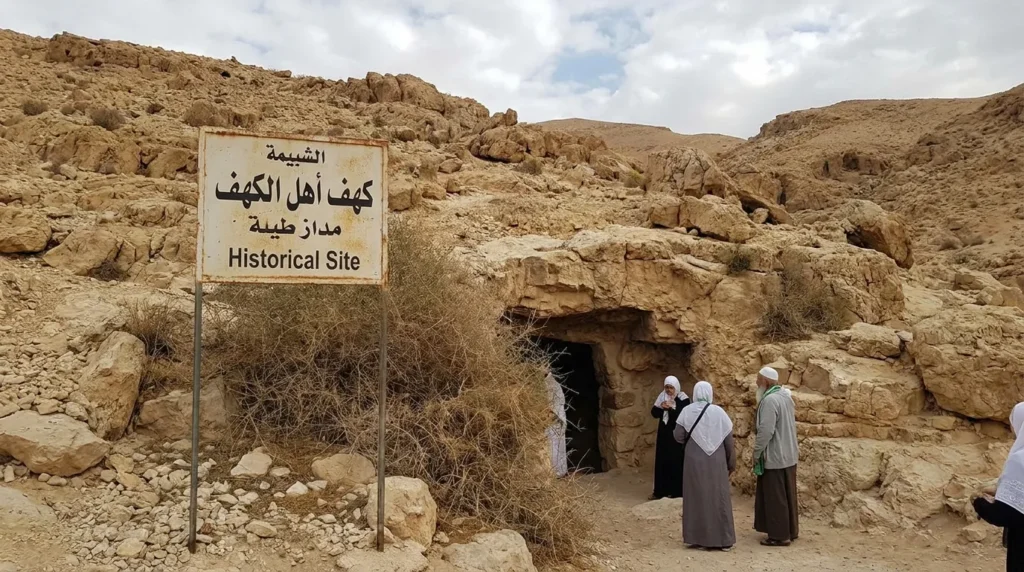
Many people wonder exactly where this cave is located today. The Quran does not name the city or the country, so we do not have one certain answer. Over the centuries, several places have claimed to be the real cave of Ashab e Kahf, and each site has its own body of local tradition, archaeology, and scholarly opinion behind it.
The Jordanian Claim: Al-Raqim, near Amman
The most widely accepted site among many Muslim scholars and historians is a cave known locally as Ahl al-Kahf, located in the town of Al-Rajib near Amman, Jordan. This site is often identified with the Quranic term Al-Raqim. Archaeological surveys at this location have uncovered a cave with several ancient graves inside and nearby, along with the remains of a Byzantine-era structure believed to have been built directly over the site — matching the Quranic description of people later deciding to construct a building over the sleepers’ resting place. UNESCO has recognized this site on its tentative World Heritage list under the name “Ahl Al-Kahf,” citing its long-standing religious and historical significance. Local tradition in Jordan has associated this cave with the story for well over a thousand years.
The Turkish Claim: Ephesus
A second major claim is located in Ephesus, in modern-day Turkey, an ancient city that was once a major center of the Byzantine Empire. This site is the traditional home of the Christian legend of the Seven Sleepers of Ephesus, and it contains the ruins of an old cave complex along with the remains of a church built over it, dating to the early Byzantine period. This location draws large numbers of Christian and Muslim visitors and pilgrims each year, and some Islamic scholars accept it as a plausible candidate as well, given how closely the Christian legend parallels the Quranic account.
The Syrian Claim
A smaller number of historical accounts point to a cave in Syria, sometimes linked to the region around Damascus or the Golan area. This claim has far less archaeological support than the Jordanian or Turkish sites and is generally considered the weakest of the three by most researchers, though it still appears in some older geographical and travel writings from the Islamic world.
Why Scholars Disagree
Scholars disagree on the exact site for a simple reason: the Quran itself deliberately withholds the location, just as it withholds the exact number of sleepers and their names. Classical commentators such as Ibn Kathir noted that pinpointing the cave was never the point of revealing the story. Additionally, the story may describe events from many centuries before Islam, in a region that changed hands between many empires — Roman, Byzantine, and later Islamic rule — making precise identification of any single cave extremely difficult from a purely historical and archaeological standpoint.
Why the Exact Location Isn’t Essential
Since the Quran does not confirm any single place, Muslims are not required to believe in one specific location, and doing so is not a matter of faith. The lesson of the story — trust in Allah, firmness in tawheed, and belief in resurrection — does not depend in any way on knowing exactly which cave, in which country, held the sleepers. As with the number of the youths and their names, the location is left as a matter of historical curiosity rather than religious obligation.
(Suggested visuals for this section: a map showing the claimed cave locations, and a respectful photo of a cave landscape without depicting the sleepers themselves.)
Ashab e Kahf and the Seven Sleepers of Ephesus
Many people notice that the Quranic story of Ashab e Kahf sounds a lot like an old Christian legend called the Seven Sleepers of Ephesus. Here is how they compare:
Islamic & Christian Accounts Compared
A concise comparison of the Qur’anic account of the Companions of the Cave and the traditional Christian account of the Seven Sleepers.
| Islamic Account (Ashab e Kahf) | Islamic Account | Christian Account (Seven Sleepers) |
|---|---|---|
| Scriptural / Historical Record | Recorded in the Qur’an, Surah Al-Kahf 18:9–26. | Preserved as a Christian legend, not scripture. |
| Number of Sleepers | The exact number of sleepers is left unknown in the Qur’an. | Traditionally said to be exactly seven. |
| Location | The location is not confirmed by the Qur’anic text. | Traditionally placed in Ephesus. |
| Duration | The Qur’an states that they remained in the cave for 300 years and nine more (18:25). | Duration is often cited as around 200 years, with variations among sources. |
| Central Focus | Tawheed, Allah’s power, resurrection, divine protection, and the limits of human knowledge. | The miracle of the sleepers’ survival and the preservation of their faith. |
| Persecutor / Ruler | The persecuting ruler is not named with certainty in the Qur’an. | The persecutor is traditionally identified as Emperor Decius. |
Similarities:
- Both stories are about a group of young believers who ran away from persecution because of their faith.
- Both groups hid in a cave and fell into a miraculous, extremely long sleep.
- Both stories end with the sleepers waking up in a completely different era, proving to the people around them that God has power over life and death.
Despite the differences, most scholars agree that both traditions are likely describing the same core historical event, passed down and retold differently by different communities over time.
Common Misconceptions About Ashab e Kahf
Because this story has been retold, illustrated, and embellished for centuries, several popular ideas about it have crept in that are not actually found in the Quran itself. Here are some of the most common ones worth clearing up:
- Misconception: The Quran says there were seven sleepers. In reality, the Quran never confirms the number seven — or any number. It lists the guesses people made (three, five, or seven) and then states that Allah alone knows the true number.
- Misconception: The Quran names the king who persecuted them. The Quran never gives the king’s name. Any specific name attached to him comes from historical speculation or later tradition, not the Quranic text.
- Misconception: The Quran names the cave or its exact location. The Quran does not identify the cave’s location. Every claimed site — in Jordan, Turkey, or elsewhere — comes from local tradition and historical inference, not a direct statement in the Quran.
- Misconception: The Quran names the dog. The popular name Qitmir is not found anywhere in the Quran. It comes entirely from later Islamic storytelling and tradition.
- Misconception: Qitmir is a Quranic detail on the same level as the dog’s paws or its position at the cave entrance. Only the dog’s presence and posture are Quranic; the name attached to it is a matter of tradition, not revelation.
These clarifications are not meant to diminish the story — they are meant to show exactly where the Quran’s own words end and where later tradition, however beautiful, begins.
Hadith and Scholarly Statements Related to Ashab e Kahf
Beyond the Quranic verses, several hadiths connect directly to Surah Al-Kahf and the story of Ashab e Kahf. These narrations strengthen our understanding of why this surah — and this story in particular — holds such an important place in a Muslim’s weekly life.
1. Virtue of Reciting Surah Al-Kahf Every Friday
There are several authentic narrations about the reward of reading Surah Al-Kahf on Friday. In one hadith recorded by Al-Bayhaqi, the Prophet ﷺ said that whoever recites Surat Al-Kahf on Friday will have light shining for him until the next Friday. Scholars such as Ibn Hajar graded similar narrations on this topic as reliable.
This is one of the main reasons Muslims make it a habit to read this surah every single Friday. The story of Ashab e Kahf is the very first major story told inside this surah, so reading it regularly is also a chance to reflect on the courage and patience of these young believers, not just to recite the words quickly. For more on how a short line of remembrance can carry real weight, see this piece on why remembering Allah brings His remembrance back to us.
(External reference: IslamQA – Virtues of Reading Surah Kahf on Friday)
2. Protection from the Dajjal
Another well-known hadith, recorded in Sahih Muslim, states that whoever memorizes the first ten verses of Surah Al-Kahf will be protected from the trial of the Dajjal (the false messiah). A related narration mentions the last ten verses instead, so many scholars recommend memorizing both.
It is not a coincidence that these opening verses include the beginning of the story of Ashab e Kahf. Scholars explain that the story teaches believers how to stay firm when the whole world around them pushes them toward falsehood — which is exactly the kind of strength needed to resist the far greater deception of the Dajjal in the future, a key theme within Islamic eschatology.
(External reference: Sunnah.com – Sahih Muslim 809a)
3. Tafsir Ibn Kathir on Ashab e Kahf
The famous classical scholar Ibn Kathir, in his tafsir of Surah Al-Kahf, explains that Allah preserved the believing youth as a lasting sign for later generations, to prove that resurrection is real. He also notes that the Quran deliberately leaves their exact number unclear, because the lesson of the story matters far more than the historical details surrounding it.
(External reference: Quran.com – Tafsir Ibn Kathir, Surah Al-Kahf)
4. Imam Al-Qurtubi’s Reflection
Imam Al-Qurtubi, another major classical commentator, highlights that this story demonstrates how sincere faith can outweigh worldly power. A handful of young men with no army and no wealth were able to stand firm against a powerful king, simply because their hearts were attached to Allah. Al-Qurtubi’s reflection reminds readers that young believers, even today, can become role models for entire communities if their faith is genuine.
(External reference: Quran.com – Tafsir Collection)
5. Ibn Taymiyyah on Trials and Steadfastness
Rather than a specific quotation tied directly to this story, Ibn Taymiyyah is well known for teaching that believers must remain steadfast during times of fitnah (trial and confusion), trusting Allah even when surrounded by disbelief and pressure. Later scholars often cite the story of Ashab e Kahf as one of the clearest Quranic examples of exactly this principle in action.
If facing hard times of your own makes you feel discouraged, this reminder that Allah never said the journey would be easy touches on the same idea of staying patient through difficulty.
Lessons from Ashab e Kahf
This story is not just history — it is full of lessons that we can apply to our daily lives, no matter what age we are.
Events & Lessons from the Cave
Key moments from the story of the Companions of the Cave and the spiritual lessons they teach believers.
| Event | Lesson |
|---|---|
| Leaving the City | Faith over comfort. Choosing obedience to Allah even when it means leaving behind familiarity and worldly security. |
| Entering the Cave | Trust Allah completely. They sought refuge while placing their ultimate trust in Allah’s mercy and guidance. |
| Falling Asleep | Allah controls time itself. Their miraculous sleep reminds us that Allah’s power is beyond the limits of ordinary human experience. |
| The Dog at the Entrance | Loyalty and companionship matter. The Qur’an mentions their dog at the entrance of the cave, highlighting its presence alongside the believing youths. |
| Waking Up After 309 Years | Resurrection is real. Their awakening provides a powerful sign of Allah’s ability to bring people back to life. |
| Being Discovered | Allah can turn a trial into a proof for others. What began as a private trial became a sign through which people were reminded of Allah’s promise and the reality of the Hour. |
- Faith comes first. The young men were willing to give up their homes, families, and comfort rather than compromise their belief in the one Creator.
- Trust in Allah brings relief. When they had nowhere left to turn, they simply asked Allah for mercy and an easy way out — and He answered them in a way beyond anything they could have imagined.
- Patience pays off. They waited in silence and uncertainty inside that cave, not knowing what would happen, and their patience was rewarded generations later.
- Youth can carry strong faith. These were young men, not old scholars or prophets, showing that age is never a barrier to sincere belief and courage.
- Prayer matters in hard moments. Their short prayer for mercy before entering the cave shows the value of turning to Allah exactly when things feel impossible.
- Reliance upon Allah (Tawakkul) is real protection. They did everything within their power — running, hiding, praying — and then left the rest completely to Allah (SWT).
- Standing against oppression is honorable. They refused to bow to unjust pressure, even when the cost seemed to be everything they had.
For more short reminders and quotes that reflect these same themes of patience, hope, and hardship, you may enjoy this collection of Islamic quotes about life, sabr, and Alhamdulillah.
What Major Scholars Said About Ashab e Kahf
Different scholars across history have highlighted different angles of this same story:
- Ibn Kathir — Focused on the lesson rather than the exact number of sleepers, reminding readers that Allah left this detail vague on purpose.
- Al-Qurtubi — Taught that the story shows how sincere faith can overpower worldly strength and status.
- Ibn Taymiyyah — Used the story as a model of steadfastness for believers going through fitnah and confusion.
- Sayyid Abul A’la Maududi (in Tafhim al-Qur’an) — Explained that the narrative shows how genuine faith can overcome even harsh political oppression.
- Mufti Muhammad Shafi (in Ma’ariful Qur’an) — Noted that the miracle of the long sleep was meant to strengthen belief in the resurrection and remind people of Allah’s complete power over time and life.
Timeline of Ashab e Kahf
Here is a simple timeline to help you picture the order of events:
- A tyrant king (associated by many historians with Emperor Decius) rules the land and forces idol worship on his people.
- A group of young men secretly hold on to belief in one God.
- They are questioned and pressured, so they escape the city together.
- They take refuge in a cave, praying to Allah for mercy along the way.
- Allah causes them to fall into a deep sleep, with their dog guarding the entrance.
- 309 years pass while their bodies remain protected and untouched by time.
- They wake up, thinking barely a day has gone by.
- One of them goes to the town to buy food and is discovered because of his old coin.
- Their story becomes known, proving Allah’s power over death and resurrection.
- Their story is later preserved in the Quran as a sign and a lesson for all future generations.
(Suggested visual: a horizontal timeline infographic built in HTML/CSS showing these ten stages — a graphic like this is easy for Google Image Search to index and can bring in additional search traffic.)
Interesting Facts About Ashab e Kahf
- The exact number of the sleepers is never confirmed in the Quran — Allah alone knows.
- Their dog is described stretching its paws at the cave entrance the entire time.
- Allah turned their bodies from side to side so their skin would not decay from lying still.
- Surah Al-Kahf is recommended reading every single Friday.
- Memorizing the first (or last) ten verses of Surah Al-Kahf is linked to protection from the Dajjal.
- The story is also known in Christian tradition as the Seven Sleepers of Ephesus.
- Multiple locations, mainly in Jordan and Turkey, claim to hold the actual cave, and the Jordanian site is on UNESCO’s tentative World Heritage list.
- When one of them went to buy food, his old coin gave away that time had passed.
- The people of that later era, unlike the earlier tyrant king, believed in the one Creator.
- The Quran uses this story mainly as proof of resurrection after death.
- Scholars are told in the Quran not to argue about small, unclear details of the story.
- The dog Qitmir has become a popular symbol of loyalty in Islamic storytelling, even though the name itself is not found in the Quran.
- The cave is described as facing away from direct sunlight, which many scholars connect to how the sleepers’ bodies were preserved.
- The story is placed near the beginning of Surah Al-Kahf, alongside other stories about trials, wealth, and knowledge.
- Many classical and modern tafsir books, including those by Ibn Kathir and Mufti Muhammad Shafi, dedicate detailed sections to explaining this story.
Why Is the Story of Ashab e Kahf Important Today?
Even though this story happened a very long time ago, its message is extremely relevant to our lives right now.
For young people facing peer pressure: Just like Ashab e Kahf faced pressure from an entire society to abandon their faith, young Muslims today often feel pressure at school, on social media, or among friends to compromise their values. This story shows that staying firm, even as a small minority, is possible and honorable.
For families raising children on faith: Parents often wonder how to plant strong belief in their children’s hearts from an early age. Stories like this one are a powerful tool, because children remember stories far more easily than lectures. If you’re thinking about how and when to start building this foundation, this guide on what age to teach your child the Quran offers helpful, practical guidance.
For technology and modern distraction: Just as the young men had to physically separate themselves from a corrupting environment, many scholars today draw a comparison to how we sometimes need to create healthy distance from things — apps, content, environments — that pull us away from our faith and values.
For hope during hard times: The story reminds us that even when a situation feels hopeless, like sleeping alone in a cave with no idea what tomorrow holds, Allah’s plan can bring a result far better than anything we imagined.
For teaching through storytelling: This story is one of the best examples of how the Quran itself uses storytelling to teach deep lessons in a way that sticks in the heart and mind. If you’re curious about why this method works so well, especially with children, this article on the impact of Quranic storytelling on children explains it further.
What Children Can Learn from Ashab e Kahf
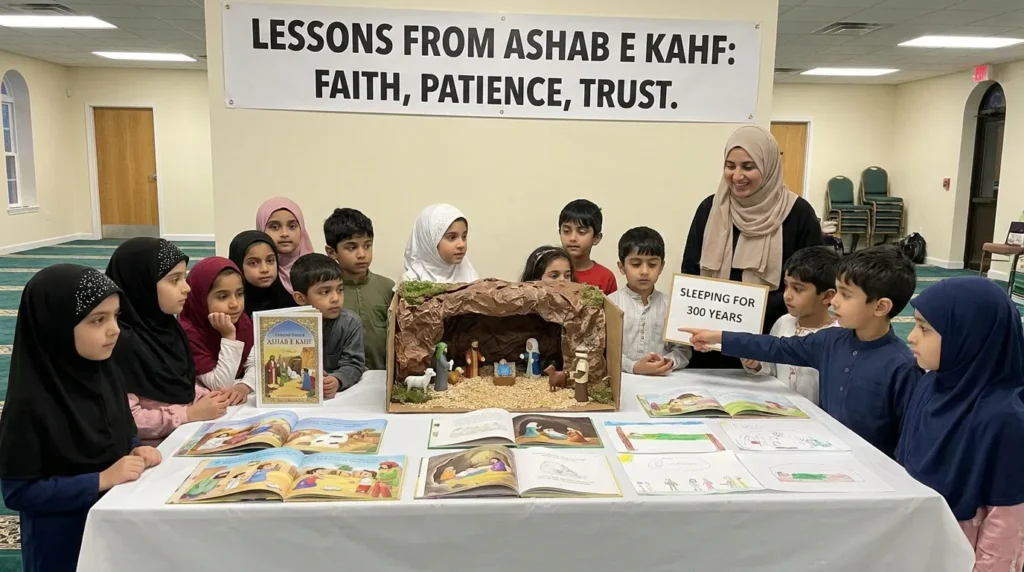
This story is a favorite for teaching children, because it has everything a young mind connects with — brave heroes, a loyal dog, a mysterious cave, and an amazing twist ending.
- Being different is okay. Children can learn that it is fine to believe and act differently from the crowd if what the crowd is doing is wrong.
- Friendship built on shared values is strong. The young men found strength in each other once they realized they shared the same belief — a simple lesson for children about choosing good friends.
- Allah always hears a sincere dua. The short, simple prayer the young men made before entering the cave is an easy one for children to memorize and understand.
- Even a dog can be part of a good story. Children often love the detail about the loyal dog at the cave entrance, which is a gentle way to introduce the idea that kindness to animals is valued in Islam.
- Time belongs to Allah. The idea that hundreds of years could feel like a single day helps children begin to grasp, in a simple way, how different Allah’s power over time is from our own.
Key Takeaways
- Ashab e Kahf were righteous young believers who chose faith over comfort and safety.
- Allah protected them by causing them to sleep for 309 years inside a cave.
- Their story is told in Surah Al-Kahf, verses 9 through 26.
- The exact number of sleepers, their names, the king, and the cave’s location are all intentionally left unknown.
- The story teaches tawakkul, patience, and steadfast faith in the face of oppression.
- Reading Surah Al-Kahf on Fridays is a well-known Sunnah practice tied directly to this surah.
- The story stands as a clear Quranic proof of resurrection and Allah’s complete power over life, death, and time.
Conclusion
The story of Ashab e Kahf is one of the most beautiful and meaningful stories in the entire Quran. A small group of young men chose to hold on to belief in the one true Creator, even when it meant leaving everything behind. Allah rewarded their faith with a miracle — a sleep of 309 years — that later stood as proof of His power over life, death, and time itself.
Along with this miracle, we also remember small but touching details, like their loyal dog, often called Qitmir, who stayed by their side the whole time. Whether we call this story Ashab al Kahf, the People of the Cave, or connect it to the Western tradition of the Seven Sleepers, the core message stays exactly the same: faith in Allah, patience through hardship, and complete trust in His plan will never go to waste.
Surah Al-Kahf continues to be recited by Muslims every Friday, keeping this story — and its lessons — alive in hearts across the world, generation after generation.
Frequently Asked Questions
What is the story of Ashab e Kahf?
Ashab e Kahf is the Quranic story of a group of young believers who ran away from a tyrant king and hid in a cave to protect their faith in one God. Allah caused them to sleep for 309 years, and when they woke up, they found that the world around them had completely changed.
Who were Ashab e Kahf?
They were young men living under a ruler who forced people to worship idols. They secretly believed in the one true Creator and chose to escape rather than give up their faith, eventually hiding together in a cave.
What is the meaning of Ashab e Kahf?
“Ashab e Kahf” is Arabic for “People of the Cave” or “Companions of the Cave.” “Ashab” means companions or people, and “Kahf” means cave.
Why did Ashab e Kahf sleep?
Allah caused them to sleep as a miracle and a form of protection, hiding them safely from the tyrant king while also creating a powerful sign to prove that resurrection after death is real.
How long did Ashab e Kahf sleep?
According to the Quran, they remained in the cave for 309 years, as mentioned in Surah Al-Kahf, verse 25.
How many were Ashab e Kahf?
The Quran does not confirm an exact number. It mentions that people guessed three, five, or seven (plus their dog), but says that Allah alone knows the true number, and He tells the Prophet ﷺ not to argue about this detail.
What happened to Ashab e Kahf?
After waking up, one of them went into the town to buy food using an old coin, which revealed that hundreds of years had passed. Their story became known publicly, proving Allah’s power over life, death, and resurrection.
Which Surah mentions Ashab e Kahf?
Their story is told in Surah Al-Kahf, the 18th chapter of the Quran, specifically in verses 9 through 26.
Is Ashab e Kahf a true story?
Yes, Muslims believe this is a true historical event, as it is described directly in the Quran, which Muslims believe to be the literal word of Allah.
Where is the Cave of Ashab e Kahf?
The Quran does not name the exact location. Several places claim to be the real site, most notably a cave near Amman, Jordan (on UNESCO’s tentative World Heritage list), and a location in Ephesus, Turkey, though there is no single confirmed location.
What is Qitmir?
Qitmir is the popular traditional name given to the dog that stayed with Ashab e Kahf at the entrance of the cave. This exact name is not found in the Quran but comes from later Islamic tradition.
Who was the dog of Ashab e Kahf?
The Quran describes a loyal dog that stretched its paws at the entrance of the cave and stayed with the young men the entire time they slept, often remembered by the name Qitmir.
What lessons can Muslims learn from Ashab e Kahf?
The story teaches the importance of firm faith, patience, trust in Allah (tawakkul), sincere prayer, and standing against oppression, even when it feels difficult or risky.
Are Ashab e Kahf the same as the Seven Sleepers?
Most scholars believe the two stories describe the same historical event, though the Quranic version does not confirm the number seven, unlike the popular Christian legend.
Is the story of Ashab e Kahf mentioned in Christianity?
Yes, a similar legend exists in Christian tradition, known as the Seven Sleepers of Ephesus, which shares many similarities with the Quranic account but also has some notable differences in detail.
Related reading: Duties of Parents and Rights of Children in Islam · How Parents Can Encourage Children to Love the Quran · Dua for Protection from Enemies and Oppression