Allahumma Barik: What It Means and When to Say It
Have you heard a Muslim friend say “Allahumma Barik” and wondered what it means? Maybe you want to say it too, but you are not sure when. This guide gives you the full, simple answer — with real proof from hadith.
What Does Allahumma Barik Mean?
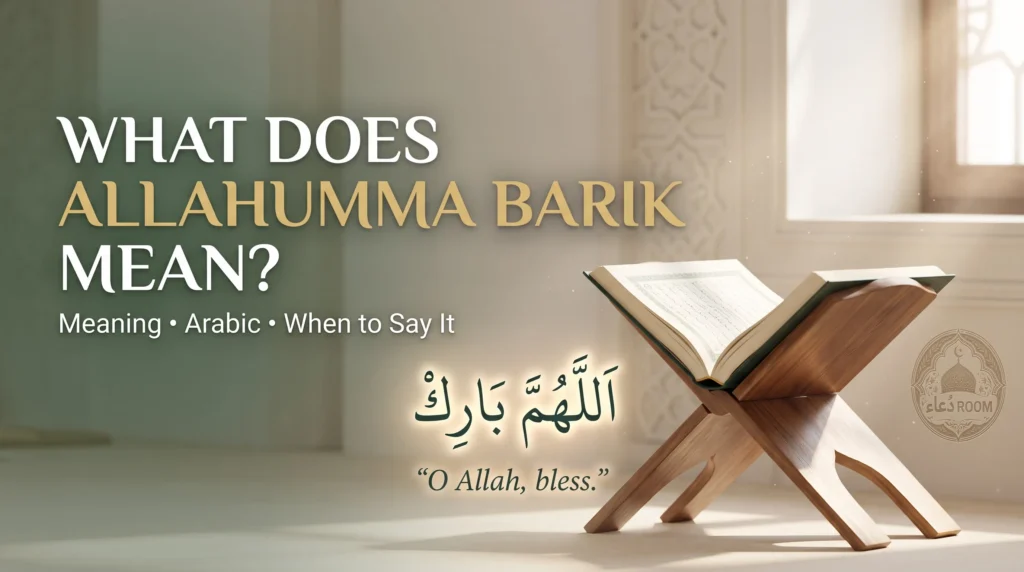
Allahumma Barik means “O Allah, bless.” It is a short dua, or prayer, that Muslims say when they see or hear something good.
The phrase has two parts. Allahumma means “O Allah.” It is a direct way to call on Allah. Barik comes from the word barakah, which means blessing or growth. So when you say Allahumma Barik, you are asking Allah to add blessing to something or someone.
Muslims often say it instead of just saying “wow” or “congrats.” It turns a simple compliment into a real prayer.
Barakah itself is a deep idea in Islam. It does not just mean “more of something.” It means Allah puts real, lasting good into something, even if it stays small.
The Arabic Text and How to Say It
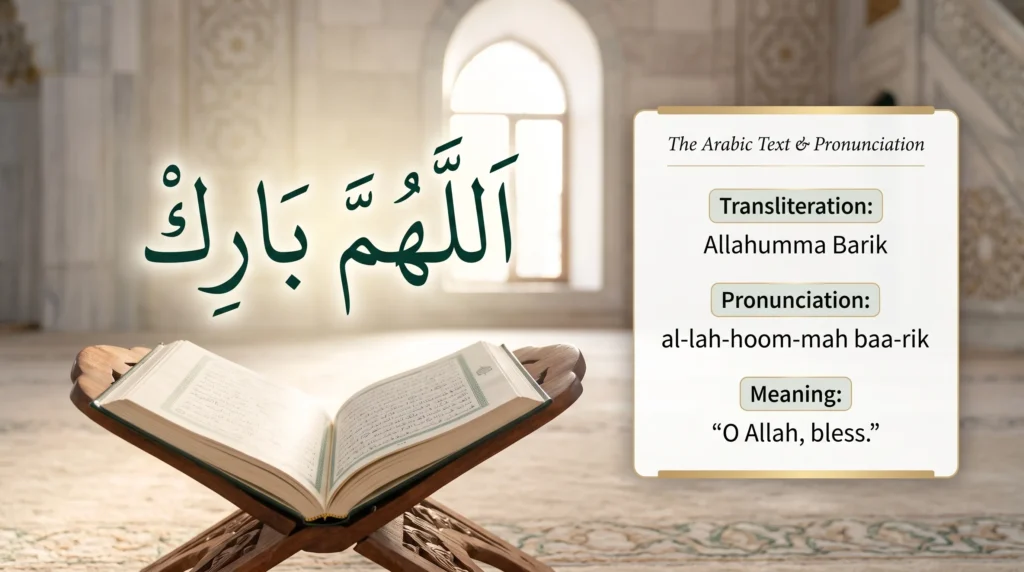
Here is how the phrase looks and sounds in Arabic:
Arabic: اللّهُـمَّ بارِكْ Transliteration: Allahumma Barik Pronunciation: al-lah-hoom-mah baa-rik Meaning: O Allah, bless
Say it slowly at first. Break it into two parts: “Allah-humma” and “Ba-rik.” With practice, it will feel natural.
Allahumma Barik Lahu, Laha, and Related Phrases
Arabic changes small word endings based on who you are talking about. This is why you see so many versions of this phrase online. Here is a simple table to clear it up.
You do not need to memorize all of these at once. Start with Lahu and Laha. Add the rest as you need them.
Is Saying Allahumma Barik a Sunnah?
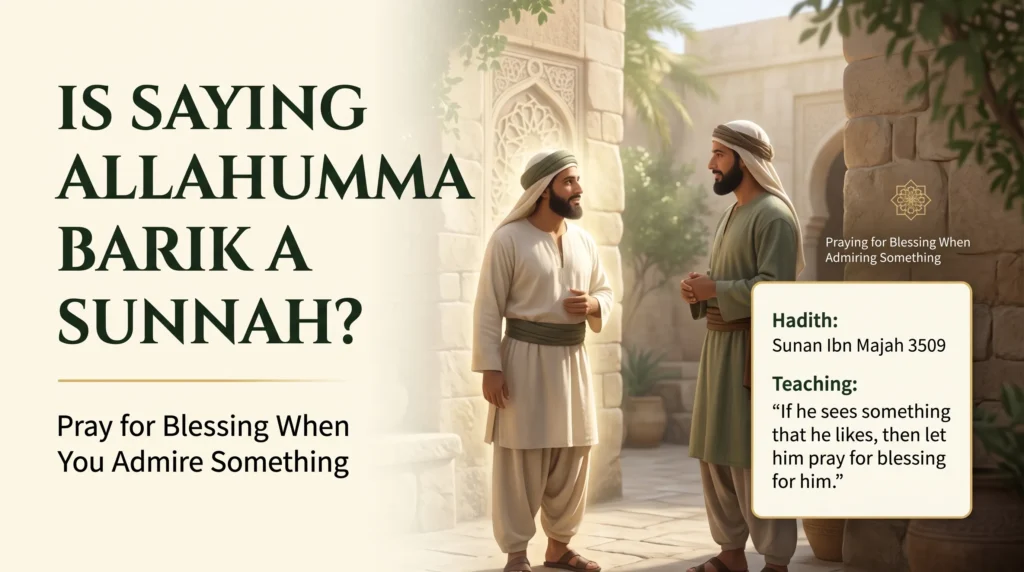
Yes. The Prophet Muhammad (peace be upon him) taught Muslims to pray for blessing when they see something they admire. This comes from a clear hadith, a saved record of what the Prophet said and did.
One day, a man named Amir bin Rabi’ah saw his friend Sahl bin Hunaif bathing. He said, “I have never seen such beautiful skin.” Right after, Sahl fell ill. The Prophet asked who had looked at Sahl. When Amir was named, the Prophet said, “Why would any of you kill his brother? If he sees something that he likes, then let him pray for blessing for him” (Sunan Ibn Majah 3509).
This hadith is one of the reports that scholars use when discussing the evil eye and the importance of praying for blessing when admiring something. Saying a blessing for the person turns admiration into a prayer asking Allah to place blessing in what you admire.
If you want to learn more ways to guard yourself and others from harm, our guide on la hawla wala quwwata illa billah covers another powerful phrase of protection.
Do You Have to Say It Every Time?
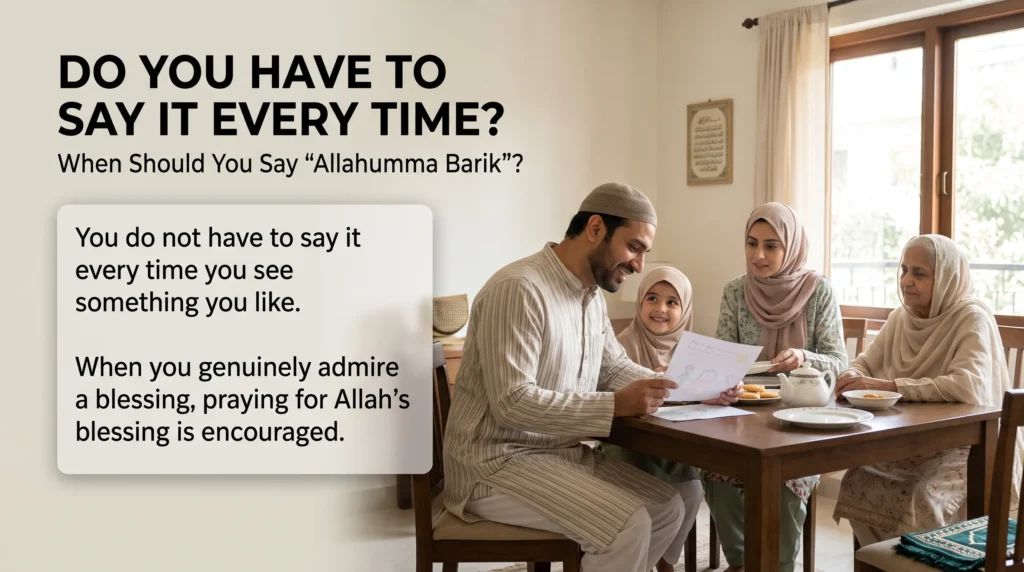
This is a real question many Muslims ask, and most articles skip it.
The hadith encourages a person to pray for blessing when they see something they admire: “If he sees something that he likes, then let him pray for blessing for him” (Sunan Ibn Majah 3509). Scholars discuss the exact ruling and circumstances behind this instruction in more depth. So it is best to treat saying this dua as an encouraged practice, rather than to assume that every single moment of admiration makes it a strict obligation.
What matters most is the habit itself. Whenever something good catches your eye, get in the habit of turning that feeling into a prayer instead of a plain compliment.
Allahumma Barik at a Wedding
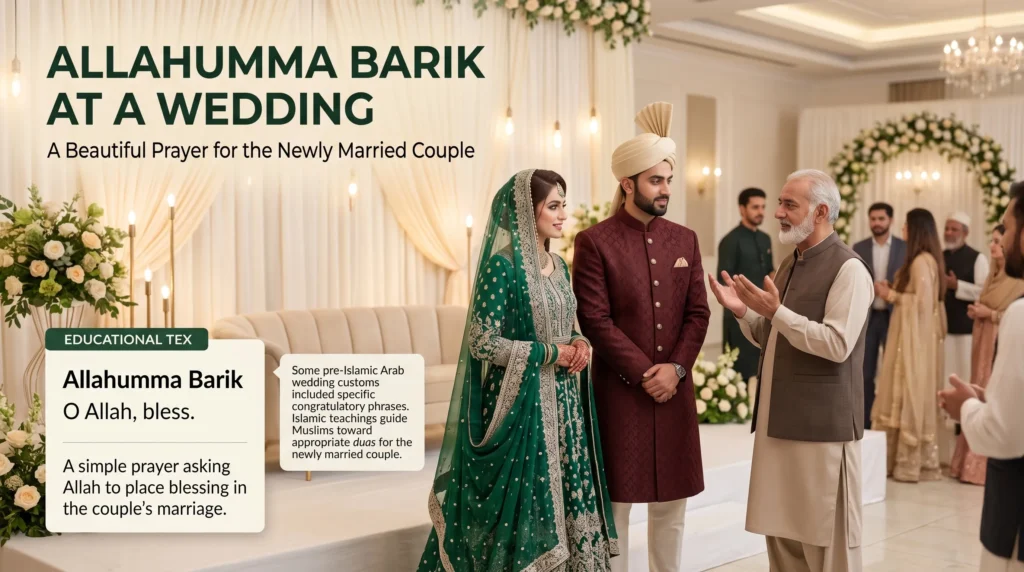
Weddings are a common place to hear this phrase. In the old Arab custom, people said “May you live in harmony and have many sons” to a new couple.
A companion named Aqil bin Abi Talib once got married. People gave him the old greeting. He told them to use the wording reported from the Messenger of Allah instead: “Allahumma barik lahum wa barik alaihim” — O Allah, bless them and bestow blessings upon them (Sunan Ibn Majah 1906).
This is a Sunnah wording reported for blessing a newly married couple. If you know someone getting married, you can use this exact dua for them. For more words of love and support for a married couple, see our list of husband and wife quotes in Islam.
Allahumma Barik for Food and Milk
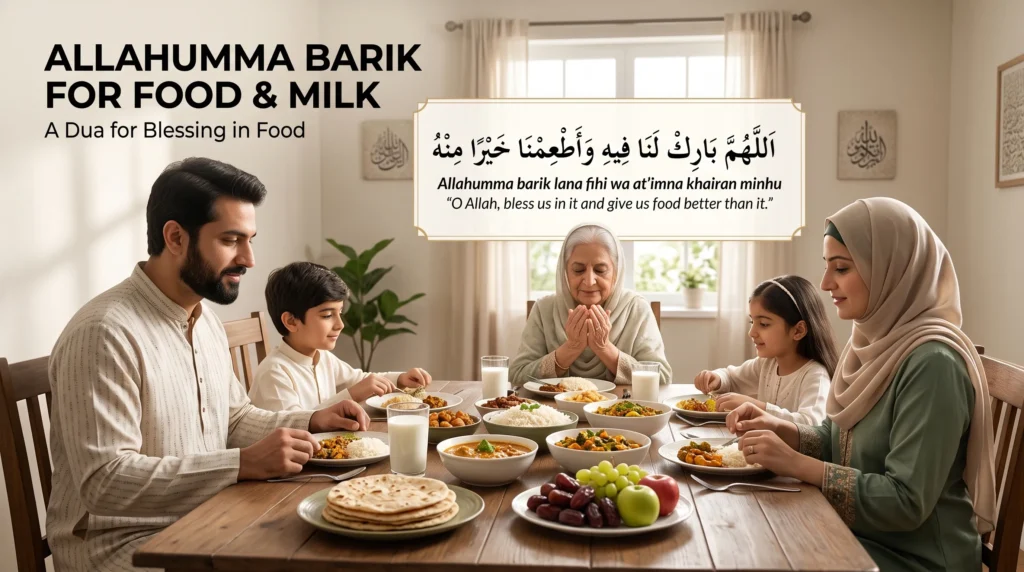
This phrase also has a place at the dinner table. The Prophet taught a dua for food, and a separate one for milk.
Ibn Abbas reported that the Prophet was once given milk to drink at the house of Maymunah. He then taught this to his companions:
Arabic: اللَّهُمَّ بَارِكْ لَنَا فِيهِ وَأَطْعِمْنَا خَيْرًا مِنْهُ Transliteration: Allahumma barik lana fihi wa at’imna khairan minhu Meaning: O Allah, bless us in it and give us food better than it
“When one of you eats food, he should say” this dua, the Prophet explained. He gave a separate, similar wording for milk, and added that no food or drink satisfies quite like milk (Sunan Abi Dawud 3730, graded Hasan by Al-Albani).
Allahumma Barik for Good News and Success

You do not need a big event to use this dua. Small wins count too.
If a student passes a hard exam, you can say “Allahumma Barik” as a prayer for blessing instead of just “well done.” Our page on dua for good result in board exams has more duas for this exact moment.
Parents can also say it over their children, asking Allah to keep them safe and righteous. If you want a fuller prayer for your child’s future, read our guide on Rabbi Habli Minas Saliheen, a beautiful dua asking Allah for righteous children.
How to Reply to Allahumma Barik
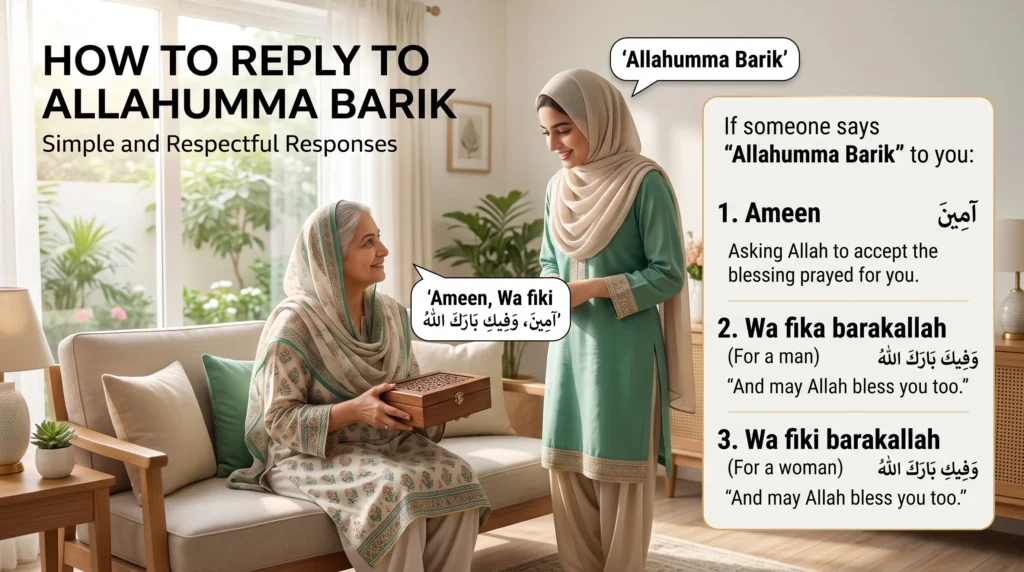
If someone says Allahumma Barik to you, you have two simple, common ways to respond.
A simple response is Ameen, meaning that you are asking Allah to accept the blessing they prayed for you.
You can also return the blessing by saying Wa fika barakallah (to a man) or Wa fiki barakallah (to a woman). This means “And may Allah bless you too.” It sends the same kindness right back to them.
Allahumma Barik vs. Masha’Allah
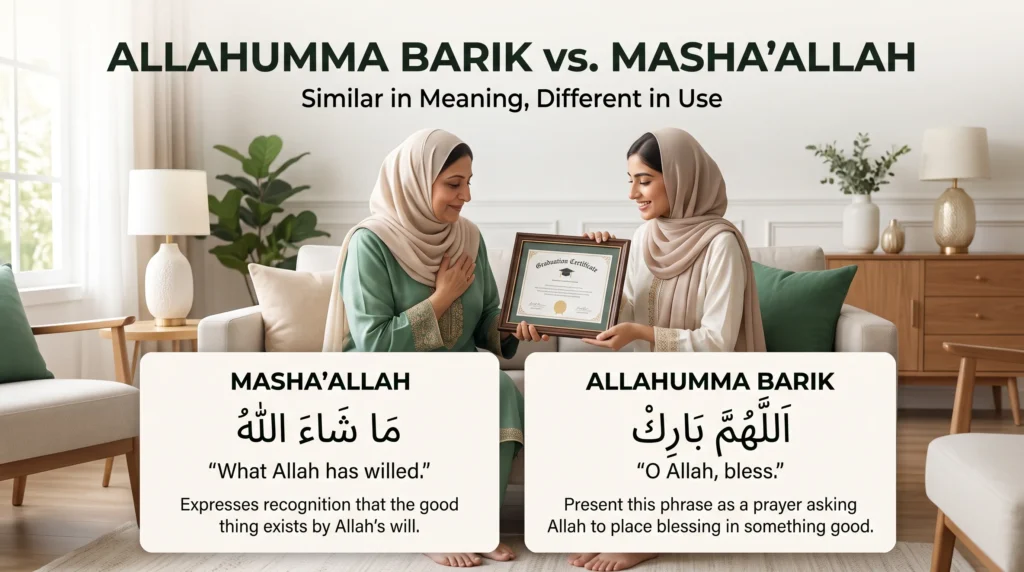
Many people mix up these two phrases. They are close, but not the same.
Masha’Allah means “what Allah has willed.” It is used to admit that a good thing comes from Allah’s will alone.
Allahumma Barik is a direct prayer asking Allah to bless what you admire. Many Muslims use the two phrases together, like “Masha’Allah, Allahumma Barik,” to admire something and pray for it at the same time. If someone shares happy news with you, this pairing is a warm way to respond — much like the words in our collection of heart-touching Islamic quotes.
The Quran also touches on this idea of blessing. Allah says: “And if only the people of the cities had believed and feared Allah, We would have opened upon them blessings from the heaven and the earth” (Surah Al-A’raf 7:96). The verse reminds us that blessing ultimately comes from Allah.
Frequently Asked Questions
What does Allahumma Barik mean?
Allahumma Barik means “O Allah, bless.” It is a short prayer asking Allah to place goodness and growth in a person, an object, or an event.
When should I say Allahumma Barik?
Say it when you admire something, hear good news, or see a friend’s new blessing, like a baby, a home, or a job. It is also found in hadith wording related to food and milk, and it is used when blessing newlyweds.
Is saying Allahumma Barik a sunnah?
Yes. The Prophet Muhammad taught Muslims to pray for blessing when they see something they admire, which this phrase expresses.
How do I reply when someone says Allahumma Barik to me?
A simple response is “Ameen,” meaning you are asking Allah to accept the blessing. You can also return it by saying “Wa fika barakallah” (to a man) or “Wa fiki barakallah” (to a woman).
What is the difference between Masha’Allah and Allahumma Barik?
Masha’Allah admits that something good is from Allah’s will. Allahumma Barik is a direct prayer asking Allah to bless that good thing. They are often said together.
Do I have to say Allahumma Barik every time I see something I like?
The hadith encourages praying for blessing whenever you admire something. Scholars discuss the exact ruling in more depth, so it is best treated as an encouraged practice rather than a strict rule for every occasion.
Can I say Allahumma Barik to someone who is not Muslim?
Yes. Praying for someone’s good is a kind act. You can say it to wish blessings on anyone, though the phrase carries its full meaning within Islamic belief.
A Small Phrase, A Big Blessing
Allahumma Barik is only two words. But it carries real care inside it. Next time you see something good in someone’s life, you can turn your admiration into a simple prayer: Allahumma Barik.