Mashallah Meaning: What Does Mashallah Mean in Islam?
You hear Mashallah all the time, but you want the real meaning, not a guess. You also want to know when to say it, and whether it truly protects against the evil eye. This guide gives you the Arabic, the English meaning, the Quran source, and clear, honest answers to every common question.
What Does Mashallah Mean?
Mashallah means “What Allah has willed” or “As Allah has willed.” Muslims say it when they see or hear something good, to give full credit to Allah for that good thing.
The phrase reminds the speaker that nothing happens without Allah’s permission. A new baby, a good grade, a beautiful view, a kind act — all of it exists only because Allah willed it. Saying Mashallah is a small, quick way to remember that truth out loud.
Mashallah in Arabic
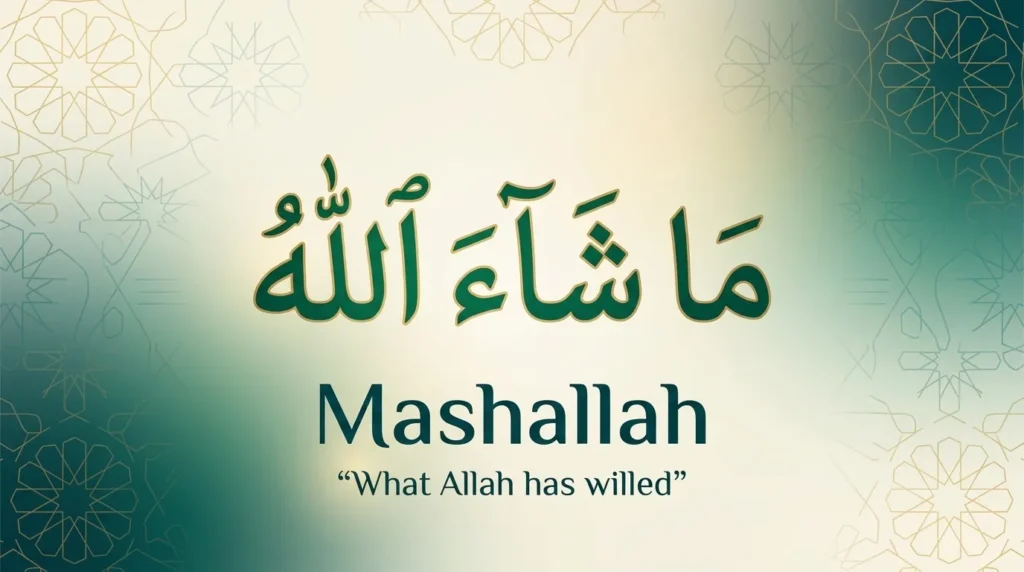
Here is the exact Arabic text of this phrase.
مَا شَاءَ اللَّهُ
This short line has three Arabic words joined together. You will find the meaning of each word later in this guide.
Mashallah Meaning in English
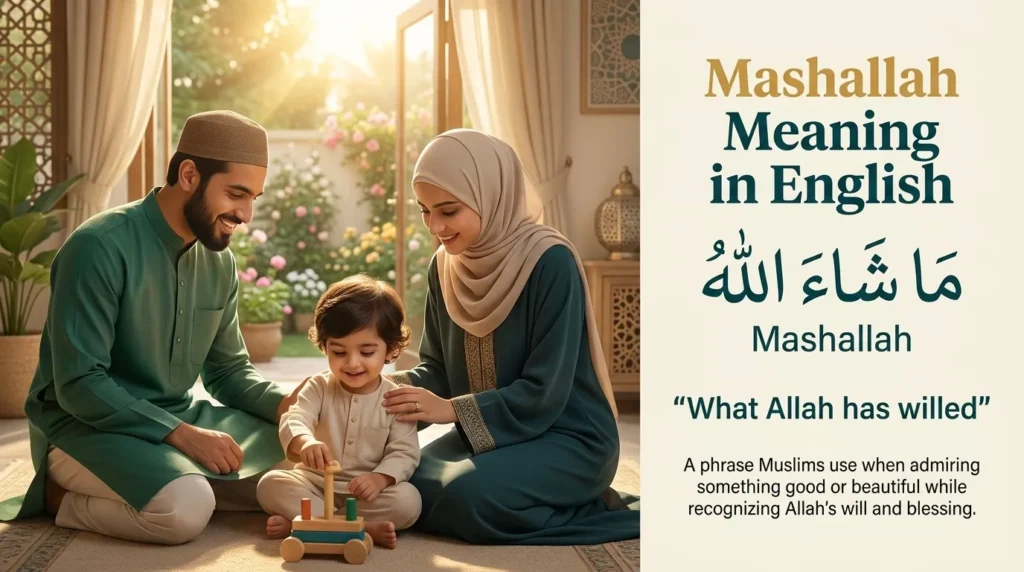
Here is the full English translation.
“What Allah has willed.”
Some translations say “As Allah has willed” or “Allah has willed it.” All three carry the same idea. Nothing good happens by chance. It happens because Allah willed it to happen.
How Do You Pronounce Mashallah?
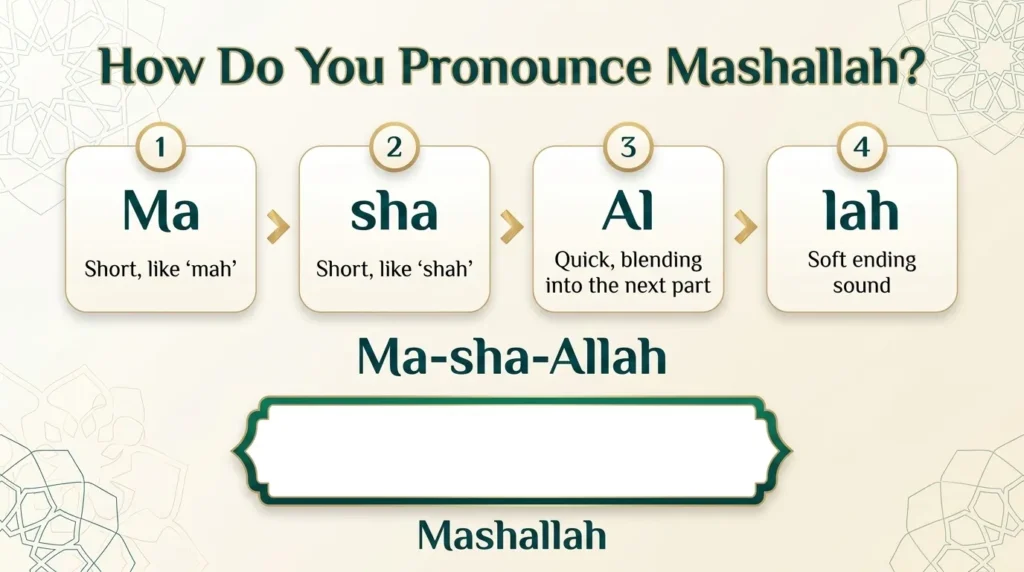
Say Mashallah as “ma-sha-al-lah,” with four short, even parts. Stress falls gently on the last part, “lah.”
Break it down like this if you are still learning:
- Ma — short, like “mah.”
- sha — short, like “shah.”
- Al — quick, blends into the next part.
- lah — soft, ending sound.
Say the parts slowly at first. Speed will come with practice.
When Should You Say Mashallah?
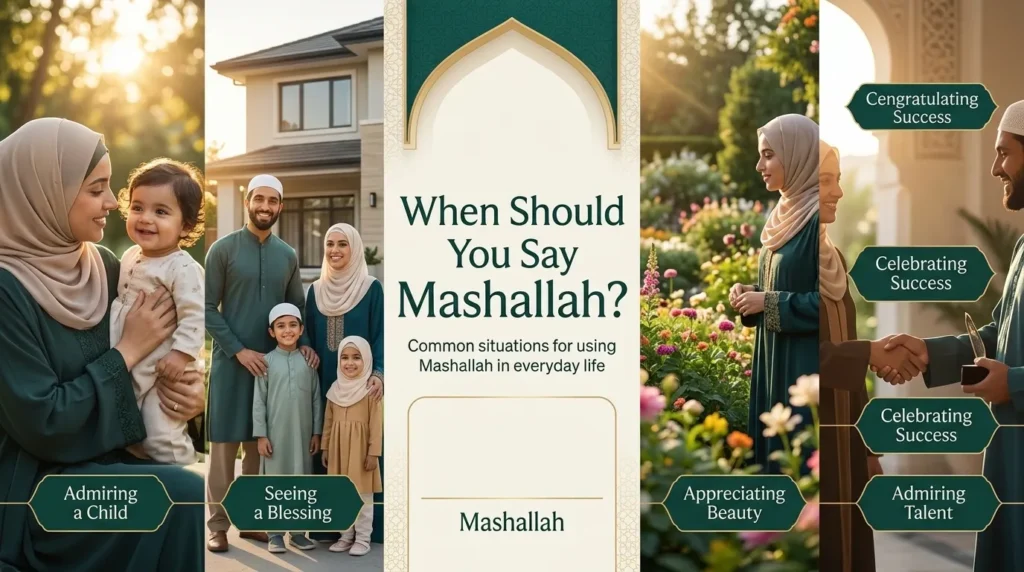
Say Mashallah any time you see, hear, or notice something good, especially something that could attract envy. It works as praise directed at Allah, not at the object or person alone.
Common moments to say it include:
- Admiring something. A nice car, a lovely home, a tasty meal.
- Praising a child. Their height, their smile, their good behavior.
- Appreciating an achievement. A new job, a graduation, a finished project.
- Seeing something beautiful. A sunset, a garden, a piece of art.
- Acknowledging a blessing. Good health, a safe trip, a happy family moment.
In each case, Mashallah shifts the credit away from luck or coincidence. It points straight to Allah as the source of every good thing.
Why Do Muslims Say Mashallah?
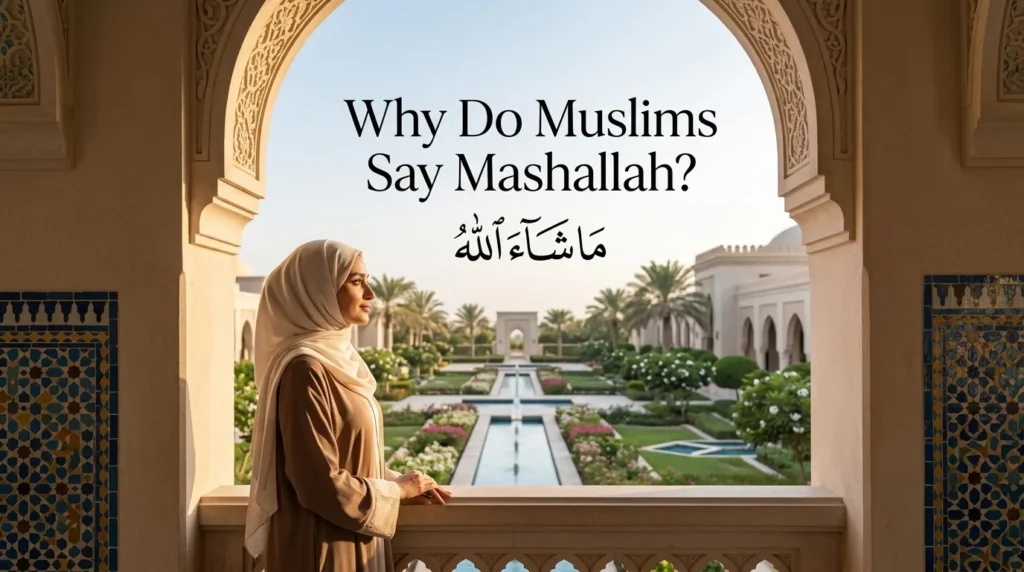
Muslims say Mashallah to remember that all good comes from Allah, not from their own effort alone. It is an act of gratitude and humility said out loud, in the moment.
This habit connects to a wider Islamic value called tawakkul, or trust in Allah. Recognizing Allah’s will in daily life, even in small moments, keeps a believer’s heart humble instead of proud. Saying Mashallah also softens pride when praising others. Instead of just saying “You look great,” a Muslim adds “Mashallah, you look great,” giving Allah the credit behind that beauty or success.
This habit fits into a larger pattern of gratitude found across Islamic teaching, similar to the spirit found in 200 Islamic quotes about life, sabr, and Alhamdulillah, where thankfulness toward Allah runs through everyday moments.
Mashallah and the Evil Eye
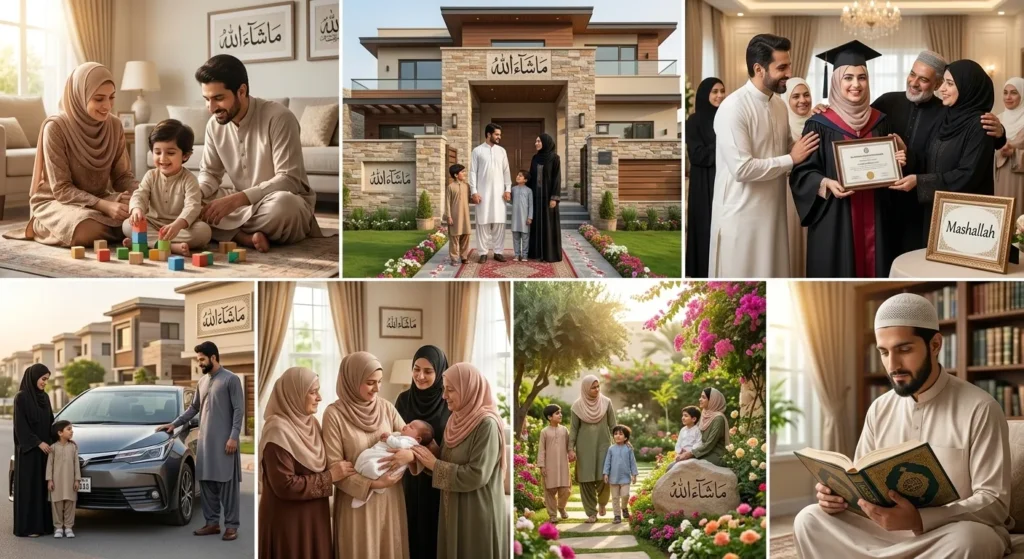
Mashallah is often said to guard against the evil eye, but it is not a magic shield on its own. Islamic teaching treats the evil eye as real, while also making clear that Allah’s decree controls everything.
The Prophet ﷺ said, “The evil eye is real. If anything could overtake the divine decree, it would be the evil eye” (Sahih Muslim 2188). This hadith confirms the evil eye exists as a real danger, often linked to envy. Saying Mashallah when praising someone is a well-known Muslim habit meant to soften that envy at the moment of praise.
A few honest points matter here.
- Mashallah is not a guarantee. Saying it does not promise total protection from harm. Only Allah controls what actually happens.
- The real safeguard is sincerity and trust in Allah. Mashallah works best as part of genuine gratitude, not as a superstitious formula.
- Other protections exist too. Many Muslims also recite short duas or portions of the Quran for protection, alongside saying Mashallah.
So can Mashallah help guard against harm tied to envy? Many scholars say yes, as part of good manners in praise. But it should never be treated as a certain, standalone shield. Trust in Allah’s decree always comes first.
Mashallah vs Inshallah: What’s the Difference?
Mashallah and Inshallah sound alike but mean very different things. Mashallah looks back at something that already happened. Inshallah looks forward to something hoped for.
| Phrase | Meaning | Common Use |
|---|---|---|
| Mashallah | What Allah has willed | Admiring or acknowledging something that already exists or has happened. |
| Inshallah | If Allah wills | Talking about something hoped for, expected, or planned in the future. |
Here is a simple way to remember the difference. If you are looking at a finished, present, or past event, say Mashallah. If you are talking about tomorrow, next year, or a hope not yet fulfilled, say Inshallah.
Mashallah vs Alhamdulillah
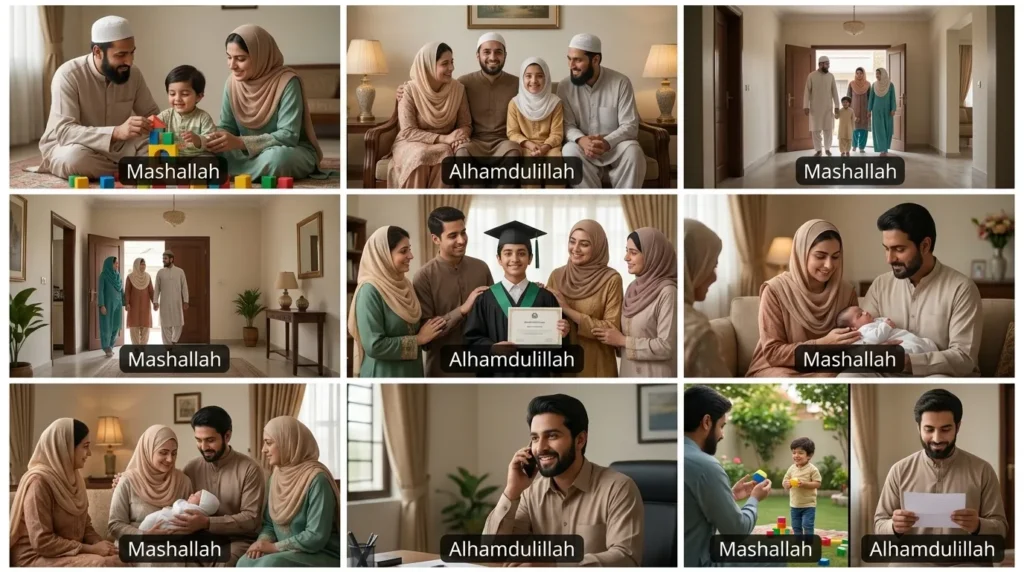
Mashallah and Alhamdulillah often get mixed up, but they serve two different purposes in daily speech. Mashallah credits Allah’s will behind something you see. Alhamdulillah simply means “praise be to Allah,” said as thanks for anything good, seen or unseen.
Think of it this way: Mashallah usually reacts to something outside yourself, like someone else’s blessing. Alhamdulillah often expresses your own personal gratitude, whether or not anyone else is present. You might say Mashallah about a friend’s new house, then say Alhamdulillah quietly to yourself for your own good health.
Both phrases share one goal. They turn a person’s attention back to Allah, instead of letting pride or comparison take over.
Mashallah Meaning in Urdu

Many readers search for mashallah ka matlab in Urdu. Here is the simple Urdu meaning.
جو اللہ نے چاہا۔
In plain words, this means: whatever Allah has willed, that has happened. This carries the exact same idea found in the Arabic and English meanings above.
Different Ways to Spell Mashallah
You will see this phrase written many different ways in English letters. All of them point to the same Arabic expression, مَا شَاءَ اللَّهُ.
| English Spelling | Same Arabic Phrase? |
|---|---|
| Mashallah | ✓ Yes |
| Masha Allah | ✓ Yes |
| Ma Sha Allah | ✓ Yes |
| MashaAllah | ✓ Yes |
| Ma Shaa Allah | ✓ Yes |
| Mashaa Allah | ✓ Yes |
None of these spellings changes the meaning. English has no single fixed way to write Arabic sounds, so different writers split and join the words differently. Choose whichever spelling feels natural to you.
The Quran Source Behind Mashallah
This phrase is not just a cultural habit. Its root idea comes directly from the Quran, in a story about pride and gratitude.
“Why did you not say, when you entered your garden, ‘What Allah has willed [has occurred]; there is no power except in Allah’?” (Quran, Surah Al-Kahf 18:39)
This verse comes from the story of a wealthy man with two gardens. He grew proud of his wealth and forgot to credit Allah for it. Allah reveals that he should have said “Ma sha Allah” the moment he admired his own blessings, as a sign of humility instead of pride.
This background gives real weight to the habit of saying Mashallah today. It is rooted in a Quranic lesson about staying humble in the face of blessings, not just a polite custom passed down through culture.
Common Mistakes When Using Mashallah
A few small habits can weaken how this phrase is used. Watch for these three common issues.
- Saying it only out of habit, without meaning. Repeating “Mashallah” quickly, without thinking about Allah, turns a meaningful phrase into empty noise. Slow down and mean it.
- Treating it as a guaranteed charm. Some people say Mashallah and assume nothing bad can now happen. This misunderstands the phrase’s real purpose, which is gratitude, not magic.
- Confusing it with Inshallah in daily speech. Mixing up “what Allah has willed” with “if Allah wills” changes the meaning of a whole sentence. Pause and check which one fits before speaking.
Fixing these small habits keeps the phrase meaningful every time you say it, instead of turning it into background noise.
Building the Habit of Saying Mashallah
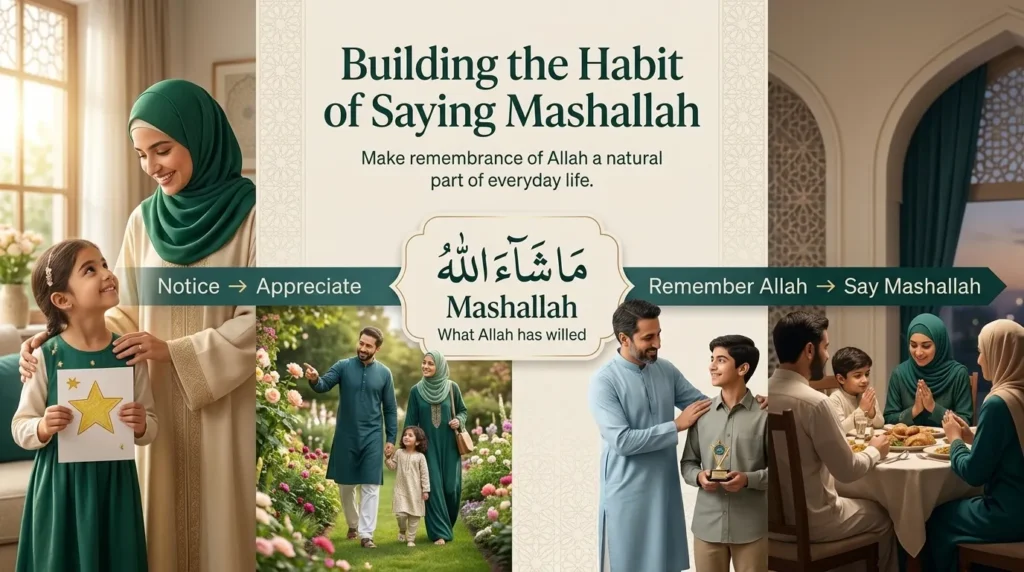
Like any good habit, saying Mashallah sincerely takes a little practice. These simple steps help make it natural.
- Pause before praising. A short pause before complimenting someone gives you a moment to remember Allah’s role in that blessing.
- Say it with your children. Teaching kids to say Mashallah when they see something nice builds gratitude early, similar to habits explored in how parents can encourage children to love the Quran.
- Use it alongside other phrases. Pairing Mashallah with Alhamdulillah, when fitting, deepens the sense of gratitude in daily conversation.
- Reflect on the Quran story behind it. Remembering the man with two gardens helps the phrase feel meaningful instead of automatic.
- Say it about your own life too. Do not save Mashallah only for other people. Use it for your own blessings, following the Quranic example.
This small daily habit connects to a much larger Islamic value of remembering Allah often, a theme also reflected in So Remember Me, I Will Remember You, which explores this same idea of ongoing gratitude and remembrance in the Quran.
FAQs About Mashallah
What does Mashallah mean?
Mashallah means “What Allah has willed.” Muslims say it to credit Allah for something good they see, hear, or experience.
What does Mashallah mean in English?
In English, it translates to “What Allah has willed” or “As Allah has willed.” Both versions carry the same meaning.
Is Mashallah from the Quran?
The exact phrase comes from a story in Surah Al-Kahf, where Allah teaches that a person should have said it when admiring their own blessings (Quran 18:39).
Does Mashallah protect against the evil eye?
It can help soften envy when praising someone, but it is not a guaranteed shield. The evil eye is real, according to hadith, but Allah’s decree always controls the outcome.
Can you say Mashallah for yourself?
Yes. You can say it about your own blessings too, following the Quranic example of the man who should have said it about his own gardens.
What is the difference between Mashallah and Inshallah?
Mashallah looks at something that already happened or exists. Inshallah looks ahead to something hoped for or planned in the future.
How do you write Mashallah in Arabic? It is written مَا شَاءَ اللَّهُ, made up of three joined Arabic words meaning “what,” “willed,” and “Allah.”
Final Word
Mashallah is short, but it carries a real lesson about humility and gratitude. Say it with sincerity, not just as a habit. Let it remind you, every time you say it, that every blessing you see traces straight back to Allah.