A small kitchen can feel crowded quickly. A few appliances, overflowing drawers, and poorly arranged cabinets can leave little room for cooking. However, limited square footage does not have to mean limited functionality. With thoughtful organization, even a compact kitchen can become easier to use and more comfortable.
The best small kitchen storage ideas make better use of the space you already have. Walls, cabinet doors, awkward corners, and narrow gaps can provide storage without requiring a major renovation. Often, rearranging everyday items makes a bigger difference than buying more containers.
This guide explores practical ways to maximize kitchen storage, reduce countertop clutter, and keep cooking essentials within reach.
1. Declutter Before Adding Storage
Before purchasing organizers, empty one cabinet or drawer at a time. Sort everything into items you use regularly, occasionally, or never.
Duplicate utensils, chipped mugs, expired ingredients, and unused gadgets take up valuable space. Donate usable items you no longer need and discard anything damaged or unsuitable for use.
Keep everyday cookware close to your preparation area. Move holiday dishes and rarely used baking equipment to less accessible shelves.
Organize around your actual cooking habits. A kitchen that supports your routine will stay tidier than one arranged mainly for appearance.
2. Use Wall Space for Vertical Storage
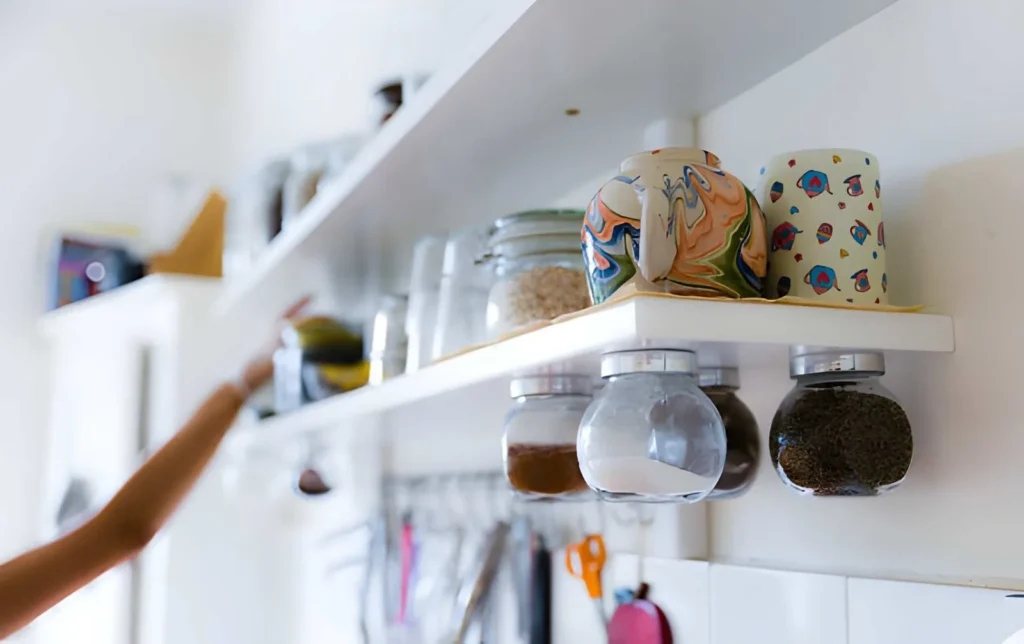
Empty walls offer useful storage opportunities in a small kitchen. Floating shelves can hold mugs, everyday dishes, or frequently used ingredients.
Position shelves where you can reach them comfortably without obstructing your work area. Keep heavier objects on lower shelves and lighter items higher up.
A wall rail with hooks can hold measuring cups, utensils, or lightweight pans. A pegboard offers similar flexibility because you can rearrange hooks as your needs change.
Install shelves and rails with fixings suitable for the wall and expected load. Leave enough clearance around cooking appliances.
3. Make Cabinet Doors Work Harder
The inside of a cabinet door can provide extra room for small, lightweight essentials.
Depending on available clearance, try:
- A shallow rack for spices.
- Clips for cleaning gloves.
- A holder for food storage bags.
- Hooks for measuring spoons.
- A compact organizer for pan lids.
Measure carefully before installing anything. Door organizers must clear interior shelves and allow the cabinet to close fully.
Under the sink, a door basket can keep sponges and brushes accessible. Store cleaning products separately from food and secure them appropriately if children can access the kitchen.
4. Add Shelf Risers and Undershelf Baskets
Tall cabinet compartments often contain unused space above dishes or food packages. Shelf risers create another level, helping you use that empty area.
Place small plates underneath a riser and bowls above it. In a food cupboard, use one to separate cans from jars so labels remain visible.
Undershelf baskets can hold lightweight items such as napkins, wraps, or tea towels.
Choose organizers that fit the cabinet rather than squeezing in the largest option. You should be able to remove everyday items without dismantling an entire stack.
5. Store Trays and Boards Upright
Baking sheets, chopping boards, cooling racks, and muffin tins become difficult to retrieve when piled together.
Vertical dividers let you store these pieces upright, like books on a shelf. Each item slides out independently, saving time and reducing awkward lifting.
Use an adjustable rack inside a lower cabinet, or add fitted dividers if you want a permanent solution.
Pan lids can also benefit from upright storage. Select a rack that accommodates their handles and keeps them stable. Keep heavier cookware in a nearby lower cabinet for convenient access.
6. Divide Drawers by Task
A crowded utensil drawer wastes space because small tools disappear beneath larger ones.
Start by grouping items according to their purpose. Keep preparation tools together, serving utensils together, and everyday cutlery in its own section.
Adjustable dividers help accommodate different drawer dimensions. Small trays work well for loose accessories such as bag clips and measuring spoons.
Avoid filling every compartment completely. Leave enough room to see and retrieve each item easily.
Store sharp knives in a suitable protective organizer, and remove tools you consistently skip when cooking.
7. Turn Narrow Gaps Into Useful Storage
The gap beside a refrigerator or between cabinets may accommodate a slim rolling cart.
Use it for items that suit the location, such as food containers, tea towels, or lightweight kitchen supplies. Avoid storing oils and spices where appliance heat could affect their quality.
Measure the gap, including handles and skirting boards, before buying a cart. Check that it can roll out fully without blocking a doorway.
Keep ventilation openings clear and follow appliance clearance requirements. A narrow storage solution is helpful only when it preserves safe, convenient movement.
8. Organize Food With Stackable Containers
Mismatched packages can make a small pantry difficult to manage. Stackable containers help create orderly rows and make ingredients easier to identify.
Choose food-safe containers sized for the quantities you normally buy. Square or rectangular shapes often use shelf space efficiently.
Label contents clearly and retain cooking instructions, allergen details, and expiry information when transferring food.
You do not need to decant everything. Original packaging works well when grouped in shallow bins.
Before shopping, check what remains. Buying suitable quantities prevents excess stock from overwhelming your available storage.
9. Keep Countertops Focused on Daily Tasks
Countertops provide essential preparation space, so reserve them for items you use frequently.
If an appliance comes out only occasionally, give it a cabinet home. Group everyday essentials on a small tray so they are easy to move when cleaning.
A wall-mounted paper towel holder can free up a little more room. Store washing-up supplies in a compact caddy rather than spreading them around the sink.
Leave a clear area for chopping, mixing, and serving. An organized countertop should make cooking easier.
10. Improve Deep Cabinets and Awkward Corners
Deep cabinets often hide items at the back. Pull-out baskets or drawers bring their contents forward, making the full cabinet easier to use.
A turntable can help organize suitable bottles or jars in an awkward corner. Check its diameter and surrounding clearance before purchasing.
For a lower-cost option, use sturdy bins with handles. Group similar items and pull out one bin when needed.
Avoid overloading these organizers. Smooth access matters more than fitting in every possible object.
Build a Storage System You Can Maintain
The most effective small kitchen storage ideas combine better placement, vertical space, and fewer unnecessary items. Start with the area that causes the most frustration, then improve one cupboard or drawer at a time.
Choose solutions that fit your kitchen and your routine. When everything has an accessible home, putting things away becomes easier—and even a small kitchen can feel spacious, practical, and welcoming.
Also Read About : The Connection Between Sleep and Emotional Well-Being