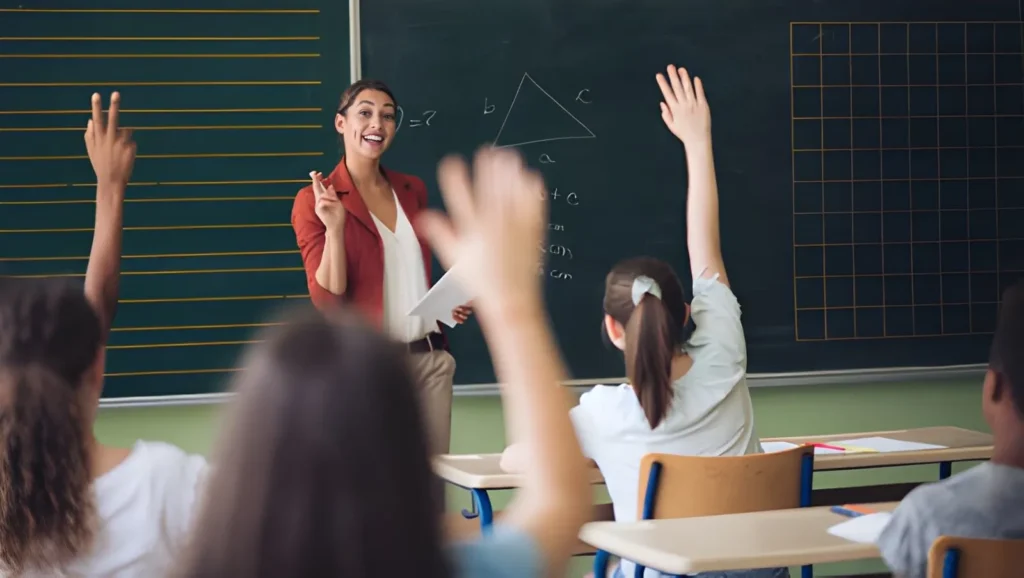

Education helps students gain knowledge, develop skills, and prepare for life. However, remembering facts is only one part of learning. Students also need to question information, understand different perspectives, and make decisions based on evidence. These abilities explain the importance of critical thinking in education.
Every day, learners encounter opinions, advertisements, social media posts, and competing explanations. Knowing how to evaluate these messages helps them become thoughtful readers and responsible decision-makers. In the classroom, the same skills allow students to move beyond memorization and develop a deeper understanding of their subjects.
Critical thinking can support learning across every discipline, from science and mathematics to literature and history. When teachers encourage thoughtful questioning, they help students become more independent, curious, and capable learners.
What Is Critical Thinking in Education?
Critical thinking is the process of carefully examining information before reaching a conclusion. It involves asking relevant questions, checking evidence, recognizing assumptions, and considering alternative explanations.
In education, this means students explore how and why an answer makes sense. They learn to distinguish a convincing argument from an unsupported claim.
For example, a history student might compare two accounts of the same event. Instead of accepting both descriptions equally, the student examines who wrote each account, what evidence supports it, and whether the writer had a particular purpose.
Critical thinking also requires openness. Students must be willing to reconsider their conclusions when stronger evidence becomes available. The goal is thoughtful judgment rather than constant disagreement.
Builds Deeper Understanding
Memorization can help students recall definitions, formulas, and dates. However, recalling information does not always mean understanding it.
Critical thinking encourages learners to connect ideas and explain relationships. A student studying environmental science, for instance, can examine how transportation, energy use, and local policies influence air quality.
This approach makes lessons more meaningful because students understand how individual facts fit into a larger picture. They can explain concepts in their own words and apply them in unfamiliar situations.
Teachers can encourage deeper understanding by asking students to justify answers, compare examples, or explain what would happen if a condition changed.
Strengthens Problem-Solving Skills
Many academic and everyday problems have several possible solutions. Critical thinking helps students define a problem, examine relevant information, and compare different approaches.
Consider a group assignment that is falling behind schedule. Students can identify the cause, review unfinished tasks, and decide how to divide responsibilities more effectively.
The process involves more than choosing the first available option. Learners consider practical limits, potential consequences, and whether their solution addresses the actual problem.
These problem-solving skills are valuable in mathematics, scientific investigations, creative projects, and daily responsibilities. Students also learn that an unsuccessful approach can provide useful information for their next attempt.
Improves Information and Media Literacy
Students have access to enormous amounts of information, but online material varies in quality. Some content is accurate and well supported, while other material is misleading, incomplete, or designed mainly to attract attention.
Critical thinking helps learners ask useful questions:
- Who created this information?
- What evidence supports the claim?
- Is the source relevant and trustworthy?
- Does the headline accurately represent the content?
- Can another reliable source confirm it?
These habits encourage careful research and responsible sharing. Students learn to look beyond confident language or attractive graphics and examine the reasoning behind a message.
Encourages Independent Learning
Independent learners take an active role in understanding their subjects. They identify gaps in their knowledge, seek explanations, and evaluate their progress.
Critical thinking supports this process by helping students question their own understanding. Instead of assuming they have mastered a topic after reading a chapter, they might test whether they can explain it or solve a related problem.
This habit is especially useful when assignments become more complex and teacher guidance becomes less frequent.
Students also become better prepared to ask specific questions. Recognizing exactly what they do not understand makes it easier to seek meaningful help.
Develops Communication and Respectful Discussion
Strong communication requires clear reasoning as well as clear language. Students need to explain their conclusions, present supporting evidence, and respond thoughtfully to questions.
Critical thinking gives structure to these conversations. During a classroom discussion, learners can distinguish between personal preferences and claims that require evidence.
They also practice listening to different perspectives without immediately dismissing them. Understanding another person’s reasoning does not require agreement, but it can reveal overlooked details.
These skills improve essays, presentations, debates, and group work. They also help create classrooms where disagreement becomes an opportunity to examine ideas more carefully.
Prepares Students for Work and Everyday Decisions
Beyond school, people regularly face decisions involving incomplete information, competing priorities, and uncertain outcomes. Critical thinking provides a useful process for approaching these situations.
In the workplace, employees may need to evaluate proposals, identify errors, compare solutions, or explain recommendations. In everyday life, people use similar reasoning when comparing purchases, planning projects, or evaluating public claims.
Education that develops these habits gives students opportunities to practice making justified decisions.
They learn to recognize uncertainty, seek relevant information, and explain why one option appears more suitable than another.
How Teachers Can Encourage Critical Thinking
Teachers can build critical thinking into ordinary lessons through purposeful questions and activities.
Open-ended questions encourage students to explain their reasoning. Comparing sources helps them assess evidence. Realistic scenarios allow them to apply classroom knowledge to practical challenges.
Teachers can also model how thoughtful reasoning works by explaining their assumptions and acknowledging uncertainty.
Feedback should address the reasoning behind an answer as well as its accuracy. Students benefit from knowing where their argument is strong and where additional evidence is needed.
Conclusion
The importance of critical thinking in education extends across subjects and beyond graduation. It helps students understand ideas deeply, solve problems, evaluate information, and communicate with purpose.
Developing these skills takes practice, patient guidance, and opportunities to reconsider mistakes. When classrooms make room for questioning and evidence-based discussion, students gain habits that support continued learning throughout their lives.
Also Read About : Common Study Mistakes Students Make and How to Avoid Them