Dua for Pain in the Body: Arabic Text, Meaning, and Steps
Does your body hurt right now? Maybe it’s your head, your back, or your stomach. There is a simple dua the Prophet Muhammad ﷺ taught for this. It takes less than one minute. This guide gives you the exact Arabic words, the meaning, and the steps to say it the right way.
What Is the Dua for Pain in the Body?
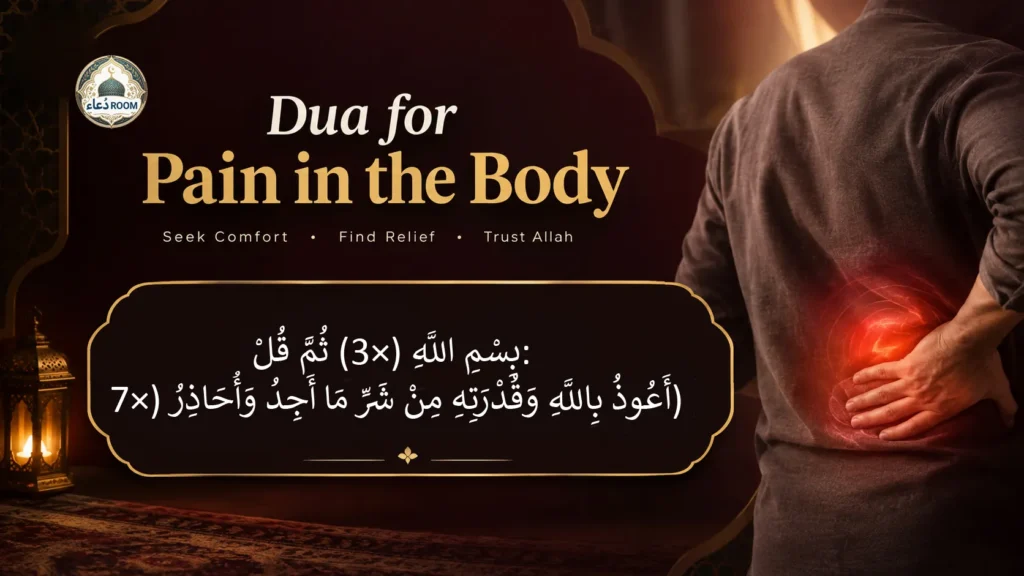
The dua for pain has two short parts. You say “Bismillah” three times. Then you say a longer line seven times, while your hand rests on the sore spot.
This is not a made-up dua. It comes from a real story in the hadith books. A man named Uthman ibn Abi al-‘As came to the Prophet ﷺ. He had pain in his body. The pain had not left him since he became Muslim. The Prophet ﷺ gave him this exact method.
Arabic: بِسْمِ اللَّهِ (×3) ثُمَّ قُلْ: أَعُوذُ بِاللَّهِ وَقُدْرَتِهِ مِنْ شَرِّ مَا أَجِدُ وَأُحَاذِرُ (×7)
Transliteration: Bismillah (say 3 times). Then say: A’udhu billahi wa qudratihi min sharri ma ajidu wa uhadhiru (say 7 times).
English meaning: “In the name of Allah” (×3). “I seek refuge in Allah and His power from the evil of what I feel and what I fear” (×7).
This exact wording is recorded in Sahih Muslim 2202, in the chapter on placing the hand on the site of pain. Scholars agree it is authentic (sahih).
Where Do You Put Your Hand When You Say This Dua?
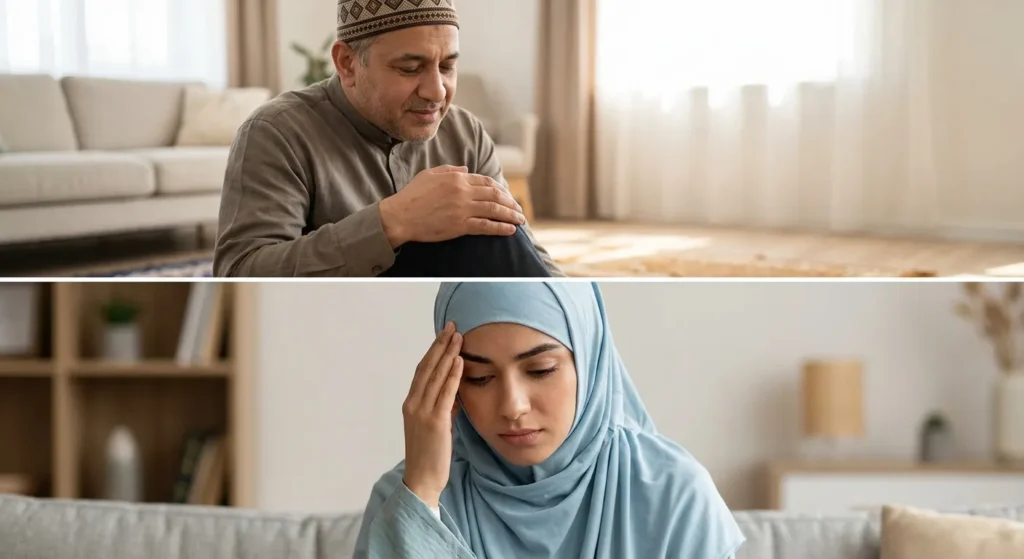
Put your hand right on the spot that hurts. If your knee hurts, place your hand on your knee. If your head hurts, place it on your head.
The hadith says: “Place your hand at the place where you feel pain in your body.” It does not name a specific hand. Many Muslims use the right hand out of habit, since the Sunnah favors the right hand for good acts in general. But the main point is contact with the sore area, not which hand you use.
Place your hand on the painful area while reciting the dua. This links your body, your voice, and your heart in one act of trust in Allah.
How Many Times Do You Repeat the Dua for Pain Relief?
Say “Bismillah” three times. Then say the second line seven times. This exact count comes straight from the hadith. It is not a guess or a custom added later.
Here is the full method laid out step by step.
| Step | Action | Count |
|---|---|---|
| 1 | Place your hand on the painful spot | — |
| 2 | Say “Bismillah” (بِسْمِ اللَّهِ) | 3 times |
| 3 | Say “A’udhu billahi wa qudratihi min sharri ma ajidu wa uhadhiru” | 7 times |
| 4 | Trust Allah for the outcome | — |
You do not need to be in an Arabic-speaking country or have special training. Any Muslim, anywhere, can say this dua. The hadith gives a general method for pain felt in the body, whether it is a child’s stomach ache or an adult’s back pain.
The Hadith Behind This Dua
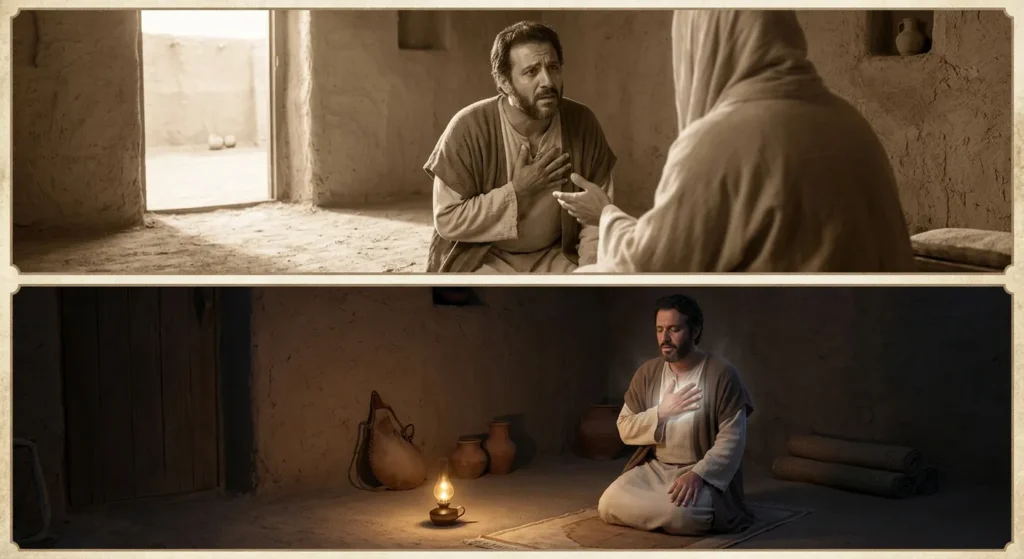
This dua comes from Sahih Muslim, one of the two most trusted hadith books in Islam. The full report explains why the Prophet ﷺ taught it.
Uthman ibn Abi al-‘As told the Prophet ﷺ about pain in his body. This pain had stayed with him since he accepted Islam. The Prophet ﷺ did not just tell him to be patient. He gave him a clear, physical action to take. He said: “Place your hand at the place where you feel pain in your body and say Bismillah three times, and seven times say A’udhu billahi wa qudratihi min sharri ma ajidu wa uhadhiru.” (Sahih Muslim 2202)
The hadith gives both the words to recite and the physical action to take.
Dua for Specific Body Pain: Head, Stomach, Chest, Legs, and Joints
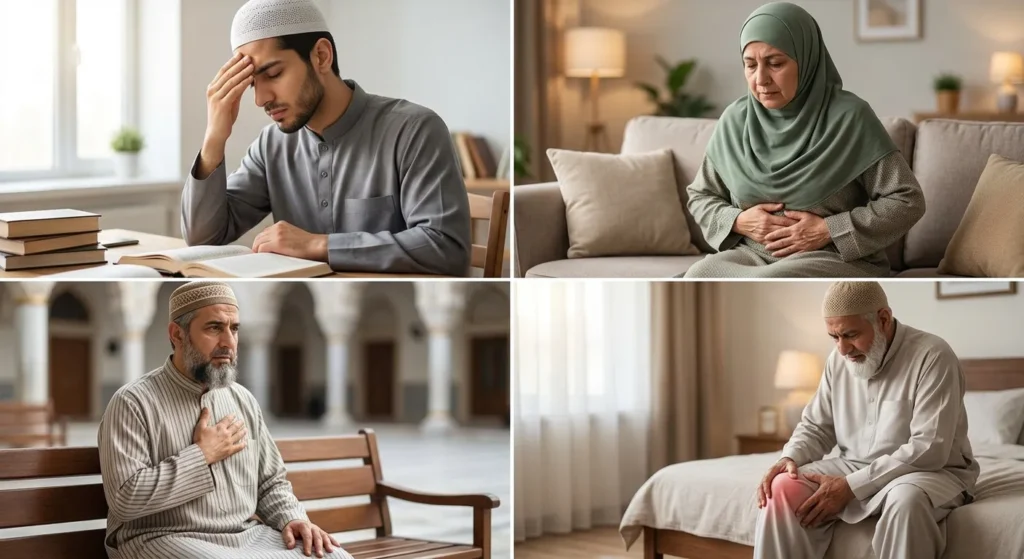
The same dua is reported for pain in the body in general. The hadith does not give a separate dua for headaches, stomach pain, leg pain, or other specific body parts. It uses the general words “the place where you feel pain in your body.” The hadith gives a general method for pain felt in the body, and you simply move your hand to wherever it hurts.
- Headache: Place your hand on your head. Say the dua as above.
- Stomach pain or period cramps: Place your hand on your stomach.
- Chest pain or tightness: Place your hand on your chest. If chest pain is sudden, severe, or comes with trouble breathing, fainting, sweating, or pain spreading to the arm or jaw, seek urgent medical care.
- Leg or joint pain (pair dard, muscle or badan dard): Place your hand on the sore leg, knee, or muscle.
Some sites online invent separate “duas” for each body part. These are not found in Sahih Muslim or Sahih al-Bukhari. It is safer to stick with the one dua the Prophet ﷺ actually taught.
Can You Do Ruqyah on Yourself for Body Pain?
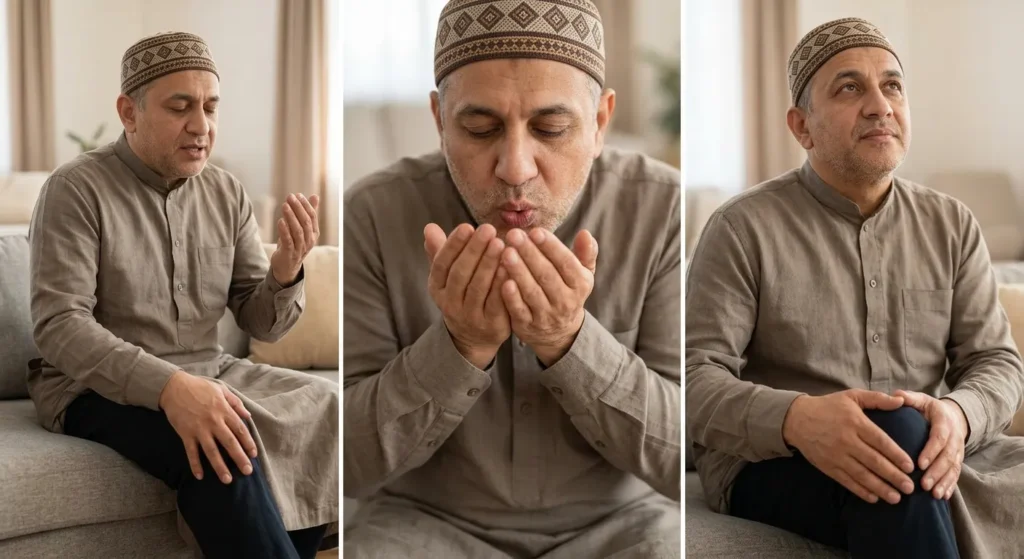
Yes. This dua for pain is itself a form of self-ruqyah. Ruqyah means asking Allah for healing using the Quran and authentic duas. You do not need another person to do it for you.
You can also add these steps:
- Recite Surah Al-Fatihah over yourself. It is reported in Sahih al-Bukhari that the Companions used it as ruqyah.
- You may also recite Ayat al-Kursi (Al-Baqarah 2:255) as a general Quranic recitation. It is not part of the specific pain method reported in Sahih Muslim 2202.
- Blow gently on your hands (called nafth, a light, dry blow with no spit) after reciting, then wipe them over the painful area.
- Follow the dua with sincere trust in Allah, or tawakkul, believing He hears you and knows what is best.
Self-ruqyah does not replace a doctor. If pain is severe or does not go away, see a doctor too. Islam teaches both dua and treatment together, not one instead of the other.
What the Quran Says About Pain and Healing
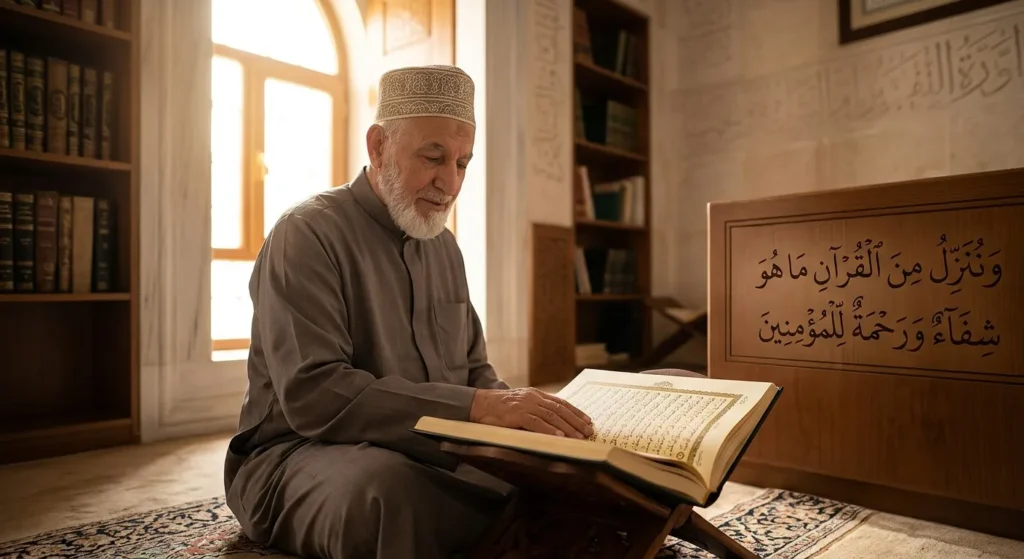
The Quran calls itself a source of healing, or shifa, for believers. Allah says in the Quran:
“And We send down of the Qur’an that which is healing and mercy for the believers, but it does not increase the wrongdoers except in loss.” — Surah Al-Isra 17:82
This verse is often called the Ayat ash-Shifa, or Verse of Healing. Scholars explain that the Quran heals both the heart and, by Allah’s will, the body. This is why many Muslims recite Quran over a sick or hurting person as part of ruqyah.
Pain Is Not Punishment: What the Hadith Teaches

Pain in this life can wipe away sins for a Muslim who stays patient. This is a strong source of comfort when you are hurting.
The Prophet ﷺ said: “No fatigue, nor disease, nor sorrow, nor sadness, nor hurt, nor distress befalls a Muslim, even if it were the prick he receives from a thorn, but that Allah expiates some of his sins for that.” (Sahih al-Bukhari 5641)
This means even small pain has a purpose. It is not wasted. Holding onto this truth, with sabr (patience), can make pain easier to carry.
Dua to Say for a Sick Person (Not Just Yourself)
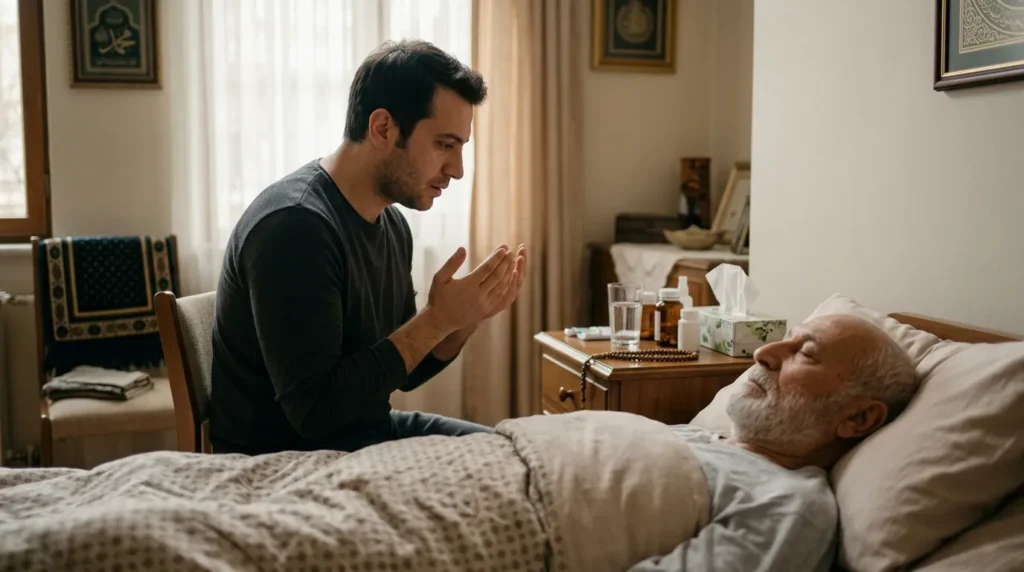
You can also ask Allah to heal someone else who is sick or in pain. The Prophet ﷺ taught a dua for this too, said seven times while sitting near the sick person.
Arabic: أَسْأَلُ اللَّهَ الْعَظِيمَ رَبَّ الْعَرْشِ الْعَظِيمِ أَنْ يَشْفِيَكَ
Transliteration: As’alu Allah al-‘Azim, Rabbal-‘Arshil-‘Azim, an yashfiyak
Meaning: “I ask Allah the Mighty, Lord of the Mighty Throne, to heal you.”
This is recorded in Sunan Abi Dawud 3106 and graded authentic by scholars. Say it for a parent, a child, a friend, or anyone in pain, in addition to the dua for your own body. Trusting in Hasbunallahu wa ni’mal wakeel — “Allah is enough for us, and He is the best guardian” — can bring extra comfort while you wait for healing.
Frequently Asked Questions
What is the best dua to say for body aches?
The strongest and most authentic dua is from Sahih Muslim 2202: Bismillah three times, then “A’udhu billahi wa qudratihi min sharri ma ajidu wa uhadhiru” seven times, with your hand on the sore spot.
Where do I put my hand when saying this dua?
On the exact spot where you feel pain, then say the words while your hand rests there.
How do I use this dua if pain is in more than one place?
Move to each painful area one at a time. Place your hand there, then repeat the full three-times-then-seven-times method for that spot before moving to the next.
What dua helps with ongoing muscle pain?
The same dua applies. For pain that keeps coming back, many people repeat the method after each prayer, not just once, placing the hand on the muscle each time.
What can I do for sudden, severe pain?
Say the dua from Sahih Muslim 2202 right away, with your hand on the spot. For sudden severe chest pain, or pain with breathing trouble, sweating, or spreading to the arm or jaw, get medical help immediately rather than relying on dua alone.
A Final Word
Pain is hard. But you are never facing it alone. The Prophet ﷺ left believers a simple, authentic way to turn to Allah during pain. Place your hand where it hurts. Say the words. Trust that Allah hears you, and that even this pain is not without meaning.